Tennessee Rules for a Passenger on a WMA Trail
A passenger can make a Tennessee WMA ride more enjoyable, but not every ATV or UTV is built to carry one, and trail access rules can vary by area. Before loading up, check that the machine has a proper passenger seat, that each rider has the required safety gear, and that your permit covers the place and type of ride you have planned.
Start With the Machine and Its Passenger Seat
The safest starting point is the manufacturer’s intended seating capacity. A passenger should have a dedicated seat and a way to hold on; riding on a rack, fender, cargo bed, or another improvised spot is not a safe substitute. A machine with one seat is a one-person machine, even if it seems large enough to carry someone else.
This distinction matters especially when comparing an ATV with a side-by-side. A side-by-side is generally designed with separate seating positions, restraints, and handholds for more than one occupant. Many ATVs are designed for one rider, while some models are specifically built with a passenger seat. Do not assume that an ATV can carry a passenger just because another person can physically sit behind the operator.
Check the owner’s manual or the manufacturer’s information for the model and year. Look for its stated seating capacity and any instructions about passenger use. If the manual says the machine is for one occupant, adding a passenger can affect balance, steering, braking, and stability. That risk is more pronounced on narrow, uneven, or steep WMA trails.
| Before you ride | What to check |
|---|---|
| Seating capacity | Confirm the machine was designed for the number of people riding |
| Passenger position | Use a designated seat, not a cargo rack or improvised perch |
| Handholds and restraints | Check that the passenger can hold on and, in a UTV, use the installed restraint |
| Protective gear | Make sure both riders have suitable, correctly fitted gear |
| WMA access | Confirm the trail and vehicle are allowed in the specific area |
| Permit | Check who must have a permit and whether it covers the area and dates |
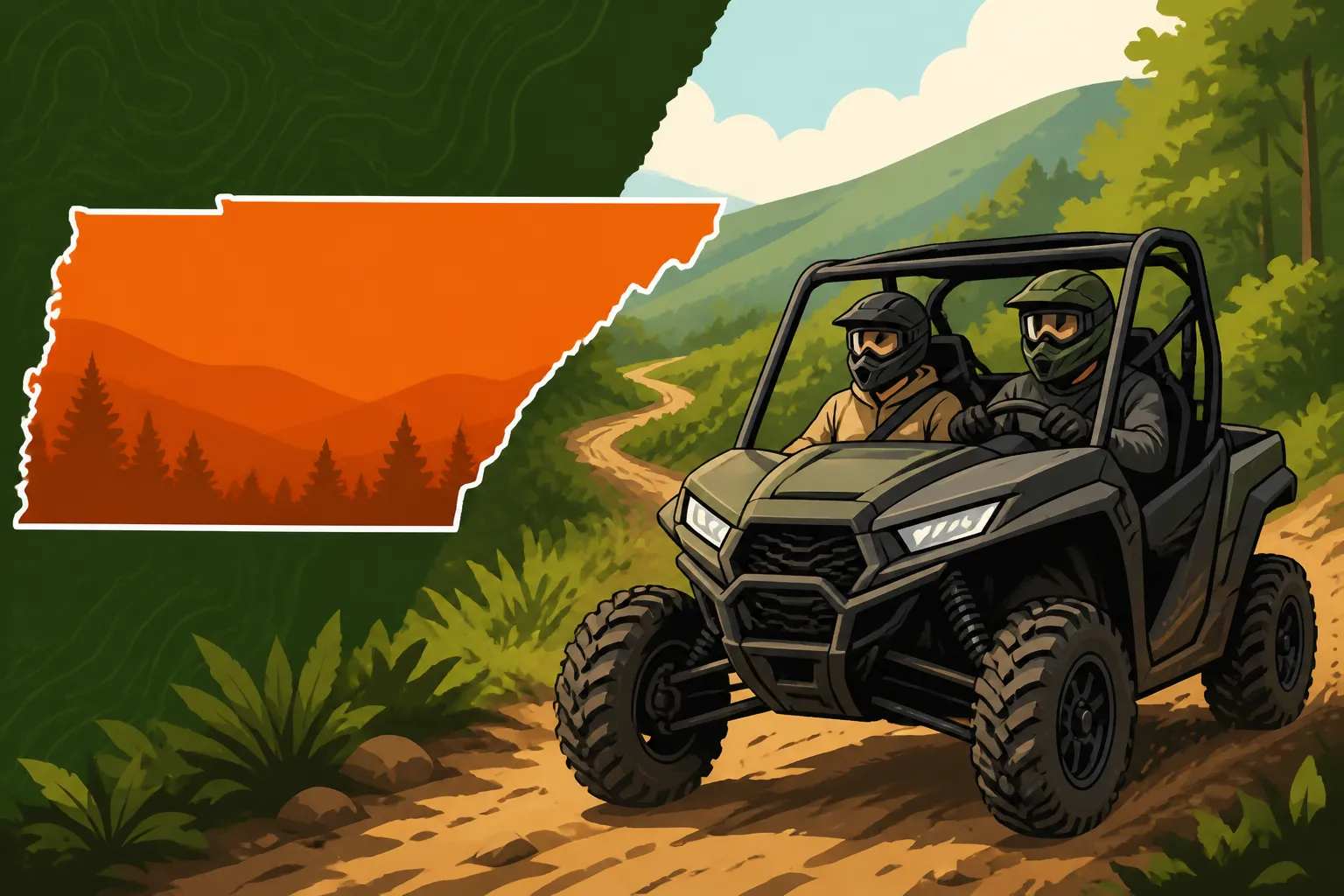
For a UTV, every passenger should have a designated seat and use the available restraint system. Keep arms and legs inside the vehicle, and do not exceed the manufacturer’s occupant limit. A belt cannot make an unsuitable seat safe, and a passenger should not ride in a cargo area unless the vehicle is expressly designed for that use.
For an ATV built for two, both people need to sit in the intended positions. The operator must be able to control the machine without being crowded or having a passenger interfere with steering, shifting, or braking. If the passenger cannot comfortably reach the footrests or hold on as the manufacturer intends, choose another machine or ride separately.
These are practical safety checks, not a replacement for the applicable WMA rules. For broader area requirements, see Tennessee Rules for Riding a WMA. Rules for a privately operated trail park may differ from rules on a WMA, so don’t assume that a park policy applies on public land.
Check the WMA Rules Before Bringing a Passenger
A WMA is not a single, uniform trail system. The permitted routes, access conditions, and requirements can depend on the particular area and may change with closures or seasonal restrictions. Confirm that the route is open to your vehicle and that passenger riding is allowed under the rules that apply there.
Start with the Tennessee Wildlife Resources Agency’s current information for the WMA you plan to visit. Review the area-specific notices as well as the general rules. If a notice is unclear, contact the agency or the land manager before you ride rather than relying on an old map, a social media post, or another rider’s recollection.
A passenger does not make an otherwise prohibited machine or route permissible. Check any limits that apply to the vehicle, its width, or where it may travel. Stay on routes designated for the type of riding you are doing. Riding beyond a marked route can create safety problems, damage land, and violate access rules. See Tennessee Rules for Riding Off the Trail for why staying on the designated route matters.
Also confirm that you have the right permit for the place you intend to ride. A WMA permit is not the same thing as vehicle registration, a title, or a private park permit. Permits for one riding area may not be valid in another. If your trip includes more than one unit or destination, check each one separately; Does One Permit Cover Every North Cumberland Unit? explains why a single permit should not be assumed to cover every area.
The passenger’s presence does not automatically answer who needs a permit. Permit requirements can depend on the specific program and the person’s role in the vehicle. Read the current instructions closely, including whether the permit is required for an operator, a passenger, or an adult associated with the vehicle. The practical point is to verify the rule before the ride rather than assuming the operator’s permit covers every rider. One Adult per Vehicle With a Permit covers the permit question in more detail.
If your machine is rented, ask the rental company how its passenger rules work and whether the permitted use matches the WMA rules. A rental company’s approval does not replace the area’s requirements. Confirm the machine’s seating capacity, who may operate it, and whether its equipment is appropriate for the route. For additional considerations, see Tennessee Rules for Riding a Rented Machine.
Plan for the Passenger’s Age, Gear, and Ability
A passenger needs to be able to ride safely for the full trip, not just fit into the seat. Consider their size, balance, attention, and ability to follow directions. A rocky climb, steep descent, narrow bench road, or sudden stop can be demanding even for an experienced adult passenger. If someone is uncomfortable, tired, or unable to stay seated and hold on, stop and reassess instead of pressing on.
Age rules and supervision requirements can depend on the ride and the applicable area rules. Do not assume that a passenger who is old enough to ride at a private park is automatically permitted under the same conditions on a WMA. Check the current guidance before taking a child or teenager. [Tennessee Rules for Riders Under 16] is a useful starting point for understanding age-related questions.
Fit protective gear to each person. A helmet should sit securely and be suitable for the rider; a loose helmet that shifts or blocks vision is not adequate preparation. Eye protection, sturdy footwear, gloves, and clothing that covers exposed skin can also help with dust, debris, branches, and changing conditions. If the WMA or the vehicle manufacturer specifies additional equipment, follow those instructions. See Tennessee Helmet Rules at a Trail Park for related helmet considerations, while remembering that a park’s rules may not be identical to WMA rules.
Before moving, make sure the passenger knows how to get on and off safely, where to place their feet and hands, and how to respond when the operator slows, turns, or stops. Agree on a simple signal for “stop” or “I need a break,” especially when helmets and engine noise make conversation difficult. The operator should drive smoothly and leave extra room for braking, turning, and uneven terrain.
For a UTV, check that the passenger’s seat belt works and that the passenger understands how to use it. Do not carry more people than there are designated seats, and do not let a passenger ride with the restraint unfastened. On an ATV designed for two, the passenger should stay in the intended position rather than leaning unpredictably or shifting weight at the wrong time.
The operator should also be realistic about the route. A passenger changes how a machine handles, and an unfamiliar or difficult trail can make that change more consequential. Choose a route the operator can manage comfortably with the added weight. If the passenger is new to off-road riding, begin with an easier route and keep the ride short enough to avoid fatigue.
Use a Pre-Ride Check and Recheck Conditions
A quick check before leaving the staging area can prevent avoidable problems. Confirm the machine’s capacity, inspect its tires and controls, and make sure the passenger has the right protective gear. For a UTV, check the restraints and doors or nets if fitted. Make sure the passenger has water and knows how to communicate if they need to stop.
Then verify the route and access rules for the day. Trail status can change, and a route shown on an older map may be closed or restricted. Check current notices before setting out and again if conditions change. Tennessee Trail Closures to Check First can help you make closures part of trip planning rather than an afterthought.
During the ride, keep the passenger’s comfort and control in mind. Slow down for rough sections, blind corners, loose surfaces, and places where other users or vehicles may appear. Do not let the passenger’s presence push the operator into a pace or route that exceeds their skill. If the passenger becomes uneasy, take a safe break and consider turning back.
A passenger can also affect the practical details of the trip: fuel use, how much cargo the machine can carry, and how quickly the group can respond to a delay. Pack essential items without blocking the passenger’s seat, handholds, or view. Keep a phone or other communication device accessible, but do not let it distract the operator.
Use this short checklist before you leave:
- Confirm the machine is designed for the number of occupants.
- Verify the passenger has a proper seat and can use the required handholds or restraints.
- Check the current WMA rules, route access, and permit requirements.
- Fit the passenger with appropriate safety gear and explain how to communicate.
- Choose a route and pace that match both riders’ experience.
- Recheck closures or notices before riding, especially if the trip spans multiple areas.
If any answer is uncertain, resolve it before the vehicle enters the trail. Taking a passenger is a decision about both equipment and access rules; neither should be treated as an assumption.
Disclaimer
This article is for general informational purposes only and does not constitute professional advice. Laws, prices and regulations vary by location and change over time. Consult a qualified professional for guidance on your specific situation.