Tennessee WMA Special Use Permit Rules
A Tennessee WMA special use permit is not a universal pass for every public riding area. The permit you need depends on where you plan to ride and what the land manager allows. Here’s how to tell whether an OHV permit applies, what it does and does not cover, and what to check before loading your ATV or UTV.
What a Tennessee WMA special use permit covers
A special use permit is permission for a particular activity on land where access or use is managed. It is not the same as a vehicle title, a road registration, or a general right to ride anywhere on public land. For ATV and UTV riders, the key question is whether the specific WMA allows motorized riding and requires a permit for that use.
Tennessee does not have one statewide trail sticker that automatically grants access to every WMA, park, or private trail system. A permit for one riding area may not be accepted at another, and an OHV permit does not open roads or trails that are closed to motorized use. For background on how these permits differ, see Why Tennessee Has No Statewide Trail Sticker and Tennessee Rules for Riding a WMA.
In particular, check the rules for the actual WMA or unit you plan to visit. Some WMAs may allow certain activities only in designated places or seasons; others may not allow public OHV riding at all. A permit for a riding area also does not necessarily authorize hunting, camping, organized events, commercial guiding, or other activities that may have separate requirements.
The North Cumberland area is a significant example for OHV riders. Its riding access is managed through specific permits and rules, and riders should confirm which permit applies to their planned visit. Do not assume that a permit associated with one North Cumberland unit automatically covers every other unit. Does One Permit Cover Every North Cumberland Unit? explains why checking the area and permit details matters.
It also helps to keep the basic permissions separate:
| Permission or document | What it generally does | What it does not do |
|---|---|---|
| WMA or OHV special use permit | Authorizes the covered activity in the area and period stated by the permit | Grant access to every WMA or override closures |
| Park or private-land permit | May authorize riding on that particular operator’s property | Substitute for a WMA permit |
| Title or ownership paperwork | Helps establish ownership of the machine | Authorize riding on public land |
| Road-use permission | May allow travel on specifically eligible public roads | Make every road or trail legal for OHV use |
This distinction can prevent a common and costly assumption: owning a properly titled machine does not mean it is permitted on a particular WMA. Tennessee generally does not register off-road machines in the same way it registers road vehicles. Trail access and vehicle paperwork are separate questions. See Why Tennessee Does Not Register Off-Road Machines for the title-and-registration distinction.
Who needs a permit and how requirements vary
The permit requirement depends on the land and activity, not simply on whether someone owns an ATV or UTV. A rider visiting an OHV area should confirm whether a permit is required, who in the group must hold one, which vehicle or activity it covers, and whether age or supervision rules apply.
On North Cumberland, permit options and eligibility can differ according to residency and the length of the visit. The state’s permit information is the place to check current choices and conditions. Do not rely on an old permit, a friend’s purchase, or a past visit as proof that today’s requirements are the same. The rules and available permit types can change. For the process, see Buying a Permit Through the State Portal.
Pay close attention to whether the requirement is attached to a rider, a vehicle, or a particular activity. A group should not assume one adult’s permit covers every person or machine. Check the permit’s conditions for operators, passengers, minors, and vehicle use, then make sure every person who is required to hold a permit has one before riding. The details can be easy to miss when a group shares machines or changes drivers during the day. Why One Adult per Vehicle Needs a Tennessee Permit covers a related issue for riders planning together.
Children and teens need an extra check. A permit requirement does not by itself answer whether a young person may operate a machine, ride as a passenger, or use a particular trail. Age restrictions, adult supervision, and the vehicle’s passenger capacity can be separate rules. Review the WMA-specific requirements as well as the permit terms. For a starting point on younger riders, see Tennessee Rules for a Rider Aged 13.
Nonresidents should not assume a permit from their home state will be honored in Tennessee. Nor should a Tennessee WMA permit be treated as a substitute for an out-of-state registration or riding-area permit elsewhere. In general, access permissions are tied to the issuing land manager and the location they cover. Why Tennessee Reciprocates Nothing explains why an out-of-state document may not replace a Tennessee trail permit.
A WMA permit also does not automatically let you ride on adjacent property. Land boundaries can run close to roads, trail connections, lease areas, and private parcels. If a route leaves the authorized area, you may need separate permission—or the route may simply be closed to riding. For private property, review [Tennessee Landowner Permission Requirements] rather than treating a nearby WMA permit as permission to cross.
Getting the permit and checking its conditions
Use the official permit information for the specific riding area, then read the conditions before paying or setting out. A third-party post, a screenshot from a previous season, or another rider’s recollection may not show current access rules, closures, or permit terms. If the online information is unclear, contact the relevant land manager before traveling.
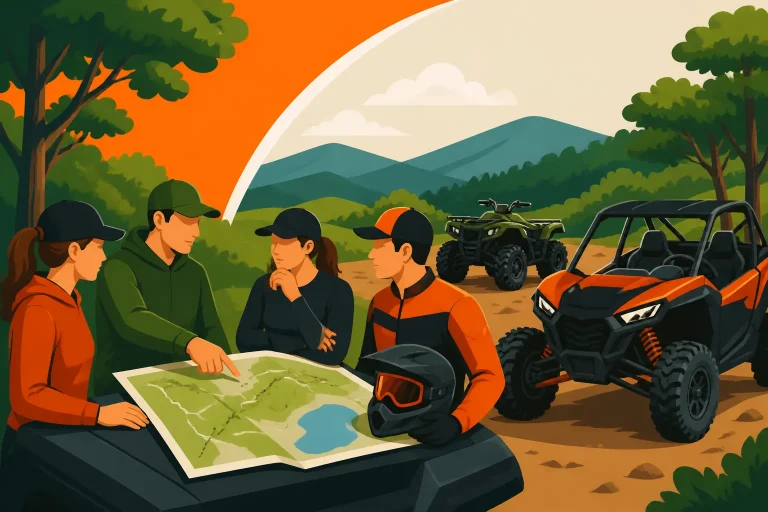
A careful permit check can follow this sequence:
- Name the exact riding area. Identify the WMA and, where applicable, the unit, entrance, or trail system. “North Cumberland” may not be specific enough when different units or access points have different conditions.
- Confirm that OHV riding is allowed there. A WMA designation alone does not mean motorized recreation is open. Look for the rules that apply to the exact area and activity.
- Check the permit type and dates. Confirm that the permit covers your visit, residency category, and planned use. If you are considering an annual permit, check its validity period rather than assuming it runs for a full year from purchase.
- Check who must have a permit. Review the requirements for operators, passengers, and minors. If several adults will drive separate vehicles, verify what each person needs.
- Read the vehicle and trail conditions. Confirm that your machine is eligible and that the route is open to its type and size. A permit does not override equipment restrictions, speed limits, seasonal access, or trail closures.
- Save proof of purchase and the rules. Keep the permit confirmation accessible, and follow any instructions about carrying or displaying it. A phone image can be useful, but do not assume it replaces a required permit document or identification.
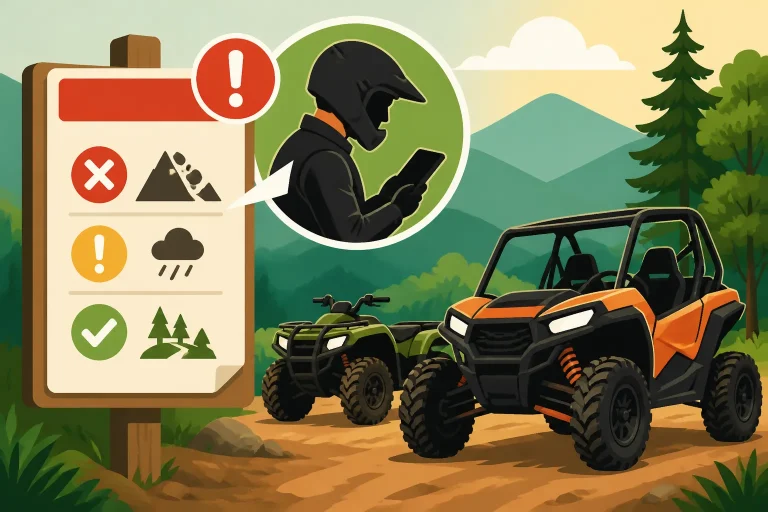
- Check again before departure. Weather, maintenance, hunting activity, or other management decisions can affect access. Check current notices close to the ride, not only when you first make plans.
Buying a permit is only one part of trip preparation. A group may also need to sign a waiver, follow gate instructions, or comply with area-specific safety and equipment rules. Do not infer that a permit purchase guarantees every trail will be open when you arrive.
The permit is not a substitute for a trail-area permit from a private operator. If your trip includes a commercial riding park, read that park’s entry requirements separately. North Cumberland permits do not automatically work at Windrock, Brimstone, or another separately managed riding area. Likewise, a private park permit does not grant access to WMA trails. Carrying Three Permits for Three Parks explains the practical reason to treat each riding destination separately.
Permit costs and available options can change, so check the official provider before purchasing. For North Cumberland specifically, Why North Cumberland Charges Visitors More per Day gives context for the resident and nonresident distinction, but the current permit page should be used for the latest terms and figures. Avoid planning around a price quoted in an old post or receipt.
Common mistakes to avoid before riding
The most frequent mistake is treating a permit as a blanket authorization. A WMA permit applies only under its stated conditions. It does not make a closed trail open, authorize travel on an unlisted road, or let a rider cross private land without permission. Follow posted signs and barriers even if the trail appears rideable or connects to a route you used previously.
Another mistake is assuming permits transfer between people or machines. If a friend bought the permit, check whether it covers your participation. If you change vehicles, change drivers, or add a passenger, review the permit conditions again. Do not make a group decision based on the idea that one person’s purchase necessarily covers everyone.
Riders can also confuse an OHV permit with proof of ownership. A permit for public-land access does not transfer ownership, replace a title, or resolve a lien. If you have recently bought a machine, handle the paperwork separately. Tennessee OHV Title Paperwork and Buying a Used OHV in Tennessee cover those ownership questions.
Finally, do not rely on a permit alone to settle whether a machine can be ridden on a particular road. Public-road use is subject to separate restrictions, and a WMA trail permit does not convert a trail or road into a legal public route. Check the rules for the specific road and area before using it to connect between riding locations.
Before you go, make a short final check: the WMA and unit are correct, motorized riding is open, the permit covers every person or vehicle that needs one, the machine fits the area’s rules, and current closures have been reviewed. If any detail remains uncertain, ask the land manager rather than relying on an assumption at the gate. That small check can prevent a wasted trip and help keep access available for other riders.
Disclaimer
This article is for general informational purposes only and does not constitute professional advice. Laws, prices and regulations vary by location and change over time. Consult a qualified professional for guidance on your specific situation.