Why One Adult per Vehicle Needs a Tennessee Permit
Tennessee’s adult-per-vehicle permit rule can be easy to misread: it does not mean one permit covers every machine in a group, and it does not apply to every riding destination. Here’s where the rule matters, what a permit does and doesn’t cover, and how to check your group before you ride.
What the adult-per-vehicle rule means
The rule is about riding on the North Cumberland Wildlife Management Area (WMA), not about every ATV or UTV trip in Tennessee. For a vehicle that requires a WMA riding permit, plan for a qualifying adult associated with that vehicle to have the required permit. One permit-holder should not be treated as covering several machines traveling together.
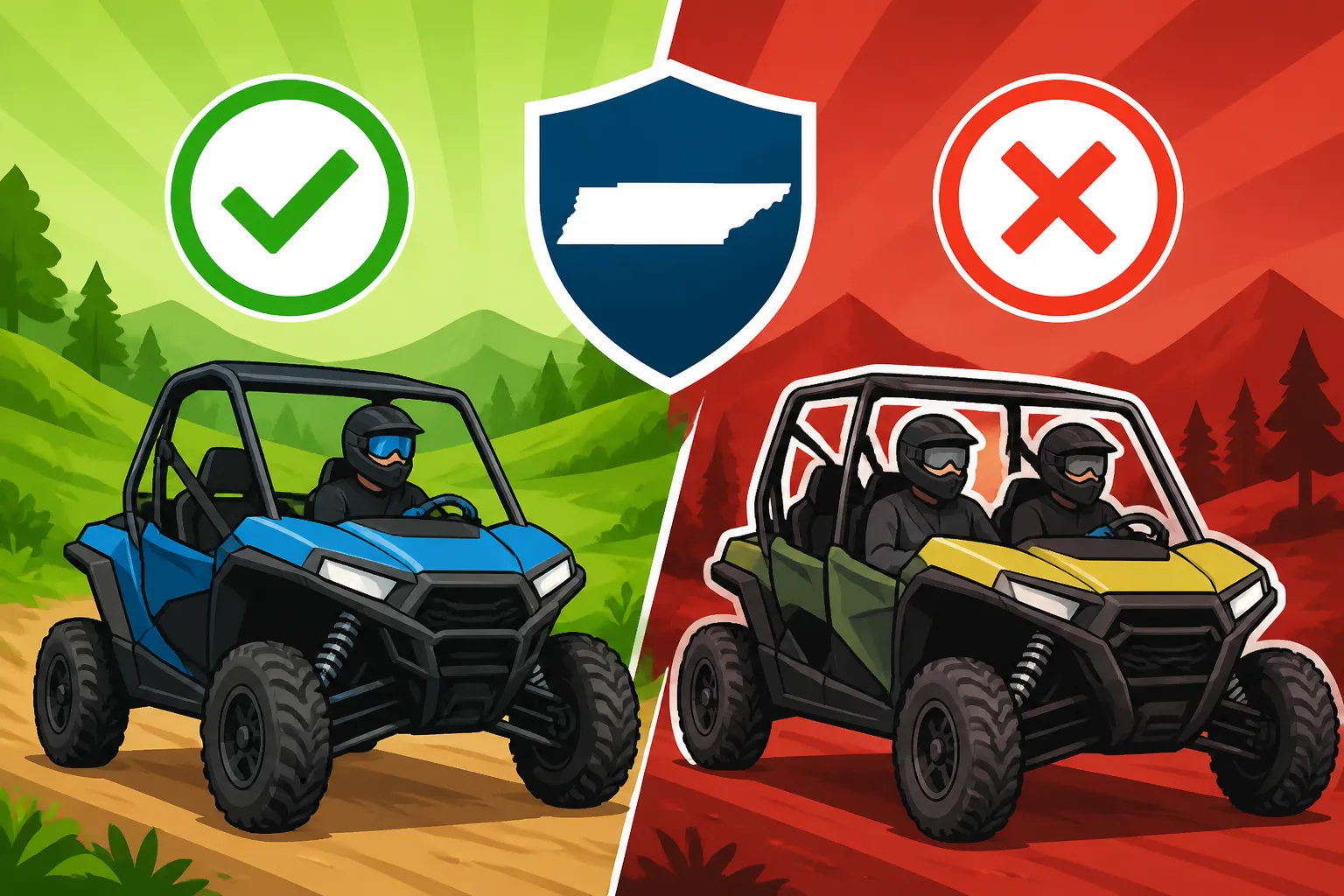
That distinction matters because riders often plan in groups. A family may arrive with two side-by-sides and a quad, or friends may bring several machines on a trailer. Even if everyone intends to follow the same route, each vehicle is a separate machine using the riding area. A permit for one vehicle is not a blanket pass for the convoy.
The phrase “one adult per vehicle” also shouldn’t be read as meaning that every adult passenger automatically needs a separate permit. The practical question is who must hold the permit for that vehicle under the current WMA rules. To avoid a preventable problem at the gate or on the trail, the adult operating the machine should be the permit-holder unless the current instructions clearly allow another arrangement. If an adult passenger is expected to satisfy the requirement instead, check that detail before setting out.
This is an access permit, not a registration plate, title, or general authorization to ride wherever you want. Tennessee’s OHV permit system is separate from the paperwork used to establish ownership of a machine. For background on the permit system and the kinds of access rules it involves, see Tennessee Trail Permits Explained. For the difference between a title and the sticker used in Tennessee’s title process, see A Sticker That Proves a Tennessee Title Exists.
| Situation | Practical way to think about it |
|---|---|
| One vehicle on North Cumberland WMA | Arrange for a qualifying adult to hold the required WMA permit for that vehicle. |
| Several vehicles traveling together | Plan for a permit-holder for each vehicle that requires one; a permit in the lead machine does not cover the others. |
| An adult passenger and a younger driver | Check the current age, supervision, operator, and permit rules together. Don’t assume a passenger’s permit automatically satisfies the operator requirement. |
| A private riding park or resort | Check that property’s own permit and admission rules; a WMA permit is not a universal Tennessee trail pass. |
| A road or public street | Check the separate road-use rules. A WMA permit does not make a machine legal for public-road use. |
The safest approach is simple: identify every vehicle in your group, identify its operator, and make sure the applicable permit requirement is satisfied for that vehicle before anyone rides. Then confirm the permit covers the specific area and dates you plan to use.
Where the rule applies and where it does not
The North Cumberland WMA has its own OHV access rules. That is why the adult-per-vehicle question should be answered in the context of that WMA rather than treated as a statewide rule for every trail, road, or property. Tennessee does not issue one statewide trail sticker that automatically grants access to every riding destination.
A machine headed to Windrock, Brimstone, Royal Blue, private property, or another managed riding area may be subject to a different combination of entry, permit, waiver, and operating requirements. A WMA permit does not replace a private park’s permit, and a private park’s pass does not necessarily authorize riding on WMA land. Before you make plans, check the rules for the specific property and trail system, not just the state permit rules. Why a Tennessee Park Permit Does Not Travel explains why access passes should not be assumed to work across different destinations.
The same separation applies to roads. A trail permit gives permission under the applicable land-access program; it does not make an ATV or UTV street legal or authorize a rider to use a county road. Road access is controlled by separate rules, which can depend on the road, location, vehicle category, and other conditions. If your route includes pavement, review Why Your Class Decides Your Road Rights and the rules for the specific road before riding there.
A good pre-trip check is to divide the route into sections:
- WMA trail or land: Confirm the WMA’s current permit, vehicle, age, and trail rules.
- Private riding area: Confirm that property’s current admission and permit requirements.
- Public road or street: Check whether the machine and rider are allowed on that particular road.
- Private land: Get the landowner’s permission and follow any conditions they set.
This prevents a common planning mistake: assuming that because a permit is valid at one place, the machine is authorized everywhere along the route. A permit is tied to its program and access rules. It is not a general pass for Tennessee.
For a fuller look at what applies on WMA property, see [Tennessee Rules for Riding a WMA]. If you are comparing WMA riding with private parks, make the comparison property by property; the rules can differ even when the machines and riders are the same.
How to plan permits for a group
Group planning gets easier when you count vehicles instead of people first. Make a list of every ATV, UTV, or other machine that will enter the WMA, then note who is expected to operate it. The adult-per-vehicle rule is about ensuring each vehicle has the required permit-holder arrangement; it is not a reason to assume the person with the group’s paperwork can cover all the other machines.
Use this checklist before buying permits:
- Confirm the destination. Verify that the route actually enters North Cumberland WMA. A nearby resort or campground may have separate boundaries and rules.
- Count the machines. Include every vehicle that will be ridden, not only the lead machine or the vehicles driven by adults.
- Name the operator for each one. Make sure each operator meets the current age, supervision, and other eligibility rules.
- Assign a permit-holder. The clearest arrangement is for the adult operating each vehicle to have the required permit. If you expect an adult passenger to satisfy the rule instead, confirm that the current WMA instructions allow it.
- Check dates and permit type. Permit options and eligibility can vary. Confirm that the permit is valid for the intended riding period and that it matches the rider’s circumstances.
- Check the specific unit and route. A permit may not settle every question about which roads or units are open. Confirm closures, restrictions, and unit coverage separately.
- Keep proof accessible. Follow the current instructions for carrying or displaying proof, and make sure the permit-holder can produce it if asked.
This process is especially useful for a family with mixed ages. A younger person’s ability to operate a machine and the adult-supervision requirement are separate questions from whether the vehicle has the correct permit. Do not treat an adult’s permit as an automatic waiver of age or supervision restrictions. Review Tennessee Rules for Riders Under 16 and Tennessee Supervision Rules for Young Riders if children or teenagers will ride.
The same care helps when one vehicle has multiple occupants. A permit requirement tied to a vehicle does not necessarily determine who may drive it, who may ride as a passenger, or whether a passenger must meet an age or safety requirement. Check these issues individually. [Tennessee Rules for a Passenger on a WMA Trail] is useful when you need to distinguish passenger rules from the permit question.
Before leaving, have the group leader read the current official permit instructions and confirm that the selected permits match the plan. A screenshot or printed copy of the relevant instructions can also help the group keep the rules straight, but it is not a substitute for a valid permit or for following posted restrictions.
What a permit covers and what it does not
A WMA permit addresses access under the applicable WMA program. It does not establish ownership, replace a title, make an unregistered machine street legal, or guarantee that every trail will be open. It also does not automatically include every passenger, every additional vehicle, or every other riding area.
It is not a title or registration
Tennessee’s OHV title process and its WMA riding permits serve different purposes. A title is a document associated with ownership. A WMA permit is an access requirement for a particular riding program. Having one does not prove that you have the other, and a permit does not remove the need to resolve an ownership or title issue when one applies.
This distinction can be important for visitors and new owners. A machine can have valid ownership paperwork and still need the correct access permit to ride in a WMA. Conversely, having a riding permit does not prove that the machine belongs to the person carrying it. Keep ownership paperwork and ride-access documents separate so you can check the right requirements for each situation.
It is not a pass for every person or every machine
The adult-per-vehicle requirement should not be stretched into “one permit covers the group.” If your group brings multiple vehicles, make a permit plan for each one. And if more than one adult will operate or ride in a particular machine, don’t assume that the vehicle’s permit answers every individual age, supervision, or operator question.
Permits may have rules about who can use them and how proof must be carried. Treat a permit as something issued under specific terms, not as a transferable token to hand from one person to another. If you are unsure whether a permit-holder can switch vehicles, operate a different machine, or cover an adult passenger, ask the program administrator before the ride rather than relying on another rider’s interpretation.
It is not a guarantee of open trails
A valid permit does not override temporary closures, posted restrictions, or rules for a particular unit. Trail conditions and access can change, so check current notices close to your trip. If a trail or unit is closed, having a permit does not authorize entry.
The same is true of operating restrictions. A permit does not excuse riding off the designated route, ignoring speed or equipment rules, or entering areas where machines are not allowed. Review Does One Permit Cover Every North Cumberland Unit? when planning a route that crosses or approaches different units, and confirm the current unit and trail status before loading.
Buying and carrying the right permit
Use the official permit channel identified for the WMA, and read the instructions before completing the purchase. The available permit options, eligibility rules, and payment details can change, so confirm the current information directly with the responsible agency or official portal. Avoid relying on an old receipt, a previous season’s permit, or a friend’s account of what was accepted on an earlier ride.
A careful purchase starts with accurate details. Check that the permit is for the right person, riding period, and access program. If the permit process asks for information about residency or the intended use, answer based on the actual circumstances and read the definitions provided. Don’t assume that a permit intended for one person or period can be reassigned to another rider.
After purchase, follow the current instructions about proof. Depending on the program’s requirements, proof may need to be carried or shown in a specific way. Keep a digital copy if accepted, but don’t rely on a phone being charged or having service in a remote area. If a printed copy is permitted or useful, carry one as backup. Do not alter, share, or reproduce a permit in a way that conflicts with its terms.
If you are riding a rented machine, ask both the rental provider and the WMA program what the rental arrangement includes. A rental agreement may explain the machine, deposit, or equipment, but it does not necessarily include the WMA permit. Confirm this before you arrive so you do not mistake the rental’s paperwork for trail access. See [Tennessee Rules for Riding a Rented Machine] for the separate questions that can apply to rentals.
If you need help locating the correct official purchase channel, see Where to Buy a North Cumberland Permit. The important point is to verify the current route to purchase and the permit terms, rather than relying on an old link or a third-party summary.
Common mistakes to avoid
Most permit problems come from a few predictable assumptions. Avoiding them takes only a little checking before the trip.
- Assuming the permit applies statewide. It is tied to a particular access program, not every Tennessee trail or park.
- Buying one permit for a group of machines. Plan for the required permit-holder arrangement for each vehicle that needs access.
- Assuming any adult passenger counts. Confirm who must hold the permit. Having the operator hold it is the clearest arrangement.
- Confusing permits with title paperwork. A title and a riding permit solve different problems.
- Assuming a rented vehicle includes access. Ask whether the WMA permit is included and confirm the answer with the relevant program.
- Ignoring age and passenger rules. A permit does not automatically make a young rider eligible to operate or ride.
- Assuming the permit overrides closures. Check current notices and respect gates, signs, and posted restrictions.
- Relying on another park’s pass. Permits generally do not travel from one property to another.
- Using old information. Confirm current eligibility, purchase instructions, and access restrictions before every trip.
If the wording still leaves a question—especially about whether a passenger may be the permit-holder, whether a younger operator is eligible, or whether a specific vehicle fits the rules—contact the responsible program before riding. A short clarification before departure is easier than discovering a mismatch at the trailhead.
Frequently Asked Questions
Does one adult permit cover several ATVs or UTVs?
Do not plan on that. The adult-per-vehicle rule means you should arrange the required permit-holder for each vehicle that needs access. A permit-holder in one machine should not be assumed to cover a group of other machines.
Does every adult passenger need a permit?
The requirement should not be confused with a rule that every adult passenger automatically needs a separate permit. Check the current WMA instructions to confirm who must hold it for the vehicle. Having the operator hold the permit is the clearest, least ambiguous plan.
Does a North Cumberland permit work at Windrock or Brimstone?
Do not assume so. WMA access permits and private park permits are separate. Confirm the requirements for each property you plan to ride.
Does the permit make an ATV or UTV legal on public roads?
No. A trail-access permit is not road-use authorization. Check the rules for the specific road and vehicle before riding on public streets or highways.
Disclaimer
This article is for general informational purposes only and does not constitute professional advice. Laws, prices and regulations vary by location and change over time. Consult a qualified professional for guidance on your specific situation.