A Citation at a Tennessee Trail Gate
A citation at a Tennessee trail gate can turn a planned ride into a stressful stop, especially if you thought your permit covered the trail or machine. What matters first is who issued the document, what conduct it describes, and what deadline or instructions it gives. A calm, practical response can help you protect your options and avoid making the situation worse.
First, identify what the gate stop is about
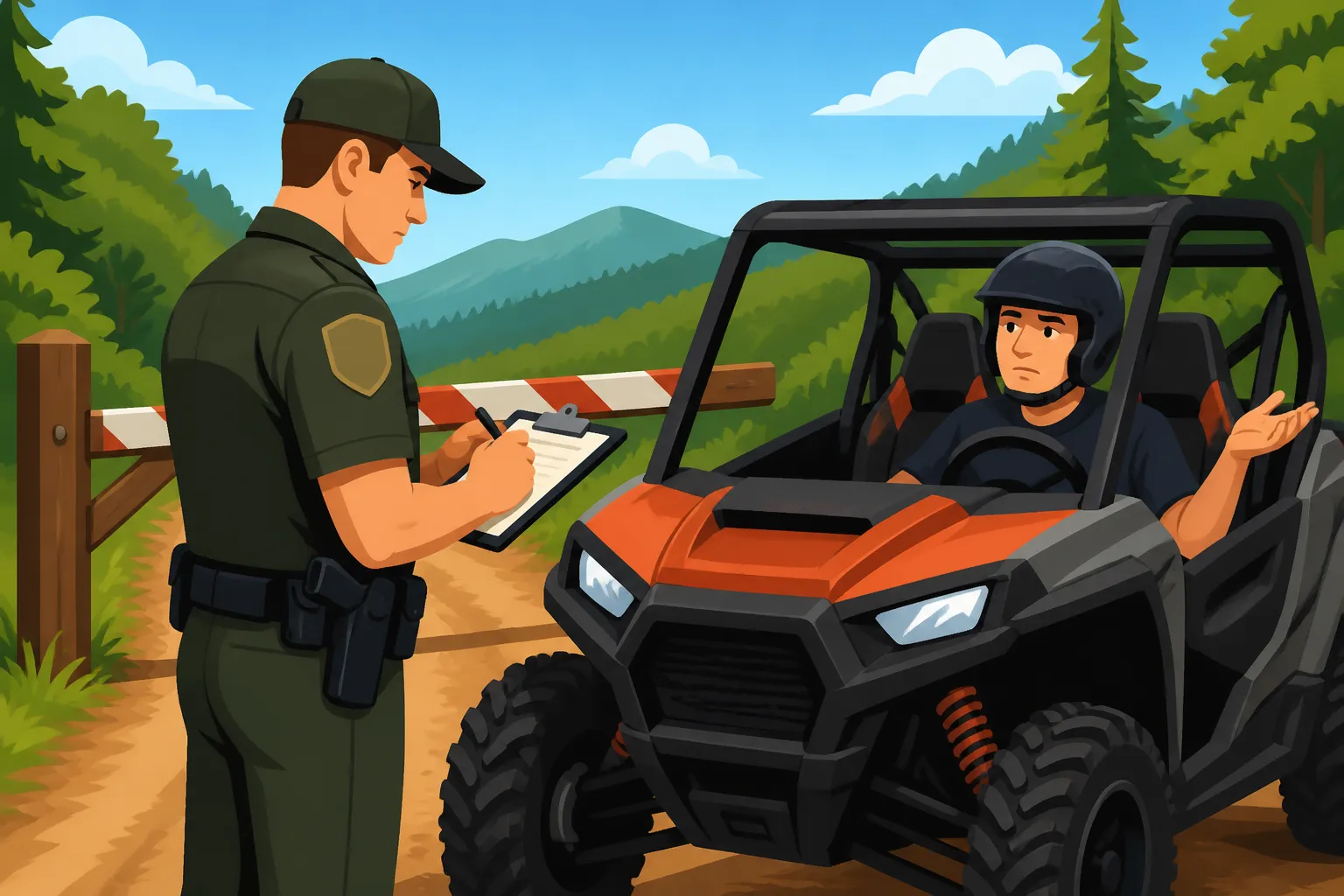
A person checking permits at a trail entrance might be park staff, a land manager, or a law enforcement officer. Their roles and authority can differ. Don’t assume every warning or request is a court citation, and don’t assume a document is harmless because it was handed to you at a gate.
Read the paper carefully. Look for the issuing agency or organization, the alleged violation, the date and location, any required response, and contact information. If it is a citation, note how it says to respond and by when. The deadline and instructions printed on the document matter; don’t rely on a verbal estimate or an online discussion about someone else’s case.
A gate encounter may involve a permit issue, riding on a closed trail, or a problem with the machine or rider. The categories can overlap, but they are not interchangeable. For example, having a permit does not automatically make every route open, and riding on an open route does not necessarily mean you have the required permit. The rules can also differ between a state-managed area and a privately operated riding park.
| What the document or stop concerns | What to check first | Practical next step |
|---|---|---|
| No permit or an invalid permit | Which area requires the permit and whether yours applies there | Keep proof of purchase and check the permit issuer’s instructions |
| Closed or restricted trail | The exact location and any posted notice or closure information | Record the route details and check the current trail notice |
| Machine or rider requirement | The specific requirement named on the document | Gather the relevant machine, age, license, or equipment information |
| Unclear warning or citation | Issuer, document type, response instructions, and deadline | Contact the issuer using the details on the document |
If you are unsure whether the paper is an official citation, ask politely what it is and who issued it. Avoid arguing at the gate or trying to ride away before the interaction is finished. If a law enforcement officer gives you instructions, stay calm and do not physically resist. You can ask how to obtain a copy of the report or where to direct questions later.
The document may not explain every detail of the alleged violation. That is a reason to preserve it and clarify the process—not a reason to ignore it. A court citation, a park rule notice, and a permit-related warning may call for different responses. Follow the instructions shown, and contact the named office if anything is unclear.
Check the permit and trail rules that applied
Before deciding what happened, establish where you were riding and which rules applied there. Tennessee does not use one trail permit that automatically covers every riding location. State-managed areas and private parks can have separate permit systems, and a permit for one place may not be accepted at another. Why Tennessee Has No Statewide Trail Sticker explains the broader distinction.
For a ride on a wildlife management area, start by checking the rules for that area and the permit you purchased. The Tennessee Rules for Riding a WMA page can help you frame the questions: Was the route open to OHVs? Did the permit cover that area and the date? Was the permit assigned to the right rider or vehicle, if the system distinguishes between them? If you are unsure whether the same permit works across multiple units, review Does One Permit Cover Every North Cumberland Unit?
At a private riding park, check the operator’s permit terms, gate instructions, and trail status. A state permit should not be assumed to replace a private park’s required permit, and a private park pass should not be assumed to authorize riding on state-managed land. Why One Park’s Permit Is Worthless at the Next covers why permits do not simply travel between parks.
If the issue is that you had no permit, or the permit did not apply, keep evidence that shows what you bought and when. Save an email confirmation, receipt, portal record, screenshot, or permit image if available. A purchase made that morning may help explain what happened, but it does not by itself prove that the permit was valid for the location or person named in the citation. See A Tennessee Permit Bought That Morning for the distinction between purchase timing and permit coverage.
If the concern is a closed trail, look beyond the general park map. A route can be closed even when the wider riding area is open. Closures may be posted at a gate, on a notice board, or through the operator’s current trail information. Preserve a photo of the notice or map only if it is safe and permitted to do so. Don’t go back onto a route just to document it. Checking a Tennessee Trail Notice First offers a useful checklist for checking current restrictions.
The route description matters. Write down the trail name or number, nearby junction, direction of travel, and the gate or entrance used. If the citation names a location you don’t recognize, ask the issuing office to clarify it. A small difference in location can matter when one segment is open and another is restricted.
What to do at the gate and after you leave
Your immediate goal is to keep the encounter safe, understand what is being alleged, and avoid losing information you may need later.
- Stay composed and listen. Let the person explain the reason for the stop. Do not interrupt with assumptions about which permit or rule should apply.
- Ask what the document is. If you receive paperwork, ask whether it is a warning, park notice, or official citation, and who issued it.
- Check the written instructions. Confirm how and when you must respond. If the paperwork does not clearly state the process, use the official contact information on it to ask.
- Keep your own notes. As soon as practical, write down the time, location, names or identification details you were given, what was said, and the route you took. Stick to what you observed rather than guessing about motives.
- Save related records. Keep the citation, permit receipt, messages, photos, maps, and any relevant rental or group-ride paperwork together. Preserve original files where possible.
- Do not miss a response deadline. If you need more information, ask the issuing office promptly. If the citation involves a court or potential penalties, consider speaking with a qualified legal professional.
A brief, respectful question can be useful: “Could you tell me which rule this document says I violated and where I can find the response instructions?” It is generally more productive than debating the entire rule at the gate. If you disagree with the allegation, you can keep that disagreement for the process listed on the citation.
If you purchased the permit through a state portal or a park office, contact that seller or issuer to confirm what the purchase covers. Ask for a written explanation if the issue is permit validity, the area covered, or the date. Do not rely only on a friend’s experience; permit rules and gate procedures can differ by location.
If you rented the machine, notify the rental provider after addressing any immediate safety or legal requirements. Keep the conversation factual and save messages. A rental agreement may explain what the company expects if a rider receives a citation, but it does not replace the instructions from the issuing authority. If a group organizer or guide handled permits, ask for records showing what was purchased and for whom.
A citation is not the moment to alter a permit, discard paperwork, or post an angry account that includes personal details. Keep copies and focus on the specific allegation. If the document describes a violation you may have committed, taking it seriously and meeting the stated response requirements is safer than ignoring it. If you believe the citation is mistaken, use the process provided rather than assuming the mistake will disappear.
Preventing another citation on a future ride
A short check before loading can prevent many gate disputes. Confirm the riding area, the permit issuer, and whether the permit covers the exact place and date you plan to ride. For a multi-park trip, treat each park or managed area as a separate rules check unless the operator clearly confirms otherwise. Showing a Permit at a Tennessee Gate explains why having proof ready can make an entrance check smoother.
Before setting out, verify that the planned trail is open and that the machine and riders meet the area’s requirements. A permit is not a substitute for checking trail closures, route restrictions, age rules, or equipment conditions. If you are riding in a group, make sure each rider knows who is responsible for permits and where the proof is kept.
For a state-managed riding area, use the current permit information and notices from the responsible agency. For a private park, check the park’s own instructions. When information conflicts, call the relevant office before riding rather than treating an old map or an informal post as final. Tennessee Trail Permits Explained provides a wider overview, while Tennessee Fines for No Trail Permit and Tennessee Fines for Riding a Closed Trail explain why it is important to distinguish permit problems from closure violations.
A gate citation can be frustrating, but the best response is usually methodical: identify the issuer, read the allegation, preserve the relevant records, and follow the stated process. If the rules or potential consequences are unclear, ask the issuing authority or a qualified professional before deciding what to do.
Disclaimer
This article is for general informational purposes only and does not constitute professional advice. Laws, prices and regulations vary by location and change over time. Consult a qualified professional for guidance on your specific situation.