Tennessee Fines for No Trail Permit
Tennessee does not have one statewide trail permit for every ATV and UTV, so the penalty for riding without one depends on where you are. A North Cumberland WMA permit is different from a private park permit, and neither automatically covers the other. Here’s how to identify the requirement, what a citation may involve, and what to check before riding.
Why the fine depends on where you ride
A missing permit is not one statewide offense with one universal penalty. Tennessee’s trail access is managed across different kinds of land, and the permit rules depend on the land manager. A rider may need a state permit on a wildlife management area, a park-specific permit at a private riding area, or no trail permit for a particular piece of land. Other rules can still apply even where a permit is not required.
That distinction matters when interpreting a citation. A violation on a state-managed area may be handled under different rules from a violation at a privately operated park. The place, the conduct, and the applicable permit terms all affect what happens next. There is no reliable way to calculate a single “Tennessee no-permit fine” without knowing where the ride occurred and which rule applied.
Tennessee also does not issue one general trail sticker that lets an ATV or UTV ride everywhere. A title or TDR sticker is not a trail-use permit, and a trail permit is not a vehicle title. For the difference between statewide registration and land-specific access, see Why Tennessee Has No Statewide Trail Sticker.
A useful starting point is to identify the land manager:
| Where the machine is ridden | Permit question to check | Important distinction |
|---|---|---|
| North Cumberland Wildlife Management Area | Does the rider and vehicle need the current WMA permit? | State-managed access has its own permit rules. |
| Windrock Park | Is a current Windrock trail permit required for this ride? | The park’s permit does not automatically cover other riding areas. |
| Brimstone Recreation | Is a current Brimstone land-use permit required? | Brimstone sets access terms for its property. |
| Other private land | Has the landowner granted permission, and are there separate access terms? | Permission to enter is not a permit for another property or trail system. |
| Public road or trail connection | Is this route legally open to the machine? | A trail permit does not make a closed road or trail lawful to use. |
For state-managed riding areas, start with Tennessee Rules for Riding a WMA. The rules can differ from those at a privately operated destination. For example, Windrock’s access terms are separate from the North Cumberland WMA system; see Windrock’s Trail Permits. Brimstone also has its own land-use permit requirements, covered in Brimstone’s Land Use Permits.
A permit requirement can also depend on who is riding, the vehicle, and the specific area. Do not assume that buying one permit covers a whole group or every vehicle. Likewise, do not assume an out-of-state registration, a permit from another Tennessee park, or a permit purchased in a previous season is accepted. Why a Tennessee Park Permit Does Not Travel explains why one park’s permit should not be treated as a pass for another.
What can happen if you ride without the required permit
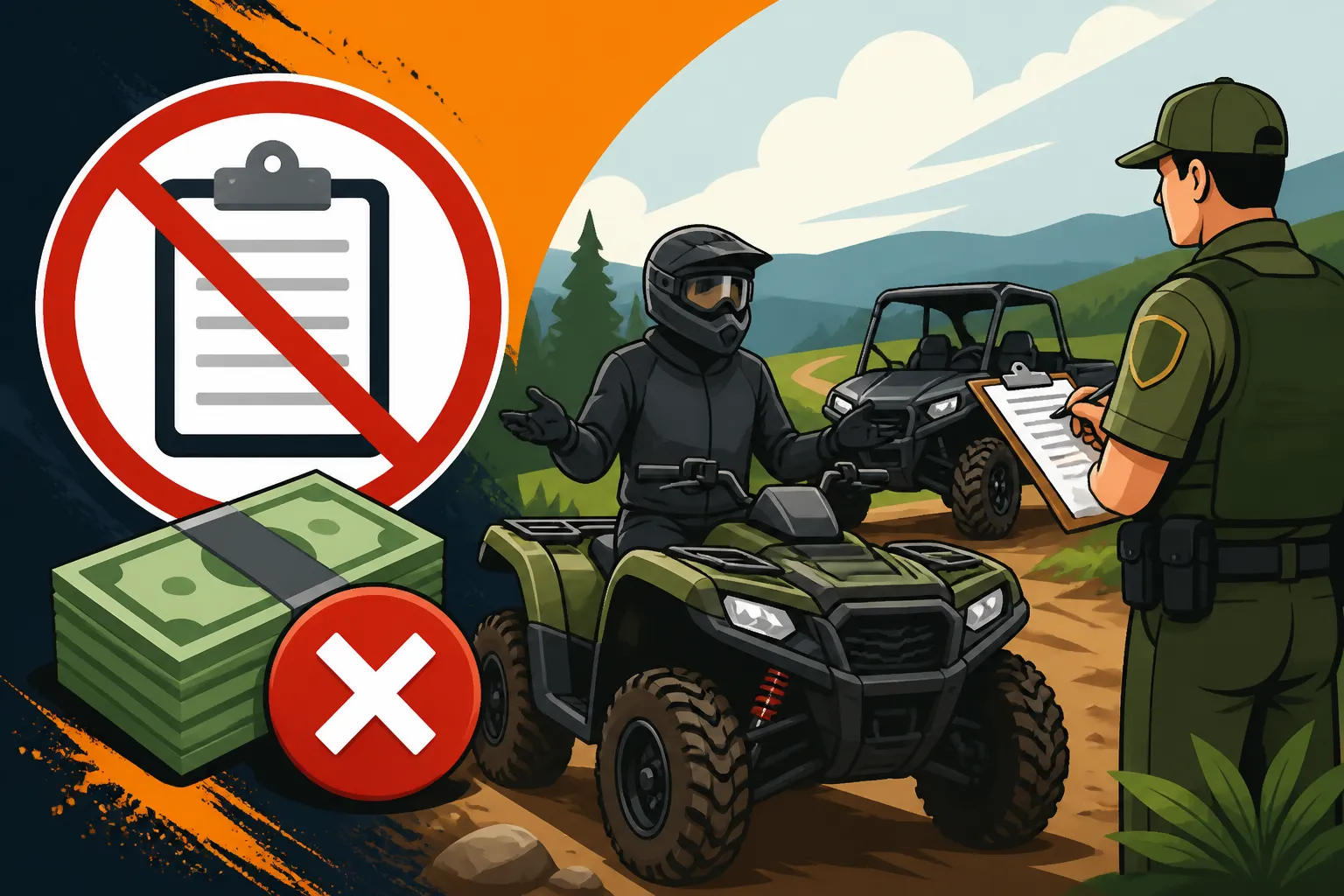
If an officer or land manager finds a rider on a trail without a required permit, the immediate result may be a stop and a citation or other enforcement action. The actual consequence depends on the governing rule and the circumstances. A missing permit does not necessarily mean the rider will face only a small administrative charge: the stop can also reveal separate violations, such as riding on a closed trail, ignoring posted restrictions, or failing to follow other access conditions.
Possible consequences may include:
- A citation that requires a response or appearance under the instructions provided.
- A fine or other court-imposed amount, where the applicable rule provides for one.
- Court costs or other amounts associated with resolving a citation.
- Being told to leave the riding area or stop operating the machine there.
- Additional citations if the rider also violated a closure, access restriction, or operating rule.
- Consequences under a private park’s access terms, which may be separate from state enforcement.
These are possibilities, not a guaranteed list of outcomes. The fine, process, and available options can vary with the location and the specific violation. A private park may enforce its own permit and entry conditions, while public-land violations may be handled under public rules. The park’s decision about access does not necessarily answer whether a state or local violation occurred, and a permit-related citation does not automatically mean every other riding rule was broken.
A permit violation is also different from riding a closed trail. A valid permit does not authorize access to every route, and a closed trail remains off limits even if the machine and rider have all required paperwork. If the incident involved a closure, review [Tennessee Fines for Riding a Closed Trail] as well as the permit rules.
Because amounts and procedures may change, do not rely on an old citation example, an online discussion, or another rider’s recollection to estimate what is owed. Read the citation and any official notice carefully. Confirm the applicable rule and current penalty with the court, agency, or land manager named in the paperwork. If the citation could affect a driving record, involve a court appearance, or raise a question about your legal rights, consider getting advice from a qualified Tennessee attorney.
What to do if you receive a citation
A citation is not the time to guess which permit applied or to ignore the response instructions. Keep the paperwork, identify the exact location, and establish which authority issued it. These steps can help you understand what the notice alleges and what deadline or procedure applies.
-
Read the full citation. Note the issuing agency or officer, the location, the rule or offense listed, and any response date or hearing information. If a section is unclear, contact the office identified on the notice rather than assuming the deadline is flexible.
-
Pin down where the ride happened. Record the trail, entrance, unit, or park as specifically as possible. A nearby town or a broad label such as “North Cumberland” may not be enough to establish which access rules applied. Save a map, route record, or other information that accurately shows the location.
-
Identify the permit system. Determine whether the site was on a WMA, a private park, or another property. For a WMA citation, check the relevant state permit requirements and contact the appropriate official source. For a private park, review the park’s permit and entry terms. The state process for buying a WMA permit is explained in Where to Buy a North Cumberland Permit.
-
Gather records without altering them. Keep receipts, permit confirmations, emails, photographs of signs, and any messages with the park or agency. If a permit was purchased, note whether it was valid for the date, rider, vehicle, and location involved. A confirmation for a different park or date may not resolve the issue.
-
Ask focused questions. If you contact the issuing office, ask which rule is alleged, which location the citation identifies, and how to comply with the response instructions. Keep a record of the information you receive. Avoid treating an informal phone answer as a replacement for a written court notice or official decision.
-
Respond by the stated procedure. Follow the citation’s instructions and deadlines. If you dispute the allegation, use the formal process provided instead of simply paying or ignoring the notice without understanding the consequences. If the paperwork is confusing or the possible impact is serious, seek qualified legal advice.
Do not assume that buying a permit after the ride erases a citation. A later purchase may help prevent another violation, but it does not necessarily resolve the original allegation. Similarly, do not assume that a park employee’s decision to let you enter means all permit requirements were satisfied; keep the permit confirmation and verify its scope.
How to avoid a no-permit problem on the next ride
The safest approach is to check the rules before loading the machine, not after reaching a gate. Confirm the exact destination, land manager, permit type, and dates covered. If the trip includes multiple parks or public-land units, treat each one as a separate access question. A permit that works at one location may be useless at the next.
For North Cumberland, verify current requirements through the appropriate state permit source before riding. Check whether the permit applies to the planned unit and whether the rider or vehicle must meet any additional conditions. Do not rely on a screenshot from a prior season or another person’s purchase confirmation. Does One Permit Cover Every North Cumberland Unit? addresses why coverage needs to be checked rather than assumed.
For a privately operated park, check that park’s current terms directly. Confirm what the permit covers, whether every machine needs its own permit, whether passengers are covered, and whether the permit must be displayed or available for inspection. Review the rules again if your plans change to include a second park. A WMA permit does not replace a private park permit, and the reverse is also true.
Before leaving home, use a short checklist:
- Confirm the exact riding area and its land manager.
- Check current permit requirements and validity dates.
- Make sure the permit matches the rider, machine, and planned location.
- Save the receipt or confirmation where it can be accessed during the trip.
- Check current trail closures and posted restrictions.
- Ask the park or agency if the permit’s coverage is unclear.
A permit answers only the access question it was issued for. It does not automatically authorize use of every trail, public road, or connection route. Check closures separately, including notices posted at the gate or trailhead. A route shown on an older map may have changed status; Checking a Tennessee Trail Notice First can help with that part of trip planning.
If an official source cannot confirm whether your permit covers a planned route, pause and ask before riding it. That small check is usually easier than trying to sort out a citation, access restriction, or interrupted trip later.
Disclaimer
This article is for general informational purposes only and does not constitute professional advice. Laws, prices and regulations vary by location and change over time. Consult a qualified professional for guidance on your specific situation.