Ticks on a Tennessee Summer Trail
A Tennessee summer ride can turn into an itchy problem when ticks get onto your socks, waistline, or dog while you’re stopped beside a wooded trail. Hot weather, brushy edges, and frequent breaks make riders especially likely to miss them. This guide explains how to reduce exposure, check yourself and your gear after a ride, and respond sensibly if you find a tick attached.
Why ticks are a summer trail concern in Tennessee
Where riders are most likely to encounter ticks
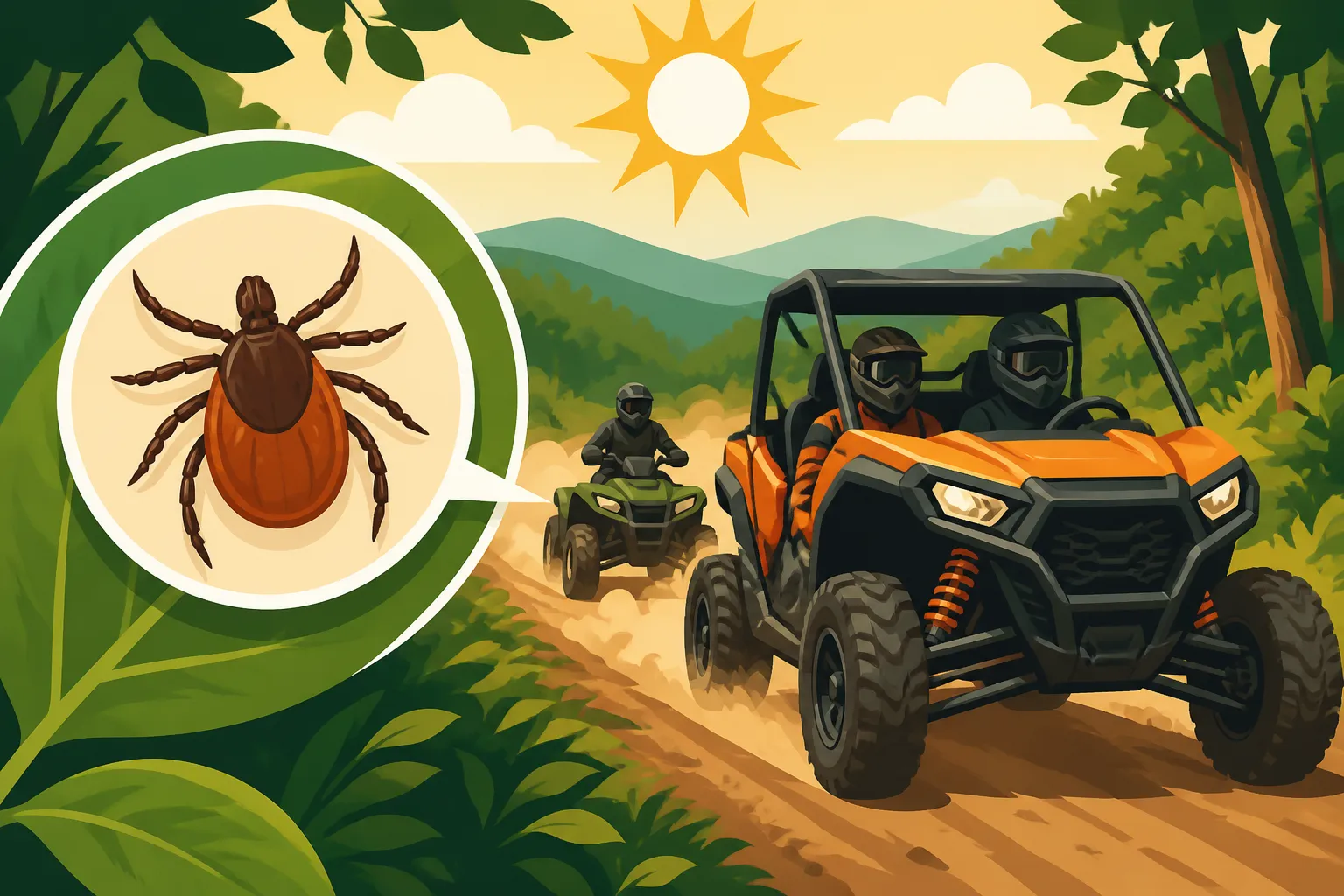
Ticks are common in wooded and brushy places, especially where tall grass, leaf litter, and low vegetation meet a trail. They don’t leap from trees or fly at riders. Instead, many wait on vegetation and latch onto clothing or fur as a person or animal brushes past. That means you may pick one up while walking around a parked machine, stepping off a trail to take a break, or pushing through overgrown edges.
On a ride, the risk isn’t limited to the time spent moving through the woods. Riders often step into grass to take a photo, check a map, or help someone with a machine. A stop at a trailhead or campsite can also put you in contact with brush. Parks and riding areas around places such as Oliver Springs, Huntsville, and the North Cumberland region have varied terrain, so conditions can differ from one section of a ride to another.
Ticks can be active during warm months, but a hot day does not make them irrelevant. Some areas may feel dry and exposed while a shaded trail or damp edge remains suitable habitat. Check conditions before heading out with [Tennessee Trail Conditions Before You Ride], and plan for breaks in places where you can avoid brushing against tall vegetation.
Which ticks and illnesses matter
Several tick species occur in Tennessee. Lone star ticks and American dog ticks are among those riders may encounter, and blacklegged ticks are also present. Different ticks can carry different germs, and the likelihood of exposure depends on the species, location, and other factors. You generally can’t identify a tick-borne illness from the bite alone.
Illnesses associated with ticks in the region include ehrlichiosis and spotted fever rickettsioses. Lyme disease is also a concern in Tennessee, although risk patterns vary geographically. Lone star ticks have also been associated with alpha-gal syndrome, an allergy that can cause reactions to certain foods from mammals. A tick bite does not mean you will become ill, but it is worth taking seriously.
If you develop symptoms after a bite, tell a healthcare professional about the bite and when it happened. Fever, headache, muscle aches, unusual fatigue, or a rash are reasons to seek medical advice, especially if symptoms are worsening. Some illnesses do not cause a classic bull’s-eye rash, so don’t use the absence of one as proof that everything is fine.
How to reduce tick exposure before and during a ride
Dress for brush, heat, and visibility
Light-colored clothing can make it easier to spot a tick crawling on fabric. Wear long sleeves and long pants where practical, and tuck pants into socks or boots when the trail is brushy. Tall boots and gaiters can help cover the gap around the ankle. These layers may feel warm in a Tennessee summer, so balance coverage with heat safety: choose breathable fabrics, drink water regularly, and take breaks in shaded, open areas rather than pushing through heat strain.
Use an insect repellent according to its label. Some products are intended for skin; others are intended for clothing or gear. Permethrin products, for example, are designed for treating clothing and equipment rather than applying directly to skin. Follow the label carefully, including directions about application and drying. If you’re choosing a product for a child, check the label and age guidance rather than assuming that an adult product is suitable.
A simple routine helps more than an elaborate kit you forget to use. Before unloading, apply any repellent you plan to use, tuck clothing, and check that socks and cuffs are secure. Keep a small pair of fine-tipped tweezers and a sealable bag in your riding kit. If you’re planning a long, hot day, [Tennessee Riding in Summer Heat] offers useful context for preparing beyond tick prevention.
Choose stops and routes with care
You don’t need to avoid every wooded trail to lower your exposure. The practical goal is to limit unnecessary contact with tall grass and brush. When stopping, choose a bare, maintained pull-off or staging area instead of sitting directly in leaf litter. Keep jackets and bags off the ground, and avoid leaning against vegetation while waiting for another rider.
Route planning can make it easier to stay oriented and reduce wandering into brush while trying to find a turn or regrouping spot. A tool such as onX Offroad can help you review your planned route before departure; download or save the information you need in advance if you expect limited cell service. A map won’t prevent tick bites, but knowing where you’re going can make stops more deliberate. Carry a paper backup or another navigation option for the same reason.
Before riding, check park notices and route information, particularly if you’re unfamiliar with the area. [Tennessee Trail Maps Worth Carrying] can help you think through navigation options, and [Tennessee Trail Closures to Check First] is a good reminder to confirm trail access before loading up. For a long ride in a hot stretch of the season, planning a route with sensible stopping points is safer than pressing on just to finish a loop.
| Riding situation | Practical tick precaution |
|---|---|
| Unloading at a wooded trailhead | Apply labeled repellent, secure cuffs, and keep bags off the ground |
| Stopping for a map check | Use a clear pull-off rather than standing in tall grass |
| Riding through brushy edges | Keep sleeves and pant legs covered where practical |
| Returning to the vehicle | Check socks, cuffs, waistline, and exposed skin before settling in |
| Riding with a dog | Check the dog’s coat and use only products intended for that animal |
What to do after the ride
Check your body, clothing, and gear
Do a tick check as soon as practical after leaving the trail, then repeat it after showering or changing. Check your hairline and scalp, behind your ears, under your arms, around your waist, inside and around your knees, and between your legs. Ticks can be very small, so use good lighting and ask someone to check areas you can’t see easily.
Inspect clothing before tossing it into a laundry pile. Look closely at seams, cuffs, socks, and waistbands. If you can, change out of riding clothes in a place where you can see what you’re doing, and keep worn clothing contained until it can be washed and dried according to the garment’s care directions. Check helmets, gloves, boots, blankets, and bags too; a tick can travel on gear even if it hasn’t attached to a person.
If a dog rode along or spent time near the trail, inspect its coat carefully, especially around the ears, collar, toes, and under the legs. Use tick-prevention products only as directed for that animal. After a family outing, make the check part of the end-of-ride routine rather than something everyone hopes to remember once they’re tired. For more trip-planning context, see [Riding With Children at a Tennessee Park] and [Camping Near Tennessee ATV Trails].
Remove an attached tick promptly and carefully
If you find a tick attached, use fine-tipped tweezers to grasp it as close to the skin as possible. Pull upward with steady, even pressure. Avoid twisting, crushing the tick, or using a lit match, petroleum jelly, or other folk methods. Those approaches can make removal harder or irritate the bite site.
After removal, clean the bite area and your hands with soap and water or an appropriate antiseptic. If the mouthparts seem to remain in the skin and they do not come out easily with tweezers, avoid digging aggressively; let the skin heal and contact a healthcare professional if you’re concerned. Note the date and where you were riding, and take a clear photo of the tick if you can do so safely. A photo may help with identification, but it cannot diagnose an illness.
Watch how you feel over the following days and weeks. If you notice a fever, rash, headache, muscle aches, or other unusual symptoms, contact a healthcare professional and mention the tick exposure. Seek urgent help for severe symptoms, such as trouble breathing, confusion, or a serious allergic reaction. Don’t wait for a rash to appear before asking for advice if you feel unwell.
Build a repeatable tick-safe riding routine
Make prevention part of your ride checklist
Tick prevention works best when it becomes as routine as checking fuel, helmets, and permits. Before leaving home, pack repellent, tweezers, a small sealable bag, and a light-colored change of clothing if you have room. At the trailhead, check that clothing is secured and decide where you’ll stop for breaks. On the way back, inspect yourself and your passengers before everyone settles into a vehicle or campsite.
A quick checklist can keep the process manageable:
- Apply repellent according to its label.
- Cover ankles and other exposed areas where practical.
- Choose clear stopping spots away from tall grass and brush.
- Check clothing and exposed skin after the ride.
- Inspect pets and riding gear before heading home.
- Record a bite and watch for symptoms afterward.
If you’re using onX Offroad or another navigation tool, review the route before setting out instead of repeatedly stopping in overgrown areas to work out where you are. Keep a backup navigation method, particularly where cell service may be unreliable. The aim is not to rush through a ride or avoid every pause; it’s to make stops in places that are easier to check and less likely to put you in direct contact with dense vegetation.
Keep the routine realistic in summer heat
Long sleeves and repeated checks can feel like extra work when it’s humid, dusty, and everyone is ready to get home. A realistic routine is one you’ll actually follow: use breathable clothing, keep repellent where you can reach it, and do a thorough check before changing into clean clothes. If you need to cool down, choose an open, maintained spot rather than sitting in brush beside the trail.
If you ride often, keep the small essentials together in a labeled pouch so you’re not searching through a gear bag at the trailhead. Replace items when they’re used or no longer suitable, and check product labels before each season. For local trip planning, onX Offroad can be one part of organizing a route, while park maps, notices, and on-site instructions remain important for understanding access and conditions.
Ticks are an outdoor risk, not a reason to abandon a Tennessee summer ride. A few steady habits—covering up when practical, choosing stops thoughtfully, checking after the ride, and responding calmly to a bite—can help you enjoy the trail while being attentive to your health.
Disclaimer
This article is for general informational purposes only and does not constitute professional advice. Laws, prices and regulations vary by location and change over time. Consult a qualified professional for guidance on your specific situation.