Mud After a Week of Rain at Windrock
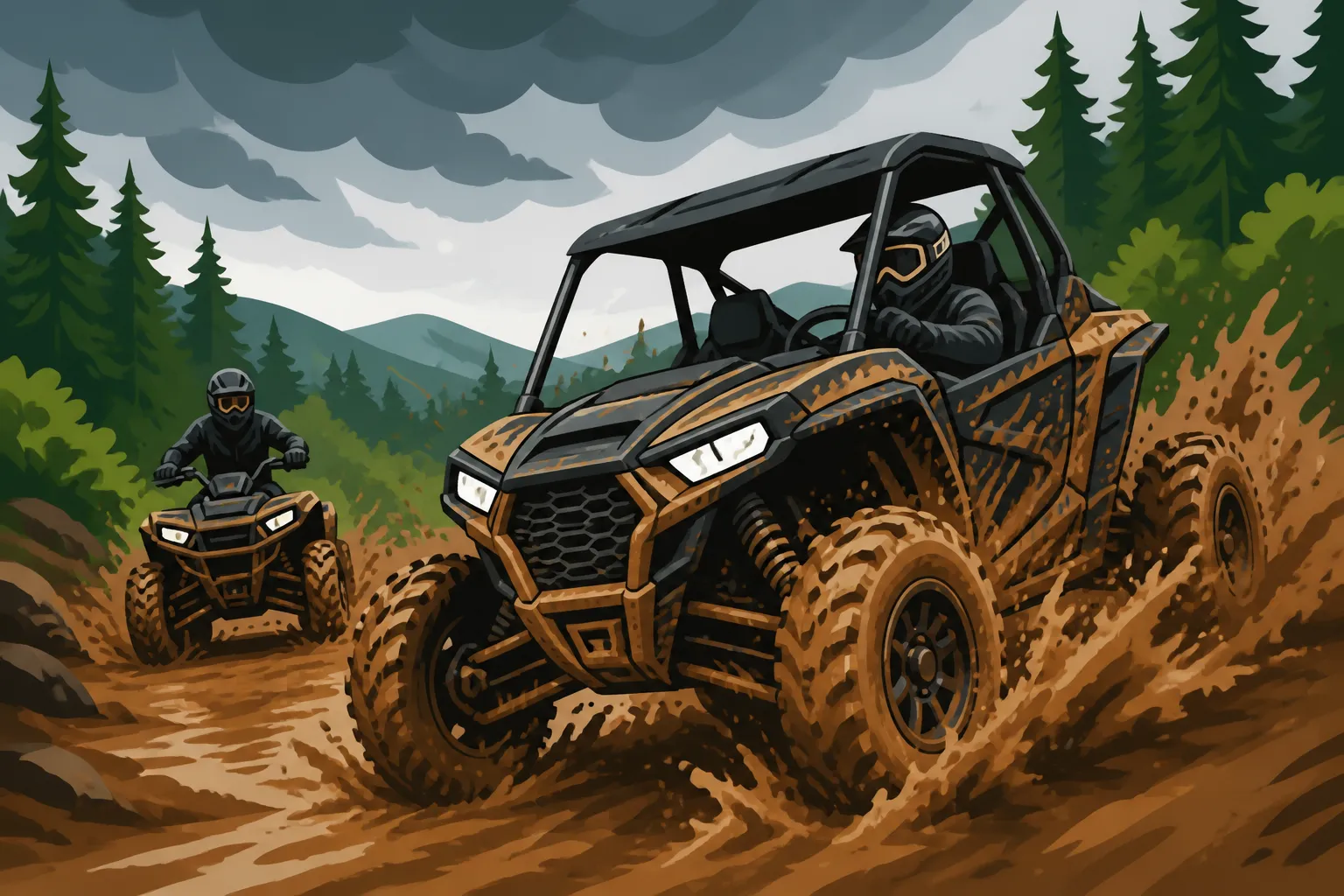
A week of rain can turn a planned Windrock ride into a very different day: clay slicks over, ruts deepen, and familiar climbs become harder to judge. This guide explains how to assess muddy trail conditions, choose a sensible route, prepare your machine and group, and know when turning around is the safest call.
Why a Week of Rain Changes a Windrock Ride
Mud is only part of the problem
At Windrock Park near Oliver Springs, rain can affect more than the surface you see. Water may run down a trail, collect in low spots, or soften the ground beneath a thin layer of gravel. A hill that looked manageable in dry weather can become slippery on the way up and harder to control on the way down.
The ground can also vary dramatically over a short distance. A muddy stretch may lead to exposed rock, a wet rut, or a firm bench road. That’s why a route that feels easy at the trailhead may demand more concentration farther in. Conditions can change with elevation, drainage, shade, traffic, and the amount of time since the last rain.
Deep mud isn’t automatically the most dangerous mud. A shallow, greasy layer over rock can offer less traction than a deeper section with a firm base. Meanwhile, a rut that seems passable from the seat may hide a sharp edge, a rock, or a drop-off. Slow down enough to read what’s ahead instead of treating every muddy patch as a challenge to power through.
Expect trail conditions to differ from the forecast
A forecast describes weather, not the exact condition of every trail. A sunny morning after several wet days doesn’t mean the ground has dried, especially on shaded routes or in places where water drains slowly. Conversely, some exposed sections may dry faster while a nearby low spot stays soft.
Recent rain can also leave debris in places where you might not expect it. Small rocks, branches, and loose material may wash onto a route, while water flowing across a trail can obscure its edges. Treat flowing water differently from a standing puddle: you may not know how deep it is, how firm the bottom is, or whether the current is carrying debris.
Before heading out, check for current park notices and closures rather than assuming a route is open because it appears on a map. [Tennessee Trail Conditions Before You Ride] and [Tennessee Trails Closed After Rain] are useful reminders that conditions and access can change. A mapping app such as onX Offroad can help you review route options, but verify trail status with Windrock’s official information before you rely on a particular route.
Plan a Route That Matches the Conditions
Choose for control, not for bragging rights
After a wet week, it’s smart to build a ride around trails your least experienced driver can handle in poor traction. If your group includes a new rider, a heavy machine, or a side-by-side with passengers, don’t make the toughest climb the centerpiece of the day. Pick a conservative route with room to pause, regroup, or turn back.
Use the map to identify alternatives before you leave the staging area. A route with several ways to shorten the day gives you more choices than a long loop with a single difficult section near the end. onX Offroad can be one tool for reviewing mapped routes and keeping your group oriented, but map information should not replace local closure notices or good judgment on the ground. [Reading a Tennessee Park Trail Map] can help you think through route planning before you ride.
| What you notice | What it may mean | A sensible response |
|---|---|---|
| A thin, glossy film over rock or clay | The surface may be slick with little visible warning | Reduce speed, use smooth inputs, and avoid abrupt steering |
| Water running across the trail | The bottom and depth may be difficult to judge | Stop well back, assess from a safe spot, and avoid crossing if you cannot see a safe line |
| Deep, sharply edged ruts | A wheel could drop in or the machine could become unstable | Do not assume the rut is passable; choose another route if the line is uncertain |
| Repeated wheel spin on a climb | Traction is limited and the surface may be getting more damaged | Stop before momentum becomes a recovery problem; reconsider the climb |
| A trail that is deteriorating with traffic | Later riders may face worse conditions than the first riders | Turn around or choose a different route before the group gets committed |
A route can also become more difficult when a group spreads out. The lead machine may get through a muddy section, but the last rider could face churned-up ground, a blocked line, or a longer wait. Keep the group together, agree on a regrouping point, and make sure nobody feels pressured to follow a line that looks unsafe for their machine.
Set a turnaround point before the hard section
It’s easier to make a calm decision when you agree in advance on what will trigger a change of plan. For example, your group might decide to turn around if a climb requires repeated attempts, a crossing cannot be assessed safely, or a machine begins sliding sideways. A clear rule helps keep the decision practical rather than personal.
Turning around is not a failure. It protects the rest of the day, your machine, and the other riders in your group. A difficult section can look manageable from the bottom and feel very different once you are partway up it, especially if the surface has already been churned by other vehicles. If backing down or turning around would create a hazard, stop in a safe place and work out the next move together rather than rushing.
Try to leave enough time and fuel for the return trip. A slower muddy ride can take longer than expected, and a machine that spends much of the day climbing or working through soft ground may use fuel differently than it would on an easy loop. For more planning ideas, see [A Loop You Can Finish Before Dark in Tennessee] and [Planning Fuel for a Long Windrock Loop].
Prepare Your Machine and Riding Group
Check the machine before leaving the staging area
Mud and water can make small mechanical problems more consequential. Before setting out, check tire condition and pressure according to the machine manufacturer’s guidance, and make sure the tires suit the terrain and the vehicle. More aggressive tread is not a guarantee of safe traction; machine weight, ground clearance, driver experience, and the changing surface all matter. [Tire Choice for Tennessee Rock and Mud] offers another useful angle when you’re preparing for mixed terrain.
Check that your brakes, throttle, steering, lights, and recovery equipment are in good working order. Secure anything that could come loose, and make sure the winch and recovery points are suitable for your machine if you carry recovery gear. A winch can help in some situations, but using one on unstable ground or without a safe anchor can create a new hazard. Don’t treat recovery equipment as permission to attempt a route that exceeds your group’s ability.
Pack basic items that help the group handle an unplanned stop: water, food, a first-aid kit, a charged phone, and layers suitable for wet or changing weather. Muddy riding can be tiring even when the weather feels mild. If riders become cold, hungry, or frustrated, they may make poorer decisions near the end of the day.
Agree on communication and recovery plans
Before leaving, make sure each rider knows the intended route, the regrouping plan, and what to do if the group gets separated. Cell reception may be limited in some parts of the region, so don’t assume you can solve every navigation problem with a call. Review the route together and save or carry the information you need offline where possible. [Cell Dead Zones Across the North Cumberland WMA] is a helpful prompt to plan for gaps in service.
Set expectations for recovery before anyone gets stuck. Decide who will stay with a disabled machine, who will manage the rest of the group, and how you’ll avoid putting people in the path of a recovery line. Keep bystanders clear when a winch or tow strap is under tension, and follow the equipment maker’s instructions. If the vehicle is in an unstable position, or the recovery requires a risky approach, stop and seek qualified help rather than improvising.
If you use onX Offroad for navigation, review the route before you lose service and make sure everyone understands the same plan. Use it as a planning aid, not as proof that a trail is open or safe at that moment. Conditions on the ground still take priority over a line on the screen.
Ride Muddy Trails With Good Judgment
Use smooth inputs and leave room to react
On slick ground, sudden throttle, braking, or steering can make a machine lose traction. Keep your speed low enough that you can respond to what you see, and leave extra space between vehicles so one rider’s sudden stop doesn’t become another rider’s problem. Avoid following so closely that dust, spray, or a vehicle ahead blocks your view.
Approach hills and descents with care. If you can’t see the top, the landing area, or a safe way to stop, don’t commit just because another machine made it through. A climb can be especially difficult when its surface is already torn up. Repeated spinning may dig deeper ruts, damage the route, and leave the rider with fewer options. If traction is not there, backing off early is often safer than trying one more run.
Be cautious around water, too. A creek or crossing may have a firm-looking entrance but a soft or uneven bottom. Don’t enter if you cannot reasonably assess the depth, current, exit, and footing. [Creek Crossings in an East Tennessee Holler] explores why these crossings deserve a careful look. If the water is moving quickly, obscures the bottom, or has risen after rain, choose another route.
Recognize when the day should change
A useful check-in is to ask whether the ride still feels controlled. If several riders are slipping, a machine has taken on water, visibility is poor, or the trail is becoming more damaged with each pass, pause and reassess. The group doesn’t need to wait for a breakdown to decide that conditions are beyond what it planned for.
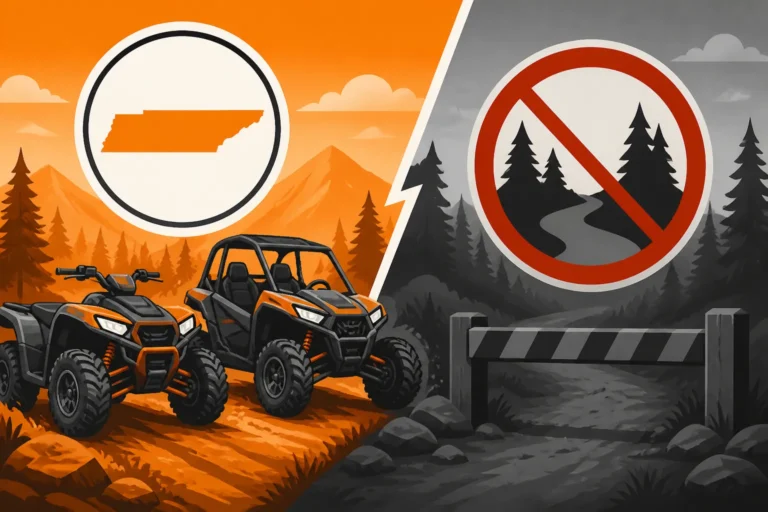
If rain begins again, don’t assume the route will remain manageable because you were already riding it. New rainfall can change runoff and traction quickly. Check for park guidance, avoid closed trails, and respect signs and barriers. If a route is restricted or a crossing looks unsafe, take the alternative even if it means a shorter ride.
A satisfying Windrock day doesn’t have to mean reaching the hardest trail or finishing the longest loop. In wet conditions, a shorter ride with a safe return is a better outcome than a recovery situation that puts riders, machines, or the trail at risk. Keep the plan flexible, ride within the group’s ability, and let the actual conditions—not the original itinerary—decide how far you go.
Disclaimer
This article is for general informational purposes only and does not constitute professional advice. Laws, prices and regulations vary by location and change over time. Consult a qualified professional for guidance on your specific situation.