Riding Prentice Cooper Above the Gorge
Prentice Cooper State Forest sits above the Tennessee River Gorge, close enough to Chattanooga to tempt riders looking for a quick ATV or UTV outing. The frustrating part is that a rugged-looking forest road is not automatically an open riding trail. This guide explains how to plan responsibly, check access, and avoid mistaking scenic roads for authorized off-highway routes.
Is Prentice Cooper a place to ride an ATV or UTV
Prentice Cooper State Forest is a large public recreation area north of Chattanooga, known for its wooded ridges, river-gorge views, hiking, camping, and other outdoor activities. But that does not mean it functions like a dedicated ATV park. Before loading a machine, find out exactly which motorized routes are open to your vehicle and what rules apply.
The key distinction is between being allowed to drive on a designated public road and being allowed to ride an ATV or UTV off-road. A gravel surface, an old haul road, or a track visible on a map does not by itself grant permission to ride there.
A public forest is not automatically an OHV trail system
It is easy to look at a forest map, spot a network of narrow roads, and assume they are all suitable for off-highway riding. At Prentice Cooper, treat that assumption as a reason to check the rules, not as permission. Routes may have different access restrictions, and a road open to ordinary vehicles is not necessarily an authorized ATV trail.
This matters even if your machine is quiet, street-equipped, or small enough to fit between a gate and a tree. Access is determined by the route’s posted status and the land manager’s rules—not by whether the vehicle can physically travel it. If the route’s status is unclear, do not ride it until you have confirmed it with the appropriate forest authority.
If you are looking for a place built around designated OHV routes, compare options in [Where to Ride an ATV in Tennessee]. That can help you distinguish a managed riding destination from a forest where access may be limited to specific roads or activities.
Know what you are confirming before you go
Before planning a ride at Prentice Cooper, establish three things: whether your type of machine is allowed, which exact route it may use, and whether any temporary closure or seasonal restriction affects that route. “The forest is open” is not the same as “every road is open to every vehicle.”
A phone call or an official forest notice can resolve questions that a general map cannot. Ask directly about ATV and UTV use, route names, gates, and current restrictions. If the answer is that the forest does not offer an authorized OHV route for your intended ride, choose a designated riding area instead of trying to make an informal route work.
Plan around access, not just the scenery
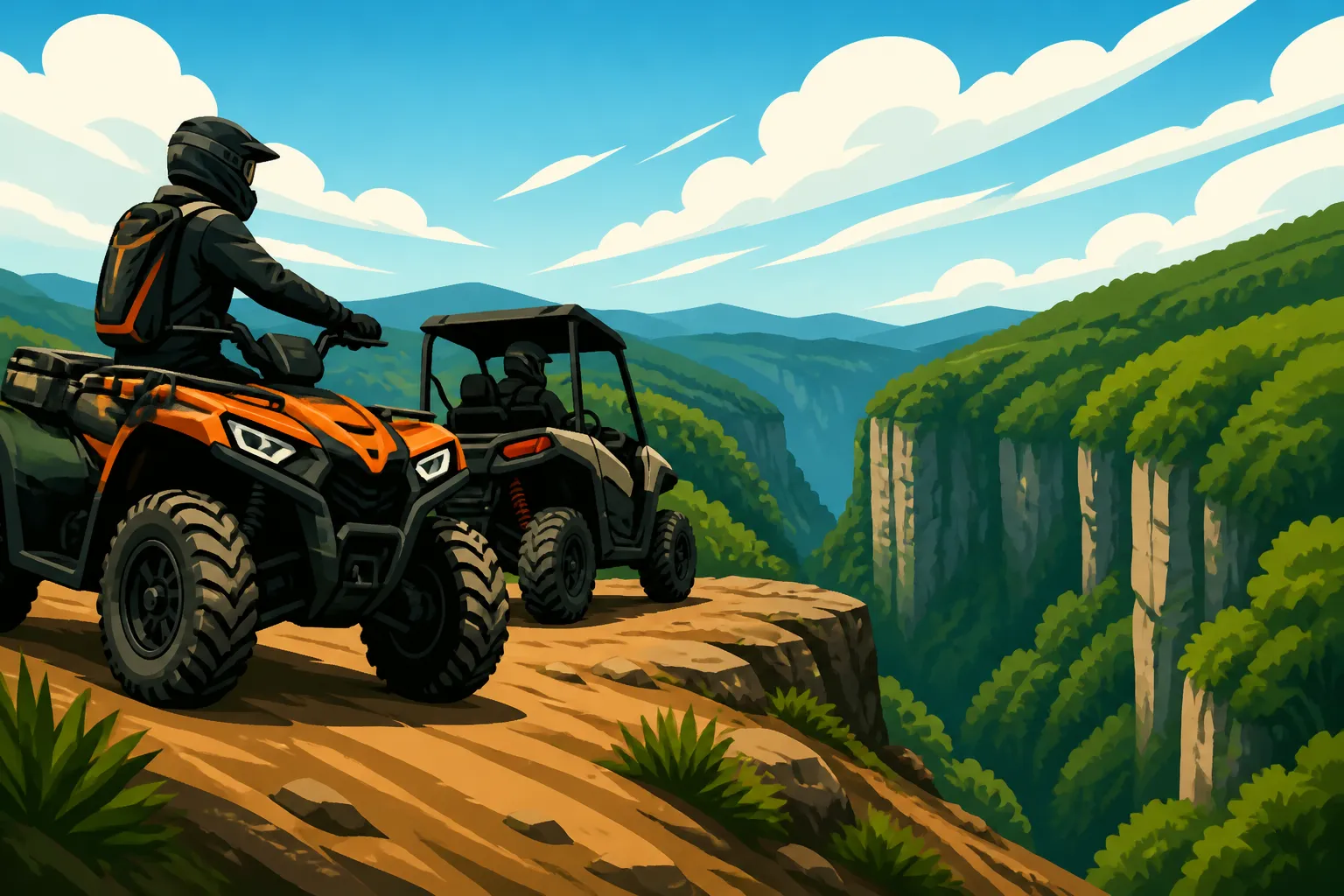
The Tennessee River Gorge and the forest’s ridge roads make this area appealing for scenic trips. Still, planning only around overlooks can leave you with a long drive and nowhere authorized to ride. Start with access rules, then decide whether the area fits your machine, group, and riding style.
Confirm the route and its status before unloading
Use official forest information as your authority for access. A navigation app may show roads or tracks that are private, closed, restricted, or intended for another use. Map visibility is useful for orientation, but it is not proof that a route is open to ATVs or UTVs.
Apps such as onX Offroad can help you review terrain and understand where mapped roads appear in relation to your planned route. Treat that information as a planning aid, not as permission to enter. Check the official notices as well, and compare the route you intend to use against any posted signs or gates when you arrive.
For a reliable pre-trip routine, check [Tennessee Trail Conditions Before You Ride] and [Tennessee Trail Closures to Check First]. Those topics are useful reminders to confirm current access rather than relying on a saved map from a previous visit.
Plan for gates, changing conditions, and limited services
A forest road can change significantly after rain. Washouts, fallen limbs, loose rock, and slick clay can turn a short drive into a difficult recovery. Even when a route is legally open, weather and maintenance conditions can make it inappropriate for your vehicle or experience level.
Do not count on trail-park conveniences such as a staffed entrance, fuel, repair help, or marked difficulty ratings. Before you leave home, make sure your machine is fueled, your group has a way to communicate, and someone outside the group knows your destination and expected return. Cell coverage can be unreliable in wooded hollows and along ridges, so download maps for offline use and carry a paper backup if you have one.
| Planning question | What to check | Why it matters |
|---|---|---|
| Is ATV or UTV use allowed? | Confirm with the forest authority | Public land does not automatically permit OHV use |
| Which route is open? | Verify the exact road or trail, not just the general area | Access can vary from one route to another |
| Is there a closure? | Review official notices and check signs at the entrance | Temporary restrictions can change a planned trip |
| Is the route suitable? | Consider weather, vehicle width, tires, and driver experience | A legal route may still be unsafe for your group |
| Is a permit required? | Check the rules for the specific land and activity | Permit requirements can differ by location and use |
Ride with a clear understanding of the rules
A little preparation can prevent a stressful roadside conversation or an avoidable trip back to the truck. Read posted signs, stay on the route you have confirmed, and make sure everyone in the group understands the plan. If one rider is uncertain whether a spur is open, stop and verify rather than letting the group split up.
Stay on the route you are authorized to use
Do not turn off onto an unmarked track just because it looks like a shortcut or because another vehicle has left tracks there. Side routes can lead onto private property, closed roads, sensitive areas, or routes reserved for a different use. Even a short detour can create a problem for the whole group.
This is especially important when using digital maps. onX Offroad may help you identify your location and keep the group oriented, but its displayed lines should be checked against official land-management information. Keep your map zoomed to the route you have actually confirmed, and set a clear turnaround point before the ride begins.
For a broader explanation of road access and the differences between route types, see [Tennessee Rules for Riding a Park Road] and [Tennessee Rules for Riding a Ridge Road]. Those distinctions are useful anywhere a route looks rideable but its legal status is not immediately obvious.
Respect other forest users
Prentice Cooper is shared by people pursuing different activities. Hikers, campers, hunters, and other visitors may be in the same general area, sometimes with limited sightlines and little room to move aside. Slow down near entrances, intersections, campsites, and places where people are likely to be walking.
Noise and dust also affect other visitors and nearby communities. Keep a controlled pace, avoid unnecessary revving, and give people and wildlife room. If you encounter a closed gate or a posted restriction, do not go around it or remove a barrier. A gate is a clear signal to stop and check access.
If your intended route crosses private land or follows a road with unclear ownership, the guidance in [Tennessee Rules for Riding Private Property] is a helpful reminder that public access should never be assumed.
Decide whether Prentice Cooper fits your trip
Prentice Cooper may suit a visitor interested in forest scenery, hiking, camping, and other outdoor activities. It may not suit someone whose main goal is a full day of ATV or UTV trail riding. Matching the destination to the activity before you travel can save fuel, time, and disappointment.
Choose a dedicated riding area if you want an OHV-focused day
If you want marked routes, a riding-oriented setup, and a clear plan for spending the day on your machine, look for a destination that specifically advertises authorized ATV or UTV riding. Confirm its route rules, permits, vehicle requirements, and current openings before setting out. You can use [Tennessee Trail Maps Worth Carrying] to think through the practical value of bringing maps that remain available without cell service.
Do not assume a permit for one Tennessee riding area covers another. Permit rules depend on the land and the operator. Check the requirements for your destination before you arrive, including whether each rider or vehicle needs separate documentation. [Tennessee Trail Permits Explained] offers background on why riding permissions are not necessarily interchangeable across locations.
Use maps as a backup, not a substitute for permission
A good navigation setup can make a trip smoother, especially when a group needs to stay together or retrace a route. Before leaving, download the relevant map, confirm that your phone can display it offline, and make sure at least one other person in the group knows how to use it. Keep a battery pack available if you depend on a phone for navigation.
onX Offroad can be part of that preparation when you are reviewing mapped roads and planning where to go. Pair it with official access information, posted signs, and common sense. If the map and a gate sign disagree, do not ride through the gate based on the app. Pause, verify the route, and choose a lawful alternative if you cannot confirm access.
A simple planning sequence can prevent most avoidable mix-ups:
- Decide whether your trip is for OHV riding or for another forest activity.
- Confirm whether your machine is allowed at the destination.
- Verify the exact route and any permit or operating requirements.
- Check for closures, weather concerns, and access changes.
- Download maps and share your route and return plan with someone.
- Follow signs and turn back if the route’s status is uncertain.
Prentice Cooper’s setting above the gorge can make it a memorable place to explore, but the best trip starts with realistic expectations. Confirm that the specific kind of riding you want is authorized before you load up. If the forest does not offer an open route for your ATV or UTV plans, choose a designated riding area and save Prentice Cooper for activities its access rules clearly allow.
Disclaimer
This article is for general informational purposes only and does not constitute professional advice. Laws, prices and regulations vary by location and change over time. Consult a qualified professional for guidance on your specific situation.