Off-Road Resorts That Also Run a Bike Park
Finding a Tennessee destination where ATV or UTV riders and mountain bikers can share a trip sounds simple until you discover the trails may have separate gates, permits, schedules, and access rules. Windrock near Oliver Springs is a notable example of an off-road destination with a bike park, but planning both activities takes more than booking one place to stay.
What an off-road resort with a bike park usually offers
Motorized trails and mountain-bike trails are different activities
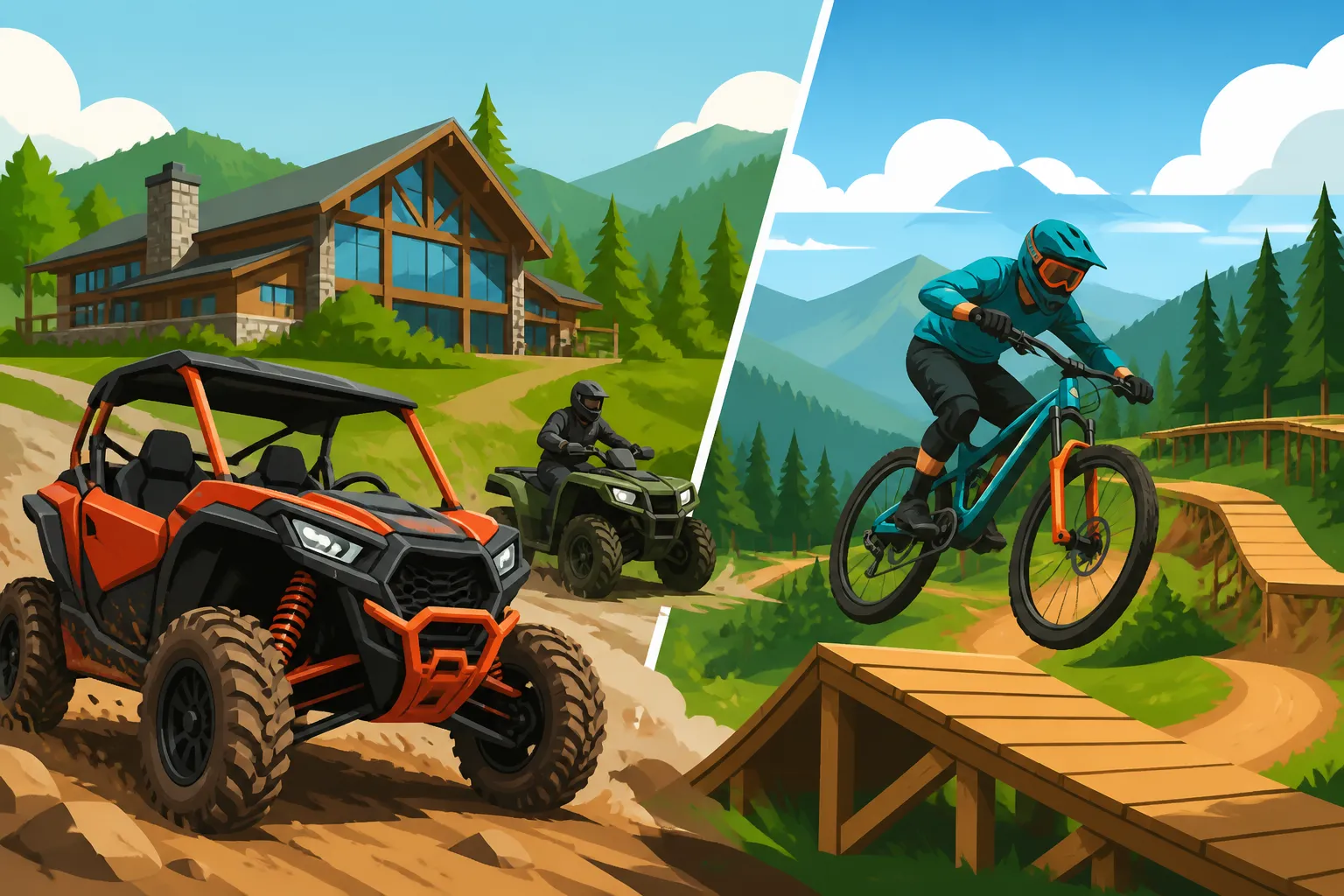
An off-road resort may bring together ATV and UTV trails, mountain-bike routes, lodging, camping, or other recreation on or near the same property. That does not mean the activities use the same trails. Motorized riding and mountain biking usually have separate routes, rules, and operating arrangements.
At Windrock, visitors can find a large off-road riding area as well as Windrock Bike Park, a downhill mountain-biking destination near Oliver Springs. The combination makes it possible to plan a trip around both activities, but it is important to treat them as separate experiences. A permit or admission arrangement for one activity should not be assumed to cover the other.
That distinction matters when you are organizing a group. A family might have one person bringing an ATV while another wants to ride a mountain bike. Before anyone loads a trailer, confirm which activity is open, where each group checks in, and what equipment is required. Start with [Windrock Park at Oliver Springs, Tennessee] and [73,000 Acres Above Oliver Springs] for a broader picture of the area.
The word resort does not guarantee an all-in-one package
“Resort” can mean different things from one destination to another. It might describe a large riding area with nearby campgrounds, cabins, or a general store, rather than a single property that bundles a room, a bike-park ticket, and an ATV permit. Even when the facilities are close together, they may have separate operators or booking processes.
That can catch visitors off guard. Someone may reserve lodging expecting a mountain-bike lift or trail access to be included, then learn that access needs to be arranged separately. An ATV rider may also assume that a park’s local trail permit works across other nearby riding areas. In Tennessee, do not treat a destination’s name or location as proof that one pass covers every activity.
Before booking, ask specific questions: Is the bike park operating during your dates? Is motorized riding available on the same days? Do you need separate permits or tickets? Are rentals available for either activity? Does lodging sit directly beside the trails, or will you need to drive or trailer between facilities? These answers are more useful than relying on a general description of the resort.
Windrock is a practical starting point for a mixed-activity trip
Windrock is a natural place to investigate if your group wants to combine motorized trail riding with downhill mountain biking in the Oliver Springs area. The riding areas and bike park appeal to different users, so a shared destination does not mean everyone needs the same level of skill or equipment.
A group could spend one day on an ATV or UTV outing and another day biking, or divide up so different family members pursue separate activities. The key is to plan the days around actual operating hours, trail conditions, and the physical demands of each activity. A challenging downhill bike run can be tiring, just as a long off-road loop can leave riders ready for a quiet evening.
Windrock’s scale is another reason to plan rather than improvise. The motorized riding area is not a small loop beside a parking lot, and route choice can affect how long a ride takes. Read [300 Miles at Windrock] and [Tennessee ATV Trails Near Knoxville] to think through the riding area and its regional context before you set an itinerary.
How to plan a trip that includes both motorized riding and biking
Choose activities first, then match dates and lodging
Start by asking what the group actually wants from the trip. If everyone is focused on ATV or UTV riding, lodging and trail access should drive the plan. If downhill mountain biking is the main attraction, confirm the bike park’s operating schedule and any access or equipment requirements before choosing dates. For a mixed group, build the schedule around the activity with the fewest available operating days.
Then check how far the lodging is from each activity. A cabin or campground described as “near Windrock” may still require a drive to a particular trailhead, check-in point, or bike-park area. Ask whether you can ride directly from the lodging, whether trailers can be parked there, and whether the route between facilities involves public roads.
| Trip detail | What to confirm | Why it matters |
|---|---|---|
| Motorized riding | Permit, trail access, machine rules, and open areas | A riding permit may be specific to one destination |
| Bike park | Operating dates, access arrangements, and rider requirements | Bike-park access is separate from motorized riding |
| Lodging | Distance to each activity and trailer parking | “Nearby” does not always mean trail-side |
| Rentals | Availability, pickup location, and included gear | ATV, UTV, and bike rentals may be handled separately |
| Group schedule | Check-in times, operating hours, and rest periods | Travel and equipment changes can take longer than expected |
| Trail conditions | Closures, weather effects, and route difficulty | A planned route may not suit the conditions on arrival |
For lodging ideas and trip logistics, see [Where to Camp Near Windrock] and [Tennessee Trails With Lodging on the Route]. Confirm details directly with the relevant operators before making nonrefundable plans.
Plan separate gear and safety checks
ATV or UTV riding and mountain biking call for different equipment. Motorized riders should check machine condition, fuel, tires, protective gear, and any park-specific requirements. Mountain bikers should make sure their bike is appropriate for downhill riding and that their protective gear fits correctly. A helmet for one activity should not automatically be assumed suitable or acceptable for another.
For motorized riding, inspect the machine before departure and bring essentials that match the ride, such as water, a charged phone, and basic repair supplies. For mountain biking, check the bike’s brakes, tires, and suspension before getting on the trail. If you are renting, ask what equipment is included and what you need to bring yourself. A rental package may cover the machine but not every personal item or park access requirement.
The groups should also agree on a communication plan. Cell service can be unreliable in mountainous and wooded areas, so choose meeting points and times in advance. If some people are riding and others are biking, do not rely on a quick text as the only way to reconnect. A paper map or downloaded route information can be useful when coverage drops; riders may use tools such as onX Offroad to review motorized routes and prepare for areas with limited service. Verify that any map information matches the park’s rules and current trail notices.
Keep the itinerary flexible
Weather can change the experience quickly. Heavy rain may make some motorized routes more difficult, while wet or otherwise unsuitable conditions can affect mountain-bike trails. A route that looks manageable on a map may feel very different after a storm, especially for visitors unfamiliar with the terrain.
Build in time to change plans rather than forcing a ride because you have already traveled to the area. If a trail is closed, choose an open option that fits your group’s ability or use the day for another activity. Check [Tennessee Trail Conditions Before You Ride] and [Tennessee Trail Maps Worth Carrying] while planning, then confirm notices with the destination before setting out. onX Offroad can also help with advance route planning, but it should supplement—not replace—park information and posted restrictions.
Permits, access, and rules to verify before you go
Treat bike-park access and ATV permits as separate
A common planning mistake is assuming that one purchase covers every activity at a multi-use destination. Motorized riding permits, bike-park access, rental charges, lodging, and other services can be arranged separately. Ask each operator what the purchase includes, where it is valid, and whether it applies to each person or each vehicle.
For Tennessee motorized riding, permit requirements depend on where you plan to ride. Do not assume a permit from one private park is accepted at another riding area or on public land. For Windrock-specific planning, review [Windrock's Trail Permits] and confirm the current requirements with the park. The wider state permit system and private-park arrangements are not interchangeable by default.
If you are renting an ATV or UTV, ask whether the rental includes the required riding permit or whether you need to buy it separately. Also ask whether the rental is restricted to particular trails or areas. These details can change the total cost and affect how much of the destination you can use.
Check machine access and route restrictions
A vehicle that can handle a trail physically is not necessarily allowed on that route. Width, vehicle type, trail designation, posted closures, and property boundaries can all affect access. Before unloading, check the rules for the specific machine you are bringing and the area where you intend to ride.
Use a current trail map and pay attention to signs and gate notices. Do not rely on a route someone posted online if the park has since changed access or closed a section. An app such as onX Offroad may be useful for planning and orientation, but posted signs and the operator’s directions take priority when they differ from a saved route.
If your group is considering more than one riding area during the trip, plan for separate access requirements. [Why Tennessee Has No Statewide Trail Sticker] offers useful context for understanding why a single statewide pass should not be assumed to cover every destination. Keep permits, confirmations, and relevant contact information accessible rather than buried in a vehicle or email thread.
Ask about age, passengers, and supervision
A mixed-activity trip may include children or teenagers, and each activity can have its own age, supervision, and equipment rules. A young person’s ability to ride as a passenger in a UTV does not automatically establish that they meet the requirements for operating a machine or using a bike-park trail. Confirm rules for both activities before you arrive.
For motorized riding, verify age limits, passenger rules, helmet requirements, and whether an adult must accompany younger riders. For the bike park, ask about rider eligibility, protective equipment, and any restrictions tied to trail difficulty. Do not rely on a child’s prior experience at another park as proof that the same rules apply here.
Set expectations with the group before the trip. Decide who will ride which machine or bike, who is responsible for supervising younger participants, and where everyone will meet if plans change. Clear arrangements reduce the stress of making decisions at a busy check-in area, especially when several activities have different start times.
Is a shared off-road and bike-park destination right for your group
It works best when people are happy with different daily plans
A destination with both motorized trails and a bike park can be a good fit when your group includes people with different interests. One person can be excited about a UTV trail while another prefers downhill biking, and the destination gives them a shared base for the trip. Still, each activity needs its own preparation, access checks, and schedule.
It may be less convenient if everyone expects to participate in every activity together. ATV and UTV routes can take substantial time, and a bike-park session may involve separate check-in, gear adjustments, or operating hours. If the group wants to stay together all day, consider choosing one main activity and treating the other as an optional side trip.
Be realistic about energy, too. A full day of riding followed by a demanding bike session may not be enjoyable for everyone. Plan shorter outings, leave room for meals and rest, and avoid building the trip around an ambitious schedule that only works if everything goes perfectly.
A simple booking checklist
Before you reserve or pack, work through these steps:
- Decide whether ATV or UTV riding, mountain biking, or a mix is the main goal.
- Confirm the operating schedule for each activity on your intended dates.
- Ask whether motorized access, bike-park access, and lodging are booked separately.
- Verify permits, machine requirements, rider eligibility, and protective equipment.
- Confirm rental availability and whether rental arrangements include any required access.
- Check where to park, where to check in, and whether a trailer is needed between facilities.
- Review trail conditions and closures shortly before departure.
- Make a backup plan for weather, delays, or a closed activity.
Keep a saved copy of confirmations and park contact details. Review your route before leaving home, and use onX Offroad or another appropriate navigation tool as a planning aid rather than a substitute for official access information. If you are transporting your own machine, [Trailering Up the Mountain to Oliver Springs] can help you think through the arrival and staging side of the trip.
What to expect from the experience
The most important expectation is that a shared destination is not necessarily a bundled experience. Windrock gives visitors a reason to investigate both off-road riding and downhill biking in the same general area, but each activity has its own practical details. The trip goes more smoothly when you confirm access separately, choose lodging with the actual locations in mind, and give the group enough time to move between activities.
That preparation can prevent familiar frustrations: arriving with the wrong permit, discovering the bike park is not operating on your chosen day, or finding that a rental does not include the access you assumed it did. With those details handled ahead of time, the group can spend less of the trip solving logistics and more of it enjoying the trails and the time together.
Disclaimer
This article is for general informational purposes only and does not constitute professional advice. Laws, prices and regulations vary by location and change over time. Consult a qualified professional for guidance on your specific situation.