Tennessee Riding in Summer Heat
Tennessee summer rides can turn uncomfortable quickly: humid air, exposed ridgelines, dusty climbs, and slow technical sections make it harder to stay cool than many riders expect. This guide explains how to plan around the heat, spot trouble early, care for your machine, and make safer decisions at places such as Windrock, Brimstone, and Royal Blue.
Why Tennessee summer riding feels so demanding
Heat, humidity, and slow trails add up
The temperature on your phone is only part of the picture. In East Tennessee, humidity can make sweat evaporate less effectively, so your body may struggle to cool itself even when you’re moving. Add direct sun on an open ridge or a long stretch of low-speed riding, and the effort can build without feeling dramatic at first.
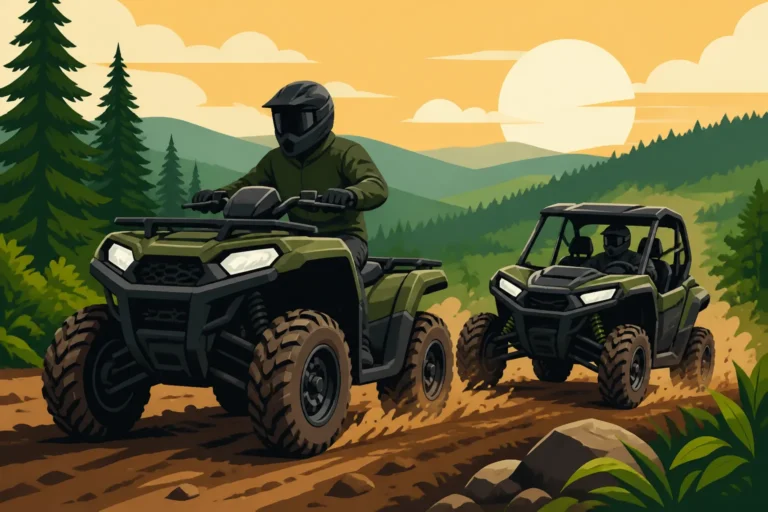
Trail conditions matter, too. A fast, shaded forest road gives you a different kind of ride from a rocky climb where you’re moving slowly and concentrating on wheel placement. At places like Windrock near Oliver Springs, riders may switch between exposed sections and shaded hollers during one outing. The shaded stretches can feel like relief, but they don’t erase the heat and exertion that came before.
Gear and machine heat are part of the experience. A helmet, gloves, protective clothing, and riding posture can all make you feel warmer, while an engine and exhaust add heat around the vehicle. That’s not a reason to skip protective equipment. It’s a reason to plan breaks, wear appropriate gear, and pay attention to how you feel instead of assuming you can push through because the ride is going well.
Know the difference between ordinary fatigue and a warning sign
Feeling warm, thirsty, or tired can happen on a summer ride. What matters is whether symptoms improve when you stop, get into shade, and take time to cool down. A headache, nausea, unusual weakness, dizziness, muscle cramps, or feeling confused or unsteady should not be brushed off as normal trail fatigue.
Heat illness can get worse quickly, and a rider who is confused or faint may not be able to judge their own condition clearly. If someone shows signs of a serious heat emergency, stop the ride, get them out of the sun, begin cooling them, and seek emergency help. Don’t send a struggling rider back down a difficult trail alone, and don’t treat a brief pause as proof that they are ready to continue.
Make a group rule before you leave: anyone can call for a stop without having to justify it. That matters when friends are excited to reach an overlook or finish a loop before lunch. A short conversation at the staging area can prevent the uncomfortable moment when someone feels pressured to keep riding despite warning signs.
Plan the ride around cooler, easier conditions
Start early and make the route fit the day
An early start can reduce the amount of time you spend riding during the hottest part of the day. It also gives your group more flexibility if a machine needs attention or a rider wants a longer rest. Before leaving, agree on a turnaround time. A loop that seems manageable at the trailhead may feel very different after several hours in the sun.
Match the route to the least experienced or least heat-tolerant person in your group, not just the most confident rider. A short, familiar loop with several places to pause may be a better summer choice than a long route with sustained climbs and few easy exits. If children, older adults, or anyone with a health condition is riding, build in more frequent opportunities to check in and cool down.
It helps to think in terms of effort, not just mileage. A short technical section can take longer and demand more concentration than a longer, smooth trail. Review the trail layout and current access information before you go. [Tennessee Trail Conditions Before You Ride] can help you make that pre-trip check part of your routine rather than an afterthought.
Build shade and rest into the itinerary
Don’t wait until everyone is exhausted to take a break. Pick stopping points before you ride, such as a shaded pull-off or a safe place away from traffic and trail intersections. Give the group time to drink, eat if needed, cool down, and check for signs of heat stress. A break is useful only if riders actually get off the machine and let their bodies recover.
If the route is unfamiliar, use a map to identify junctions and possible return options before you start. Some riders use onX Offroad to review trail layout and keep track of where they are, particularly when a group is deciding whether to take a shorter route back. Treat any digital map as a planning aid, not as permission to use an unmarked or closed trail; follow posted signs and the managing property’s instructions.
A simple plan can look like this:
- Choose a route that fits the group’s experience and the day’s conditions.
- Identify a shorter way back or a safe stopping point.
- Set a turnaround time and agree that anyone can call for a break.
- Check the route again at the trailhead, where current signs and notices take priority.
- Tell someone who is not riding where you expect to be and when you plan to return.
Hydration, clothing, and personal preparation
Drink regularly and pack more than you think you need
Start the day hydrated rather than trying to catch up once you’re already thirsty. Bring water where it can be reached without unloading the machine, and make drinking part of each planned stop. A group should not rely on one shared bottle or assume there will be a convenient place to refill on the trail.
How much fluid a person needs varies with exertion, weather, body size, and individual health. Don’t force a one-size-fits-all rule onto everyone in the group. Riders who have medical conditions or take medication that affects hydration or heat tolerance should ask a healthcare professional for personalized guidance before a demanding ride. If you’re sweating heavily for an extended period, consider how you’ll replace fluids and salts, while avoiding products or routines that don’t suit your health needs.
Pack a little extra water for delays, not only for the planned ride time. A flat tire, a stuck machine, a wrong turn, or a closed trail can extend the outing. Keep the reserve separate from the water you expect to use during the first part of the trip so it remains available if the day runs long.
Choose protective gear that works in the heat
Protective gear should stay on the packing list even when the weather is uncomfortable. A properly fitting helmet, eye protection, gloves, and suitable riding clothes help protect against impacts, dust, branches, and flying debris. Lightweight, breathable layers can be more comfortable than heavy clothing, but they still need to suit the trail and your equipment.
Avoid assuming that bare skin is automatically cooler or safer. Sun exposure can add to the strain, and exposed skin is more vulnerable to scratches and contact with hot components. Choose clothing that covers appropriately while allowing movement, and take time to adjust helmet fit, vents, and layers before riding. If gear becomes soaked with sweat, use a rest stop to cool down and change a layer when you can do so safely.
Remember that passengers need preparation too. They may be less involved in steering and therefore less aware of how much effort the driver is using, but they still experience heat, vibration, and sun exposure. Check that every rider has suitable gear, water, and a clear understanding of when to speak up. For family trips, [Tennessee Trails Good for Kids] can help you think about choosing a route that matches younger riders’ needs.
Protect your ATV or UTV from heat-related problems
Check the machine before loading it
A summer pre-ride inspection is a practical way to catch small problems before they become trail delays. Check fluid levels and look for leaks, inspect tires, make sure the brakes feel normal, and confirm that the radiator area and cooling system are free of visible debris. Use the maintenance guidance for your specific machine; cooling-system design and service needs vary by model.
Mud, leaves, grass, and dust can collect around cooling components during ordinary riding. If your machine has been through a muddy or dusty route, inspect and clean it as recommended by the manufacturer. Don’t remove a hot radiator cap or open a pressurized cooling system. Give the machine time to cool and follow the owner’s manual, especially if a warning light appears or the engine starts behaving differently.
Pack basic recovery and repair items suited to your vehicle and the route, and make sure someone in the group knows how to use them. A tool kit does little good if it is buried beneath everyone’s gear. Before you leave, check that the load is secure and that the machine’s vents and cooling areas are not blocked by bags or accessories.
Respond calmly to overheating or a breakdown
If the machine shows a temperature warning, loses power, or behaves unusually, stop somewhere safe and follow the owner’s manual. Continuing to climb because the group is nearly at the top can turn a manageable warning into a more serious mechanical problem. Keep people away from hot engine and exhaust components, and let the vehicle cool before inspecting it.
A breakdown in the heat affects riders as well as the machine. Move the group to a safe place with shade if available, keep water accessible, and check everyone’s condition while arranging help. If the machine is on a narrow trail, avoid creating a second hazard by leaving it where other riders cannot see or pass safely. Don’t attempt a recovery that exceeds the group’s equipment or experience.
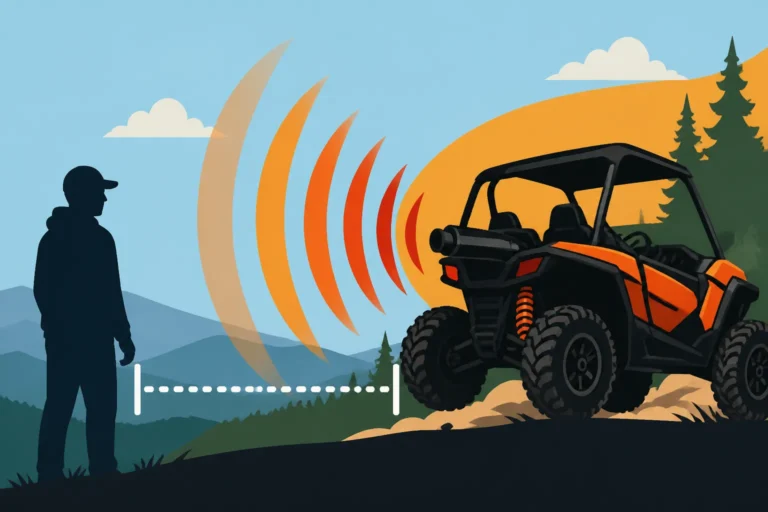
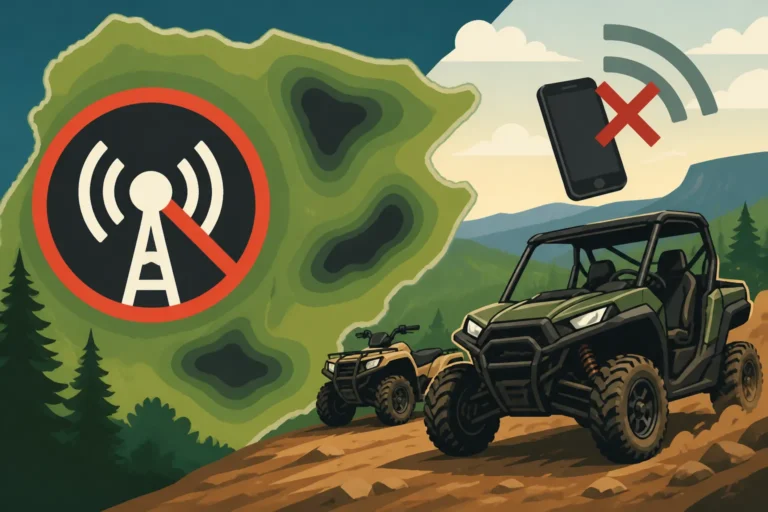
Plan for navigation and communication before you ride. Some Cumberland areas have weak or absent cell coverage, so don’t assume a phone call will solve a problem. Offline maps and saved route information can help with orientation; onX Offroad may be useful for reviewing a route in advance, but it should not replace posted directions, local park information, or a backup plan. [Cell Dead Zones Across the North Cumberland WMA] is a useful reminder to think about communication gaps before heading out.
| Before the ride | What to check | Why it matters in summer |
|---|---|---|
| Cooling system | Look for visible debris, leaks, or warning indicators; follow the owner’s manual | Heat and slow, demanding riding can make cooling problems more consequential |
| Tires and brakes | Check condition and normal operation | A mechanical issue can turn a short stop into a long wait in the sun |
| Water and supplies | Bring accessible drinking water and a reserve | Delays, recovery, and route changes can extend the day |
| Route and backup plan | Review junctions, exits, and current trail notices | A shorter return option helps when the group is tired or conditions change |
| Communication | Tell someone your plan and consider coverage limitations | Service may be unreliable in remote riding areas |
Make smart choices at Tennessee riding areas
Check the site’s rules and conditions before you travel
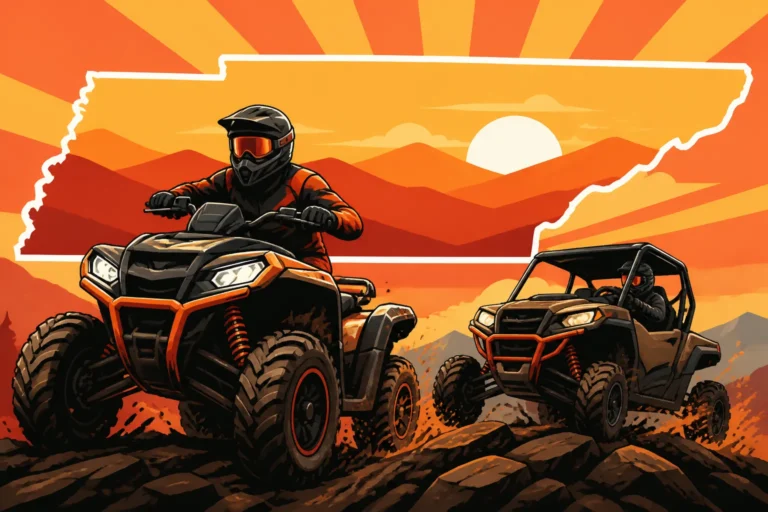
Tennessee riding areas are not interchangeable. Windrock, Brimstone Recreation near Huntsville, Royal Blue near Pioneer, and units within the North Cumberland Wildlife Management Area each have their own access arrangements, notices, trail layouts, and requirements. Confirm the rules for the specific property you plan to visit, including permits, hours, closures, and any vehicle restrictions.
Summer weather can change trail conditions. A dry stretch may leave some routes dusty, while heavy rain can make steep or rocky sections slick and increase the chance of a machine getting stuck. Look for official park or land-manager updates and read signs at the entrance. If a trail is closed, don’t use a map app or old route description as a reason to continue onto it.
Prepare your route information so you can check it without relying on a strong signal. A paper map or saved offline map can be useful alongside the site’s official information. onX Offroad can help riders orient themselves and review route options, but always compare what you see on a screen with signs and the property’s current guidance. [Tennessee Trail Maps Worth Carrying] offers another perspective on why a backup map can be worthwhile.
Keep permits, staging, and return logistics simple
Sort out permits and access requirements before you reach the gate. Requirements can differ between public-land riding and private trail parks, and one permit should not be assumed to cover every destination. Review [Tennessee Trail Permits Explained] and then confirm the specific rules with the place you intend to ride.
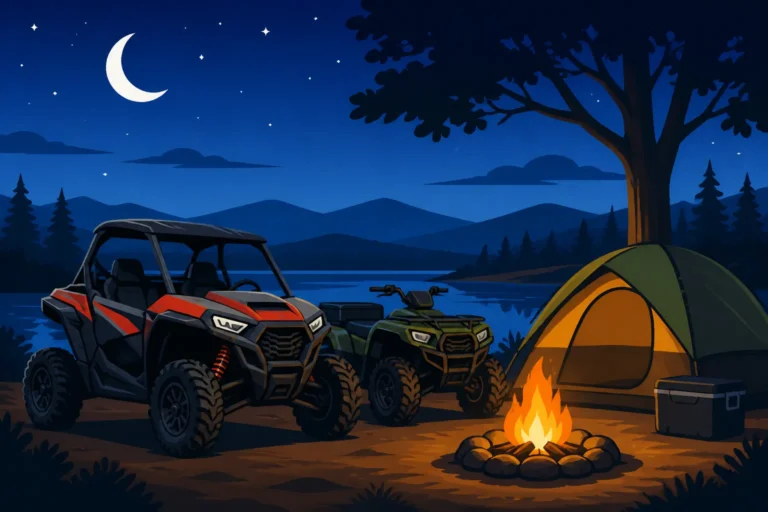
Staging can be tiring in the sun, especially if the trailer is parked far from shade or your gear is scattered across several machines. Organize helmets, water, tools, and first-aid supplies before unloading. If your group is meeting at a busy trailhead, settle on a meeting point and a simple plan for regrouping if riders become separated.
Also decide how you’ll handle the return. A rider who feels unwell should not be expected to drive a long distance home immediately after a hot day. Have a backup driver where practical, keep water available for the trip back, and allow time to cool down before loading. [Parking a Trailer at a Tennessee Trailhead] can help with the practical side of planning where to stage and how to keep the departure organized.
Disclaimer
This article is for general informational purposes only and does not constitute professional advice. Laws, prices and regulations vary by location and change over time. Consult a qualified professional for guidance on your specific situation.