What the Windrock General Store Stocks for Riders
Windrock riders often reach the General Store after a long drive, only to realize they forgot gloves, snacks, or a small trail essential. The tricky part is that store inventory can change, and a counter shop is not the same as a fully stocked ATV dealership. This guide explains what riders may find, what to confirm before relying on it, and what to pack from home.
What Riders May Find at the Windrock General Store
A general store at a riding destination is useful because it can solve small, immediate problems: you need a drink before heading out, forgot a basic item, or want to pick up something connected with your visit. But it is worth thinking of the shop as a convenient stop rather than a guaranteed source for every part, size, or piece of riding gear.
The selection can change with the season, demand, deliveries, and what the store chooses to carry. If you are planning around a specific item, call ahead and ask about that item by name. “Do you sell riding gear?” is less useful than “Do you have adult medium goggles?” or “Do you carry the kind of plug that fits my machine?”
Snacks and drinks for a ride day
Food and drinks are among the most practical things to check for when you arrive. Riders commonly want water, packaged snacks, or something easy to eat before or after a day on the trails. These are the kinds of everyday essentials a general store may carry, but the exact selection can vary. If you have dietary restrictions, need a particular brand, or want enough food for a group, bring those items with you rather than counting on finding them at the park.
It also helps to separate a quick store stop from a full meal plan. A snack at the counter may tide you over, but it may not be enough for a long loop in the North Cumberland area. Pack food that can ride safely in a cooler or secured storage compartment, and bring more water than you think you will need. A warm afternoon, a slow-moving group, or a trail delay can stretch the day.
For trip planning beyond the store, [Camping Near Tennessee ATV Trails] can help you think through where you will stay and what you may need to bring. If you are riding several days, make a simple supply list for each day instead of assuming you can restock everything at the General Store.
Clothing and small riding accessories
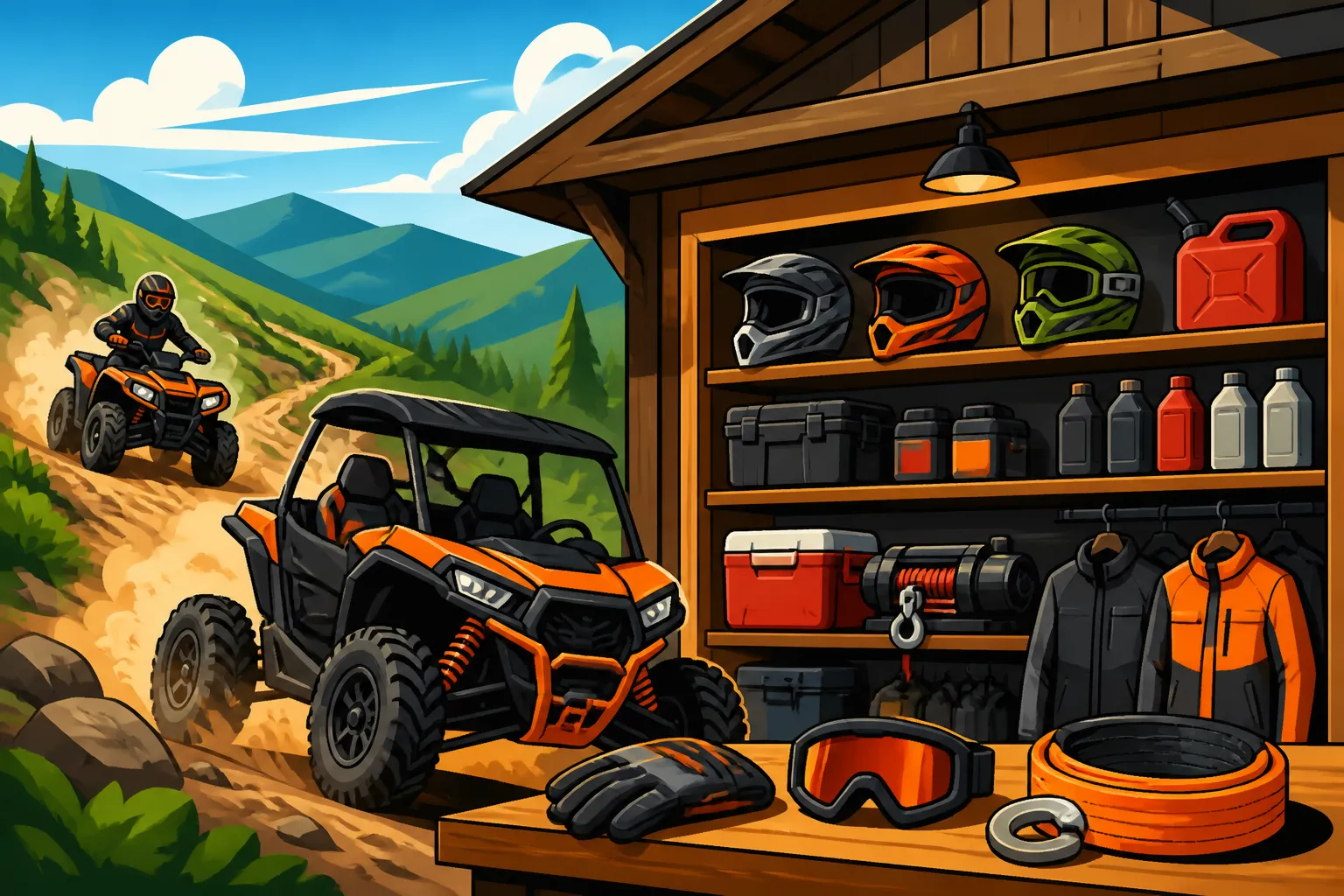
A store near a trail system may carry some apparel or small accessories, but riders should not assume it will have every size, style, or technical feature they need. A spare pair of gloves, protective eyewear, a hat, or a basic layer can make a ride more comfortable. Availability and fit matter, though: a glove that is too loose or goggles that do not sit well with your helmet can become a nuisance once you are on the trail.
Think of the store as a possible backup for forgotten basics, not your primary source for safety equipment. Bring your helmet, boots, eye protection, and any protective gear you rely on. If a piece of gear is important to your fit or safety, test it before the trip rather than buying an unfamiliar replacement just before riding.
Weather around Oliver Springs and the Cumberland Plateau can feel different from the conditions where you started your drive. A morning can be cool, while a long afternoon ride can feel warm and dusty. Pack layers and a dry change of clothes. If you find a useful accessory at the store, treat it as a welcome addition rather than a reason to leave your regular gear at home.
Souvenirs and Windrock-related items
Some riders like to bring home a reminder of the trip, and stores at recreation destinations may offer branded clothing, keepsakes, or other Windrock-related merchandise. The available designs and sizes can change, so it is best to treat these as a pleasant possibility rather than a guaranteed part of the shopping list.
If you are travelling with children or a group, decide ahead of time whether you are making time for a store stop. A quick browse can turn into a longer break, especially when everyone wants to look around after a dusty ride. That is not a problem; just build it into your schedule, especially if your group is trying to get back to camp before dark.
What Not to Assume the Store Has
A common frustration on an off-road trip is discovering that “general store” does not mean “everything a rider could need.” A store may be convenient for a forgotten everyday item while still not having a machine-specific repair part or a full range of protective equipment. If your plans depend on one item, confirm it before you leave home.
That distinction matters most for parts, fuel, permits, and specialized gear. These are all things riders may look for at a park, but their availability and rules can differ. A quick phone call can save you from driving to Oliver Springs with an assumption that turns out to be wrong.
Machine-specific parts and repair supplies
Do not count on finding a replacement belt, tire, battery, plug, fuse, or model-specific tool at the General Store unless someone there confirms it. Parts vary by make, model, year, and engine configuration. Even a common-looking item can have multiple sizes or specifications, and the wrong replacement can waste time or create a safety issue.
Before the trip, check your owner’s manual and make a short list of the parts and supplies that match your machine. For a longer ride, consider carrying basic tools, a tire repair kit that suits your tires, and any small spares you know your group may need. If you are unsure what to carry, ask a qualified mechanic who knows your machine rather than buying a random collection of parts at the last minute.
A useful backup plan is to identify a nearby repair or parts option before the ride, while recognizing that opening hours and stock can change. For trail-specific preparation, [Tire Choice for Tennessee Rock and Mud] and [Planning Fuel for a Long Windrock Loop] are useful topics to review before loading up.
Fuel and fluids
Fuel is one of the easiest things to plan badly. A rider may see a store near the park and assume fuel will be available there, but the presence of a General Store does not by itself confirm that fuel is sold, that it is the right type, or that it will be available when you need it. Ask directly about fuel availability, hours, and any limits that matter to your trip.
Start with a full tank before entering the trail system when practical. Estimate the distance and difficulty of your planned route, account for the way your group rides, and keep a reserve instead of planning to arrive at the last possible drop of fuel. Low-speed crawling, steep climbs, mud, and repeated stops can all affect consumption. A machine that uses little fuel on an easy road may use much more on a demanding trail.
Bring only approved fuel containers and secure them properly. Fuel should never be carried loosely in the passenger area or in a place where it can spill onto hot components. If you need additional fluids, confirm the type recommended for your machine. A store may not carry the exact engine oil or coolant specification your owner’s manual calls for.
Permits, passes, and park information
Before arriving, verify where and how you need to obtain the permit for the specific place you plan to ride. Do not assume that a shop counter sells every required permit, that a pass for one riding area works at another, or that buying a permit resolves every access requirement. Windrock, Brimstone, and public-land riding areas have different access arrangements, so check the rules for your destination.
If you expect to buy something on arrival, ask what identification, payment method, or rider information you should have ready. A group can lose time at the start of the day if one person is still searching a truck for details while everyone else is waiting. For a broader explanation of how permits differ across riding areas, see [Tennessee Trail Permits Explained] and [Why Tennessee Has No Statewide Trail Sticker].
Also check trail conditions and closures through the appropriate park or land manager before setting out. A map or store conversation can be helpful, but neither should replace current access information from the operator responsible for the area. [Tennessee Trail Closures to Check] is a useful starting point for building that habit.
What to Bring From Home
The simplest way to use the General Store well is to arrive prepared for the essentials and let the store fill in small gaps. That approach avoids relying on uncertain inventory while still leaving room for a convenient stop. It is especially helpful for families, groups, and riders who are travelling a long distance to East Tennessee.
Think of packing in three layers: safety gear you will not ride without, machine supplies that match your vehicle, and comfort items that make a long day easier. The first two should be handled before you leave. The third may be easier to adjust after you see the weather and your group’s plans.
Build a dependable rider kit
Start with the equipment you need for a safe ride: a properly fitting helmet, eye protection, gloves, suitable footwear, and clothing for the expected conditions. Bring a spare layer and a dry change of clothes if your plans may include rain, mud, or water crossings. If a family member needs a particular size or fit, pack it rather than expecting to find a replacement nearby.
Add personal essentials such as any medication you need, sunscreen, insect protection, and a small first-aid kit. Put these in a place that is easy to reach but protected from dust and moisture. It is easy to focus on the machine and forget the people riding in it; a headache, blister, or forgotten medication can affect the whole group.
For navigation, do not rely on cell service being available everywhere on a ride. Plan your route before leaving and make sure each driver understands where the group intends to go. onX Offroad can be useful for researching trails and preparing navigation, but check the park’s rules and map information as well. If you use an app, prepare it before entering areas where reception may be limited.
Prepare the machine before loading it
A quick inspection at home is much less stressful than discovering a problem in the parking area. Check tire condition and pressure, brakes, lights, battery connections, fluids, and any visible damage. Secure loose cargo, confirm that your recovery gear is ready, and make sure your trailer equipment is in good shape before beginning the drive.
Pack tools and spares that make sense for your specific vehicle. One rider may need a particular wrench or belt, while another machine uses different parts. Keep small items organized in labeled bags or compartments. If you carry a tire plug kit, know how it works before you have a puncture on a trail. A kit that has never been opened may not be much help when the group is waiting.
Navigation preparation belongs in the same pre-trip routine. onX Offroad can help you review routes and organize a plan before the ride, while a paper map or downloaded information can serve as a backup where the phone signal is weak. Share the route with another person in the group, and agree on a meeting point in case riders become separated. [Reading a Tennessee Park Trail Map] offers more guidance on getting comfortable with a map before the ride begins.
How to Make a Useful Stop at the General Store
A quick, intentional stop can make the day smoother. A vague stop with a long list of questions can be frustrating for you and for the staff, especially when other riders are arriving at the same time. Decide what you need before you walk in, ask specific questions, and confirm anything that affects access, safety, or the rest of your schedule.
The store is also a good place to ask where to find official information, but treat informal advice as a starting point. Rules, trail conditions, and availability can change. When an answer affects where you can ride or what you must carry, confirm it through the relevant park or land manager.
Call ahead with specific questions
If an item is essential, call before making the trip. Be precise: ask whether the store has a particular size, type, or model, and whether it is available at the location you plan to visit. For fuel or permits, ask directly rather than interpreting a general answer as confirmation. It is also sensible to ask about store hours if your arrival will be early, late, or close to closing time.
A clear list helps. You might ask: “Do you have adult small riding gloves?” “Can riders buy the required permit there?” “Is fuel available, and what type?” “Do you carry a basic tire repair kit?” A direct question makes it easier for staff to give you an answer you can use. If the answer is uncertain, plan to bring the item or find another source before you arrive.
Keep a backup plan for anything that could stop the ride. If you cannot confirm a critical part, obtain it before leaving town. If the permit process is unclear, contact the park operator. This is more reliable than arriving with your trailer and hoping the store can sort out every detail.
Use the stop to reset the group
A store stop can be a useful moment to check that everyone is ready. Confirm that riders have water, helmets, eye protection, and a clear idea of the plan. Make sure the group knows where vehicles will be parked and when you intend to return. If children or newer riders are coming along, take a moment to explain the day’s expectations before the machines start.
It is also a good point to check the weather and adjust the plan. A warm day may call for more water and earlier breaks; a damp forecast may mean extra layers and a more conservative route. Avoid letting a shopping stop become a reason to rush through the safety checks. A few minutes spent organizing the group can prevent confusion later.
For longer trips, use onX Offroad or another navigation option to review the route with the drivers before you leave the staging area. Make sure everyone understands that the app is a planning aid, not permission to ride anywhere shown on a map. Stay on authorized routes and follow signs, closures, and posted instructions.
A Practical Shopping and Packing Checklist
The table below separates items you might be able to pick up locally from items you should treat as your responsibility to bring. It is not a promise about the General Store’s inventory. Call ahead whenever availability matters.
| Need | Better to bring from home | What to confirm before relying on the store |
|---|---|---|
| Food and drinks | Enough water and food for the planned ride | Which snacks and drinks are available |
| Safety gear | Helmet, eye protection, gloves, boots, protective clothing | Whether any basic accessories are stocked |
| Clothing | Layers, rain gear, dry change of clothes | Sizes and types of apparel, if needed |
| Machine repair | Model-specific parts, tools, tire repair supplies | Exact part availability and compatibility |
| Fuel and fluids | Fuel plan and machine-approved fluids | Whether fuel is sold, what type, and when |
| Permits and access | Know which riding area you are visiting | Where to buy the relevant permit and what to bring |
| Navigation | Route plan and a backup method | Where to find official trail information |
| Personal needs | Medication, sunscreen, first aid, needed personal items | Do not depend on the store for essential medication |
Decide what counts as essential
An essential item is anything that could prevent a safe or legal ride if you cannot get it. That usually includes required protective equipment, machine-specific supplies, medications, and access paperwork. If an item falls into this category, pack it or confirm its availability well in advance.
A comfort item is different. A snack, souvenir, or extra layer may improve the day, but its absence is unlikely to stop the ride. These are reasonable things to look for at the store, provided you are comfortable with the possibility that the exact option you want may not be there.
This distinction helps prevent a familiar last-minute scramble. Instead of asking, “Can I buy everything when I arrive?” ask, “Which items must be in my truck before I leave, and which would simply be convenient to find locally?” That small change makes packing easier and expectations more realistic.
Keep the store stop within your riding plan
If the store is part of your arrival routine, budget time for parking, shopping, and getting the group organized. On busy days, several people may arrive with questions or need to prepare at once. Do not plan a route that depends on getting from the store to the trail at the exact last minute.
Consider what you will need after the ride, too. A dry shirt, water for the drive, and a way to keep muddy equipment separate from the vehicle interior can make the return trip more pleasant. The store may or may not have those items, so bring what you know you will want.
If you are planning more than one riding area during a trip, do not assume a purchase or permit from one destination carries over to another. Review each area’s access requirements separately. [Why One Park's Permit Is Worthless at the Next] explains why that distinction matters when riders travel between parks.
Planning a Windrock Visit With Fewer Surprises
The General Store can be a handy part of a Windrock visit, particularly for small conveniences and forgotten basics. It is most useful when you arrive with realistic expectations: common necessities may be available, but specialized gear, machine parts, fuel, and permits should be confirmed rather than assumed. That is especially important for visitors travelling from outside the area or arriving with a group that has little flexibility.
Before you leave, make three checks. First, confirm the items you truly need from the store. Second, verify access and trail information with the appropriate operator. Third, pack the equipment and supplies that are specific to you and your machine. Those steps leave room for a relaxed stop without making the whole ride depend on uncertain stock.
A little route preparation also helps. Use an app such as onX Offroad to review your planned route before the ride, but follow the park’s own guidance about open trails and permitted areas. Share the plan with the group, carry a backup navigation option, and avoid assuming that a trail shown on a map is open or authorized for your vehicle.
Most of all, leave enough time to get ready. When riders are tired from the drive, it is tempting to rush through the store, gear checks, and permit questions so they can get moving. A calm start is worth more than squeezing in one extra early trail mile. Pack the essentials, ask direct questions, and use the General Store as a helpful stop—not as your only plan.
Disclaimer
This article is for general informational purposes only and does not constitute professional advice. Laws, prices and regulations vary by location and change over time. Consult a qualified professional for guidance on your specific situation.