Parking a Trailer at a Tennessee Trailhead
Trailer parking at Tennessee trailheads requires checking land rules, confirming route conditions, and avoiding blocked emergency access.
The map is not the permission.
National forest and BLM routes, state OHV parks, and club trails crossing private land — with the closures and passes that decide whether today counts.
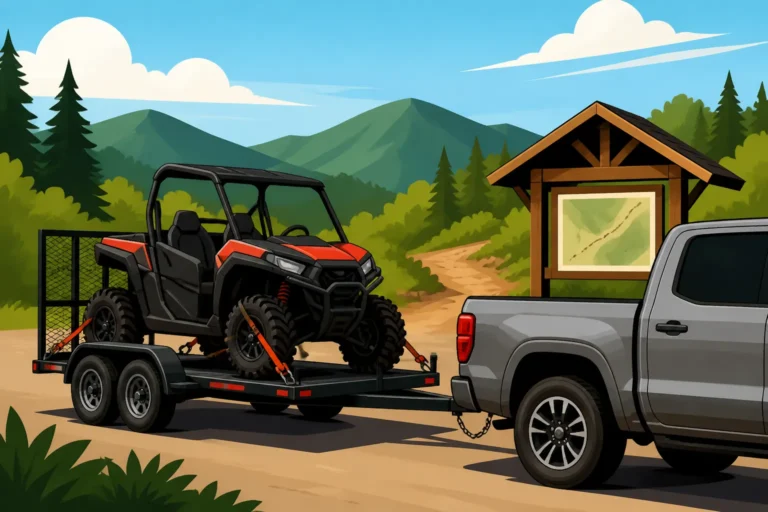
Trailer parking at Tennessee trailheads requires checking land rules, confirming route conditions, and avoiding blocked emergency access.
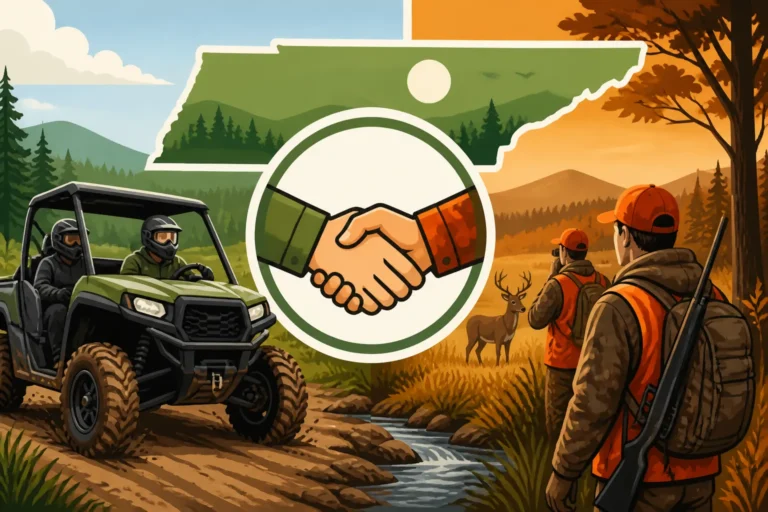
Tennessee wildlife management area rules explain how off-road vehicle riders safely share public lands with deer hunters.

Blaze orange helps ATV and UTV riders stay visible to hunters in the Cumberland hills, but rules differ between private parks and Wildlife Management Areas.

Snow on a Windrock bench creates slick trails, hidden ice, and narrow drop-offs requiring careful machine preparation and route planning.

Ice on shaded Cumberland trails can cause vehicle slides, requiring riders to spot hazards, prepare machines, and choose cautious routes.

Post-frost riding at Royal Blue brings mixed trail conditions, cold temperatures, and changing mud hazards that require careful preparation.

Copperheads on Tennessee ATV trails require careful riding habits, safe stopping practices, and proper bite response steps.

Tennessee trail ticks carry ehrlichiosis and Lyme disease, so this text explains prevention, gear checks, and removal.

North Cumberland August rides require heat planning, early starts, strict turnaround times, and conservative routes across the WMA units.

ATV creek crossings in East Tennessee hollers require assessing water depth, checking exits, and avoiding rising runoff.