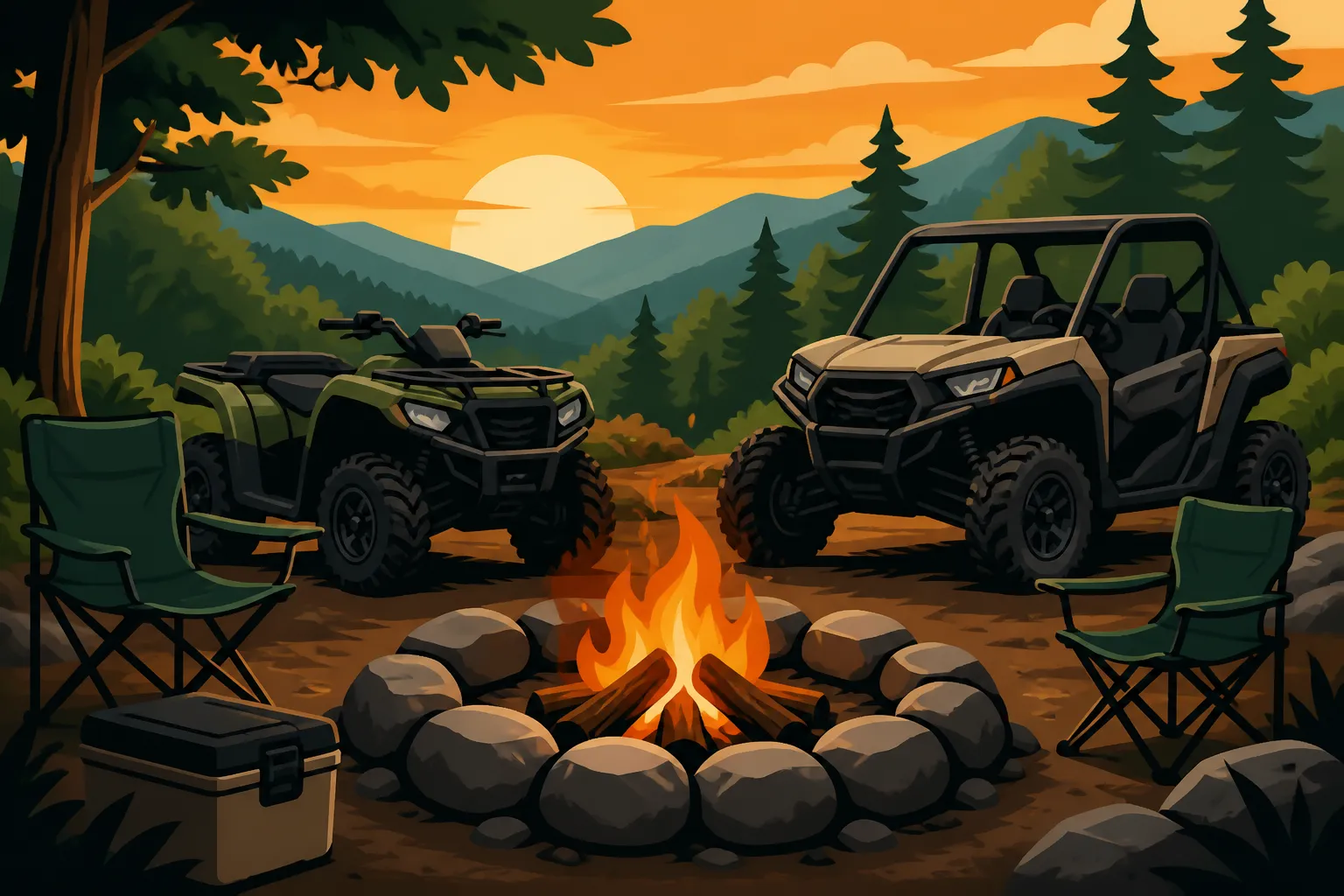
A Fire Ring at a Tennessee Trail Camp
A fire ring beside a Tennessee trail camp can look like a clear invitation to build a fire, but it may not be. Campfire rules depend on the property, campsite, and current conditions—not simply on having an OHV permit or finding a ring. Check what the site allows before lighting up, then plan to contain and fully extinguish the fire.
A fire ring is not blanket permission
A built fire ring is a useful clue that fires may be allowed at that particular campsite, but it is not a guarantee. The ring could be closed temporarily, intended for a different use, or subject to rules that limit when and how it may be used. A notice at the entrance, posted campsite instructions, or a direct answer from the land manager is more reliable than the ring alone.
This distinction matters because Tennessee trail riding takes place on different kinds of property. A private riding park, a campground, and a public wildlife management area may each set different rules. Even within one property, a rule can apply to designated campsites but not to a dispersed camp elsewhere. The permit that lets you ride does not necessarily give you permission to camp or make a fire.
Before your trip, check the property’s current camping and fire rules alongside its riding requirements. Tennessee Rules for Campfires at a Trail Park covers the issue from the park-rules perspective. If your ride is on public wildlife management land, review Tennessee Rules for Riding a WMA as well. A riding permit and permission to use a campsite are separate questions; do not assume one answers the other.
Ask whether fires are allowed at your specific site, not just whether fires are generally allowed at the property. A park may permit fires only in permanent rings, for example, or may restrict fires during dry or windy conditions. If you are staying at a private campground near a riding area, the campground’s rules may apply even when the trail system has its own permit and operating rules.
A quick comparison helps keep the different permissions straight:
| What you need to confirm | Why it matters | What to check |
|---|---|---|
| Permission to ride | Riding access does not automatically include camping access | The riding-area permit and its boundaries |
| Permission to camp | A nearby trailhead or parking area may not be a campsite | The campground or land manager’s site rules |
| Permission to build a fire | A ring may be closed or limited to certain uses | Posted notices and current fire restrictions |
| Permission to use collected wood | Gathering wood may be prohibited even when a fire is allowed | Property rules; use only approved fuel |
| Current site conditions | Wind or dry vegetation can make a permitted fire unsafe | Park updates and any restrictions in effect |
For a paid trail park, look for fire rules with the camping information rather than relying on the riding permit page alone. Windrock’s Trail Permits and Brimstone’s Land Use Permits explain why access requirements are property-specific; neither should be treated as a substitute for confirming campsite and fire rules. A permit for one riding area does not necessarily work at another, and it does not automatically establish that a particular campsite is open.
If you are unsure, ask before you unload. Calling a Tennessee Park Before You Load can help you make that check in advance. On arrival, read the entrance notices and campsite signs again. Conditions and temporary closures can change between the time you plan a trip and the time you reach the property. A Gate Board With Today’s Rules in Tennessee is a useful reminder to treat posted information as part of your arrival routine, not as background scenery.
Check for restrictions before you light anything
Even where a fire ring is normally available, current restrictions may change what is allowed. Dry weather, strong wind, nearby fire activity, or a temporary site closure may lead a property manager to limit or prohibit fires. Do not assume that yesterday’s rules—or a friend’s experience on a previous trip—settle the question for today.
Check the trail park or campground’s latest notices before traveling, and look again when you arrive. If the property posts a fire restriction, follow it even if the ring is clean and ready. When the rules are unclear, ask staff rather than interpreting silence as permission. If there is no one available to ask and no clear information, the safer choice is not to light a fire.
Pay attention to the exact wording of a restriction. It may prohibit open fires altogether, allow fires only in established rings, or limit fires when conditions are especially dry. Do not decide that a small flame, a cooking fire, or a fire started in a metal container falls outside a restriction unless the property’s rules say so. Ask what counts as an allowed fire at that site.
It also helps to check whether the campsite itself is open. A permitted fire is not appropriate at a closed site, and a campsite closure may be part of a wider trail or property restriction. Check updates before departure with Tennessee Trail Closures to Check First. The broader point is simple: riding access, camping access, and fire permission are related parts of trip planning, but they are not interchangeable.
If your plans involve a public area, do not assume that a campground rule from a nearby private park applies there. The land manager’s rules govern the site you are actually using. Similarly, a private campground’s fire ring does not authorize a fire on adjoining public land. Stay within the campsite boundaries, and ask where those boundaries are if they are not obvious.
A short pre-trip check can prevent a costly or dangerous misunderstanding:
- Identify who manages the campsite and confirm that camping is allowed there.
- Ask whether fires are currently permitted at your specific site.
- Confirm whether you must use an established ring and what fuel is allowed.
- Check for temporary closures or restrictions before leaving and again on arrival.
- Make sure you have enough water and time to put the fire out completely.
If fire rules change after you arrive, follow the new instruction. Do not argue that a reservation, riding permit, or earlier phone call overrides a later closure notice. A posted restriction is the signal to stop and adjust the plan.
Use the ring carefully and keep the campsite controlled
When fires are allowed, use the established ring rather than making a new one. A ring concentrates the fire in a designated spot, but it does not make a fire harmless. Sparks can escape, wind can move embers, and heat can damage soil, roots, or nearby objects. Keep the fire small enough to manage, and do not leave it unattended.
Before lighting, inspect the ring and the area around it. Look for dry leaves, grass, branches, trash, or other material that could catch. Keep tents, chairs, vehicles, fuel containers, and riding gear well away from the fire. Do not put gasoline, machine fuel, or other unsuitable liquids on a fire. Avoid building a fire larger than the ring can safely contain.
Use only fuel the property allows. Some sites may provide firewood or permit wood brought from elsewhere; others may prohibit collecting wood on the property. Do not cut branches from living trees or pull down dead wood unless the rules expressly allow it. If you bring firewood, check the site’s guidance on outside wood, since moving wood between areas can spread pests. When the rules do not explain what is acceptable, ask staff before using it.
Keep children and pets supervised around the fire, and set a clear boundary so nobody backs or steps into the ring. At an OHV camp, take extra care with gear and vehicle movement: hot cookware, fuel, gloves, and riding equipment can easily end up crowded into a small campsite. Keep a clear path between the fire, the sleeping area, and parked machines.
Have water or another approved way to put out the fire within reach before you start. Do not wait until the end of the evening to find out that the nearest water source is far away. A small vehicle-rated fire extinguisher can be a useful backup for a vehicle or equipment fire, but it is not a reason to leave a campfire unattended or to ignore site rules. If you compare equipment on Amazon, check that the extinguisher is appropriate for the likely fire types and can be securely carried; a loose extinguisher is difficult to reach when you need it.
Plan the fire around your departure time. If you need to leave the campsite, go to sleep, or pack for an early ride, stop adding fuel well beforehand. A fire that still has glowing coals can reignite or send embers into dry material. Never assume it is out just because there are no flames.
Put it out completely before leaving
A campfire is not finished when the flames disappear. Coals and ash can retain heat and start a fire after the campsite looks quiet. Leave enough time to extinguish the fire thoroughly before you go to bed or depart for a ride.
Use the method the property recommends. In general, add water carefully, stir the ashes and coals, and continue until the material is cool—not merely until it stops smoking. Check around and beneath the fuel for hidden hot spots. If water is not allowed or the site provides a specific extinguishing method, follow that instruction. Do not bury hot coals or leave them in the ring for the next camper unless the site’s rules explicitly direct you to do so.
A practical final check:
- There are no visible flames, glowing embers, or persistent smoke.
- The coals and ash have been stirred and cooled as directed.
- The ring and surrounding area do not feel hot.
- No burning material has been carried away from the ring.
- You have followed the property’s instructions for ash and leftover fuel.
Do not pour a large amount of water on a very hot ring without considering the site’s setup; it can create steam and scatter ash. Work carefully, keep your face and hands back, and add water in a controlled way. If the fire is spreading or you cannot control it, alert park staff or emergency services immediately rather than trying to manage a dangerous fire alone.
Leave the ring and campsite in the condition the property expects. Put trash in the appropriate place, do not leave food scraps, and do not move rocks or alter the ring. If you find the ring damaged, full of trash, or unsafe to use, tell the campground or park staff. Do not try to repair it with materials from the site.
Fire safety is part of trail planning, not a separate chore to squeeze in at the end. Check the camping rules, confirm any restrictions, keep the fire within an approved ring, and extinguish it fully before riding away. If you cannot verify that a fire is allowed, skip it and use an alternative permitted way to prepare food or stay warm.
Disclaimer
This article is for general informational purposes only and does not constitute professional advice. Laws, prices and regulations vary by location and change over time. Consult a qualified professional for guidance on your specific situation.