Tennessee’s $20 Resident Day Permit
Tennessee’s resident day permit is easy to mistake for a general ATV registration or a pass that works at every riding area. It is neither. Before you load up, it helps to know which land the permit covers, who needs one, what it does not replace, and how to keep proof handy on the trail. Here’s how to plan around the resident day permit without paying for the wrong access.
What the Resident Day Permit Covers
The resident day permit is associated with riding designated off-highway vehicle trails on Tennessee Wildlife Management Areas, including areas within the North Cumberland system. It is a land-access permit for the eligible trail system, not a vehicle license plate, statewide registration, or permission to ride wherever an ATV or UTV can physically go.
That distinction matters because Tennessee has several different kinds of riding access. Public WMA trails, private recreation parks, private land, and public roads each have their own rules. A permit for one does not automatically authorize riding on the others. For a broader look at what the state permit does and does not apply to, see Tennessee Trail Permits Explained.
The title’s $20 figure is the resident day-permit amount associated with this permit category. Permit fees and options can change, so check the official permit portal before you buy rather than relying on an old receipt, screenshot, article, or forum post. The portal is the place to confirm the current fee, dates offered, eligibility requirements, and any conditions attached to the permit.
A day permit is generally the practical option when you are planning a single riding day or want to try the system before committing to a longer permit. It may also make sense if you ride infrequently or your trip falls outside the dates covered by another permit you already hold. The right choice depends on your plans, not just the price printed beside a permit option.
| Question | What to keep in mind |
|---|---|
| What does the permit cover? | Eligible OHV trail access on the designated Tennessee WMA system, subject to current rules and closures |
| Is it vehicle registration? | No. It is not a plate or general registration document |
| Does it work at every Tennessee park? | No. Private parks and other land managers set their own access requirements |
| Is the $20 amount guaranteed? | No. Confirm the current fee and permit options through the official portal |
| Does a permit make a closed trail legal to ride? | No. Closures and posted restrictions still apply |
| Does it replace a road-use permit or vehicle requirement? | No. Trail access and lawful road use are separate questions |
The permit also does not guarantee that every trail will be open on your chosen day. A route can be closed because of weather, maintenance, hunting activity, land-management decisions, or other restrictions. Check current notices close to your ride, then check again before you head out. Planning around a fee is useful; planning around access conditions is essential.
Tennessee does not issue one universal trail sticker that grants access to every OHV destination. If you are comparing the state permit with a pass from a private riding area, Why Tennessee Has No Statewide Trail Sticker explains why those systems are separate. The state permit and a commercial park’s permit are different products issued for different land.
Who Should Buy One and When
The resident day permit is intended for eligible Tennessee residents who plan to ride the covered WMA trails for a day. Residency is not simply a matter of where you are standing when you buy the permit. The state portal may ask for information to establish eligibility, so use the official instructions and provide accurate details.
Do not assume that a Tennessee driver’s license, a machine titled in Tennessee, or a Tennessee mailing address automatically settles every eligibility question. If your situation is unusual—such as recently moving to Tennessee, holding a temporary license, or buying a permit for someone else—check the current residency definition before purchasing. The permit portal’s terms are more useful than guessing at the counter or after reaching the gate.
A day permit is most useful when your trip is genuinely short. If you plan to ride for multiple days, compare the available permit periods before paying. The day option may be simplest for one outing, while a longer-duration option could be more convenient for a multi-day visit. The right comparison includes the exact riding dates, the permit’s validity period, and whether you will actually use all the days you buy. When a Three-Day Permit Beats a Single Day can help you think through that choice.
Before purchasing, ask yourself:
- Are you riding on land covered by the state WMA permit, rather than a private park or another managed area?
- Are you eligible for the resident option under the portal’s current rules?
- Which days will you ride, and does the permit option cover those dates?
- Is the route you want open to your type of machine?
- Have you checked whether the permit is required for each adult or vehicle in your party?
- Do you have a separate permit for any other riding area on your itinerary?
The last question is a common source of confusion. A permit bought for the North Cumberland system does not follow you to Windrock, Brimstone, or another private recreation property. Those destinations have their own access rules and fees. In the other direction, a private park pass does not replace the state WMA permit. If your trip includes more than one area, list each destination and verify its access requirements separately.
The state permit also does not automatically resolve whether a particular vehicle is suitable or allowed on a specific route. Machine type, width, trail designation, and posted rules can matter. If you need to understand the difference between a state permit and the rules for riding on WMA land, review [Tennessee Rules for Riding a WMA]. For a visiting rider, Does Tennessee Honor Out-of-State Registration? covers a separate question that should not be confused with purchasing an access permit.
How to Buy and Keep Proof of Your Permit
Use the official state permit portal and follow its current prompts. Online purchasing can be convenient, but take a moment to confirm the selected permit category, residency status, dates, and rider or vehicle information before submitting payment. If a choice is unclear, pause and contact the relevant state office instead of choosing the closest-looking option and hoping it works.
For more detail on the online process, see Buying a Tennessee Permit Online. The exact screens and payment options can change, but the basic habit is steady: review the permit summary before completing the transaction, then save the confirmation and read any instructions about displaying or carrying proof.
After purchase, keep a usable record with you. If the permit is digital, save the confirmation in a way you can access when cell service is poor. If the portal or permit terms require a printed copy or another form of display, follow that requirement. Do not assume a payment confirmation alone is sufficient if the permit instructions say otherwise.
A practical pre-ride routine:
- Save the permit confirmation on your phone.
- Take a screenshot that can be opened without a data connection.
- Print a copy if the official instructions call for one or if you want a backup.
- Keep proof where the operator can retrieve it without unpacking the whole machine.
- Make sure the rider named or covered by the permit matches the person who will be riding.
- Check that the permit dates align with your trip.
- Recheck the current trail notices before leaving.
A waterproof document sleeve or small organizer can keep paper proof from becoming unreadable in rain, mud, or a wet gear bag. If you shop on Amazon for a sleeve or organizer, check that it is large enough for the printed permit and that its closure will hold up to the conditions you expect. A phone mount or waterproof phone pouch can help with navigation, but do not treat a mounted phone as a substitute for carrying proof in the form the permit rules require.
Another useful preparation is to keep the route map and permit proof separate from items that are easy to lose during a stop. Some riders store a paper copy in a protected pocket and keep a second copy with their trip paperwork in the tow vehicle. A basic waterproof map sleeve from Amazon can also protect a printed map, though a map sleeve does not make an outdated map reliable. Use current trail information and respect the posted signs on the ground.
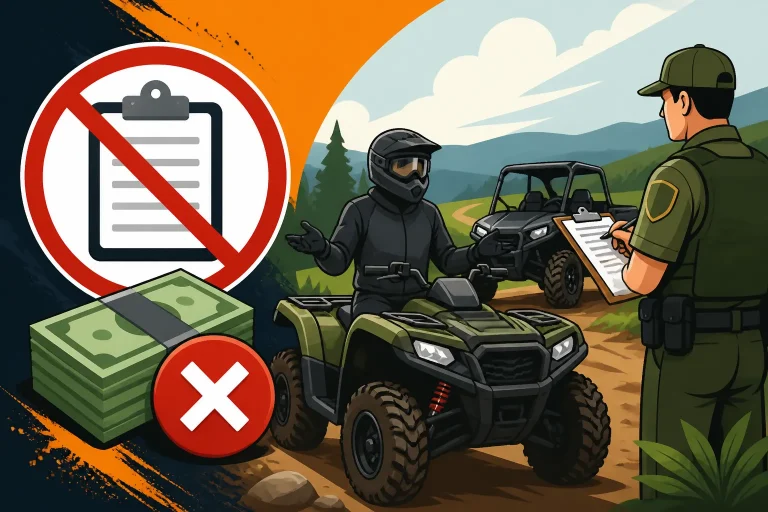
The point is not to carry a binder on every ride. It is to avoid arriving at a gate with a dead phone, no signal, and no way to show that you bought the correct permit. If an employee or officer asks for proof, being able to retrieve it promptly makes the interaction easier.
If you purchase permits for several people, be careful not to assume one adult’s confirmation covers everyone. The current rules may distinguish between an individual permit, a vehicle, and the adults in a party. Verify who must hold a permit for your group and keep each person’s proof accessible. One Adult per Vehicle With a Tennessee Permit addresses this point in more detail.
What the Permit Does Not Replace
The resident day permit grants only the access described by its terms. It does not make an otherwise prohibited ride legal, and it does not override restrictions set by a land manager. You still need to follow trail closures, designated routes, speed limits, machine requirements, safety rules, and any seasonal conditions that apply.
It is also not the same as registering or titling a machine. Tennessee’s approach to OHV documentation is a separate subject from trail access. A title or sticker does not serve as a trail pass, and a trail permit does not serve as proof of ownership or vehicle registration. If you are sorting out the difference, Why Tennessee Reciprocates Nothing explains why out-of-state documents and Tennessee access requirements should not be treated as interchangeable.
Road use is another separate issue. A WMA trail permit does not grant permission to ride on a county road, town street, or state highway. Road access depends on the applicable state law, road designation, machine classification, and local restrictions. Before connecting trails by road, check Tennessee Rules for Riding a County Road and the rules for the specific road you intend to use. Do not assume that a road near a riding area is part of the trail system.
A permit also does not let you enter land that is not included in the authorized area. A trail may approach private property, a restricted unit, or a closed route. Stay on marked, authorized trails and obey gates and signs even if a route appears passable. Never treat an open-looking track as proof that it is open to OHVs.
If you plan to ride a WMA during a hunting season or another special-use period, look for the current rules before the trip. There can be additional requirements or restrictions beyond the general permit. Check the relevant land manager’s notices rather than relying on a rule you remember from a previous visit. Conditions can vary between units and may change during the year.
Finally, the permit does not guarantee a refund or replacement if your plans change, a trail closes, your machine breaks down, or weather makes riding unpleasant. Those outcomes depend on the current permit terms and agency policy. Read the conditions before purchase, especially if you are traveling a long distance or planning around a narrow window.
Planning a Ride Without Paying for the Wrong Pass
The simplest way to avoid a permit mistake is to build your access plan around the land, not around the machine. Start with the exact trail system you intend to ride. Then identify who manages it and what permit that manager requires. An ATV or UTV can be legal to operate on one property and prohibited on another, even when the properties are only a short drive apart.
For a ride in the North Cumberland area, confirm that your planned route is part of the permitted WMA system and not a nearby private park or a closed section. For a commercial recreation park, check that park’s pass, hours, machine restrictions, and rules directly. If you intend to ride more than one place in a weekend, write down each location’s requirements separately.
A quick checklist before you leave:
- Confirm the current resident day-permit fee and terms on the official portal.
- Check that you meet the resident eligibility rules.
- Verify the permit dates and how the permit must be carried or displayed.
- Confirm which riders need their own permit or coverage.
- Check the current trail map, open areas, closures, and notices.
- Make sure your machine fits the route and meets its requirements.
- Carry proof in a form you can access without dependable cell service.
- Buy separate access passes for separate private parks or land managers.
- Keep road-use questions separate from trail-permit questions.
If you are traveling with friends, agree on the destination and permit plan before anyone pays. One person may be thinking of a WMA trail, while another assumes the group is going to a private park. That misunderstanding can leave riders with passes that are valid, but for the wrong place.
It can also help to assign one person to verify access information for the group and send everyone the official purchase instructions. Each rider should still check that the permit applies to them and that they can show proof. A group message with the trail system name, dates, permit link, and meeting location is more reliable than a verbal plan made at a fuel stop.
Amazon may be useful for practical trip supplies such as a small waterproof sleeve, but it cannot verify whether a trail is open or whether a permit covers a particular area. Use the official portal and land-manager notices for access questions; use retailers only for gear. That separation keeps a convenient shopping search from becoming a substitute for checking the actual rules.
The $20 resident day permit can be a straightforward way to plan a one-day ride on eligible Tennessee WMA trails. The main thing is to buy the correct permit for the correct land, confirm the current fee and terms, and remember that access, vehicle paperwork, and road use are separate issues. When in doubt, check the official portal and current trail notices before you load the machine.
Disclaimer
This article is for general informational purposes only and does not constitute professional advice. Laws, prices and regulations vary by location and change over time. Consult a qualified professional for guidance on your specific situation.