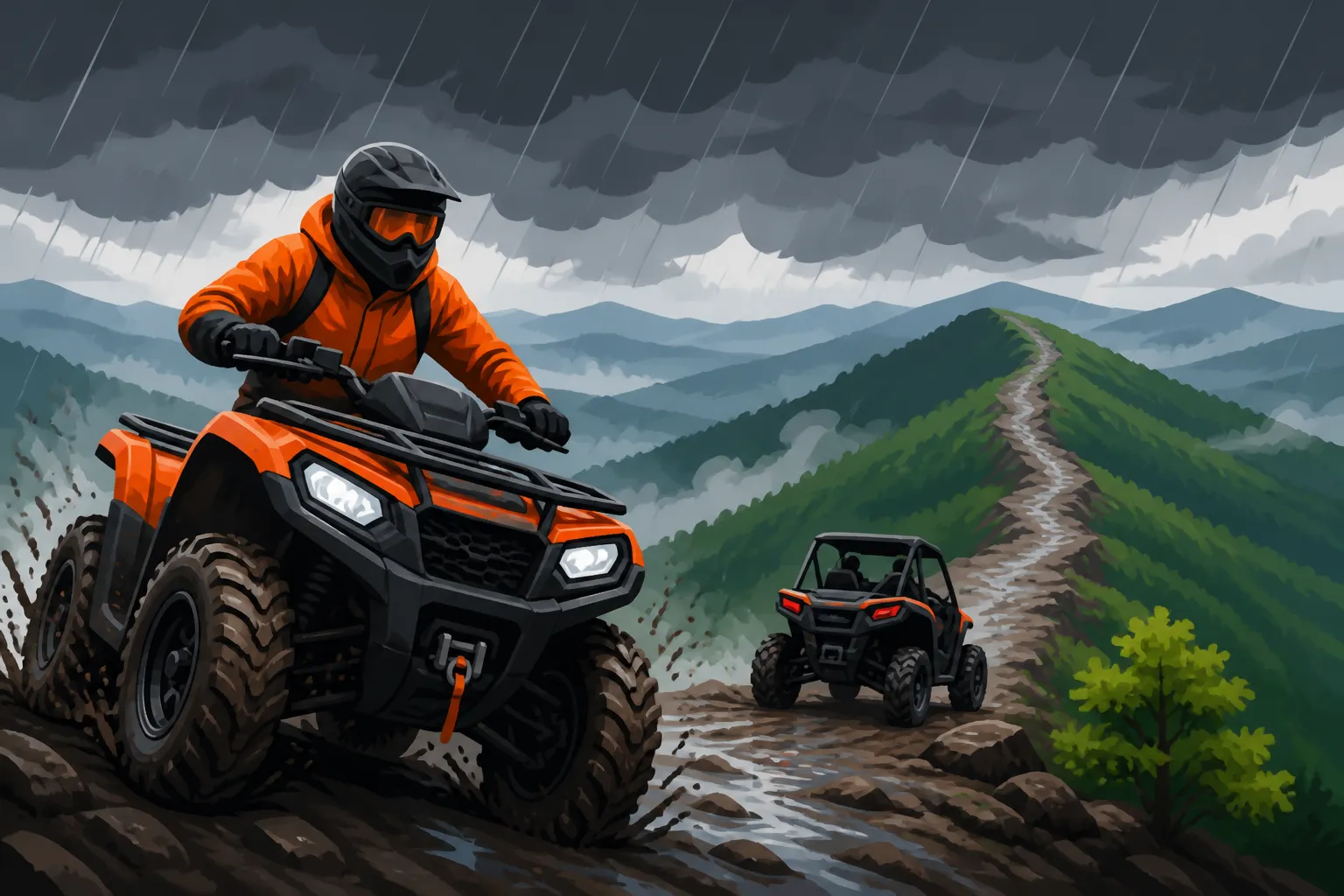
Riding a Windrock Ridge in Rain
There's nothing quite like the allure of Windrock Park, is there? But when the skies open up and the rain starts to fall, those incredible trails can transform into an entirely different beast. What was once a dusty path becomes a slick, muddy challenge, and what was a clear view turns into a foggy, spray-filled struggle. This guide is here to walk you through everything you need to know to safely and enjoyably tackle a rainy day on Windrock's majestic ridges, ensuring you're prepared for the elements and ready to conquer the mud.
Preparing for a Wet Windrock Adventure
Riding in the rain isn't just about throwing on a jacket and hoping for the best. It requires a whole different level of preparation, both for yourself and your machine. Ignoring the forecast can quickly turn an exciting day into a miserable, and even dangerous, experience. Think of it as gearing up for battle against the elements – you wouldn't go to war without your armor, right?
Gearing Up for the Elements
When it comes to staying comfortable and safe in the rain, your personal gear is paramount. Being cold, wet, and miserable makes it incredibly hard to focus on the trail, which is when mistakes happen.
First and foremost, invest in a high-quality rain suit. This isn't just a poncho; it's a dedicated two-piece or one-piece suit designed to keep you dry through sustained downpours and muddy splashes. Look for something that's waterproof and breathable, so you don't end up sweating from the inside out. Layering is key: start with moisture-wicking base layers, add a fleece or insulating layer for warmth, and then your waterproof outer shell. Even in warmer rain, a good base layer helps regulate body temperature when you're alternating between high exertion and standing still.
Your hands and feet are often the first to get cold and wet, and losing dexterity in your fingers or feeling numb in your toes can severely impact your riding. Waterproof gloves are a must, ideally with some insulation if the temperatures are cool. For your feet, waterproof boots are non-negotiable. Many riders opt for rubber boots or dedicated ATV/UTV boots that offer excellent waterproof protection and good grip on pegs or floorboards. Don't forget waterproof socks as an extra line of defense; sometimes, even the best boots can get overwhelmed by deep puddles or creek crossings.
Finally, your helmet and eye protection need special consideration. A full-face helmet with a visor is often preferred for rain, as it offers more protection from water spray and mud. If you use goggles, bring multiple sets of tear-offs or roll-offs, or at least a few spare lenses. Anti-fog sprays are your best friend here, as fogged-up goggles are a major safety hazard. Consider a helmet with good ventilation that can be closed off to prevent water intrusion, but also allows airflow to prevent fogging. [Tennessee Helmet Law for ATV Riders] outlines the requirements if you plan to hit any public roads.
Machine Maintenance and Modifications
Your ATV or UTV is going to be put through its paces in the rain and mud, so making sure it's ready is crucial. This isn't just about preventing breakdowns, but about enhancing safety and capability.
Tires are perhaps the most critical component for wet weather riding. Aggressive, open-tread tires designed for mud and soft terrain will provide far better traction than all-purpose tires. Check your tire pressure before you head out; slightly airing down can sometimes increase your contact patch and improve grip on slick surfaces, but be careful not to go too low, especially if you're hitting rocks. For more extreme conditions, beadlock wheels can prevent tires from coming off the rim if you air down significantly. Many riders swear by brands that offer robust mud-specific tire lines.
Winching capabilities become absolutely essential. Even if you're usually confident without one, rain turns solid ground into quicksand. A reliable winch, whether electric or manual, can be the difference between a quick self-recovery and an hours-long ordeal waiting for help. Ensure your winch rope or cable is in good condition, and always carry a tree saver strap and shackles. Products from brands like SuperATV often include heavy-duty winches and mounting kits that are well-suited for the challenging terrain you'll find at Windrock. Consider also adding a heavy-duty bumper for protection and an easy recovery point.
Beyond tires and winches, think about protecting your machine's vital electronics. Water can wreak havoc on wiring, ignition systems, and fuse boxes. Many riders add dielectric grease to electrical connections or use waterproof electrical tape to seal vulnerable spots. Check your air filter; a wet filter can starve your engine of air. Some riders install snorkel kits to raise air intakes and CVT vents, providing crucial protection for deeper water crossings. Finally, ensure all your lights are working, especially brake lights and headlights. Reduced visibility means you need to be seen, and you need to see the trail.
Essential Supplies for the Trail
A well-stocked pack is your lifeline on the trail, especially when conditions are tough. You’ll be covering [73,000 Tennessee Acres at Windrock], so being self-sufficient is smart.
Always carry more water and snacks than you think you'll need. Cold weather can dehydrate you just as quickly as hot weather, and expending extra energy to fight through mud means you'll burn calories faster. High-energy snacks like granola bars, nuts, or dried fruit are great.
A comprehensive first-aid kit is non-negotiable. Slips and falls are more common in wet conditions, and you want to be prepared for cuts, scrapes, or sprains. Include things like waterproof bandages, antiseptic wipes, pain relievers, and any personal medications.
For navigation, don't rely solely on your phone. Wet hands, low battery, or a dropped device can leave you stranded. Carry a physical map of Windrock (like the [Tennessee Trail Maps Worth Carrying]) and a compass, and know how to use them. A GPS unit designed for off-road use is also an excellent investment, as many are waterproof and rugged.
Finally, a basic toolkit is essential. Include things like a tire repair kit (plugs, patch kit, portable air compressor), spare fuses, zip ties, duct tape, a multi-tool, and a small shovel. A sharp knife, a headlamp, and a fire starter can also be invaluable in an emergency. If you're riding with a group, coordinate who is carrying what, so you don't duplicate efforts but ensure all bases are covered. Always remember to carry a fully charged power bank for your phone, even if it's just for emergencies.
Navigating Windrock's Trails in the Rain
Riding the [300 Miles at Windrock] in the rain requires a different mindset and skillset than fair-weather riding. The challenges are amplified, but so is the sense of accomplishment when you conquer them.
Understanding Trail Conditions and Challenges
Rain utterly transforms a trail system like Windrock. What might have been a minor rut or a gentle slope in dry weather can become a significant obstacle.
Mud: This is the most obvious change. Mud can range from slick, greasy topsoil to deep, vehicle-swallowing bogs. The consistency changes dramatically depending on the soil type; some areas might be clay-like and extremely slippery, while others might be more sandy and less traction-resistant. Knowing the local geology, even generally, can help you anticipate. Deeper mud can hide rocks, stumps, or drops, making it unpredictable.
Slick Rocks and Roots: Any exposed rock or tree root becomes incredibly slick when wet. This is where your tire choice and careful throttle control really come into play. A momentary lapse in judgment or an aggressive throttle input can send you sliding sideways or cause your tires to lose grip entirely. Wet leaves on top of rocks or roots are a double whammy, creating an even more treacherous surface.
Water Crossings: Small puddles can become rushing creeks, and existing creek crossings can become significantly deeper and faster. Always scout water crossings if you can. Look for the shallowest point, check for hidden obstacles, and never enter water that's deeper than your machine's air intake or electrical components can handle. If you're unsure, turn back or find an alternate route.
Reduced Visibility: Rain itself reduces visibility, but the spray from other riders, mud flung from your own tires, and potential fog can make it even worse. This affects your ability to see upcoming obstacles, other riders, and trail markers. This is why good eye protection and helmet visors are so important.
Safe Riding Techniques for Wet Terrain
Adjusting your riding style for wet conditions is crucial for safety and control. Think smooth, slow, and deliberate.
Throttle and Steering Control: The biggest mistake riders make in mud and on slick surfaces is being too aggressive with the throttle. Smooth, consistent power delivery is key to maintaining traction. Jerking the throttle will just cause your tires to spin uselessly or break traction. Steer gently, using small, controlled movements. Over-steering can lead to slides or even rollovers, especially on off-camber slopes. If your machine starts to slide, often the best technique is to look where you want to go and make minor, controlled corrections with both the throttle and steering.
Line Choice: In dry conditions, you might take the path of least resistance. In the wet, you need to be far more strategic. Look for lines that offer the best traction – this might be the high side of a rut, a less-used part of the trail, or even a line that seems more difficult but has solid ground. Avoid the deepest mud holes unless you are prepared for a recovery. When crossing mud, try to maintain momentum, but not excessive speed. Sometimes, going just off-center from existing ruts can give you fresh, less churned-up ground.
Braking: Braking distances increase dramatically on wet and muddy surfaces. Start braking earlier and apply the brakes smoothly. Avoid sudden, hard braking, which can cause your wheels to lock up and you to slide uncontrollably. Utilize engine braking on descents by selecting a lower gear, which provides a more controlled slowdown than relying solely on your mechanical brakes. If you have four-wheel drive, engage it for better control and traction.
Managing Visibility and Communication
When visibility drops, communication and awareness become even more critical, especially if you're riding in a group.
Keeping Your Eyes Clear: As mentioned, anti-fog solutions for goggles or helmet visors are indispensable. If your visor or goggles get caked with mud, pull over to clean them. Don't try to ride blindly. Some riders carry a small spray bottle with water and a rag for quick clean-ups. For UTVs, ensure your windshield wipers are working, and consider applying a rain-repellent treatment.
Group Communication: If you're riding with others, maintain closer distances than you might in dry weather, but still leave enough room to stop safely. Hand signals become vital if radio communication is difficult due to noise or conditions. Agree on clear signals before you head out, especially for "stop," "slow down," "obstacle ahead," or "I need help." If someone gets stuck, everyone should stop and assist. [Tennessee Rules for a Group Ride] might offer additional insights on how to manage your party.
Trail Marking and Awareness: Pay extra attention to trail markers, as they can be harder to spot in reduced visibility. Keep an eye on your GPS or map. If you're unfamiliar with the area, stick to marked trails and avoid venturing off into unknown territory. [Tennessee Rules for Riding Off the Trail] are always in effect, rain or shine.
Post-Ride Care and Recovery
You've conquered the ridges, splashed through the mud, and made it back to camp. Now it's time for the often-dreaded, but absolutely essential, post-ride cleanup. Neglecting this step can lead to premature wear, corrosion, and costly repairs down the line.
Cleaning Your Machine After a Rainy Ride
Mud isn't just dirty; it can be corrosive and abrasive. Allowing it to dry on your machine is a recipe for disaster.
The first step is a good rinse to get off the heavy stuff. A pressure washer is ideal, but even a garden hose with a strong nozzle will work. Start from the top and work your way down. Pay special attention to areas where mud tends to accumulate: around the suspension components, in the wheel wells, on the skid plates, and in the engine bay. Mud packed into cooling fins can lead to overheating, and grit in moving parts like U-joints or CV boots will accelerate wear.
After the initial rinse, use a good quality ATV/UTV soap and a soft brush or sponge to scrub away any remaining grime. Rinse again thoroughly, ensuring all soap residue is gone. Don't forget to clean the underside and inspect for any damage that might have occurred during your ride. Pay attention to the chain (if applicable), drive shafts, and brake components.
Once clean, let your machine air dry, or use a leaf blower to speed up the process. Once dry, consider applying a silicone-based protectant spray to plastic and rubber components to help repel water and prevent fading. Lubricate all moving parts, especially chain and suspension pivots, with appropriate greases or lubricants. For anyone operating an electric machine, ensure the battery and electrical connections are thoroughly dried and protected. [Tennessee Rules for an Electric Machine on Trails] are worth reviewing.
Personal Decontamination and Warm-Up
After a full day of riding in the rain, chances are you're going to be pretty dirty, and possibly quite chilled. Getting yourself clean and warm is just as important as cleaning your machine.
First, shed your muddy outer layers as soon as possible. Have a change of dry, warm clothes ready. Many riders keep a large storage bin in their truck specifically for dirty gear, keeping the mud contained. If you have access to a shower, take a hot one! It's amazing how much better you'll feel after getting thoroughly clean and warm. If not, a good wipe-down with wet wipes and a change into dry clothes will still make a huge difference.
Hydrate with warm beverages like hot chocolate, coffee, or tea. This helps raise your core body temperature and replaces fluids. Eat a warm, hearty meal to refuel and help your body recover. Remember that your body has been working harder in the cold and wet, so replenishing energy is crucial. Don't underestimate the risk of hypothermia, even on days that don't feel "freezing." Being wet and exposed to wind can quickly drop your core temperature.
Reflecting on the Ride and Future Prep
Every ride, especially a challenging one in the rain, is an opportunity to learn and improve for next time.
Take a few moments to think about what went well and what could have been better. Was your gear adequate? Did your machine perform as expected? Were there any areas where you felt unprepared or where your technique could have been improved? Did you discover a new favorite trail, or one that you'll definitely avoid in the wet?
Make a mental or physical note of any gear that failed or any modifications you'd like to make to your machine before your next rainy adventure. Maybe you need better waterproof boots, or perhaps that winch you've been eyeing now seems like a necessity. Perhaps you'll invest in some more SuperATV accessories like a full roof or better mud-fenders. This continuous cycle of riding, learning, and improving is what makes you a more skilled and prepared rider.
Road Use and Regulations in Rainy Conditions
While the focus at Windrock is primarily off-road, it's not uncommon to encounter public roads, whether you're using them for staging, connecting between trail sections, or simply accessing the park. When the weather is wet, these transitions become even more critical to handle legally and safely.
When You Might Encounter Roads at Windrock
Windrock Park, like many large trail systems, isn't a completely isolated wilderness. You might find yourself on public roads for several reasons:
- Accessing Trailheads: Many staging areas or specific trail access points require navigating a short stretch of county road.
- Connecting Trail Systems: Sometimes, a short segment of public road connects one section of trails to another, allowing you to cover more ground on your ride.
- Reaching Amenities: Getting to a general store, gas station, or restaurant just outside the park boundaries might involve using a public road.
- Leaving the Park: At the end of your day, you'll inevitably be on public roads to get back to your vehicle or lodging.
It's vital to remember that even a quick jaunt on a paved surface means you're no longer just an off-road rider; you're operating a vehicle on a public roadway, and you must adhere to all applicable traffic laws.
Tennessee Road Rules in Adverse Weather
Tennessee has specific regulations for ATVs and UTVs on public roads, and these rules don't just disappear when it rains. In fact, adverse weather often means you need to be more cautious and comply more strictly.
Helmet Laws: Tennessee law generally requires helmets for ATV operators and passengers on public roads. While Windrock has its own rules, if you're on a public road, state law applies. Check [Tennessee Helmet Law for ATV Riders] and [Tennessee Helmet Law for Passengers] for the specifics. Reduced visibility from rain only makes a helmet more crucial for safety.
Speed Limits: Just because an ATV or UTV might be capable of higher speeds, doesn't mean you should push it, especially in the rain. Tennessee law often designates lower speed limits for OHVs on approved public roads, and common sense dictates you should reduce your speed even further in wet conditions. Roads become slick, stopping distances increase, and other vehicles might have limited visibility of you.
Equipment Requirements: Any time you are on a public road, your machine must meet certain [Tennessee Equipment Rules for Road Use]. This includes functional headlights, taillights, brake lights, and often turn signals. In the rain, these lights are essential for visibility. If your UTV has a windshield, it should have a working wiper. Tires designed for off-road use can have very different handling characteristics on wet pavement, so be extra cautious.
Visibility and Signaling: In rainy conditions, make yourself as visible as possible. Keep your lights on, even during the day. Use hand signals or your turn signals clearly and well in advance of any turns or lane changes. Be extra aware of traffic around you; car drivers might not expect to see an OHV on the road, especially in poor weather. Always prioritize safety over getting to the next trail quickly. For information on how to legally cross a highway, check [Tennessee Rules for Crossing a Highway].
Understanding Local Ordinances: While the state sets overall guidelines, individual counties and cities in Tennessee often have their own ordinances regarding OHV use on local roads. This can be complex, as some areas may allow UTVs on certain roads, while others may not. Always verify the specific rules for the county you're in. Even if a county road is "open" to OHVs, that doesn't mean it's safe or advisable to ride it at full speed in the rain. Always be aware of signs indicating restricted roads or special rules. Non-compliance can lead to [Tennessee Fines for Illegal UTV Road Use].
Riding in the rain at Windrock offers an exhilarating and memorable experience, but it's one that demands respect, preparation, and careful execution. By understanding the challenges, preparing your gear and machine, and riding responsibly, you'll be able to enjoy the unique thrill of a wet, muddy day on the trails while staying safe and sound.
Disclaimer
This article is for general informational purposes only and does not constitute professional advice. Laws, prices and regulations vary by location and change over time. Consult a qualified professional for guidance on your specific situation.