Riding Hickman County Roads
Navigating the ever-changing landscape of off-highway vehicle (OHV) laws in Tennessee can feel like trying to find your way through a dense Cumberland Gap fog. You bought your side-by-side or ATV for the trails, for the backroads, for adventure, and the idea of being able to legally connect those experiences by riding county roads in places like Hickman County is incredibly appealing. However, the fear of unknowingly breaking a rule, getting a hefty fine, or worse, finding yourself in an unsafe situation, often keeps many riders confined to trailers or private land. This guide is here to cut through that confusion, giving you a clear roadmap to understanding how and where you can legally and safely enjoy riding your OHV on the designated county roads of Hickman County.
Navigating Tennessee's OHV Road Rules: The Statewide Picture
For years, figuring out where you could and couldn't legally ride your ATV or UTV on a public road in Tennessee felt like a patchwork quilt of local ordinances, often leaving riders guessing. You might be perfectly legal in one county, cross an invisible line, and suddenly be breaking the law. It was a source of endless frustration for enthusiasts who just wanted to enjoy their machines responsibly. Thankfully, the state has made strides to create a more unified approach, though local decisions still hold significant weight.
The Shift from County-by-County to a Unified Approach
Historically, the ability to ride an OHV on a public road in Tennessee was largely left to individual counties, leading to a confusing mix of regulations. One county might embrace it, seeing the economic potential of trail riders, while a neighboring county might ban it outright. This meant you, the rider, had to do extensive research for every single county you planned to visit, which was a huge hassle. Imagine planning a multi-county ride, only to find a critical connector road was illegal, forcing you to turn around or risk a ticket. This fragmentation often deterred riders, making it harder to plan trips and enjoy the vast natural beauty Tennessee offers.
However, recent legislative changes have aimed to streamline this process, establishing a clearer statewide framework for counties to adopt OHV road use. The goal was to provide a more consistent set of guidelines, making it easier for both residents and visitors to understand their rights and responsibilities. While the power to designate specific roads still largely rests with local authorities, the state has provided the blueprint for how they can do so within a set of uniform rules. This means that while Hickman County makes its own decisions, it does so within a framework that applies statewide, giving you a baseline understanding no matter where you eventually ride. You can learn more about this in [Tennessee Rules for Riding a County Road].
Understanding Adventure Tourism Districts
One of the most significant developments in Tennessee's OHV landscape is the creation of "Adventure Tourism Districts." These districts are a legislative tool designed to empower counties with significant natural attractions, like extensive trail systems or rugged landscapes, to legally open their county roads to OHVs. The idea is to connect these natural assets, fostering economic development through tourism by making it easier for riders to access trails, gas stations, restaurants, and lodging without having to load their machines onto a trailer for short distances. This framework acknowledges the growing popularity of OHV recreation and aims to integrate it responsibly into the local economy.
Hickman County is one of these ten counties specifically named in the state law as being eligible to establish an Adventure Tourism District, which is great news for riders. This designation gives the county commission the authority to pass ordinances designating county roads for OHV use, as long as they meet specific criteria set out by the state. It's not a free-for-all, but a structured way for counties to embrace OHV tourism. For a comprehensive overview of these districts and the counties involved, check out [Tennessee's Adventure Tourism Districts] and [The Ten Counties Named in Tennessee Law], which includes [Perry, Unicoi, Fentress and Hickman Counties]. This is the legal foundation upon which your ability to ride in Hickman County rests, allowing for the possibility of a seamless blend of trail and road riding experiences.
Riding Legally in Hickman County: What You Need to Know
So, with the statewide framework in place, what does this actually mean for you, your ATV, and your UTV in Hickman County? It's not just about knowing the general rules; it's about understanding the specific decisions Hickman County has made within that framework. This is where the rubber meets the road, quite literally, and where careful attention to local details becomes crucial.
Identifying Permitted Roads and Speed Limits
The biggest hurdle for many riders is simply knowing which roads are open to OHVs. Just because Hickman County is part of an Adventure Tourism District doesn't mean all county roads are fair game. The county commission must specifically designate roads, and they often do so with public safety and local traffic patterns in mind. These designated roads are typically those that connect trailheads, provide access to local businesses, or allow passage between different riding areas. You'll often find these lists published by the county clerk's office, on the county's official website, or sometimes even signposted at popular entry points. It’s absolutely vital that you consult the official list of designated roads for Hickman County before you ever put a wheel on pavement. Riding an undesignated road, even accidentally, can lead to fines and a ruined day.
Once you're on a designated road, you must adhere to the posted speed limits. Tennessee law generally restricts OHVs to roads posted [Tennessee's 45 mph Road Rule] or less. This is a critical distinction, as it immediately rules out state highways or busy thoroughfares with higher speed limits. Always remember that your OHV, even if modified with the best aftermarket parts from companies like SuperATV, is still a very different machine from a car or truck when it comes to road handling, especially at higher speeds. Staying aware of the speed limit and driving defensively are not just legal requirements but essential safety practices. For more on this, consult [Riding a Road Posted 45 mph or Under].
Operating Hours and Restrictions
Another key aspect of legal OHV road use in Hickman County, and indeed across Tennessee's Adventure Tourism Districts, pertains to operating hours. The general rule for OHV road use is strictly limited to daylight hours. This means [Riding Only Between Sunrise and Sunset]. There's a good reason for this: while your OHV might have headlights, they are often not designed to illuminate a public road and make your vehicle visible to oncoming traffic with the same effectiveness as a street-legal car. Visibility issues, combined with the often-rugged nature of OHVs, make night riding on public roads significantly more dangerous.
Counties also have the discretion to impose additional restrictions beyond the statewide minimums. This could include limitations on certain types of OHVs, specific dates when roads might be closed to OHVs for events, or even noise ordinances. It’s important to remember that these county roads are shared spaces. Farmers use them, residents commute on them, and families enjoy them. Responsible riding means being aware of your surroundings and respecting local communities. Before your trip, always check for any specific Hickman County ordinances that might further refine these rules to avoid any unwelcome surprises.
Essential Requirements for Your OHV and Yourself
Alright, so you know where and when you might be able to ride your OHV in Hickman County. But before you even think about hitting that pavement, you need to make sure your machine and you, the operator, meet all the legal requirements. This isn't just about avoiding a ticket; it's about ensuring your safety and the safety of everyone else on the road.
Gearing Up: Mandatory Equipment for Road Use
Converting an off-road machine into one that's road-legal requires specific modifications. It's not just about slapping on a license plate (which isn't required for OHVs in Tennessee, by the way, as they aren't registered like cars). The core idea is to ensure your OHV is visible, controllable, and can communicate its intentions to other drivers. Here’s what you’ll generally need:
- Headlights: At least one, producing a white light visible from 500 feet.
- Taillights: At least one, producing a red light visible from 500 feet.
- Brake Lights: Red, activating when the brakes are applied, visible from 500 feet.
- Turn Signals: Both front and rear, indicating your intended turns. Aftermarket kits from reputable brands like SuperATV are popular choices for adding these essential components.
- Mirrors: At least one rearview mirror, typically mounted on the left side, or a combination of mirrors providing a clear view of traffic to the rear. Many riders opt for a full set from SuperATV, including a wide panoramic rear-view mirror and side mirrors, to enhance visibility.
- Horn: A working horn capable of emitting sound audible from 200 feet.
- Windshield: While not always explicitly required for all OHVs, a windshield can greatly improve safety and comfort on public roads, especially against debris.
- Spark Arrester: A properly functioning spark arrester is crucial to prevent wildfires, particularly in dry conditions.
- Tires: Must be suitable for highway use, meaning they are designed for pavement and not exclusively for off-road terrain.
These are the fundamental requirements designed to bring your OHV up to a standard of safety and visibility comparable to other vehicles on the road. It’s not just about checking boxes; it’s about making sure you can see and be seen. For a detailed list, refer to [Tennessee Equipment Rules for Road Use].
Driver Qualifications, Passengers, and Insurance
Beyond the machine itself, the operator and any passengers also have specific legal requirements that must be met. These rules are in place to ensure that those operating OHVs on public roads are competent and that all parties are protected in case of an incident.
- Driver's License: Anyone operating an OHV on a designated public road in Tennessee must possess a valid driver's license. This means you can't have a learner's permit or just an off-road safety certificate; it needs to be a full, unrestricted driver's license. This ensures you've passed the necessary tests demonstrating your understanding of traffic laws. You can find more details in [Tennessee Driver's License Rules for UTVs].
- Minimum Age: The operator must be at least 16 years of age. While younger riders can enjoy trails with proper supervision, public road use demands a higher level of maturity and experience. This is clearly outlined in [Tennessee Minimum Age to Ride a Road].
- Passengers: If you're carrying passengers, they must also adhere to specific rules. For example, all passengers must be able to keep their feet flat on the floorboards or footrests, and the machine must be designed by the manufacturer to carry the number of passengers you have. Overloading an OHV or allowing passengers to ride in an unsafe manner is strictly prohibited. For specific guidance, see [Tennessee Rules for a Passenger on a Road].
- Helmets: This is a crucial one. While off-road helmet laws can vary by age, when operating an OHV on a public road in Tennessee, the law requires both the operator and all passengers to wear a helmet. This is non-negotiable and vital for safety. Always ensure your helmet meets DOT standards. Check [Tennessee Helmet Rules for Operator and Passengers] for specifics.
- Insurance: Just like any other vehicle on a public road, your OHV must be covered by a liability insurance policy. This is a non-negotiable requirement to ensure that if you are involved in an accident, there is financial protection for damages or injuries. Always carry proof of insurance with you while riding. Dive deeper into this topic with [Tennessee UTV Insurance Requirement].
Staying Safe and Avoiding Trouble on Hickman County Roads
Even with all the right equipment and knowledge, riding an OHV on a public road carries inherent risks and responsibilities. The goal isn't just to be legal, but to be safe and courteous, ensuring that OHV access to these roads remains a positive experience for everyone involved.
Common Pitfalls and How to Steer Clear of Them
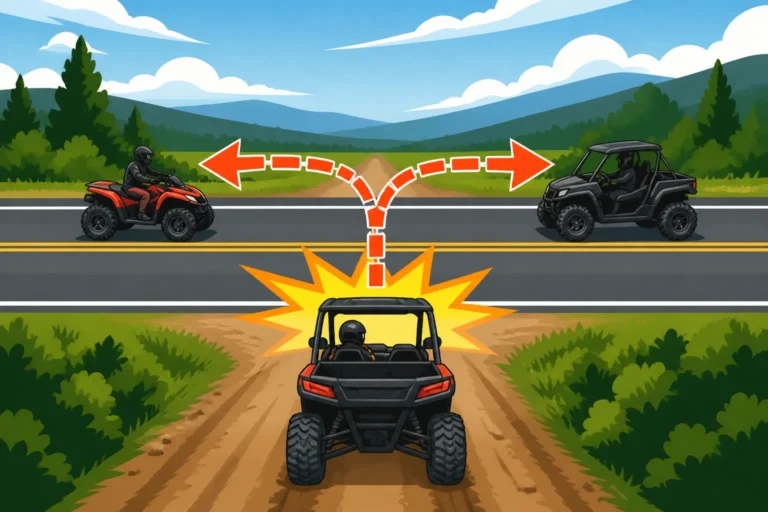
It's easy to get caught up in the excitement of riding, but a lapse in judgment can quickly turn a fun outing into a costly headache. One of the most common mistakes riders make is venturing onto roads that are not designated for OHV use. This often happens inadvertently, by missing a sign or misinterpreting a map. Always double-check your route against Hickman County's official list of designated roads. Never assume a road is open just because it looks like a "county road." State highways, for instance, are generally off-limits for OHVs, regardless of their speed limit. The rule of thumb is: if it's not explicitly on the approved list, don't ride it.
Another pitfall is pushing the limits of your machine on paved surfaces. While your OHV might feel powerful, its suspension, tire design, and weight distribution are engineered for off-road conditions. High-speed turns, sudden braking, or swerving to avoid obstacles can be much more challenging and dangerous on pavement. Furthermore, riding after dark, even for a short distance, is a significant risk due to reduced visibility for both you and other drivers. Stick to the [Riding Only Between Sunrise and Sunset] rule and plan your rides accordingly. Don't let the allure of just a "little bit further" lead you into a dangerous or illegal situation.
Understanding Fines and Responsible Riding Practices
The consequences of failing to adhere to Tennessee's OHV road use laws can range from inconvenient to severe. Violations can lead to significant fines, and in some cases, could even be classified as a Class C misdemeanor, which is a criminal offense. Imagine facing [Tennessee Fines for Illegal UTV Road Use] just because you didn't check the designated road list or forgot your helmet. These penalties are designed to deter unsafe and illegal riding, and law enforcement in areas like Hickman County will enforce them to protect public safety.
Beyond the legal ramifications, responsible riding is about being a good neighbor and an ambassador for the OHV community. This means:
- Sharing the Road: Remember that OHVs are sharing these roads with cars, trucks, farm equipment, and even pedestrians. Drive defensively, maintain a safe following distance, and be prepared for other vehicles that might not expect an OHV.
- Respecting Noise Levels: While some aftermarket exhaust systems can sound great on the trail, excessive noise on residential roads can be a nuisance. Be mindful of how much noise your machine is making, especially in populated areas.
- Avoiding Dust and Debris: When transitioning from dirt to pavement, ensure your tires are as free of mud and debris as possible to avoid leaving a mess on the road.
- Protecting the Environment: Stick to designated roads and trails. Do not ride off the shoulder or create new paths, as this damages private property and natural habitats.
By being informed, equipped, and respectful, you can contribute to a positive perception of OHV riders and help ensure that access to Hickman County's beautiful roads remains open for years to come.
Disclaimer
This article is for general informational purposes only and does not constitute professional advice. Laws, prices and regulations vary by location and change over time. Consult a qualified professional for guidance on your specific situation.