Tennessee Rules for Riding in Deer Season
Riding your ATV or UTV in Tennessee is a fantastic way to explore the state's rugged beauty, but when deer season rolls around, the trails and back roads can become a whole different world. Many riders find themselves asking whether they can even hit their favorite spots during these critical hunting periods, and the answer isn't always straightforward. This guide will walk you through Tennessee's regulations and best practices for off-highway vehicle (OHV) use during deer season, ensuring you stay safe, legal, and respectful of hunters sharing the land.
Understanding Tennessee's Hunting Seasons and ATV/UTV Use
Tennessee's landscapes are a shared resource, and during deer season, hunters have specific rights and expectations that OHV riders must respect. It's not about outright banning your fun, but about ensuring everyone can enjoy the outdoors safely and legally. The Tennessee Wildlife Resources Agency (TWRA) manages hunting seasons and sets rules for various types of land, especially Wildlife Management Areas (WMAs).
General Rules for OHV Use on WMAs During Hunting Season
Wildlife Management Areas (WMAs) are critically important for wildlife conservation and public hunting. Because of this, the rules for OHV use on WMAs are often stricter, particularly during hunting seasons. Generally, you'll find that many WMAs have designated trails or roads where OHVs are permitted, but these permissions can change or be restricted when hunting is active. The TWRA's primary goal is to minimize disturbance to wildlife and hunters, which means your presence on a quad or side-by-side might be limited. It's not uncommon for some trails or even entire sections of WMAs to close during certain phases of deer season, or to have specific hours of operation that align with hunting activities. You might even find that some WMAs, like those within the North Cumberland WMA complex (Royal Blue, Sundquist, etc.), have specific rules about when you can ride, not just where. You can learn more about these areas in our guide, [Tennessee Rules for Riding a WMA].
Before you even load your machine onto the trailer, the absolute first step is to check the specific WMA's regulations. These are usually available on the TWRA website or posted at kiosks near WMA entrances. Don't assume that just because you rode there last month, the rules are the same during rifle season. Many WMAs publish annual guides detailing open and closed dates for various activities, including OHV use. Ignorance of these rules isn't a valid excuse if you're caught riding somewhere you shouldn't be. Remember, these areas are managed for a specific purpose, and while OHV recreation is often a component, it's frequently secondary to wildlife management and hunting during peak seasons.
Specific Restrictions During Deer Season
Deer season introduces a layer of complexity beyond general WMA rules. During archery, muzzleloader, and especially firearms seasons, the land can be teeming with hunters. Some WMAs may prohibit OHV use entirely on certain days or even for the duration of the season. Others might restrict OHV travel to designated access roads only, preventing riders from venturing onto smaller trails where hunters might be set up. For instance, you might find that while you can use your UTV to get to a specific parking area, you can't then ride it deep into the woods on a two-track trail. These restrictions are often in place to reduce noise disturbance that could spook deer, minimize the risk of accidents between riders and hunters, and prevent interference with hunting activities. It's a matter of safety and respect, ensuring that everyone can safely pursue their chosen outdoor activity without encroaching on others. Keep an eye out for specific dates and zones where these restrictions are most stringent, as they can sometimes vary even within a single WMA unit. Checking [Tennessee Trail Seasons and Closures] before you head out is always a good idea.
| Type of Land | General OHV Rules During Deer Season | Key Considerations |
|---|---|---|
| Wildlife Management Areas (WMAs) | Often restricted to designated roads/trails; some areas may close completely. | Check TWRA website for specific WMA dates & rules. Priority often given to hunting. |
| State Parks/Forests | Varies greatly. Some prohibit OHVs entirely, others have dedicated trails that may have modified hours. | Consult park/forest office directly. Often very strict about staying on marked trails. |
| Private Land (with permission) | As permitted by landowner, but strongly advise caution & communication with hunters. | Always have written permission. Coordinate with hunters on the property. |
| Public Roads (where legal) | Follow all state/local road-use laws. Be extra vigilant for hunters/game near rural roads. | Adhere to speed limits, helmet laws, and visibility requirements. [Tennessee Rules for Riding a County Road] |
Essential Gear and Practices for Riding During Deer Season
Beyond knowing where you can ride, it's crucial to understand how to ride during deer season to ensure your safety and that of others. This involves specific gear choices and considerate practices that minimize your impact on the hunting experience. Remember, you're not just a recreational rider; you're sharing the landscape with individuals who are often very focused and sensitive to their surroundings.
Visibility is Key: Blaze Orange Requirements
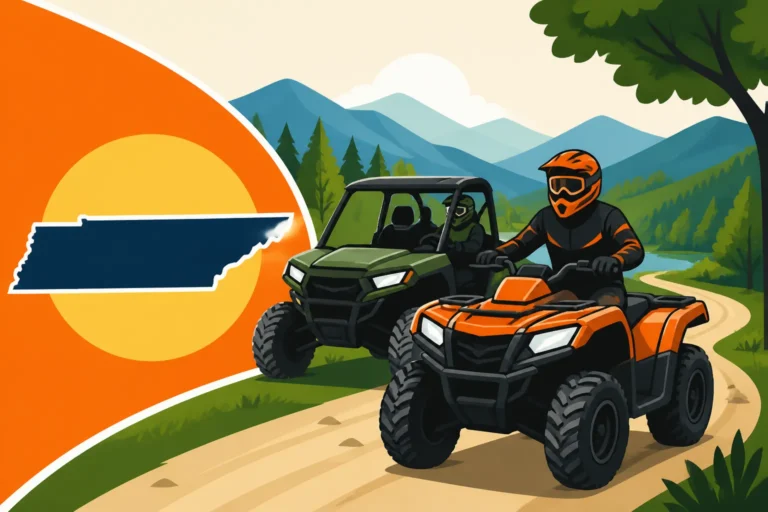
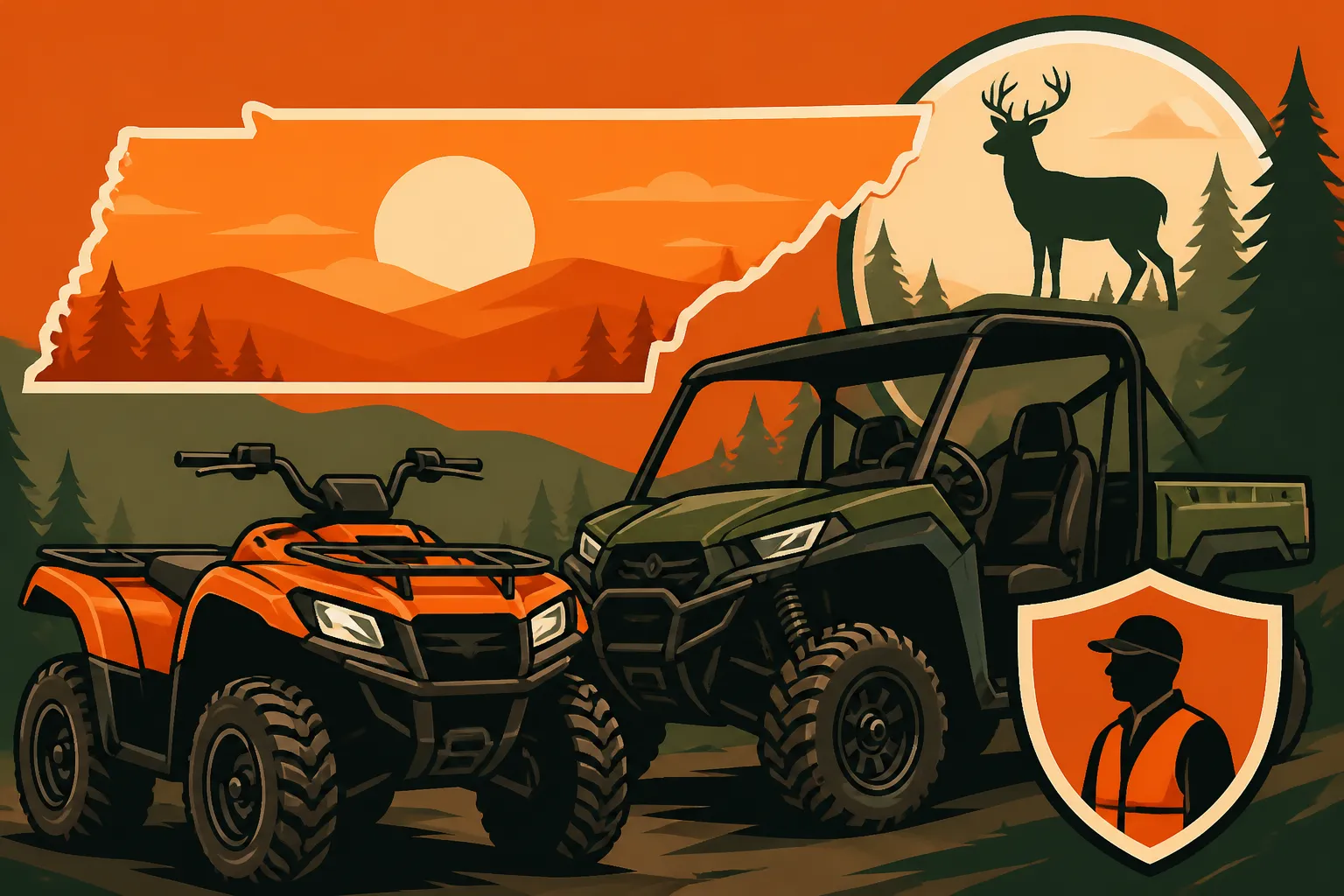
When you're out riding during deer season, especially on public lands or properties where hunting is allowed, making yourself visible is paramount. The most common and effective way to do this is by wearing blaze orange. Many states, including Tennessee, have regulations or strong recommendations for wearing blaze orange during firearms seasons. While specific legal requirements for OHV riders might vary by WMA or specific public land area, it's a non-negotiable best practice for your safety. Hunters are trained to look for blaze orange, and wearing it drastically reduces the chance of you being mistaken for game, particularly in low light conditions or dense cover. A bright orange vest, jacket, or hat can be the difference maker.
Consider the classic scenario: you're cresting a hill on your ATV, and a hunter, set up for deer, is looking through binoculars from a distance. If you're wearing earth tones, you might blend in. If you're covered in blaze orange, you immediately stand out as a human. This isn't just about avoiding a mistaken shot; it's also about preventing hunters from being startled or distracted. Some of Tennessee's Wildlife Management Areas, like portions of the North Cumberland WMA, specifically require riders to wear a minimum amount of blaze orange (often 500 square inches) during certain hunting seasons. Even if the law doesn't explicitly mandate it for OHV riders on all public roads or trails, it's a small investment for a massive increase in safety. Our guide on [Tennessee Orange Requirements for Riders] provides more detailed information.
Sound Management and Respect for Hunters
One of the biggest friction points between OHV riders and hunters can be noise. The roar of an engine can travel for miles through quiet woods, startling wildlife and ruining a hunter's carefully planned stakeout. While you might enjoy the sound of your aftermarket exhaust, a hunter might see it as a direct interference with their activity. This isn't just about being polite; it's about not sabotaging someone else's legal and permitted activity. The TWRA sets [Tennessee Sound Limits on a WMA] for vehicles to help mitigate this, but even within legal limits, excessive or unnecessary noise can be disruptive. If you know you'll be riding in areas frequented by hunters, consider how your machine's sound might affect them.
Practically speaking, this means avoiding unnecessary revving, speeding through known hunting areas, or playing loud music. If you encounter hunters, slow down, give them a wide berth, and be prepared to stop your engine briefly if they signal to you. A simple gesture of courtesy can go a long way in fostering good relations between user groups. Remember that many hunters wake up before dawn and stay out until dusk, and they value the quiet solitude of the woods. Your presence, while legal on designated trails, should be as unobtrusive as possible during these sensitive periods. Furthermore, consider that the presence of numerous loud vehicles can push deer out of an area, impacting hunting success for everyone, including those who may be using their OHV to retrieve game. This mutual respect is key to sharing Tennessee's beautiful natural resources.
Navigating Private Land and Public Access
Understanding land ownership and access rules is crucial when riding your ATV or UTV in Tennessee, and this becomes even more critical during deer season. There's a big difference between riding on your own property and riding on public or leased land, especially when hunters are present.
The Importance of Landowner Permission
If you're planning to ride your ATV or UTV on private property during deer season, the first and most important step is obtaining clear, explicit permission from the landowner. This isn't just a courtesy; it's a legal requirement to avoid trespassing charges. Tennessee's [Tennessee Trespass Rules for Riders] are clear: riding on private land without permission is illegal. This becomes even more sensitive during hunting season because the landowner might have granted hunting rights to others, or they might be hunting themselves. Imagine unknowingly riding through a field where a hunter has been patiently waiting for hours; it's not only disruptive but potentially dangerous if they're not expecting you.
Ideally, get written permission that specifies where and when you can ride, and crucially, who else might be using the land (e.g., hunters). Discuss your plans with the landowner, inquire about any hunting activity, and ask if there are specific areas or times you should avoid. Perhaps they've leased hunting rights, or a family member will be out there. A brief conversation can prevent misunderstandings or even dangerous encounters. If you're riding a utility vehicle, perhaps a sturdy SuperATV defender series, you might even be using it for legitimate farm or timber work. Even in such cases, if hunting is also occurring on the property, communication is paramount. Always carry proof of permission with you, whether it's a signed document or a text message from the landowner, in case you encounter law enforcement or an upset hunter. Being upfront and respectful ensures you can continue to enjoy riding on private land. Our article, [Tennessee Rules for Riding Private Land], has more details.
State Parks, Forests, and Other Public Lands
Beyond WMAs, Tennessee boasts various state parks, state forests, and other public lands, each with its own set of rules regarding OHV use. It's a common misconception that all public land is open to all activities. This is rarely the case, especially for OHVs. Many state parks, for example, strictly prohibit ATVs and UTVs altogether, regardless of the season, to preserve natural quiet and protect sensitive ecosystems. State forests might have more relaxed rules but will often limit OHV use to specific, marked multi-use trails or forest roads. These trails may also have seasonal closures or restrictions, particularly during hunting seasons, to manage conflicts and ensure public safety.
Before riding on any state park or forest land, you must consult their official website or contact the park office directly to understand their specific OHV policies. Do not rely on assumptions or old information. A trail that was open for dirt bikes in the summer might be closed to all motorized vehicles during deer season to accommodate hunters or simply to prevent disturbance. For instance, areas like Prentice Cooper State Forest have very specific rules for vehicle access. Furthermore, while you might find a trail that allows OHVs, remember that you are still sharing that space. Be extra vigilant for hikers, equestrians, and of course, hunters, as these areas can attract a diverse range of outdoor enthusiasts. Respect posted signs, stay on marked trails, and keep your speed and noise levels down.
Safety and Legal Compliance Beyond Permits
Beyond knowing where you can ride and what to wear, several other safety and legal considerations come into play when riding your ATV or UTV during deer season in Tennessee. These cover local nuances, broader legal frameworks, and how to interact respectfully when encountering others.
Local Ordinances and Adventure Tourism Districts
While the state of Tennessee sets many overarching rules for OHV use, local governments—counties and municipalities—often have their own specific ordinances that can impact where and when you can ride, especially on local roads. This becomes particularly relevant in areas designated as "Adventure Tourism Districts" in Tennessee, which explicitly allow for more permissive OHV use on certain public roads. Counties like Scott, Anderson, Campbell, and others (as outlined in [What an Adventure Tourism District Means for Riders]) have taken advantage of this legislation to open up specific county roads to OHVs. However, even within these districts, there can be local variations and restrictions during hunting season.
It's crucial to remember that even if a county road is designated for OHV use, it doesn't automatically mean that it's open season for off-trail riding into adjacent woodlands, especially if those woods are private property or part of a WMA with different rules. Always check county ordinances and maps, usually available through the county clerk's office or highway department, for current rules. A road that's open to OHVs might still be heavily used by hunters accessing their spots. Furthermore, just because you're riding a sturdy side-by-side with aftermarket accessories from SuperATV, doesn't exempt you from local speed limits or helmet laws. Always assume that during deer season, there will be increased traffic of hunters on foot and in vehicles in rural areas, requiring extra caution and adherence to all traffic laws.
What to Do if You Encounter a Hunter
One of the most important aspects of riding during deer season is knowing how to respond when you encounter a hunter. Chances are, if you're riding in an area where hunting is permitted, you will cross paths with someone. Your reaction can significantly impact the interaction and help foster a positive relationship between user groups.
First and foremost, be respectful and courteous. If you see a hunter, slow down immediately, and if possible, stop your machine and turn off the engine. This reduces noise and allows for clear communication. Make eye contact and offer a friendly nod or greeting. Avoid any actions that could be perceived as aggressive or disruptive, such as speeding past them, revving your engine, or making loud noises. If they signal you to stop or have a question, engage politely. They might be trying to determine if you have permission to be there, if you've seen any game, or simply to ensure your safety.
Secondly, maintain a safe distance. Never approach a hunter who appears to be actively hunting (e.g., aiming a weapon or moving stealthily). Give them space and alter your route if necessary to avoid interfering with their activity. If you are carrying a firearm on your ATV or UTV, ensure it is properly stored and unloaded, as per [Tennessee Rules for Carrying a Firearm on an ATV]. The goal is to avoid conflict and promote a safe environment for everyone. Hunters often spend a lot of time and effort preparing for their hunts, and a little consideration from OHV riders can go a long way in ensuring everyone enjoys Tennessee's wild spaces harmoniously.
Disclaimer
This article is for general informational purposes only and does not constitute professional advice. Laws, prices and regulations vary by location and change over time. Consult a qualified professional for guidance on your specific situation.