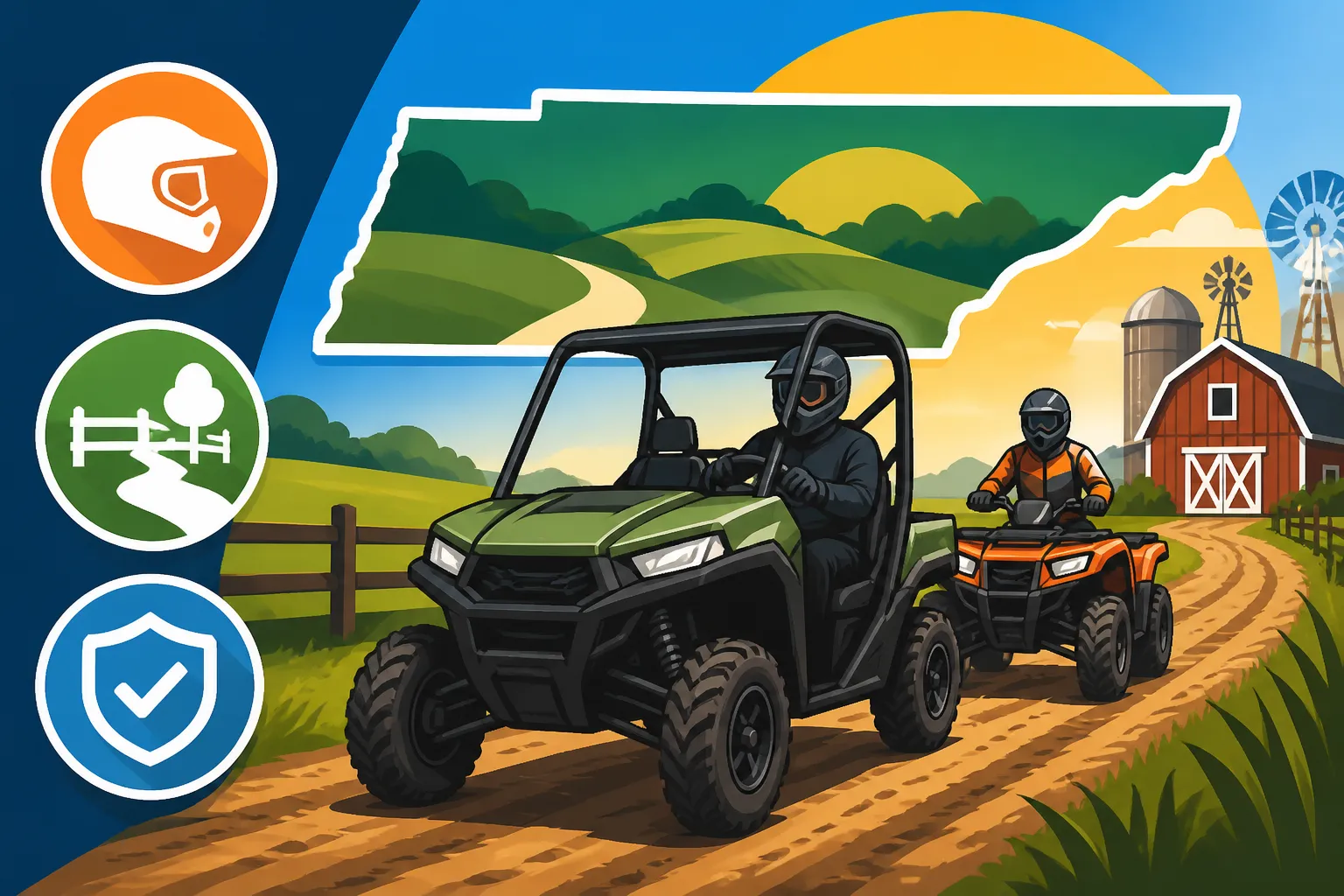
Tennessee Rules for Riding a Farm Lane
It's incredibly common for folks in Tennessee who own ATVs or UTVs to use them around their own property, especially on a farm. You've got land, you've got a machine, and it just makes sense to use it for chores or getting around. But even on your own property, things can get a little murky when you consider the letter of the law, especially if that farm lane happens to briefly intersect a public road. This guide is here to help clear up the confusion surrounding Tennessee's rules for riding your machine on a farm lane, helping you stay safe and legal.
The Unique Nature of Farm Lanes in Tennessee Law
When you're out on your property, especially a working farm, your ATV or UTV isn't just a recreational toy; it's often a crucial piece of equipment. Tennessee law, recognizing the vital role these machines play in agriculture, offers some specific considerations. However, it's not a free-for-all, and understanding the nuances is key.
Why Farm Machines Get Special Consideration
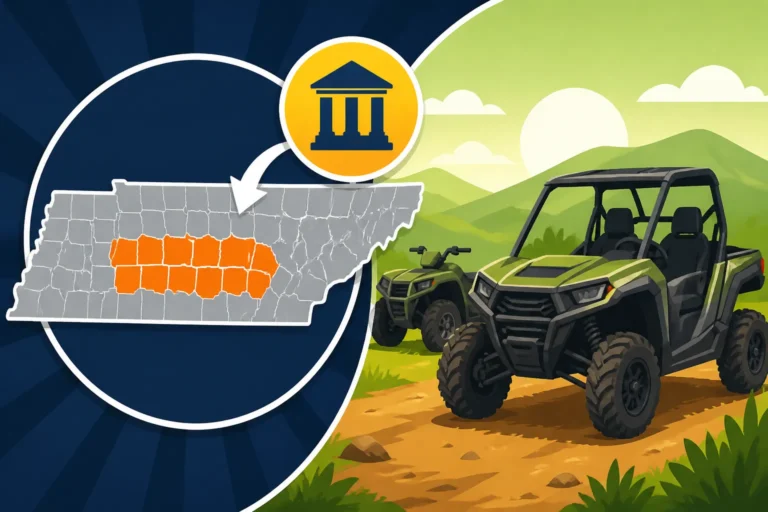
For generations, farmers have relied on various forms of off-highway vehicles (OHVs) to get work done. From hauling feed and checking fences to moving equipment across fields, ATVs and UTVs are indispensable tools on many Tennessee farms. The state acknowledges this necessity by often providing an [Tennessee's Agricultural Exception] to certain rules that would otherwise apply to recreational use. This isn't just about making life easier for farmers; it's about supporting a fundamental industry. These exceptions mean that an ATV or UTV being used solely for bona fide agricultural purposes on private land typically doesn't face the same strict regulations regarding registration, titling (beyond proof of ownership), or road-use equipment that a recreational machine might. It's a recognition that your side-by-side isn't a street-legal car, but it's also not just for weekend trail riding when it's helping you bring in the hay.
However, it's really important to distinguish between using your machine for legitimate farm work and just taking it for a spin for fun. If you're using it to round up cattle or move tools to the back forty, that's one thing. If you're simply joyriding down a gravel path on your property because it connects to a fishing spot, the "agricultural exception" might not be your shield if something goes wrong or if you somehow stray onto public access. The core idea is the purpose of the travel.
What Exactly Qualifies as a "Farm Lane"?
So, what makes a path on your property a "farm lane" in the eyes of the law and common sense? Generally, a farm lane is a private access road or path located entirely within the boundaries of a private agricultural property. It's typically unpaved, often gravel or dirt, and its primary purpose is to connect different parts of the farm—think between fields, from the barn to the pastures, or just across a large tract of land you own. It's not usually maintained by the county, nor is it intended for general public access, although you might have easements for utilities or allow certain service vehicles.
The crucial distinction here is that a farm lane is private. It's your property, and you largely control who uses it and how. This is fundamentally different from a public road, even if that public road is also unpaved or lightly traveled. A private farm lane does not have a posted speed limit by the county, nor are you generally required to have a driver's license to operate an OHV on it, because it's not considered a public thoroughfare. However, if your farm lane happens to be a known shortcut for neighbors (even if they technically trespass), or if it's used by multiple property owners without clear delineation, it can sometimes blur the lines, leading to potential misunderstandings about its status. It's best to clearly mark your property and maintain its private nature.
Navigating Public Road Crossings and Connections
One of the biggest headaches for farmers and rural landowners is when a farm lane, which is clearly private, needs to briefly interact with a public road. Maybe your property is split by a county road, or you need to access a different field across the street. This is where the rules shift dramatically, and you need to be extremely careful.
The Brief Necessity of Crossing a Public Road
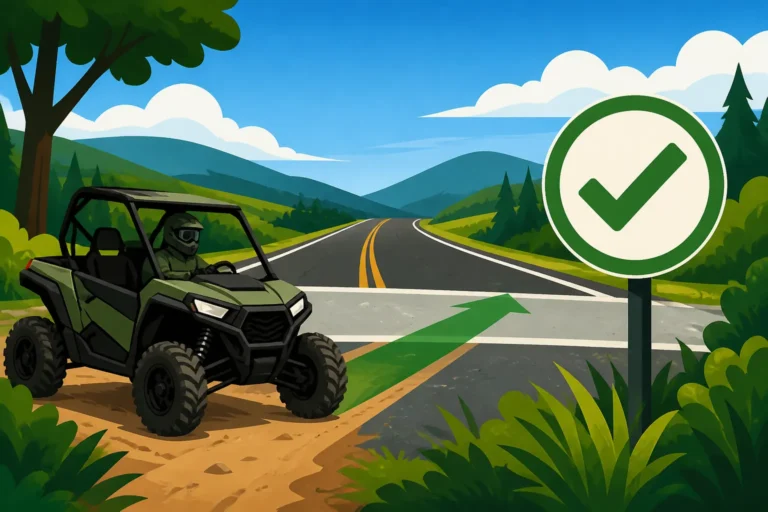
It's a familiar scenario: your farm is on both sides of a county road, or you need to move equipment from one part of your land to another, and the most direct route involves a quick hop across a public road. While your machine might not be street legal in the traditional sense, Tennessee law does account for these brief, necessary movements. You might need to move your ATV from the barn to a field on the other side of a two-lane county road. In these instances, the "agricultural exception" often provides specific guidance, but it doesn't mean you can just zoom across without care.
When you're crossing a public road, even for a short distance, you're temporarily operating on public property. This means you generally need to comply with specific rules that ensure safety for everyone. For example, Tennessee law often dictates how you must cross: typically at a ninety-degree angle to the road, and only when safe to do so. You might need to obey traffic signals or stop signs. It's wise to consider visible safety equipment, even if not explicitly mandated for a crossing. For any move on a public road, even a quick hop, ensure your machine is equipped with basic functioning lights, and perhaps even a flag for visibility. While you might not need a full set of street-legal turn signals for a quick crossing, being highly visible is paramount. Understanding [Tennessee Rules for Crossing a Highway] or even more specifically [Crossing a Two-Lane at Ninety Degrees in Tennessee] is critical. Always look both ways, signal if you can, and make your intentions clear to any oncoming traffic.
When a Farm Lane Blurs into a Public Road
Sometimes, what you think of as your private farm lane might have a more ambiguous status. This can happen in older rural areas where property lines and public access weren't always clearly defined. For example, a lane that's primarily used for farm access might also serve as a utility access road, or historically, it might have been used by neighbors to access their own properties, gradually taking on a semi-public character even without being officially designated as such. This blurring of lines can create real confusion about whether you're on private or public land.
If a farm lane is regularly used by the public, even if not officially designated as a county road, it might be treated differently in the event of an accident or incident. Moreover, some rural roads or paths, while unpaved and looking very much like a farm lane, are actually officially designated as [Tennessee Rules for Riding a County Road]. If your lane connects directly to such a road and isn't clearly marked as private, you could inadvertently be operating on public property without realizing it. It's always a good idea to check with your local county clerk's office or highway department if you have any doubts about the status of a road that runs through or borders your property. A simple conversation can prevent a lot of headaches later on. Remember, the general rule is if it's publicly maintained or open to the general public, it's likely considered a public road, regardless of its appearance.
Equipment, Age, and Insurance for Farm Lane Use
Even though you're primarily on private land, there are still important considerations regarding the equipment on your ATV or UTV, the age of operators, and crucial insurance coverage. Don't let the "private land" aspect lull you into a false sense of security regarding safety and liability.
Equipment Considerations Beyond the Fields
While you won't need to meet full street-legal requirements for operating solely on your farm lane, thinking about practical safety equipment is still very smart. Your OHV might navigate through muddy pastures, rocky paths, or wooded areas. Good working headlights and taillights are essential, especially if you're out at dawn or dusk tending to animals or chores. A horn can be useful for alerting others on the property. And while not legally mandated for private land, things like mirrors can improve situational awareness, especially if you're hauling a trailer or have workers around.
Consider also the mechanical integrity of your machine. Regular maintenance is key. Strong, durable tires suitable for varied terrain – perhaps even an upgrade from a company like SuperATV – can greatly improve safety and efficiency on a working farm. They offer better traction on slippery surfaces and are more resistant to punctures from thorns or debris. Proper suspension and working brakes are also non-negotiable. Furthermore, a spark arrestor on your exhaust is critical, especially during dry seasons, to prevent accidental fires. A small spark from an unprotected exhaust could easily ignite dry grass or crops, leading to devastating consequences. So, while you might not be worrying about a [Tennessee UTV Road Requirements] checklist, you should definitely have your own farm-specific safety checklist.
Rider Age, Licensing, and Helmet Rules on the Farm
When you're strictly on private property, many of the state's age and licensing rules for public road use don't apply. This means that, technically, you don't need a driver's license to operate an ATV or UTV on your own farm lane. And while there isn't a state-mandated minimum age for operating an OHV on private land, common sense and safety should always prevail. Young riders should always be supervised, and should only operate machines appropriate for their size and skill level. Training courses, even if not legally required, are an excellent idea for riders of all ages, especially younger ones.
Helmet rules also see a shift on private land. While [Tennessee Helmet Law for ATV Riders] and [Tennessee Helmet Law Off-Road] generally mandate helmets for riders under 18 on public lands or trails, the rules are often different on private property, especially when an OHV is being used for agricultural purposes. In fact, [Tennessee's Agricultural Exception] can specifically remove helmet requirements for those engaged in farm work. However, just because it's not legally required doesn't mean it's not a good idea. A helmet protects you from serious injury, whether you're hitting a stump in a field or rolling your machine on a steep incline. Always prioritize safety over convenience. Consider it part of your personal responsibility as a machine owner and operator.
The Importance of Insurance, Even on Private Land
This is perhaps one of the most overlooked aspects of owning and operating an ATV or UTV on a farm lane. Many people assume that because they're on their own property, they don't need insurance. This is a dangerous assumption. While [Tennessee UTV Insurance Requirement] typically pertains to public road use, liability is a concern everywhere. An accident on your farm lane could still result in significant costs.
Imagine a scenario: a hired hand, a family member, or even a friend visiting your property is operating your machine on your farm lane, and an accident occurs, resulting in injury or property damage. Who is liable? Your homeowner's or farm insurance policy might offer some coverage for OHVs, but it's crucial to check the specifics. Often, there are limitations or exclusions for recreational vehicles, especially those not specifically endorsed. It's highly advisable to speak with your insurance agent about your ATV or UTV use on your farm. They can help you determine if you need a separate policy or an endorsement to your existing coverage to adequately protect you from liability. The cost of a dedicated policy or an add-on is often far less than the potential financial devastation of a lawsuit from an uninsured accident. Don't leave yourself exposed simply because you're riding on private dirt.
Staying Safe and Legal on Your Tennessee Farm
Navigating the rules for riding your ATV or UTV on a farm lane in Tennessee requires a blend of legal understanding and common-sense safety practices. Your farm is your domain, but even there, a little vigilance goes a long way.
Best Practices for Farm OHV Use
Beyond the specific legalities, there are several best practices that will keep you, your family, your workers, and your property safe. First and foremost, clear communication is essential. If you have multiple people operating machines on your farm, ensure everyone understands the established paths, any hazards, and the rules of the road (or, in this case, the lane). Regular maintenance of your machines isn't just about performance; it's about safety. Checking brakes, tires, lights, and fluid levels before each use can prevent many accidents.
Always be aware of your property boundaries. It's easy to inadvertently stray onto a neighbor's land, which could lead to trespassing issues. While not a strict legal requirement for private land, carrying a basic first-aid kit, a small tool kit, and a communication device (like a cell phone or two-way radio) is always a good idea, especially if you're venturing to remote parts of your farm. Even if your machine never leaves your property, having a [A Tennessee Bill of Sale for an OHV] and properly [Titling a Farm Machine in Tennessee] can prevent disputes over ownership. Think about it: if your machine is ever stolen, that title is your proof of ownership, whether it's parked in a field or on a trailer. Remember, the purpose of your ride often determines which rules apply, so when you're engaging in [Tennessee Rules for Agricultural Road Use], you have more leeway, but when it's just for fun, the lines can blur with public recreational rules if you're not careful.
Farm Lane vs. Public Road Crossing: Key Differences
| Feature | On Your Private Farm Lane (Agricultural Use) | Briefly Crossing a Public Road (Agricultural) |
|---|---|---|
| Driver's License | Generally not required | Required for operator (typically 16+) |
| Age Restrictions | No statewide minimum (supervision recommended) | Minimum age (e.g., 16) applies to operator |
| Helmet Required | Generally exempt for agricultural work | Required for operator and passengers under 18 |
| Vehicle Title | Recommended for ownership proof | Recommended/required depending on local rules |
| Registration | Not required | Not required (unless fully street-legal) |
| Insurance | Highly recommended (liability) | Highly recommended (liability) |
| Speed Limit | Your discretion (within safe limits) | Posted public road limits apply |
| Crossing Method | N/A | At 90-degree angle, when safe |
| Lights/Mirrors | Recommended for safety | Required (basic operation) for visibility |
When in Doubt: Consult Local Authorities
Tennessee's laws can sometimes have local interpretations or additional county ordinances. If you're ever unsure about the status of a particular path, the requirements for crossing a specific road, or any other detail related to operating your OHV on or around your farm, the best course of action is to consult your local authorities. Your county sheriff's department or county clerk's office are excellent resources. They deal with these questions regularly and can provide clarification specific to your area.
For example, understanding [Why the Class Matters on a Tennessee County Road] might be crucial if your farm lane is near a road that has specific restrictions for certain types of OHVs. They can also clarify whether a particular gravel road is truly private or if it has been adopted as a public right-of-way. It's always better to ask a question than to inadvertently break a law or, worse, put yourself or others at risk. A quick phone call or visit can save you a lot of potential fines, legal troubles, or even accidents. Your peace of mind and the safety of everyone on your farm are worth the effort.
Disclaimer
This article is for general informational purposes only and does not constitute professional advice. Laws, prices and regulations vary by location and change over time. Consult a qualified professional for guidance on your specific situation.