Tennessee’s 45 mph Road Rule
For years, navigating the maze of Tennessee's ATV and UTV road laws felt like a wild goose chase. One county said yes, the next said no, and trying to figure out where you could legally drive your machine was an exercise in frustration. Many riders just gave up, stuck to private land, or risked fines because the rules were so inconsistent and unclear. If you've felt this confusion, you're not alone. This comprehensive guide is here to cut through that fog, specifically focusing on Tennessee's crucial 45 mph road rule for UTVs, explaining exactly what it means for you and your machine, and helping you understand where and how you can legally hit the pavement.
Understanding the Big Picture: Tennessee's UTV Road Legalization
For the longest time, the idea of legally riding your UTV on Tennessee's public roads was a patchwork quilt of local ordinances, often leaving riders scratching their heads and fearing a ticket around every corner. It was a situation ripe for confusion, and frankly, it often discouraged people from even trying to understand the rules, leading to missed opportunities for riding or accidental violations. The good news is, recent legislative efforts have brought a much-needed push towards clarity, aiming to create a more consistent framework across the state. This doesn't mean every road is open, but it does mean there's a clearer path forward.
The Shift from County-by-County Chaos
Imagine planning a weekend ride, carefully mapping out your route, only to find out that a short stretch of county road separating two trail systems was completely off-limits due to an obscure local rule. This was the reality for many Tennessee riders. One county might have had a progressive view, designating certain roads for OHV use, while the very next county line meant your machine was instantly illegal on that same type of road. This inconsistency was a major source of frustration for enthusiasts, making long-distance or connecting rides a logistical nightmare. It wasn't just inconvenient; it was genuinely unfair, as riders couldn't easily ascertain their legal standing.
The state legislature recognized this problem, acknowledging the growing popularity of UTVs and the economic potential of trail tourism. The goal was to move away from this fractured approach and establish a baseline set of rules that applied statewide. While local governments still retain some power to designate roads, the new framework provides a default level of access, making it much easier for riders to understand their rights and responsibilities without having to consult a different county clerk in every jurisdiction. This shift represents a significant step forward in harmonizing UTV road access.
The Core of the New Law: Class II OHVs
At the heart of Tennessee's updated road use laws is the definition of a Class II Off-Highway Vehicle (OHV). This specific classification is crucial because it's the category of machine that the new legislation primarily addresses for public road use. When we talk about street-legal UTVs, we're almost exclusively referring to these Class II machines. They are generally defined by their width, often exceeding 50 inches, and sometimes their weight, which can range significantly. Think of your typical side-by-side or a larger recreational UTV – these are the machines the law is designed for.
It's important to understand this distinction because not all off-highway vehicles fall under the same rules. Your narrower ATV, for instance, might be a Class I OHV, and its road use regulations could be entirely different, or even nonexistent, on public roads. [Tennessee's Class II OHV Definition] The legislative intent was to provide a path for the popular, wider side-by-sides to legally access certain roads, recognizing their stability and enclosed nature as distinct from smaller, single-rider ATVs. Before you even think about hitting the pavement, knowing if your machine qualifies as a Class II OHV is your first and most critical step.
Decoding Tennessee's 45 mph Road Rule
The most significant and perhaps most talked-about aspect of Tennessee's new UTV road laws is the 45 mph rule. This isn't just an arbitrary number; it's the lynchpin that determines which roads you can and cannot legally traverse with your Class II OHV. For years, riders either guessed or stuck strictly to trails, but now there's a specific numerical guideline to follow. Understanding this rule completely is essential to avoid tickets, ensure your safety, and confidently explore new areas.
The "Roads Posted Forty-Five or Less" Criterion
This phrase is absolutely critical. It doesn't mean you can drive your UTV at 45 mph on any road. It specifically means that your Class II OHV is permitted only on public roads where the posted speed limit is 45 miles per hour or less. So, if you're on a county road with a sign clearly stating "Speed Limit 35 MPH," you're likely good to go, assuming all other requirements are met. The same applies to a road posted "Speed Limit 45 MPH."
However, if you encounter a road with a "Speed Limit 50 MPH" sign, even if you feel you could safely drive your UTV at 45 mph, that road is strictly off-limits under this rule. This distinction is paramount: it's about the posted limit, not the speed you choose to drive. This often means county roads, rural routes, and some secondary state highways will be accessible, but major state routes and federal highways with higher speed limits are generally excluded. Always keep an eye on those speed limit signs, as they are your ultimate guide. [Riding a Road Posted 45 mph or Under]
Why 45 mph, and Not Higher?
You might wonder why the legislature landed on 45 mph as the maximum posted limit. It's a pragmatic decision rooted in safety and the inherent design characteristics of UTVs. While many modern UTVs are incredibly capable and can reach speeds well beyond 45 mph, they are fundamentally different from passenger cars or trucks. Their suspension, tires, braking systems, and overall handling are optimized for off-road conditions, not sustained high-speed pavement travel. Pushing these machines to their limits on faster roads can lead to unpredictable handling, increased tire wear, and a higher risk of accidents, especially when interacting with traditional vehicle traffic.
The 45 mph threshold aims to integrate UTVs onto roads where traffic speeds are generally lower, and the dynamics of merging and navigating are less demanding. It minimizes the speed differential between UTVs and other vehicles, making it safer for everyone. Furthermore, this limit reflects a balance between providing riders with greater access and maintaining public safety. It’s a compromise that acknowledges the desire for more road access while still recognizing the primary purpose and design limitations of these powerful machines. [Why a Road Posted 50 mph Is Off Limits]
Where You Can (and Can't) Ride Your UTV in Tennessee
Understanding the 45 mph rule is one thing, but knowing the specific types of roads where it applies – and where it absolutely does not – is crucial for any Tennessee UTV owner. The law opens up new possibilities, but it also comes with clear boundaries designed to ensure public safety and manage traffic flow effectively. Navigating these distinctions is key to a legal and enjoyable ride.
Navigating County and State Highways
The statewide UTV law primarily targets county roads and certain state highways for legal operation, provided they meet that crucial 45 mph or less posted speed limit. For many riders, this means finally being able to connect trails, access small-town amenities, or simply enjoy a scenic cruise down a rural route without constantly looking over their shoulder. Imagine leaving your campsite and being able to legally drive your UTV into the nearest town for supplies, or linking up with a buddy on another farm road – these are the scenarios the law now facilitates. [Tennessee Rules for Riding a County Road]
However, it's equally important to remember where you cannot go. Major state routes, U.S. highways, and especially interstates, are generally off-limits for UTVs. These roads are designed for higher speeds, heavier traffic, and different vehicle dynamics, which UTVs are simply not built to handle safely in a sustained manner. Attempting to ride your UTV on a road posted 50 mph or higher, or on an interstate, isn't just illegal; it's incredibly dangerous for you and other motorists. The law is quite clear on these prohibitions, aiming to keep UTVs off the fastest and most congested thoroughfares. [Why Tennessee Bars Interstates]
Understanding Restricted Road Lists and Adventure Tourism Districts
While the state law provides a general framework, it also grants local counties the ability to create exceptions. Specifically, counties can publish a list of roads within the 45 mph limit where UTV operation is still restricted or prohibited. This is an important nuance, meaning that even if a road is posted 45 mph or less, you still need to be aware of any specific county-level restrictions. Always check with the county clerk's office or their online resources for any such "restricted road lists" before you plan your route in an unfamiliar area. [Finding the Restricted Road List Your County Published] This helps prevent surprises when you're out riding.
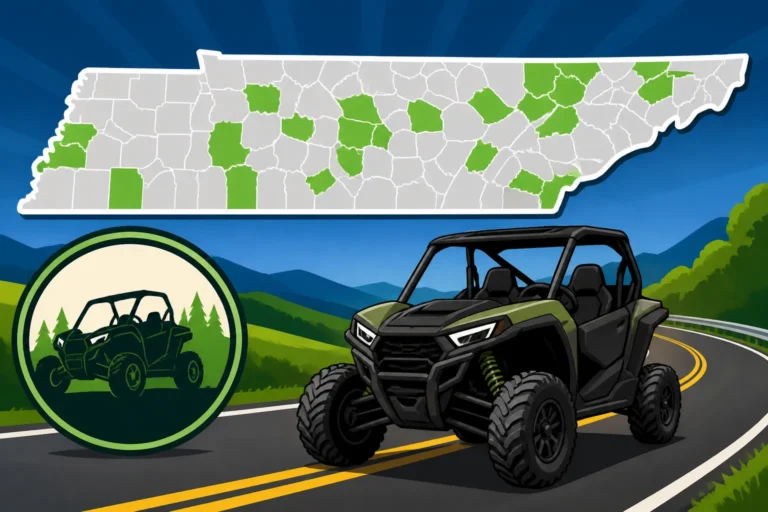
Conversely, Tennessee has also created "Adventure Tourism Districts" in specific counties, such as Scott, Anderson, Campbell, Morgan, Jackson, Johnson, Perry, Unicoi, Fentress, and Hickman. These districts are explicitly established to promote outdoor recreation, and within them, there can be even greater flexibility for UTV road use. For instance, some of these counties might have special provisions for unpaved roads, allowing them to be opened to UTV traffic with a two-thirds vote by the local legislative body. [Why an Adventure Tourism District Matters] This means that in these designated areas, you might find even more riding opportunities, but it still requires understanding the local specifics. The goal here is to balance local control with broader access, particularly in areas where OHV recreation is a significant economic driver. [How a Two-Thirds Council Vote Opens Unpaved Roads]
Essential Requirements for Road-Legal UTV Operation
Just because a road falls under the 45 mph rule doesn't mean you can simply drive your unmodified UTV onto it. Tennessee law has stringent equipment requirements designed to ensure that these machines are as safe as possible when sharing the road with traditional vehicles. Skipping any of these can lead to fines, safety hazards, and the frustration of being turned around by law enforcement. It's an investment, but it’s a necessary one for legal road access.
Equipment Mandates for Your Machine
To be considered road-legal in Tennessee, your Class II OHV must be equipped with several key features, many of which might not come standard from the factory. Think of it like making your off-road machine fit into the world of conventional vehicles. These requirements include:
- Headlights: Must be operational and provide adequate illumination, similar to a car.
- Taillights and Brake Lights: Essential for visibility from the rear and signaling when you slow down or stop.
- Turn Signals: You need functional front and rear turn signals to indicate your intentions to other drivers. This is often an aftermarket add-on for many UTVs.
- Rearview Mirrors: At least one, mounted to provide a clear view of the rear. Many riders opt for a combination of a central rearview mirror and side mirrors for optimal visibility.
- Horn: A working horn is necessary for signaling warnings.
- Windshield: A front windshield, similar to what you'd find in a car, to protect occupants from debris and weather.
- Seatbelts: All occupants must be properly restrained with seatbelts, which are standard on most UTVs but their functionality should always be checked.
These aren't suggestions; they are legal requirements. Many aftermarket companies, like SuperATV, offer comprehensive kits specifically designed to convert UTVs to meet these street-legal standards, making the process much easier for riders. It’s far better to invest in these modifications upfront than to face a citation or, worse, be involved in an accident due to inadequate equipment. [Tennessee Equipment Rules for Road Use]
Operator and Passenger Rules
Beyond the machine itself, there are specific rules for who can operate a road-legal UTV and who can be a passenger. These regulations are in place to ensure a minimum level of driving competence and safety for all occupants. For starters, anyone operating a Class II OHV on a public road must possess a valid driver's license, just as if they were driving a car or truck. This means no learner's permits or simply operating it with an ATV safety course certification. [Tennessee Driver's License Rules for UTVs]
Furthermore, operators must be at least 16 years old to legally drive a UTV on a public road. This aligns with the minimum age for obtaining a standard driver's license, reinforcing the idea that operating these machines on public thoroughfares is akin to driving any other motor vehicle. [Tennessee Minimum Age to Ride a Road] Passengers are also subject to certain rules, most notably regarding helmets. While adults might not always need a helmet off-road, Tennessee law requires all operators and passengers under the age of 18 to wear a helmet when riding a Class II OHV on a public road. This is a crucial safety measure to protect younger riders. [Tennessee Helmet Law for ATV Riders] Finally, just like a car, your road-legal UTV needs to be covered by liability insurance. This isn't just a recommendation; it's a legal mandate to ensure financial responsibility in case of an accident. [Tennessee UTV Insurance Requirement] Always carry proof of insurance with you when riding on public roads.
Day-to-Day Road Use: Practical Considerations
Once your UTV is properly equipped and you understand the basic rules, riding on Tennessee roads becomes a much more enjoyable experience. However, there are still practical considerations and specific maneuvers you need to be aware of to ensure safety and compliance. It's not just about what's on your machine, but how you operate it in the flow of traffic.
Navigating Intersections and Crossings
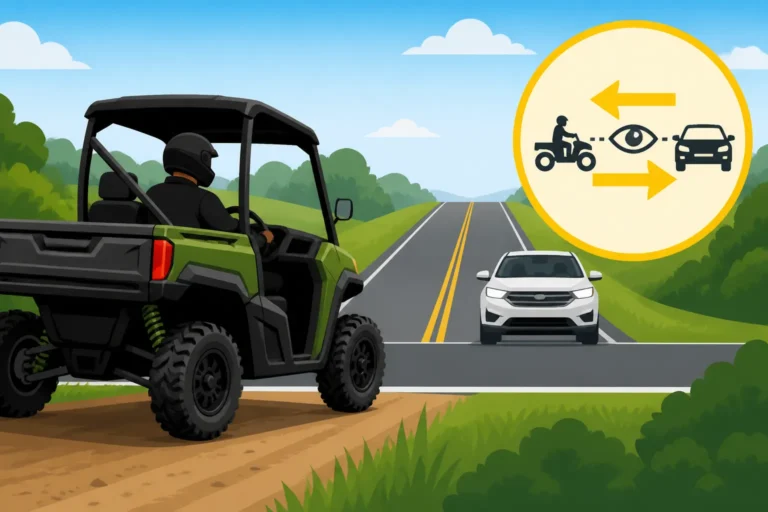
One of the more unique aspects of UTV road use involves crossing multi-lane highways or even two-lane roads that might have higher speed limits. The law is very specific here. If you need to cross a two-lane road that is not a designated UTV route but falls within your general riding area, you must do so at as close to a ninety-degree angle as possible. This minimizes the time your UTV spends in a lane of faster-moving traffic. [Crossing a Two-Lane at Ninety Degrees in Tennessee] It's a quick, direct maneuver aimed at getting you safely across.
For multi-lane crossings, the rules become even stricter. You can only cross a multi-lane state highway at locations specifically designated by the Tennessee Department of Transportation (TDOT). These designated crossings are usually chosen for their visibility and safety, so you can't just pick any spot. [Crossing a Multi-Lane Where TDOT Designates] Always approach any intersection or crossing with extreme caution, yielding to all other traffic, and using your turn signals well in advance. Remember, your UTV, while road-legal, might still be less visible or slower to accelerate than a car, so defensive driving is paramount.
Timing and Visibility: Daylight Hours Only
One of the most important restrictions for UTVs on Tennessee roads is that operation is limited to daylight hours. You cannot legally ride your Class II OHV on public roads between sunset and sunrise. [Riding Only Between Sunrise and Sunset] This rule is a direct reflection of safety concerns. Despite having headlights and taillights, UTVs are generally smaller and less conspicuous than full-sized vehicles, especially in low-light conditions. Their different profile and speed can make them harder for other drivers to spot at night, significantly increasing the risk of accidents.
Even during daylight, it's wise to enhance your visibility as much as possible. Consider bright colors for your machine or clothing, and always keep your headlights on, even if it's a sunny day. This small action can make a huge difference in ensuring other drivers see you, especially when you're turning, crossing, or simply sharing a narrow country lane. This rule underlines the state's emphasis on safety, acknowledging the limitations of UTVs when integrated into the broader traffic system.
What Happens If You Break the Rules? Penalties and Enforcement
Understanding the rules is crucial, but it's equally important to be aware of the consequences if you inadvertently (or intentionally) violate them. Law enforcement in Tennessee is empowered to enforce these UTV road use regulations, and ignoring them can lead to more than just a slap on the wrist. It can impact your wallet, your driving record, and even your ability to enjoy future rides.
Fines and Legal Consequences
If you're caught operating a UTV on a restricted road, without the proper equipment, or in violation of other provisions of the law, you're looking at a fine. The typical penalty for such infractions in Tennessee is around $50. While this might not seem like a massive amount, it's certainly an unwelcome expense that could have been avoided with proper preparation and adherence to the rules. [Tennessee's $50 Fine]
Beyond the immediate financial penalty, some violations can be classified as a Class C misdemeanor. While this is typically the lowest level of misdemeanor offense, it's still a criminal charge that can appear on your record. [A Class C Misdemeanor in Tennessee] This can have various long-term implications, depending on the specifics of your situation. It's not just about the cost of the ticket; it's about maintaining a clean record and avoiding unnecessary legal entanglements. The best defense is always to know the law and follow it diligently.
Roadside Stops and Compliance Checks
Just like any other vehicle on the road, your UTV is subject to roadside stops by law enforcement. A Tennessee deputy might pull you over to verify several aspects of your operation, especially if you're on a road where UTVs are a relatively new sight. They'll typically check for your valid driver's license, proof of insurance, and ensure that your machine meets all the required equipment standards (headlights, taillights, turn signals, mirrors, etc.). They might also verify that your vehicle is indeed a Class II OHV. [What a Tennessee Deputy Checks Roadside]
It's important to be cooperative and respectful during any roadside stop. Have all your documentation readily available, and be prepared to demonstrate that your UTV is in compliance. If you've modified your machine with aftermarket parts, such as a SuperATV street-legal kit, be confident in explaining how it meets the state's requirements. This proactive approach can often help a quick check go smoothly and get you back on your way with minimal delay. Remember, deputies are just doing their job to ensure everyone's safety on the roads.
Beyond the Pavement: Integrating Road Use with Trail Riding
The ability to legally use your UTV on certain Tennessee roads isn't just about cruising down a scenic country lane; it's a game-changer for how many riders can access and experience the state's incredible trail systems. This newfound flexibility can significantly enhance your riding adventures, connecting previously isolated areas and making logistics much simpler.
Accessing Trailheads and Connecting Trails
One of the most exciting aspects of Tennessee's UTV road law is the potential for seamless transitions between public roads and designated off-road trails. Imagine being able to ride directly from your cabin or campsite, down a permitted county road, and straight to the trailhead without having to load your machine onto a trailer. This removes a significant logistical hurdle for many riders, especially those exploring areas like Windrock Park or Brimstone Recreation. You can link up different sections of trails, access nearby towns for gas and food, or simply extend your ride by utilizing short stretches of public pavement. [Tennessee Rules for Riding to a Trailhead]
This means that instead of a fragmented experience, you can plan more expansive and integrated rides. It opens up possibilities for longer loops that incorporate both challenging off-road sections and scenic road segments. This integration is particularly valuable in regions rich with trail opportunities, making it easier for riders to fully immerse themselves in the area's outdoor offerings. It’s about more than just convenience; it’s about maximizing your adventure.
Farm Use and Agricultural Exemptions
While the primary focus of the new law is recreational UTV use on roads, it's worth noting that Tennessee has historically provided specific exemptions for off-highway vehicles used strictly for agricultural purposes. Farmers and individuals operating UTVs for work on their land or between adjacent fields have certain allowances for limited road crossings or short-distance travel on public roads, often without the full suite of street-legal modifications required for recreational use. [Tennessee's Agricultural Exception]
However, it's crucial to understand that these agricultural exemptions are not a carte blanche for general road use. They are narrowly defined and intended solely for specific work-related activities. A UTV used for farm work does not automatically become street-legal for joyriding or commuting to town simply because it occasionally crosses a road to get to another pasture. Any recreational use of a farm-registered UTV on public roads would still fall under the new statewide rules and require all the necessary equipment and licensing. Always confirm the specific conditions of these exemptions if you are using your UTV for bona fide agricultural purposes. [Tennessee Rules for Agricultural Road Use]
Equipment Checklist for Road-Legal UTVs in Tennessee
To make it easier, here's a quick checklist of the essential equipment your Class II OHV needs to operate legally on Tennessee roads where the posted speed limit is 45 mph or less:
| Feature | Requirement | Notes |
|---|---|---|
| Headlights | Functional, white light, visible from at least 500 feet | Ensure both high and low beams (if applicable) work. |
| Taillights | Functional, red light, visible from at least 500 feet | Must illuminate when headlights are on. |
| Brake Lights | Functional, red light, activates when brakes are applied | Essential for signaling stops to following traffic. |
| Turn Signals | Functional front (amber/white) and rear (amber/red) signals | Must be visible from front and rear respectively, indicating turns. Often an aftermarket addition. |
| Rearview Mirrors | At least one, providing a clear view to the rear | Many riders opt for one central and two side mirrors for best visibility. |
| Horn | Functional, audible from at least 200 feet | Must be a distinct warning sound. |
| Windshield | Front windshield | Provides protection from debris and weather. |
| Seatbelts/Restraints | For all occupants | Must be in good working order and worn by all occupants. |
| Tires | DOT-approved (D.O.T. marked) | While not always explicitly stated for UTVs, DOT-approved tires are generally recommended for any vehicle operating on public roads for safety and compliance. |
| Driver's License | Valid, appropriate class | Operator must be at least 16 years old. |
| Insurance | Liability coverage | Proof of insurance must be carried. |
| Helmet (Under 18) | Required for operator and all passengers under 18 | This applies to both on-road and off-road use when operating on a public road or in an Adventure Tourism District. |
| Daylight Hours Only | Operation restricted to between sunrise and sunset | No night riding allowed on public roads. [Riding Only Between Sunrise and Sunset] |
| Spark Arrestor | Required for exhaust system | While primarily an off-road requirement, it's a good practice for any OHV. |
Remember, always double-check the latest Tennessee Department of Revenue and county regulations, as laws can evolve. Equipping your machine correctly, perhaps with a quality kit from a reputable vendor like SuperATV, will ensure you meet the requirements and can ride safely and legally.
Disclaimer
This article is for general informational purposes only and does not constitute professional advice. Laws, prices and regulations vary by location and change over time. Consult a qualified professional for guidance on your specific situation.