A Permit Left in a Tennessee Truck
A permit left in a Tennessee truck can turn a simple trail check into a frustrating problem, especially when the truck is parked away from the machine. The key is to separate having bought a permit from being ready to show that it covers the vehicle you’re riding. Here’s how the per-vehicle rule works and how to avoid leaving proof behind.
What a Tennessee trail permit covers
For riding on the North Cumberland Wildlife Management Area (NCWMA), permits are required for each vehicle, not simply for each group or trip. According to the Tennessee Wildlife Resources Agency (TWRA), at least one adult per vehicle must possess a valid permit. The new NCWMA permit requirements took effect on July 1, 2026.
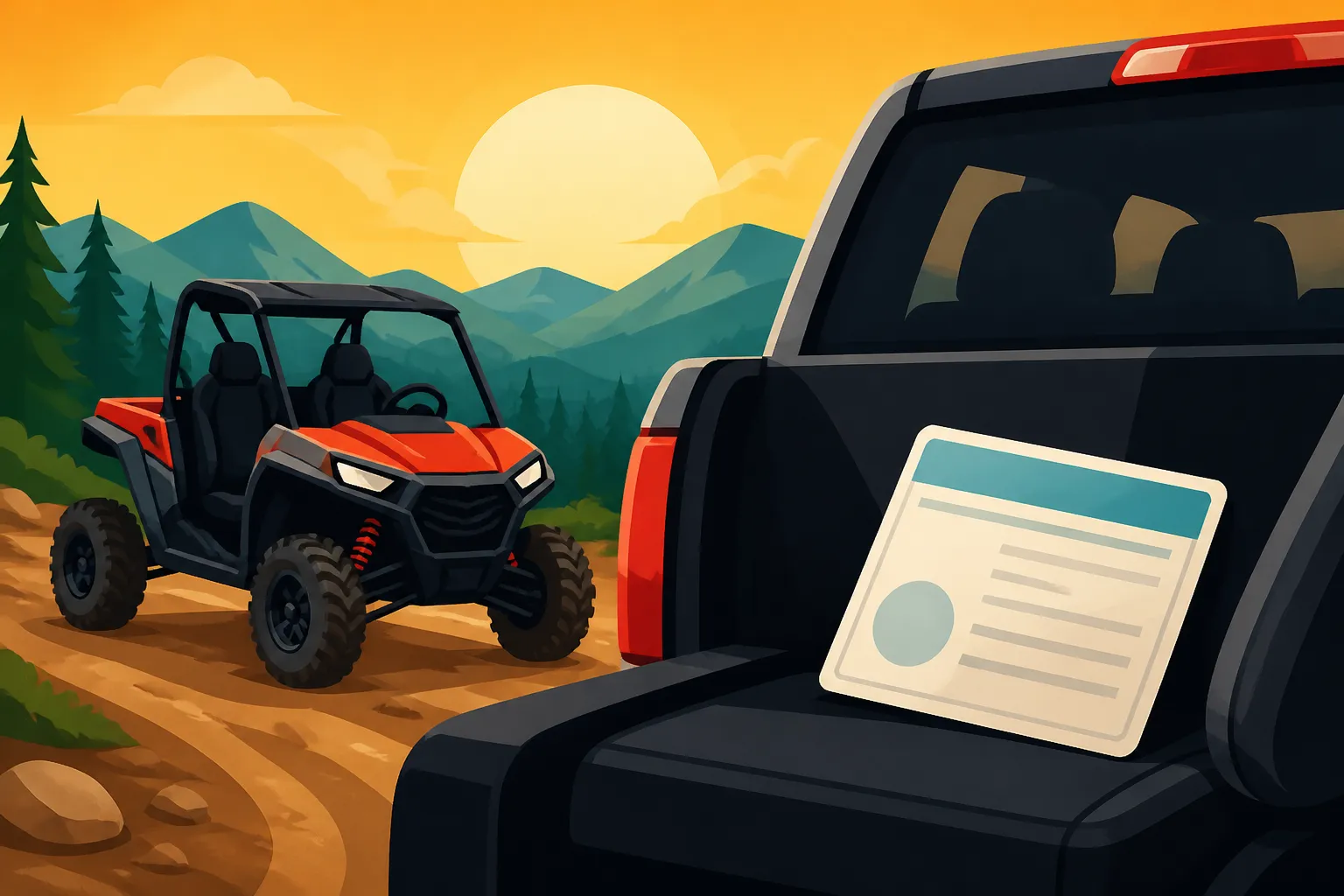
That distinction matters if your ATV or UTV is on a trailer behind a truck. A permit for the truck does not automatically cover the ATV, and the ATV’s permit does not automatically cover the truck if you take the truck onto trails. TWRA says highway-legal vehicles such as Jeeps and trucks also need the required NCWMA OHV permit when used on the trails. The permit requirement follows the vehicle being operated there.
| Situation | What to check |
|---|---|
| You ride an ATV or UTV while the truck stays parked | Make sure the permit covers the ATV or UTV, and keep its proof with the rider rather than relying on the truck |
| You drive a truck or Jeep on NCWMA trails | Check that the truck or Jeep has its own required permit |
| Several vehicles travel together | Confirm there is a valid permit for each vehicle and an adult with a permit for each one |
| You have an older High Impact Permit or license | Check its expiration and whether it is still honored for NCWMA |
| You ride a different wildlife management area | Check that area’s permit requirements; the NCWMA permit is not a universal Tennessee trail permit |
The number of vehicles in your party and the number of permits are not interchangeable. According to TWRA, permits are required on a per-vehicle basis, and at least one adult per vehicle must have a valid permit. A single permit in the lead truck should not be treated as group coverage for a line of machines.
Permits for NCWMA are separate from ordinary vehicle title paperwork. The Tennessee Department of Revenue says a TDR sticker is evidence that a title has been issued for an off-highway vehicle that is not registered for road operation. That sticker is not the same thing as a TWRA riding permit. A title sticker does not replace a trail permit, and a trail permit does not establish that the vehicle has been titled.
If you need to sort out those documents, see Tennessee TDR Sticker Requirements and Why Tennessee Has No Statewide Trail Sticker. They address different requirements, so it helps to identify which one applies before you head out.
If the permit is left in the truck
If you’re already at the riding area and the permit is in a truck parked away from the trail, don’t assume that the purchase record alone will be accepted as proof at a gate or during a check. The facts about TWRA’s rule establish that an adult must possess a valid permit for each vehicle, but they do not specify whether a screen, printed receipt, account record, or another format is acceptable in every situation.
The practical move is to retrieve the permit or its proof before riding, if that is possible. If the truck is too far away or access is restricted, pause and contact the park or TWRA for instructions instead of guessing. Avoid moving onto the trail on the assumption that a permit somewhere in the party’s truck is enough.
This is especially important when the truck is only a tow vehicle. The rider may think, “We bought the permit, so we’re covered,” while the person checking has no easy way to verify it. Keeping the permit information close does not change the coverage rule; it makes it easier to demonstrate that the required permit is associated with the machine being used.
Before leaving home, confirm the current proof and display requirements with TWRA. If you buy through the agency’s online portal, keep the confirmation available in the form TWRA accepts. The agency says permits are available through the TWRA customer portal beginning July 1, 2026. For help with the purchase process, see Buying a Permit Through the State Portal.
At the gate, follow the instructions posted there and be ready to present the relevant permit information. Showing a Permit at a Tennessee Gate covers that moment in more detail. If you cannot produce the proof, ask staff what to do before entering or continuing your ride.
A simple system to keep proof with the right vehicle
A permit is easiest to manage when you treat it as part of that vehicle’s ride kit, rather than as a piece of paperwork that happens to be in the truck. Set up a repeatable routine before each trip:
- Match each permit to the vehicle it covers. Write down or otherwise record the machine associated with the permit so permits do not get confused in a group.
- Put the proof somewhere the responsible adult can access while riding. Do not leave the only copy in a tow vehicle that will be parked elsewhere.
- Keep a backup of the confirmation in a format TWRA accepts. Verify accepted formats with the agency rather than assuming a screenshot or email will be enough.
- Check the permit’s validity before the trip, especially if it was purchased for a limited period or under an older program.
- Review the rules again if the vehicle or riding area changes. A permit for one vehicle or place should not be assumed to transfer to another.
A small, water-resistant document pouch can help protect paper proof from rain, mud, and trail dust. If you shop on Amazon for one, choose a pouch that can be secured and opened without losing the contents. Keep it with the machine’s documents or the responsible adult’s riding gear, not loose in a shared truck compartment.
For a group, assign a responsible adult to each vehicle before unloading. That avoids the common handoff problem where one person carries all the paperwork, then rides a different machine or stays back at camp. According to TWRA, the requirement is vehicle-based, so each machine needs its own valid permit coverage even when the group is traveling together.
If you change plans and take a truck or Jeep onto the trails, check its permit separately. A road-legal vehicle does not become exempt just because it is not an ATV. TWRA specifically says highway-legal vehicles such as Jeeps and trucks also need the required NCWMA OHV permit on the trails.
Avoid confusing permits, licenses, and locations
An older permit can create another kind of uncertainty. TWRA says High Impact Permits and Annual Licenses purchased before July 1, 2026, are honored on NCWMA until they expire. Permits and licenses purchased on or after that date are not valid for riding on NCWMA. Check the date and expiration of what you have rather than assuming that an old purchase or a license still covers the area.
Sportsman licenses are another point to check. According to TWRA, the NCWMA OHV riding permit is not included in Annual and Lifetime Sportsman licenses. Eligible license holders may purchase a Sportsman Supplemental Annual OHV Permit, but that supplemental permit still needs to be accounted for in the same practical way: connect it to the vehicle and keep its proof accessible.
The NCWMA permit also should not be treated as a statewide pass. TWRA says OHV riders using other designated wildlife management areas outside NCWMA still need the High Impact Habitat Conservation Permit. Different parks and properties may have their own rules as well. Before a trip, identify the actual riding location and check its current permit instructions; Why One Park’s Permit Is Worthless at the Next explains why a permit purchased for one place may not work somewhere else.
Keep the trail permit distinct from the vehicle’s title evidence, too. If a machine has a TDR sticker, that sticker does not act as an NCWMA riding permit. The Tennessee Department of Revenue says TDR stickers are non-renewable and non-transferable, and they become invalid when the vehicle is sold or dismantled. Those title-related rules do not replace TWRA’s separate riding requirements.
A useful pre-ride check is straightforward: identify the vehicle you will operate, confirm its permit is valid for the destination, and make sure the responsible adult can access acceptable proof away from the truck. If any part is unclear, ask TWRA or the property manager before riding. That small check is much easier than discovering at the trail entrance that the only permit record is sitting back in the parking area.
Sources
- Tennessee Department of Revenue — Off Highway Vehicles (checked November 3, 2026)
- Tennessee Wildlife Resources Agency — North Cumberland OHV Riding Area (checked November 3, 2026)
- Tennessee Wildlife Resources Agency — New OHV Permit Requirements to Take Effect July 1, 2026 (checked November 3, 2026)
Disclaimer
This article is for general informational purposes only and does not constitute professional advice. Laws, prices and regulations vary by location and change over time. Consult a qualified professional for guidance on your specific situation.