Carrying a Spare Fuel Can on a Brimstone Loop
A spare fuel can can turn a Brimstone ride from a cautious short loop into a longer outing, but only if it is allowed, secured and included in a realistic fuel plan. The key questions are whether the park permits it, where to carry it safely, and how much fuel your machine and route actually require.
Check Brimstone’s rules before you pack fuel
Do not assume that a portable fuel can is allowed on every trail just because your machine has room for one. Park policies can set limits on containers or how fuel is carried, and rules may change. Confirm Brimstone’s current requirements before you load the machine; contact the park if the posted guidance is unclear.
A trail permit and permission to bring a fuel container are separate questions. Your permit covers access under its terms, but it does not automatically override safety instructions or park restrictions. Review Brimstone’s Land Use Permits and Tennessee Rules for Carrying Fuel, then check for current notices before heading out. A permit for one riding area also does not automatically cover another, as explained in Why One Park’s Permit Is Worthless at the Next.
When you check, ask specific questions rather than relying on a general “fuel cans allowed” answer:
- Are portable fuel cans permitted on the trails you plan to ride?
- Are there limits on container type, capacity or number?
- Does the park require the can to be mounted in a particular way?
- Are there rules for refueling at the staging area or along a trail?
- Are there current fire restrictions or temporary closures that affect fuel handling?
If a rule is posted at the gate, office or on the park’s current information channels, follow it even if it differs from what you heard earlier. Conditions and operating instructions can change. For trip preparation, Checking a Tennessee Trail Notice First is a useful reminder to verify current information before riding.
Do not treat a general recommendation from another rider as official permission. A container that was accepted on a previous visit, or on another property, may not meet Brimstone’s current requirements. If you cannot confirm whether a can is permitted, do not take it onto the trails until you have an answer.
Decide whether a spare can is worth carrying
A spare can is most useful when your planned loop could exceed the machine’s dependable range, when fuel access is limited, or when a group needs a buffer for delays. It is not a substitute for knowing your route or starting with a full tank. A can also adds weight, takes up cargo space and creates extra handling risks.
Start with the machine’s actual fuel use, not a brochure estimate or a guess based on a different vehicle. Consumption varies with terrain, load, speed, tire setup, mechanical condition and riding style. Slow technical sections, repeated climbs, mud and frequent stops can use fuel differently from an easy, steady ride.
Use a conservative plan:
- Start with a full tank, if the park’s procedures and your machine’s condition allow it.
- Estimate fuel needs for the planned route using your own machine’s recent riding history.
- Add a reserve for navigation mistakes, a detour, waiting for a group or an unexpected delay.
- Decide whether the reserve should be carried in the tank, in a spare container, or both.
- Shorten the route if the plan depends on using every drop in the tank or container.
A small fuel can may provide a useful margin, but it may not be enough for a long ride. A larger container offers more reserve while adding more weight and increasing the amount of fuel you must secure and manage. Choose based on the machine’s carrying limits, the park’s rules and the route—not on the idea that more fuel is always better.
| Situation | What to consider | Practical choice |
|---|---|---|
| Short, familiar loop | The machine’s normal range and available fuel before the ride | A spare may be unnecessary if the tank provides a comfortable reserve |
| Long or unfamiliar loop | Navigation uncertainty, terrain and time needed to turn back | Carry a permitted, securely mounted reserve or plan a shorter route |
| Group ride | Different machines may have different fuel use and tank sizes | Set the route around the least capable machine and agree on regroup points |
| Heavy load or challenging conditions | Extra passengers or cargo and demanding terrain can affect fuel use | Increase the reserve and avoid relying on a best-case range estimate |
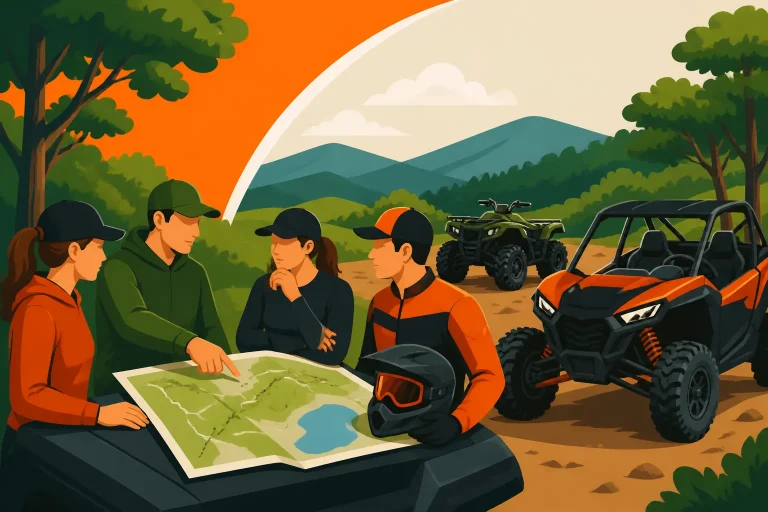
Fuel planning should fit the ride, not encourage a longer route than the group can safely complete. Brimstone’s trail network and ride options make route planning important; review Brimstone’s 300 Miles in Tennessee alongside the current park map, and choose a loop that leaves time to return without rushing. A map is most helpful when the group agrees on a turnaround point before setting out. See Tennessee Trail Maps Worth Carrying for broader map-planning considerations.
A spare can is not automatically the right solution for every machine. If there is no safe, approved way to attach it, or if it pushes the vehicle beyond its cargo limits, reduce the route or arrange a different fuel plan instead.
Choose and secure the container carefully
Use a container designed and labeled for gasoline, in good condition, with a cap and closure that seal properly. Do not carry fuel in a drink bottle, improvised jug or container intended for a different liquid. Check the container maker’s instructions for the approved fuel type, filling guidance, mounting requirements and storage limits.
If shopping for one, including through Amazon, use the manufacturer’s specifications to confirm that the product is intended for gasoline and appropriate for the way you plan to carry it. A high rating or attractive product photo does not establish that a container is compatible with your fuel or suitable for a particular mounting position.
Inspect the can before every ride. Look for cracks, damage, a loose cap, a worn seal, a damaged spout or signs of leakage. Replace a questionable container rather than trying to patch it for trail use. Keep the can clean enough that dirt around its opening cannot fall into the fuel when you pour.
Securement matters as much as the container itself. A can that shifts, tips or rubs against a hot or moving part can become a hazard. Follow the machine and container manufacturers’ instructions, and make sure the mounting point can handle the added weight on rough terrain.
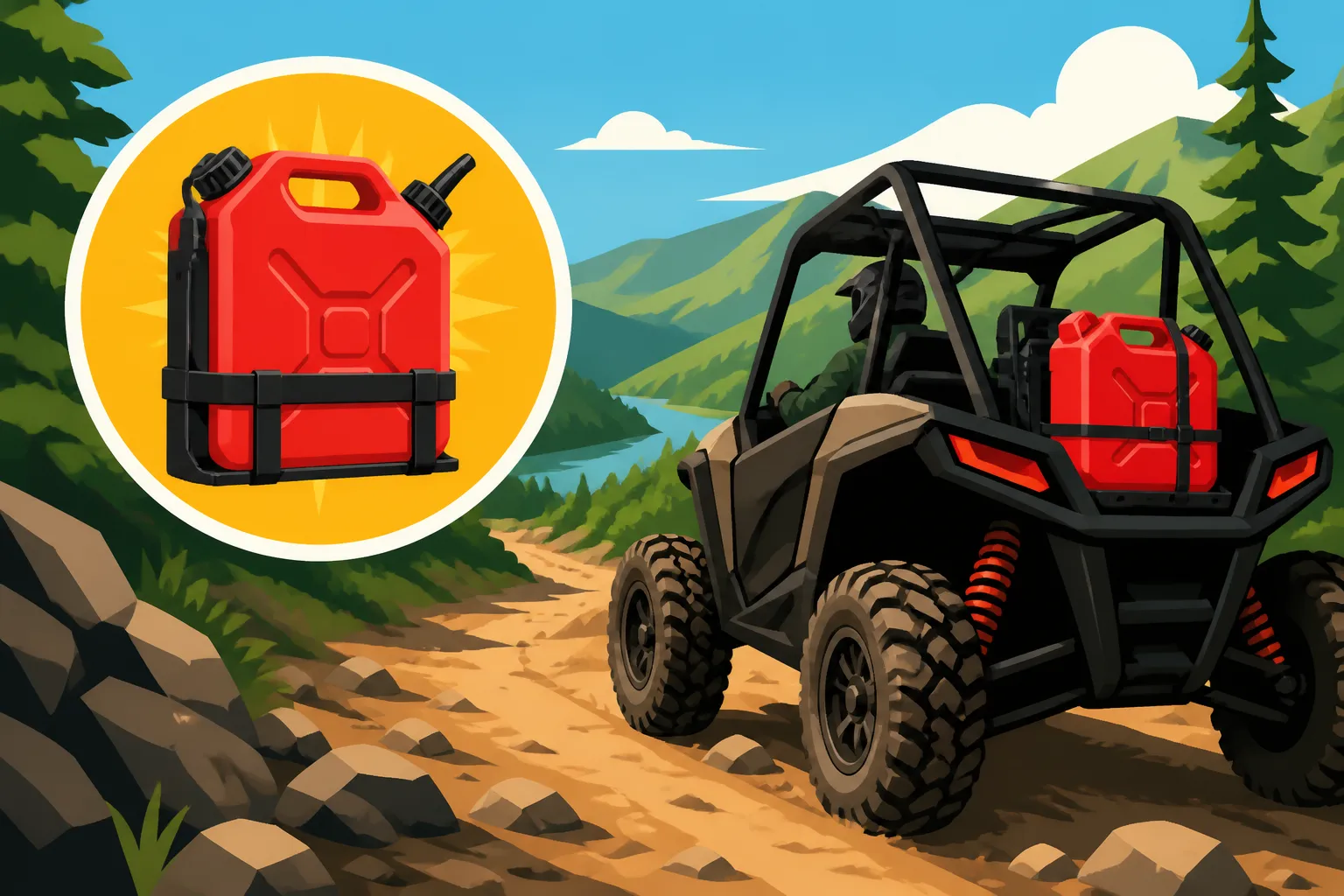
- On an ATV, use a secure rack or approved mounting system that does not block controls, lights, exhaust components or the rider’s movement.
- On a UTV, use a suitable cargo area or mounting point that keeps the can upright and restrained. Do not place it loose in the passenger area.
- Keep the can away from hot exhaust parts, sharp edges and components that could pinch or abrade it.
- Check that straps or mounts remain tight, and that the can cannot slide during a turn or on a rough section.
- Stay within the machine’s payload limit, including riders, tools, water, luggage and fuel.
Do not assume that an enclosed cab or cargo box is a safe place for gasoline. Vapors can accumulate, and the container could be exposed to heat or impact. Use only a location and mounting method allowed by the vehicle and container makers, and follow Brimstone’s instructions.
A full fuel can is heavy, and its weight can affect handling. Place the load where the vehicle’s manufacturer recommends, and avoid an arrangement that makes the ATV or UTV feel unstable. If the machine’s handling changes noticeably, stop in a safe place and reassess the load rather than continuing with a setup that feels wrong.
Handle and use the fuel with care on the ride
Before leaving the staging area, make sure everyone knows where the fuel can is, how it is attached and what to do if there is a leak. Do not wait until the machine is nearly out of fuel to figure out how to access it. If a group is riding together, agree on a safe place to stop and refuel before the ride begins.
Stop the engine before opening the can or refueling. Move away from ignition sources, flames, smoking materials and hot surfaces. Refuel only where it is safe and permitted, and avoid spilling fuel on the machine, clothing or ground. Follow the fuel-can and vehicle instructions for pouring and for leaving appropriate room in the tank; do not force fuel into an overfilled tank.
If fuel spills, stop work and follow the park’s instructions for reporting or managing the spill. Do not continue riding with fuel on the vehicle or clothing, and do not leave contaminated material behind. If there is a significant spill, fire risk or injury, notify park staff or emergency services as appropriate.
A spare can can help with an unexpected delay, but it is not a reason to push past a safe turnaround point. If fuel use is higher than expected, the route is unclear, or the group is running behind, shorten the ride and return by the safest available route. Tell another person your plan and expected return time, especially when riding beyond familiar areas.
Before loading, do a final check:
- The container is permitted under Brimstone’s current rules.
- The can is intended for gasoline, undamaged and properly closed.
- Its mounting is secure and does not exceed the vehicle’s carrying limits.
- The route has a realistic fuel reserve and a clear turnaround plan.
- Riders know how to stop and respond if the container leaks or becomes loose.
Recheck park notices and route conditions close to departure. Tennessee Trail Conditions Before You Ride and Tennessee Trail Closures to Check First can help frame that final check. For a Brimstone trip, the simple rule is to verify permission first, carry only what you can secure safely, and plan a route that does not depend on the spare can to rescue an overly ambitious ride.
Disclaimer
This article is for general informational purposes only and does not constitute professional advice. Laws, prices and regulations vary by location and change over time. Consult a qualified professional for guidance on your specific situation.