Trail 27 at Midnight
Trail 27 at Royal Blue is known for its around-the-clock access, but a midnight ride is not simply a daytime trip with the lights switched on. Darkness makes trail junctions, rocks, changing conditions, and other riders harder to read. This guide explains how to plan a safer night ride, check access and permit requirements, and decide whether your group and machine are ready.
What Makes Trail 27 at Midnight Different
The route feels different after dark
Trail 27 sits in the Royal Blue area of Tennessee’s North Cumberland riding country. Its reputation for being open around the clock makes it appealing to riders who want to extend a trip or experience the trail after sunset. But night riding changes how quickly you can spot a rut, a rock ledge, a turn, or a vehicle coming the other way.
Even a familiar route can feel unfamiliar when your view is limited to the space your headlights reach. A ridge, bend, or trail junction you recognize by daylight may look like an unmarked opening at night. Dust can hang in the air and catch your lights, while trees and terrain can create dark patches just beyond the beam.
That does not make a midnight ride automatically unsafe. It does mean that speed, spacing, and judgment matter more. Ride at a pace that lets the driver stop within the clear distance ahead, and do not assume the rider in front can see everything you can.
Around-the-clock access is not a promise that every route is open
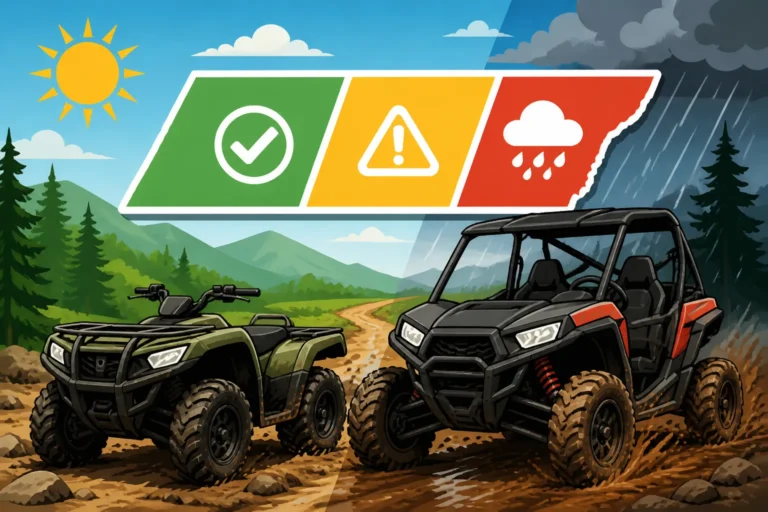
A route described as open around the clock is not necessarily open under every condition or on every date. Trail status can be affected by closures, maintenance, weather, land-management notices, or other restrictions. Check the latest notices before loading your machine, and check again before you set out after dark if you are already in the area.
It also helps to separate trail access from permission to ride. A machine’s title, a park pass, a permit, and a particular route’s open status are different things. Read [Tennessee Rules for Riding a WMA] and [Does One Permit Cover Every North Cumberland Unit?] before assuming you have everything needed for the trip.
When you are planning with a group, agree on what you will do if a gate is closed or a trail is marked off. Do not treat a closed route as a navigation puzzle to solve. Turn around, use an open route you have already checked, or end the ride.
Confirm the route and the rules before leaving
A map can help you understand where you are going, but it cannot replace posted notices or official directions at the riding area. Use a mapping tool such as onX Offroad to review the route and key junctions ahead of time, then compare what you see with current park or land-manager information. Save the map for offline use if that option is available to you; cell coverage can be unreliable across remote riding areas.
Make sure every driver knows where the group plans to start, which route it intends to use, and where it will turn around. If riders are separated, a shared plan is far more useful than trying to explain a complicated turn by phone in a dead zone.
| Before the ride | Why it matters at night |
|---|---|
| Confirm the trail is open | A route can be closed even if it appears on a map |
| Check permit requirements | A trail pass may be specific to a riding area or unit |
| Save a route for offline use | Cell service may not be dependable in remote terrain |
| Set a turnaround point | It is easier to make a calm decision before fatigue sets in |
| Check lights and communication gear | A failure is harder to manage in darkness |
| Tell someone your plan | A trusted contact can know where you expect to be |
Permits, Access, and Trail Notices
A trail location does not determine your permit by itself
Royal Blue is part of a broader riding area, and riders should not assume one permit automatically covers every place they might travel. The permit needed can depend on the riding area and the land being used. Review [Tennessee Trail Permits Explained] and [North Cumberland OHV Permit Cost] to understand the distinction between state-area permits and permits associated with private riding parks.
If you are visiting from another state, check the requirements that apply to nonresidents before you arrive. A permit bought for one location may not be valid at another. The same caution applies if your route crosses between units or approaches a boundary: know where you are, and do not count on a single pass to cover every possible destination.
Keep proof of your permit accessible in the way the rules require. Do not bury it beneath tools, a wet jacket, or cargo that is difficult to reach after dark. If an attendant or officer asks to see it, you want to be able to respond without unpacking half your machine on a trail.
Check notices more than once
A quick check days before a trip is useful for planning, but it cannot tell you what changed afterward. Before setting out, look for current notices about closures, trail conditions, and special restrictions. If you are already at the area, follow signs and gate information even if your printed plan or downloaded map shows the route as available.
For the North Cumberland area, [Tennessee Trail Closures to Check First] is a useful reminder to make closure checks part of your routine. A route that is normally available may not be appropriate or open under the conditions you encounter. Heavy rain, for example, can make a trail more difficult and can contribute to damage; darkness makes it harder to identify soft spots or washouts early.
An app such as onX Offroad can help with orientation and route planning, but it should be treated as a navigation aid rather than the final word on access. Keep a second way to understand your route, such as a paper map or a written list of major junctions. If the app, phone, or battery fails, you should still know how to stop safely and retrace your route.
Read the rules for the area you are actually riding
Night riding at a permitted location does not mean every activity or road use is allowed. Trail rules, permit conditions, equipment requirements, and local restrictions still apply. Before the trip, review [Tennessee Rules for Night Riding at a Park] and [Tennessee Sound Limits on a WMA] so you understand the rules that may affect your ride.
Do not rely on a general statement from a friend or an old social-media post as proof that a route is open or that a particular machine is allowed. If a rule is unclear, contact the managing agency or park before riding. That small bit of preparation can prevent a frustrating trip back to the truck—or a much more serious problem on the trail.
Preparing Your ATV or UTV for a Midnight Ride
Treat lighting as essential equipment
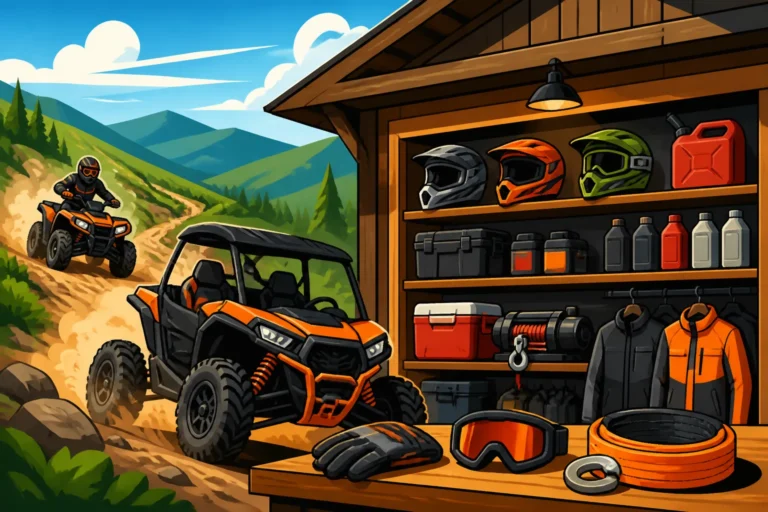
At night, your lights are not just for being seen; they are how you read the terrain. Check that the headlights work, are aimed correctly, and do not flicker when the machine moves over bumps. If your vehicle has additional lighting, confirm that it is securely mounted and aimed so it improves your view without blinding other riders.
A bright beam can still leave dangerous blind spots. Dust, fog, rain, and steep changes in elevation can limit what you can see, even with strong lights. Avoid staring only at the brightest point directly in front of the machine. Look for the edges of the trail, reflective markers, and the shape of the ground as it rises and falls.
Carry a backup light and keep it somewhere you can reach without unloading the vehicle. A small headlamp can be useful if you need both hands to inspect a tire, adjust gear, or help another rider. Test the backup light before the trip rather than discovering dead batteries at a junction.
Check the machine and the gear you depend on
A pre-ride inspection is especially worthwhile before a night trip. Check tires, brakes, throttle response, fuel, and any straps or cargo that could shift. Make sure the machine is in good working order before you leave the staging area. A small issue that is easy to spot in daylight can become a difficult repair when the group is tired and the trail is dark.
Bring basic tools and supplies suited to your machine and the length of your ride. This might include a tire repair kit, a means of airing up a tire, water, warm layers, and a first-aid kit. Pack for a longer return than you expect; a wrong turn, a slow-moving group, or a mechanical problem can stretch a short ride.
Communication equipment deserves its own check. Charge phones and radios, confirm that riders know how to use them, and consider how you will regroup if the group becomes separated. Do not assume a phone will have a signal or that a message will arrive immediately.
Make the group ride manageable
A midnight ride is usually easier to manage with a small, coordinated group than with a long line of riders who have not agreed on how to communicate. Choose a lead rider who knows the route and a sweep rider who can make sure nobody is left behind. Establish a simple way to signal a stop, a problem, or a change in plan.
Leave enough space between machines to reduce the risk of riding into another vehicle’s dust or debris. At the same time, avoid letting the gap grow so large that a rider loses sight of the group. Stop at safe, visible places to regroup rather than stopping unexpectedly in a narrow or exposed section of trail.
Set limits before anyone is tired. If a rider is anxious, a light is failing, or conditions are deteriorating, the group should be willing to turn back. A midnight ride is not a test of endurance or a reason to push a machine beyond the driver’s comfort level.
A Safer Plan for Riding Trail 27 After Dark
Choose a route you can manage
If this is your first night ride in the area, keep the plan conservative. Avoid adding unfamiliar trails just because the group is having fun or the night is still young. Pick a route that suits the least experienced driver and the most limited machine in the group.
Use onX Offroad or another map to identify major turns and possible return points before you start, but make sure you can recognize those features on the ground. A route line on a screen may be difficult to follow when several tracks appear close together. Pause at junctions, check your direction, and avoid guessing when the route is unclear.
Plan a turnaround time, not just a destination. It is easy to underestimate how long a nighttime return will take. Fatigue, dust, a slow section, or a short stop to help another rider can change the schedule. Turning around while everyone is alert is usually a better choice than continuing until the group is worn out.
Ride for visibility, not bravado
Keep your speed low enough to stop for what you can actually see. On a narrow trail, that may mean slowing before a bend, crest, or patch of dust. Do not follow so closely that the vehicle ahead hides hazards or leaves you no room to react.
Be especially cautious around trail intersections and places where vehicles may approach from another direction. Use a controlled pace and look for signs, markers, or other indicators rather than assuming that a familiar-looking track is the correct one. If you meet another group, slow down and give them room to pass safely.
If visibility drops, stop at a safe location and let dust settle. If you encounter rain, fog, a lighting problem, or a trail condition that exceeds your group’s ability, turn back. The fact that a trail is open does not mean it is sensible to continue in every condition.
Know when to call the ride
Before leaving, share your route and expected return with someone who is not riding with you. Give that person a realistic time to check in, and tell them what to do if the group does not return as planned. This is especially helpful when riders are going somewhere with limited phone service.
If a machine breaks down, move it and the group out of the path of other traffic if it is safe to do so. Use your backup lights, communicate clearly, and avoid sending one person off alone without a plan. If a situation involves an injury or immediate danger, use the appropriate emergency response rather than trying to solve it on the trail.
A good midnight ride ends with everyone and every machine back safely, even if the planned loop was shortened. Trail 27’s around-the-clock reputation can make a late ride possible, but preparation, current access checks, and conservative decisions are what make it a reasonable one.
Disclaimer
This article is for general informational purposes only and does not constitute professional advice. Laws, prices and regulations vary by location and change over time. Consult a qualified professional for guidance on your specific situation.