Titling at a Tennessee County Clerk
Navigating the world of ATV and UTV ownership in Tennessee can feel a bit like trying to find your way through a dense forest with an outdated map. Many folks assume these machines are registered like cars or trucks, only to find out Tennessee handles them quite differently, leading to confusion right from the start. This comprehensive guide is here to untangle the specific process of titling your off-highway vehicle (OHV) at your local Tennessee County Clerk's office, ensuring you have all the information you need to make the process smooth and stress-free.
The County Clerk's Central Role in Tennessee OHV Titling
When you bring a new-to-you ATV, UTV, or other off-highway vehicle home in Tennessee, one of the first and most critical stops you'll make is at your local county clerk's office. This isn't just a suggestion; it's a fundamental requirement for establishing legal ownership. Unlike many other states, Tennessee has a unique system when it comes to OHVs, and understanding the county clerk's place in it is key to avoiding headaches down the road.
Why Your Local Clerk Handles Titling, Not Registration
It's a common misconception, especially for those new to the state or to OHV ownership, that you need to "register" your ATV or UTV in Tennessee. However, this simply isn't the case. Tennessee does not register off-highway vehicles in the same way it registers cars, trucks, or motorcycles for highway use. There's no annual tag to renew, no traditional license plate, and no requirement for recurring registration fees. Instead, the focus is entirely on titling the machine.
Your county clerk's office is the designated agency for processing these titles. They act as the local point of contact for the state's Department of Revenue (TDR), which ultimately issues the official paper title. This distinction between titling and registration is crucial. Titling establishes legal ownership, providing a verifiable record of who the machine belongs to. Registration, on the other hand, typically grants permission for a vehicle to operate on public roads and requires periodic renewal. Since most ATVs and UTVs in Tennessee aren't designed for widespread public road use, the state opts for a title-only system to track ownership. You might be asking yourself, [Does Tennessee Register ATVs?], and the answer, in the traditional sense, is no, they do not.
This unique approach can sometimes catch people off guard, especially if they're moving from a state where OHVs are registered annually. They might expect to receive a plate or a yearly sticker that permits riding. Instead, the Tennessee system is streamlined to focus solely on the transfer and proof of ownership. The county clerk's office is equipped to guide you through this process, ensuring all the necessary forms are completed correctly and submitted to the state. They serve as the administrative hub for this initial and vital step in making your OHV legally yours.
The Importance of a Title for Ownership and Sale
So, if there's no registration, why is a title so important? Think of your OHV's title as its birth certificate and deed rolled into one. It is the official, legal document that proves you are the rightful owner of that specific ATV or UTV. Without a valid title in your name, proving ownership can become incredibly difficult, leading to a host of problems if you ever need to sell the machine, claim it from theft, or settle disputes.
When it comes time to sell your OHV, a clear title is paramount. A buyer will almost certainly require a properly executed title, signed over to them, to ensure they can legally transfer ownership into their own name. Trying to sell a machine without a title is a red flag for most legitimate buyers and can severely limit your ability to find a willing party. It also complicates the buyer's ability to get their own title and TDR sticker, which is necessary for riding in designated areas. Understanding the nuances of [Selling an OHV in Tennessee] means having your title in order.
Furthermore, a title protects you as the owner. In the unfortunate event that your ATV or UTV is stolen, law enforcement relies on the title information to identify the rightful owner and return the machine. Without that official documentation, proving the machine is yours can be an uphill battle. The title contains vital information such as the Vehicle Identification Number (VIN), make, model, and year, all of which are essential for tracking and recovery. It’s the cornerstone of responsible OHV ownership in Tennessee, providing peace of mind and legal standing for both current and future transactions involving your machine.
Gathering Your Paperwork: What to Bring to the Clerk
One of the most crucial steps to ensure a smooth titling process at your county clerk's office is arriving prepared with all the necessary documents. Missing a single piece of paperwork can mean an extra trip, delayed riding time, and unnecessary frustration. The requirements can vary slightly depending on whether your machine is brand new, used, or coming from out-of-state, so it's wise to double-check everything before you head out.
Essential Documents for a New Title
If you've just purchased a brand-new ATV or UTV from a dealership, the primary document you'll need is the Manufacturer's Statement of Origin (MSO), sometimes called a Manufacturer's Certificate of Origin (MCO). This is essentially the "birth certificate" for your off-highway vehicle, indicating that it's a new machine that has never been titled before. The dealership should provide this to you, often alongside a bill of sale that details the purchase price and any sales tax collected. The MSO will have the vehicle's VIN and other critical identifying information, which the county clerk will use to create the first-ever Tennessee title for your machine. Make sure the MSO is properly signed and notarized if required by the manufacturer or dealership, as any omissions could cause delays.
For machines bought directly from a private seller, you'll need a properly executed Bill of Sale. While not always strictly necessary if you have a perfectly transferred title, a comprehensive Bill of Sale is highly recommended, especially when purchasing a used machine where an MSO is no longer applicable. This document should clearly state the buyer's and seller's names and addresses, the purchase date, the agreed-upon price, and a detailed description of the OHV, including its make, model, year, and crucially, its Vehicle Identification Number (VIN). Both the buyer and seller should sign it, and it's a good idea to have it notarized if possible, though this isn't always a strict requirement for the clerk's office to process the title transfer. A well-drafted Bill of Sale protects both parties and provides the county clerk with verifiable proof of the transaction and purchase price for sales tax calculations. Sites like LawDepot offer excellent templates that can help ensure you don't miss any critical information when creating this document. These documents are central to [Tennessee OHV Title Paperwork].
Beyond the MSO or Bill of Sale, you'll also need a valid form of identification, such as a driver's license, to prove who you are as the new owner. The county clerk's office will need to verify your identity and residency to process the title in your name. In some cases, if the machine was financed, the lending institution will also provide documentation that needs to be presented, as they will typically hold a lien on the title until the loan is paid off. Always call your specific county clerk's office ahead of time to confirm their precise requirements, as local offices can sometimes have slight variations in what they prefer to see, ensuring you're fully prepared.
Transferring an Existing Tennessee Title
When you purchase a used ATV or UTV from a private seller that already has a Tennessee title, the process at the county clerk's office is generally straightforward, provided the previous owner completed their part correctly. The most important document in this scenario is the existing Tennessee Certificate of Title itself. On the back of this title, there will be sections specifically designed for transfer of ownership. The seller must sign this document, print their name, and often record the odometer reading (though for OHVs, an odometer reading may not be applicable or required, so clarify this with your clerk). They'll also need to fill in the date of sale and the sale price. It’s imperative that the seller's signature matches the name(s) printed on the front of the title. If there are two names on the title joined by "and," both individuals typically need to sign.
You, as the buyer, will then complete your portion of the transfer, including your name, address, and signature. This physically transferred title, along with your identification and proof of purchase (such as a Bill of Sale), will be what you present to the county clerk. The clerk will then process the transfer, collect any applicable sales tax, and issue you a new title in your name, along with the required TDR sticker. This entire process is covered in detail under [Tennessee OHV Title Transfer]. It’s a seamless way to update the state's records and ensure you have clear legal ownership.
One common issue that arises during a title transfer is an existing lien. If the previous owner financed their OHV and hasn't fully paid off the loan, the title may indicate a lienholder. In this situation, the seller must obtain a lien release from their lender before they can legally transfer a clear title to you. Without a lien release, the county clerk cannot issue a new title without carrying over that existing lien, which means the previous owner's debt would still be attached to the machine, complicating your ownership. Always check the title for any recorded liens before finalizing a private purchase, and ensure you receive a lien release document if one was present.
Special Cases: Inherited, Gifted, or Out-of-State Machines
Sometimes, titling an OHV isn't as simple as walking into the dealership or buying from a neighbor. Special circumstances, like inheriting a machine or bringing one in from another state, require additional steps and documentation. For an inherited machine, you'll need the existing title, if one exists, along with legal documents proving your right to inherit the property. This typically includes a copy of the death certificate and, depending on the estate's size and complexity, probate court documents like Letters Testamentary or Letters of Administration. These legal papers establish you as the rightful inheritor and allow the county clerk to transfer the title into your name. It's an understandably sensitive situation, and the clerk's office can guide you through the specific requirements. For more specific guidance, refer to [Titling an Inherited Machine in Tennessee].
If you've been lucky enough to receive an ATV or UTV as a gift, you'll still need to go through the titling process. While you might be exempt from sales tax if it's a genuine gift with no monetary exchange (though check with your clerk, as rules can vary or be misinterpreted), you'll still need the previous owner's properly transferred title or an MSO, along with a Gift Affidavit or Bill of Sale indicating it was a gift. This document should clearly state that no money changed hands. This helps the county clerk determine that sales tax is not applicable for the transaction. Even a gifted machine needs its official "birth certificate" or proof of prior ownership to establish its lineage and transfer it properly into your name.
Bringing an ATV or UTV into Tennessee from another state also has specific requirements. You'll need the original title from the previous state. The county clerk will use this out-of-state title to issue a new Tennessee title. If the previous state had a registration but not a title for OHVs, you'll need to provide whatever proof of ownership was issued by that state, along with a Bill of Sale. You'll also be responsible for paying Tennessee sales tax on the current value of the machine if you haven't paid sales tax in another state that has reciprocity with Tennessee within a certain timeframe (often 90 days). It's always best to have a comprehensive Bill of Sale, perhaps one drafted using a template from a service like LawDepot, to clearly document the purchase price and date when dealing with an out-of-state transfer. For a deeper dive into this, check out [Buying an Out-of-State Machine for Tennessee].
Understanding the Fees and Taxes at the Clerk's Office
When you head to the county clerk's office to title your ATV or UTV, it’s not just about paperwork; it's also about settling the financial aspects. There are specific fees and taxes you'll need to pay, and understanding what each charge covers can prevent sticker shock and ensure you budget correctly for your new-to-you machine. These costs are a necessary part of establishing legal ownership and keeping state records accurate.
State Title Fees and County Clerk Fees
The titling process involves two main categories of fees: those that go to the State of Tennessee and those that are retained by your local county clerk's office for their administrative services. The state title fee is a flat charge that applies statewide, regardless of which county you're in. This fee contributes to the overall administration and maintenance of the state's vehicle titling system, ensuring accurate records of ownership for all types of vehicles, including OHVs. It's a fundamental cost that every new titleholder pays.
In addition to the state fee, your county clerk's office will charge a separate administrative fee. This is the compensation for the local office's work in processing your application, reviewing your documents, inputting the data, and issuing any temporary permits or the TDR sticker. These fees help cover the operational costs of the county clerk's office, from staffing to technology. While the state portion of the fee is uniform, the county administrative fee might vary slightly from one county to another, so it's always a good idea to confirm the exact amount with your specific county clerk before your visit. You can gain more insight into this by looking at [What a Tennessee OHV Title Costs] and specifically, [Tennessee's $8.50 County Clerk Fee].
It's important to understand that these two fees are distinct and serve different purposes, even though you pay them both at the same counter. The state fee is for the title itself, while the county fee is for the service of processing that title locally. When you receive your receipt, you'll likely see these itemized separately. Being aware of both components helps you understand where your money is going and confirms that all necessary charges for legitimate titling have been covered, ensuring a smooth and compliant process.
Sales Tax Calculation and Payment
One of the largest financial considerations when titling your ATV or UTV at the county clerk's office will likely be sales tax. In Tennessee, sales tax is generally due on the purchase price of the vehicle, whether it's new or used, and this tax is typically collected by the county clerk at the time of titling. This means that even if you bought your machine from a private seller, you're still responsible for paying the state's sales tax on that transaction unless a specific exemption applies.
The sales tax is calculated based on the agreed-upon purchase price of the OHV. If you bought it new from a dealership, the sales tax might already be itemized on your bill of sale, or the dealership might have collected it directly. However, for private sales, the county clerk will rely on the Bill of Sale you provide to determine the taxable amount. It's crucial to have an accurate Bill of Sale with the true purchase price stated, as underreporting could lead to issues. Some county clerks may also have access to resources that allow them to assess the fair market value of a machine if the stated purchase price seems unusually low, to ensure sales tax is collected appropriately. More information can be found under [Tennessee Sales Tax at the Title Counter].
There are a few instances where sales tax might not apply. If you received the OHV as a genuine gift, and can provide a notarized gift affidavit, you might be exempt. Additionally, machines used exclusively for agricultural purposes on a farm might also qualify for certain exemptions, but this requires specific documentation and verification. If you previously paid sales tax in another state that has reciprocity with Tennessee, and you are titling within a specified timeframe (usually 90 days), you might also be exempt from paying Tennessee sales tax again. It’s always best to clarify any potential exemptions with your county clerk's office before your visit, as these situations often require specific forms or proof to be accepted.
Lien Recording Fees
If you're financing the purchase of your ATV or UTV, there's another fee you'll need to account for at the county clerk's office: the lien recording fee. When a bank or other lending institution provides you with a loan to buy your OHV, they typically want to secure their investment. They do this by placing a lien on the vehicle's title. This means the lender has a legal claim to the machine until the loan is fully paid off. The lien recording fee is the charge for formally noting this legal claim on the state's title records.
This fee ensures that when anyone looks up the title for your OHV, they will see that a lien exists. This is important for both the lender, who has their interest protected, and for future potential buyers, who will know that the vehicle has an outstanding debt attached to it. The county clerk's office is responsible for recording this lien with the state, and the fee covers the administrative cost of processing and documenting this information. This is usually a flat fee, distinct from the title and county administrative fees.
Paying the lien recording fee is a standard part of the financing process for any titled vehicle. Once you've paid off your loan, your lender will send you a lien release document. You'll then typically need to take this release back to the county clerk's office (or follow their specific instructions) to have the lien officially removed from your title, making it a "clear" title. Understanding this fee and the process around liens is important, especially if you plan to sell the machine before the loan is fully satisfied, as the buyer will need a clear title for transfer. For the exact cost, see [Tennessee's $11 Lien Fee].
The Tennessee TDR Sticker: Proof of Title
Beyond the paper title itself, Tennessee has a unique way of providing immediate, visible proof that your off-highway vehicle is properly titled: the Tennessee Department of Revenue (TDR) sticker. This little sticker often causes a lot of questions among new OHV owners, as it looks somewhat like a registration decal but functions very differently. Understanding its purpose and limitations is crucial for compliant OHV use in the state.
What the TDR Sticker Is and Why It Matters
The Tennessee TDR sticker is not a registration sticker, despite its appearance. Instead, it serves as visible proof that your ATV or UTV has a valid Tennessee Certificate of Title on file with the state. When you successfully title your machine at the county clerk's office, you will be issued this sticker. It typically contains the machine's VIN, the title number, and an issue date. This sticker is designed to be affixed to a prominent, non-removable part of your OHV, often near the VIN plate or on the frame, where it can be easily seen. You can find more details under [Tennessee's TDR Sticker Explained].
Why does it matter? While the paper title is your ultimate proof of ownership, the TDR sticker provides an immediate, on-the-spot verification for authorities, park rangers, or trail operators that your machine is legally titled in Tennessee. Many state-managed riding areas or private parks that require a permit will also expect to see this sticker on your machine as part of their compliance checks. It acts as a quick visual cue that your OHV is legitimate, helping to deter theft and ensure that only properly titled machines are being operated.
Without a TDR sticker, even if you have a paper title, you might face questions or delays when trying to access certain riding areas. It's the state's way of simplifying the verification process for OHVs that don't carry traditional license plates. It demonstrates that the necessary titling process, including payment of sales tax and fees, has been completed. It's an integral part of the Tennessee OHV landscape, providing both a layer of security and a practical means of compliance.
How the TDR Sticker is Issued and Its Limitations
When you complete the titling process at your local county clerk's office, they will typically issue the TDR sticker to you right there on the spot. It’s part of the standard procedure once all your paperwork is approved and fees are paid. The clerk will usually peel it off a roll and hand it to you, instructing you to affix it to your machine. This immediate issuance ensures that you have proof of title as soon as you walk out the door, allowing you to legally operate your OHV (where permitted) without delay. The sticker itself is designed to be durable and weather-resistant, able to withstand the challenging environments that off-highway vehicles often encounter.
However, it's crucial to understand the significant limitations of the TDR sticker. Unlike vehicle registration tags, the Tennessee TDR sticker cannot be renewed. Once issued, it’s a one-time sticker that remains valid for the life of that specific title and ownership. It does not have an expiration date in the traditional sense, but its validity is tied directly to the ownership record. This means you won't be receiving annual renewal notices or paying yearly fees for it. This fundamental difference from registration stickers often confuses new owners, but it underscores that its purpose is solely to confirm the existence of a title. If you're wondering [Why the Tennessee Sticker Cannot Be Renewed], this is the key reason – it's a proof of title, not a registration.
Furthermore, the TDR sticker cannot be transferred from one owner to another. If you sell your OHV, the sticker that was issued to you becomes void and should be removed by the seller. The new owner will then go through their own titling process at the county clerk's office and receive a brand-new TDR sticker in their name. This ensures that the sticker always reflects the current legal owner of the machine. These limitations are designed to maintain accurate ownership records and prevent the misuse of stickers from previously sold or non-existent titles. The specifics of this are outlined in [Why the Tennessee Sticker Cannot Be Transferred].
What Happens When a TDR Sticker is Voided
Given that the Tennessee TDR sticker is non-renewable and non-transferable, understanding when and why it becomes void is crucial for both sellers and buyers of OHVs. The most common scenario for a sticker being voided is when the ownership of the machine changes hands. As soon as an ATV or UTV is sold, the TDR sticker that was affixed by the previous owner immediately becomes invalid. It no longer accurately represents the current legal ownership, and therefore, it effectively ceases to serve its purpose. The seller is typically expected to remove or deface the old sticker to prevent any confusion or potential misuse by others.
When a TDR sticker is voided by a sale, the new owner must then follow the full titling process at their local county clerk's office. This means they will submit the properly transferred title from the previous owner (or MSO for a new machine), pay the applicable fees and sales tax, and in return, receive a brand-new Tennessee Certificate of Title in their name, along with a fresh TDR sticker. This fresh sticker will bear the new owner's title information and officially link them to the machine in the state's records. This system ensures a clear chain of ownership and avoids any ambiguity that could arise from using an old sticker. This process is detailed in [A Tennessee Sticker Void After a Sale].
Beyond sales, a TDR sticker can also become void if the machine is dismantled or declared a total loss. If an OHV is scrapped, salvaged, or otherwise taken out of commission, its title would theoretically be retired, and the corresponding TDR sticker would become invalid. The core principle remains consistent: the TDR sticker is a direct reflection of a current, active title in the name of a specific owner. Any event that fundamentally alters that ownership or the machine's titled status necessitates a new sticker for subsequent legal owners, or the effective retirement of the existing sticker. This system, while different from traditional vehicle registration, is designed for clarity and accuracy in OHV ownership in Tennessee.
Classifying Your OHV: Why It Matters at the Clerk's Office
Tennessee, like many states, categorizes off-highway vehicles. These classifications aren't just for regulatory purposes; they directly impact how your machine is titled and, in some cases, how it can be used. When you visit the county clerk's office, providing accurate information about your OHV's classification is a vital part of ensuring the correct title is issued. Getting this right from the start can save you a lot of hassle later on.
Understanding Tennessee's Class I and Class II OHVs
Tennessee law delineates off-highway vehicles into two primary classes: Class I and Class II. This distinction is based on characteristics like width, weight, and sometimes passenger capacity, and it's essential for the county clerk to correctly identify your machine's class when issuing a title.
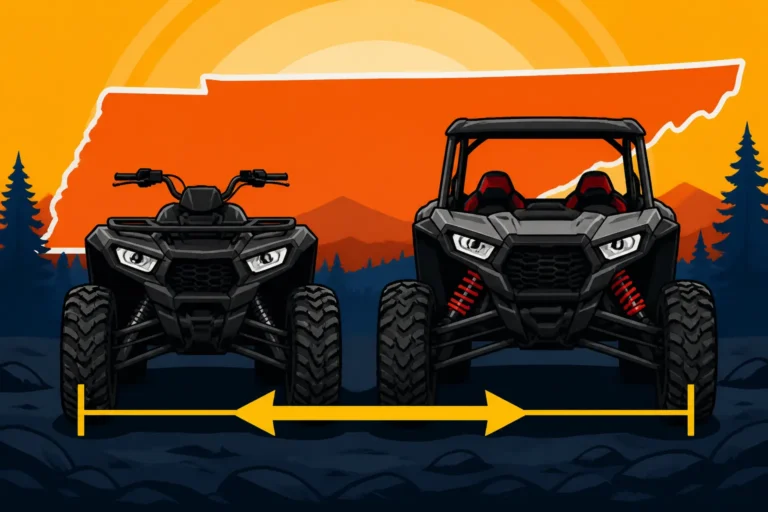
Class I OHVs are generally what most people recognize as traditional ATVs (All-Terrain Vehicles) and many smaller, two-passenger side-by-sides (UTVs). The key defining characteristics for a Class I OHV are:
- Being 50 inches or less in width.
- Weighing 2,500 pounds or less.
- Having a non-straddle seat.
- Designed for recreational use off-road.
This category covers the vast majority of four-wheelers you see on trails. When you bring your MSO or Bill of Sale to the clerk, they'll look at the specifications to determine if it fits this description. For a more detailed breakdown, explore [Tennessee's Class I OHV Definition].
Class II OHVs encompass larger, often more robust machines, typically larger UTVs and vehicles like sand rails. The defining characteristics for a Class II OHV are:
- Being more than 50 inches wide but not more than 80 inches wide.
- Weighing 2,500 pounds or less.
- Designed for recreational use off-road.
It’s important to note the weight limit here – 2,500 pounds or less. This is a critical factor. Many modern four-seat UTVs, while wider than 50 inches, still fit under this weight threshold and therefore qualify as Class II. Vehicles like dune buggies or sand rails that meet the width and weight criteria would also fall into this category. The county clerk will rely on the manufacturer's specifications on your MSO or the information provided on your Bill of Sale to make this determination. You can learn more about this in [Tennessee's Class II OHV Definition].
The Impact of Classification on Road Use and Titling
While the primary role of the county clerk is to issue a title, the classification of your OHV does have downstream implications, particularly concerning road use. Although this guide focuses on titling, it's worth noting that Tennessee laws regarding where and how OHVs can be operated on public roads often differentiate between Class I and Class II machines. While the clerk won't be making decisions about your road use, correctly identifying your machine's class ensures your title accurately reflects the type of vehicle you own, which is fundamental if you ever refer to state statutes regarding operation.
From a titling perspective, both Class I and Class II OHVs follow the same general titling process at the county clerk's office. You'll use the same forms, pay the same state title fees and county clerk fees, and receive the same type of Tennessee Certificate of Title and TDR sticker. There isn't a separate "Class I title" or "Class II title" document itself. However, the clerk will record the specific class of your machine in the state's database, linked to your VIN and title number. This information is vital for state record-keeping and for enforcing any future regulations.
The importance of correct classification isn't always immediately obvious at the titling counter, but it provides a foundational piece of information that the state uses for various purposes. It helps ensure that if new laws or regulations are introduced that differentiate between OHV types, your machine is correctly identified in the state's system. For example, if you're curious about how these classifications play into where you can ride, a relevant article would be [Why the Class Matters on a Tennessee County Road]. Providing accurate information to your county clerk helps ensure compliance and consistency with state records.
Other Vehicle Categories and Potential Confusion
Beyond Class I and Class II OHVs, Tennessee recognizes other vehicle categories that can sometimes cause confusion, especially when trying to understand titling and road use regulations. It's important to differentiate your ATV or UTV from these other types of vehicles, as they have entirely different titling, registration, and operational requirements. The county clerk's office is primarily concerned with OHVs in the recreational sense, but understanding the distinctions can help clarify why certain machines are treated differently.
For instance, Tennessee has categories for "Low Speed Vehicles" (LSVs) and "Medium Speed Vehicles" (MSVs). These are typically small, four-wheeled vehicles, often resembling golf carts or small utility vehicles, that are specifically manufactured to meet federal and state safety standards for operation on public roads with speed limits below a certain threshold (e.g., 35 mph for MSVs, or 25 mph for LSVs). Unlike OHVs, LSVs and MSVs are generally required to be registered and licensed for road use, similar to a car, and they must carry specific safety equipment like seatbelts, headlights, turn signals, and sometimes even windshields. These machines usually have their own distinct titling and registration processes, separate from the OHV system. A relevant link to explore this further is [Tennessee's Low Speed Vehicle Category] and [Tennessee's Medium Speed Vehicle Category].
The key takeaway here is to not confuse your recreational ATV or UTV with these road-legal categories. While some larger UTVs might physically resemble an MSV, if it's sold and designed primarily as an off-highway vehicle, it will be titled as a Class I or Class II OHV. The county clerk will rely on the MSO or previous title to correctly identify the vehicle type. Attempting to title a true OHV as an LSV or MSV, or vice-versa, would be incorrect and could lead to issues with both titling and legal operation. The distinct nature of these vehicle types highlights why accurate classification at the titling counter is so important – it sets the foundation for how the state recognizes and regulates your machine.
Navigating the Titling Process: Step-by-Step at the Clerk's Office
Making a trip to the county clerk's office for titling your OHV can seem daunting, but by breaking it down into manageable steps, you can ensure a smooth and efficient visit. Preparation is key to avoiding multiple trips and getting your new title and TDR sticker in hand as quickly as possible. Let's walk through the process, from getting ready to what happens after you leave the counter.
Preparing for Your Visit: Avoiding Common Pitfalls
The old adage "an ounce of prevention is worth a pound of cure" certainly applies to visiting the county clerk's office. Before you even think about heading out, make a checklist of all the required documents. This will almost always include your identification (driver's license), the Manufacturer's Statement of Origin (MSO) for a new machine, or the properly assigned previous title along with a Bill of Sale for a used one. For a gifted machine, you'll need the title and a gift affidavit. Make sure all signatures are present and correct, especially on the MSO or the back of the previous title. If you're dealing with an out-of-state title, ensure you have the original, not a copy.
Another critical step is to call your specific county clerk's office ahead of time. While the general state requirements are uniform, individual county offices might have specific hours, preferred payment methods, or additional recommendations. Confirm their operating hours, especially for titling services, and ask if they have any unique requirements or forms they'd like you to complete in advance. This call can clarify things like whether you need a notarized Bill of Sale (though always a good idea, a service like LawDepot can help draft one) or if they accept personal checks for fees and taxes.
Finally, come prepared to pay. This means having funds available for the state title fee, the county clerk's administrative fee, any lien recording fees, and, most significantly, the Tennessee sales tax. Confirm what payment methods they accept (cash, card, check) and ensure you have sufficient funds to cover everything. Making copies of all your documents before you go is also a wise move; you'll typically hand over originals, but having copies for your records can be invaluable for reference or if any issues arise later. A little upfront effort can save a lot of frustration and ensure your visit is a one-and-done success.
The Counter Experience: What to Expect
When you arrive at the county clerk's office, the actual counter experience is usually quite straightforward, especially if you've done your homework and brought all the necessary paperwork. You'll typically take a number or stand in line for the "vehicle services" or "title and registration" counter. Once it's your turn, you'll present all your documents to the clerk. They will review everything carefully, checking for completeness, correct signatures, and proper identification. This is where your organized preparation truly pays off, as any missing information or discrepancies can cause a delay.
The clerk will input the details of your OHV, including the VIN, make, model, and your personal information, into the state's titling system. They will calculate the exact amount of sales tax due (if applicable) and confirm all fees. This is your opportunity to ask any final questions about the charges or the process. Once all calculations are confirmed, you will make your payment. Upon successful payment, the clerk will typically issue you a temporary receipt that serves as proof of your titling application. More importantly, they will usually hand you your brand-new Tennessee TDR sticker on the spot.
It's important to understand that while you receive the TDR sticker immediately, the actual physical Certificate of Title usually isn't printed and given to you on the same day. The state Department of Revenue (TDR) processes these titles centrally and mails them to you. This can take several weeks, sometimes even longer during peak seasons. The county clerk will often provide an estimated timeframe for when you can expect your title to arrive in the mail. During this waiting period, your temporary receipt and the TDR sticker affixed to your machine serve as your legal proof of a pending title.
What to Do After Titling: Receiving and Safeguarding Your Title
Once you've left the county clerk's office, you've completed the most active part of the titling process. Your immediate task is to affix the Tennessee TDR sticker to your OHV in a visible, non-removable location, as instructed by the clerk. This is your immediate proof that the titling process is underway and your machine is legitimate. Now, the waiting game begins for your official paper title to arrive in the mail from the Tennessee Department of Revenue.
When your title does arrive, usually in a plain envelope, your first action should be to carefully review every detail on the document. Check that your name is spelled correctly, your address is accurate, and all the details about your OHV—make, model, VIN, and year—match your machine exactly. Look for any recorded liens if you financed the purchase. If you find any discrepancies, contact your county clerk's office immediately to inquire about how to get them corrected. It's much easier to fix an error soon after issuance than months or years down the line.
Finally, and perhaps most importantly, safeguard your title. The Certificate of Title is a vital legal document, essentially the deed to your OHV. Do not store it in the machine itself, where it could be lost, damaged by weather, or stolen along with the vehicle. Instead, keep it in a secure location, such as a fireproof safe, a locked filing cabinet, or a safe deposit box, along with other important documents like your home deed or car titles. You'll need the original physical title for any future transactions, such as selling the OHV or transferring ownership. Losing it can create a hassle, requiring you to apply for a duplicate, a process that can be time-consuming and involve additional fees. For ideas on where to store it, check out [Where to Keep an OHV Title Between Rides]. Treating your OHV title with the same care as your other valuable legal papers is a simple step that provides long-term peace of mind.
Common Questions and Troubleshooting Titling Challenges
Even with the best preparation, unexpected issues can arise during the OHV titling process. From missing documentation to errors on existing titles, these challenges can feel like roadblocks. Knowing how to troubleshoot common problems can help you navigate these situations effectively and ensure your ATV or UTV is properly titled without undue stress.
Lost or Missing MSO/Previous Title
One of the most frustrating scenarios when trying to title an OHV is discovering that the Manufacturer's Statement of Origin (MSO) for a new machine is lost, or the previous owner's title for a used machine is missing. Without these foundational documents, the county clerk's office cannot typically issue a new title directly. If you purchased a new machine and the dealership can't provide the MSO, you'll need to work with them to get a duplicate from the manufacturer. This can be a lengthy process, so immediate action is recommended.
For a used machine with a missing previous title, the situation is more complex. You'll need to provide verifiable proof of ownership and how you acquired the machine. A strong, detailed Bill of Sale is absolutely critical here. This document, ideally notarized, establishes the transaction between you and the previous owner. If the previous owner can be contacted, they might be able to apply for a duplicate title in their name and then properly assign it to you. However, if the previous owner is unreachable or unwilling to cooperate, you might need to explore options like a bonded title. This involves purchasing a surety bond for the value of the OHV, which protects the state and any potential former owners if a legitimate claim of ownership arises. It's a more involved process, but it can be a pathway to titling a machine with missing paperwork. For drafting a thorough Bill of Sale to prevent these issues, resources like LawDepot can be very helpful.
It’s crucial to remember that buying an OHV without a title, especially from an unknown private seller, carries significant risks. Always try to verify a clear title before making a purchase. If you inherit or are gifted a machine with no title, you'll need a combination of a Bill of Sale (or Gift Affidavit) and potentially an affidavit of ownership explaining how the title was lost or why it was never issued. The county clerk's office, while strict on documentation, can often guide you on the specific affidavits or procedures required in these unique circumstances.
Dealing with Errors on Your Title Documents
Discovering an error on your newly issued Tennessee Certificate of Title can be frustrating, but thankfully, there's usually a process to correct it. Errors can range from a misspelled name or incorrect address to a wrong VIN or vehicle description. The most important step is to address any mistakes as soon as you notice them, preferably immediately after receiving your title from the mail. The longer you wait, the more complicated the correction process can become.
If the error was made by the county clerk's office or the state Department of Revenue during the titling process, they will typically rectify it without additional fees. You'll need to bring the incorrect title back to your county clerk's office, along with any supporting documentation (like your driver's license, MSO, or original Bill of Sale) that proves the correct information. The clerk will then initiate a request for a corrected title. This might involve completing a specific form for title amendments and, similar to the initial titling, you'll likely have to wait for the corrected title to be mailed to you.
However, if the error originated from the information you provided or from the previous owner on a transferred title (e.g., a misspelled name on the seller's assignment, or an incorrect purchase price on your Bill of Sale), the correction process might be more involved. You might need to obtain an amended document from the original source (like a new Bill of Sale from the seller) or complete an affidavit explaining the error. In some cases, if the error is significant, it might even require re-titling the machine, which could incur additional fees. This is why thorough review of all documents before they are submitted to the clerk, and after the new title arrives, is so incredibly important. Don't hesitate to ask questions at the counter if something looks incorrect on your temporary paperwork.
When to Seek Professional Help (and When It's Not Needed)
For the vast majority of ATV and UTV titling situations in Tennessee, a visit to your local county clerk's office with the correct paperwork is all you need. The staff are generally well-versed in the procedures and can guide you through the standard process, answering common questions and ensuring all forms are properly completed. You typically do not need to hire an attorney, a title service, or any other professional for a straightforward new title or title transfer. The system is designed to be accessible and manageable for the average citizen.
However, there are specific scenarios where professional assistance might be beneficial, or even necessary. If you're dealing with a highly complex situation, such as an OHV involved in an estate with no clear will, a machine with a severely damaged or missing VIN, or a situation involving a disputed ownership claim, consulting with an attorney who specializes in property or vehicle law could be a wise investment. They can help you navigate legal complexities, understand your rights, and ensure you pursue the correct legal pathway to establish clear title. Similarly, if you're importing a machine from a foreign country or trying to title a custom-built OHV with no MSO, a specialist in vehicle import or custom build titling might offer valuable guidance.
For issues like obtaining a duplicate MSO from a manufacturer or getting a lien release from a lender, you typically work directly with those entities, not a legal professional. Similarly, for drafting robust legal documents like a Bill of Sale, services like LawDepot provide user-friendly templates that can often meet your needs without requiring legal counsel. The key is to assess the complexity of your situation. If it's a matter of missing a signature or paying a fee, the clerk's office is your first and usually only stop. If it involves legal interpretation, court orders, or intricate ownership disputes, that's when you should consider calling in a professional.
| Scenario | Required Documents | Sales Tax Due? | Notes |
|---|---|---|---|
| New Machine (Dealership) | Manufacturer's Statement of Origin (MSO) | Yes | Dealership may collect tax or it's due at clerk. |
| Bill of Sale from dealership | |||
| Valid ID | |||
| Used Machine (Private Sale) | Properly Assigned Original Tennessee Title | Yes | Seller's signature(s) and date/price filled on back. |
| Bill of Sale (recommended, especially for tax basis) | LawDepot templates helpful for comprehensive Bill of Sale. | ||
| Valid ID | |||
| Used Machine (Out-of-State) | Original Out-of-State Title or Proof of Ownership | Yes | May be exempt if tax paid in reciprocal state within timeframe. |
| Bill of Sale | |||
| Valid ID | |||
| Gifted Machine | Properly Assigned Original Tennessee Title | No* | *Requires Gift Affidavit/Bill of Sale stating "no monetary exchange." |
| Gift Affidavit or Bill of Sale | |||
| Valid ID | |||
| Inherited Machine | Original Tennessee Title (if available) | No | Requires Death Certificate, possibly Letters Testamentary/Admin. |
| Death Certificate | |||
| Probate documents (if applicable) | |||
| Valid ID |
Disclaimer
This article is for general informational purposes only and does not constitute professional advice. Laws, prices and regulations vary by location and change over time. Consult a qualified professional for guidance on your specific situation.