Riding a Windrock Bench Road in Fog
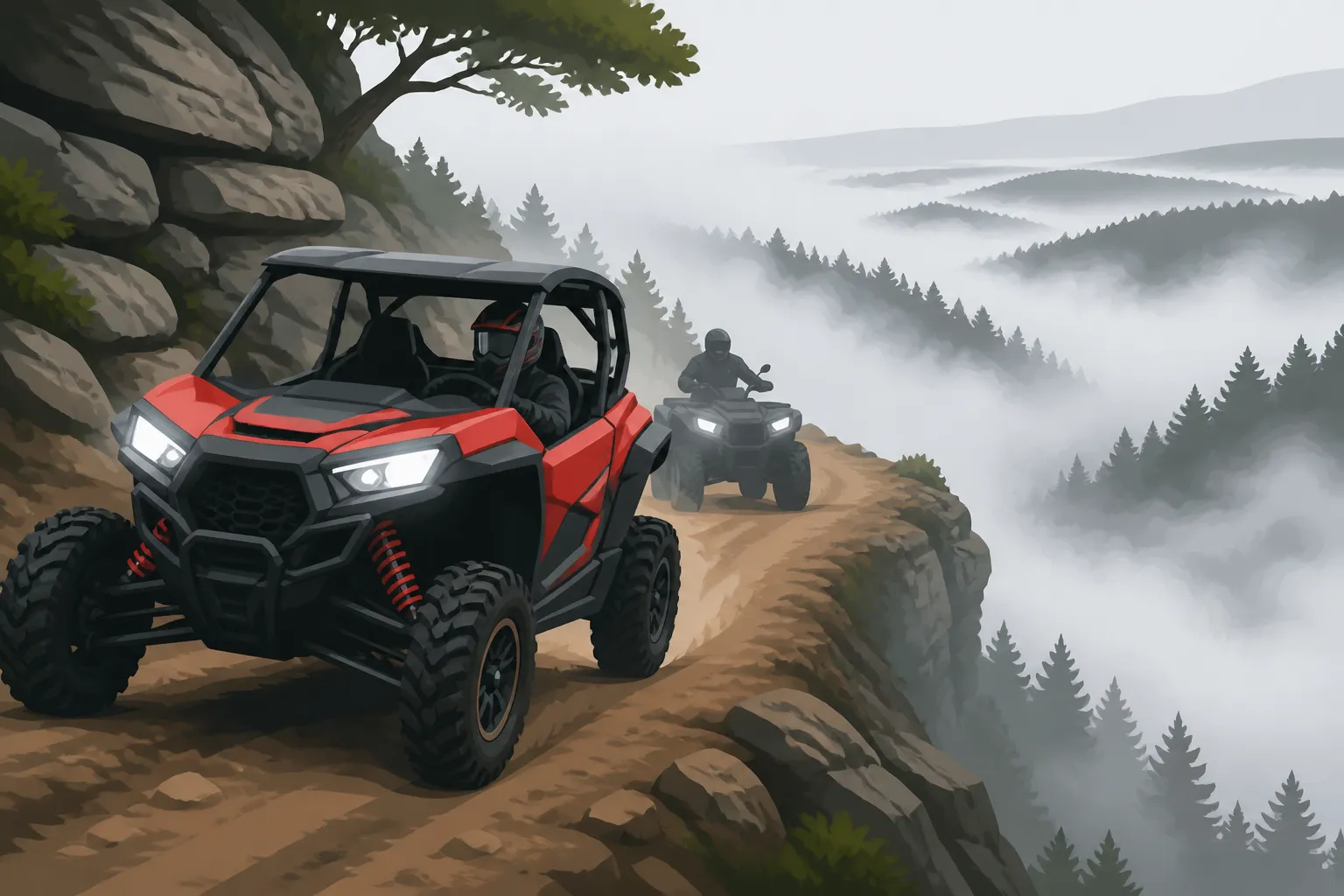
A foggy morning can turn a familiar Windrock bench road into a narrow strip of gravel with a steep drop, limited sightlines, and little room to correct a mistake. This guide explains how to judge visibility, prepare your ATV or UTV, ride more cautiously, and decide when turning around is the safer choice.
Why fog changes a Windrock bench road ride
A bench road leaves little room for error
Windrock Park, near Oliver Springs, is known for rugged terrain and long views across East Tennessee’s ridges. A bench road follows a cut into a hillside: the uphill bank may rise close on one side while the ground falls away on the other. In clear weather, that layout is easier to read. In fog, the road edge, slope, loose rock, and turns can blend together.
The biggest hazard is not only the reduced view ahead. Fog can make it harder to judge how sharply the road bends or how much usable width remains. A rider who normally keeps to the uphill side may drift toward the outside edge without realizing it, especially when trying to avoid a puddle, rut, or oncoming vehicle.
The road can also feel deceptively calm. You may be moving slowly and still approach a blind curve before you can see around it. If another machine, a truck, or a maintenance vehicle appears, there may be little room to pass. On a narrow bench, stopping early is usually easier than trying to squeeze by at the last moment.
Fog can hide changes in surface and traffic
Fog softens contrast. A dark wet patch may look like a shallow puddle, while a dip or rut can disappear into the road surface. Loose rock, washouts, and debris are harder to spot at a distance. A familiar route can feel unfamiliar because visual landmarks—ridge lines, tree gaps, and distant slopes—are hidden.
Sound may carry differently in damp, still air, but it is not a dependable substitute for sight. An approaching machine can be masked by your engine, wind, or the terrain. Do not assume a quiet stretch is clear, and avoid stopping in a blind turn or where another rider could come around the bend without warning.
If conditions have recently changed, check for park notices before you unload. Rain, maintenance, or a closure can affect the route even if you rode it safely on a previous visit. Tennessee Trail Conditions Before You Ride and Tennessee Trail Closures to Check First are useful reminders to make that check part of the plan, not an afterthought.
Decide whether to ride, wait, or turn back
Judge the view from a safe stopping place
Do not make your first visibility assessment while moving along a narrow section. Stop at a broad, stable area where you are fully off the travel line and not blocking a trail entrance, intersection, or curve. From there, look at the road ahead and ask whether you can see enough to stop comfortably before reaching an obstacle or bend.
A quick check from the parking area may not tell the whole story. Fog can sit in a hollow, cling to one ridge, or thicken as you climb. If you start riding, reassess whenever the terrain or visibility changes. A clear stretch does not guarantee the next bench road will be clear, and a fog bank can reduce visibility quickly.
Use a conservative personal limit rather than waiting for a dramatic moment to decide. If you cannot confidently see the surface and enough road to stop, slow down further or stop in a safe place. If you still cannot see well enough to proceed without guessing, turn around when there is room to do so safely. Riding a Windrock Trail at 2 a.m. covers a different low-visibility situation, but the same basic principle applies: visibility should guide the decision, not the desire to finish a route.
| Condition | What to consider | Safer response |
|---|---|---|
| Light mist with a clear view of the road surface | Can you see bends, edges, and likely stopping space? | Ride slowly and reassess often |
| Fog hiding the next bend or narrowing the road ahead | Could you stop before reaching something unseen? | Stop at a safe pull-off or turn back |
| Fog plus wet leaves, mud, or loose rock | Can you maintain control without abrupt steering or braking? | Avoid the section if traction or sight distance is uncertain |
| Visibility worsening as you climb | Is there a safe place to wait or return? | Do not continue upward just to see whether it clears |
| No safe place to pass or turn around | Could another rider appear around a blind bend? | Wait in a safe, visible area until conditions allow a cautious return |
Make “turn around” part of the route plan
Riders sometimes feel pressure to continue because the group has already driven to the park, unloaded, or worked through a challenging trail. That investment does not make a foggy road safer. Agree before leaving the staging area that any rider can call for a stop or retreat without being talked into pushing onward.
Choose a regrouping point and make sure every rider knows how the group will handle a split. Keep the group close enough that the lead rider can communicate with the next rider, but leave space for safe stopping. On narrow terrain, avoid crowding: a rider who stops abruptly should not cause the machine behind to brake hard or move toward the edge.
A route plan should include a simple fallback: return by the known route when visibility permits, wait at a suitable open area, or contact park staff if you need help. Do not improvise a shortcut through an unmarked road or trail because it appears to head downhill. Reading a Tennessee Park Trail Map and Tennessee Trail Maps Worth Carrying can help riders understand the route before visibility becomes a problem.
Prepare your machine and group for low visibility
Check lights, tires, and communication
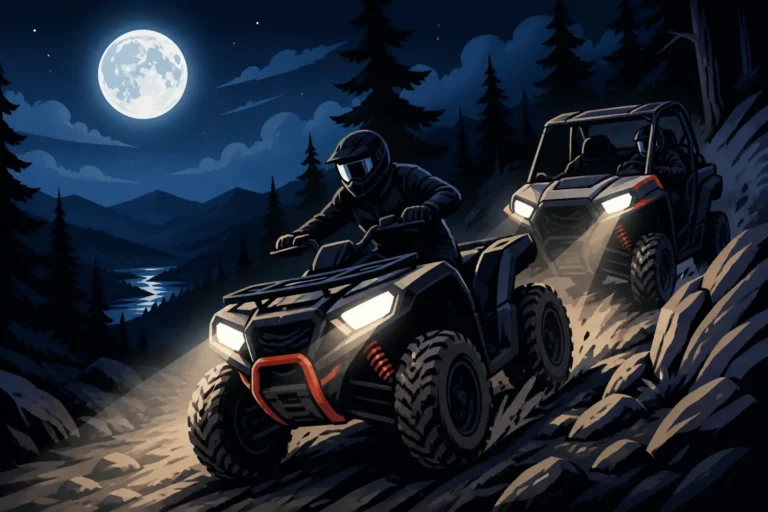
Before heading out, make sure your headlights and taillights work, the lenses are clean, and the controls are familiar to the driver. Lights help other riders notice you, but they do not make it safe to travel at normal speed through fog. High beams can reflect off fog and create glare, so use lighting thoughtfully and follow the machine’s operating instructions.
Check tire condition and pressure according to the manufacturer’s guidance, and inspect the brakes and steering. A foggy bench road is a poor place to discover a soft tire, weak brake response, or a loose component. Secure loose gear so it cannot shift when you slow or turn. Keep the windshield and mirrors clear if your machine has them; mist and grime can further reduce an already limited view.
Discuss hand signals or another reliable way to communicate before the ride. Phones may have limited service in remote terrain, so do not depend on a call or map connection for every decision. onX Offroad can be useful for reviewing a route and preparing map information before leaving service, but a digital map cannot show a sudden washout, a parked machine, or the exact visibility around the next bend. Pair it with the park’s own information and the group’s judgment.
Set a pace that leaves room to stop
Reduce speed before a blind bend, not while you are already entering it. Keep a generous gap between machines so the next rider has room to react if the lead rider stops. Avoid following so closely that dust, spray, or engine noise makes it harder to notice a change in pace.
Stay on the established road and avoid edging toward the outer side to get a better view. A steep slope or soft shoulder may be concealed by fog. If you meet another vehicle, stop where the road is wide enough to do so without placing a tire near the edge. Communicate clearly, move only when both drivers understand the plan, and do not force a pass on a narrow section.
A group also needs to account for the least experienced rider, the widest machine, and any passengers. A route that feels manageable to a confident solo rider may be stressful for a new driver in a loaded four-seat UTV. Tennessee Trails for Beginners and Tennessee Trails for a Wide Machine offer useful context when choosing routes that match the group and machine.
Ride with a clear fallback plan
Use maps as preparation, not permission
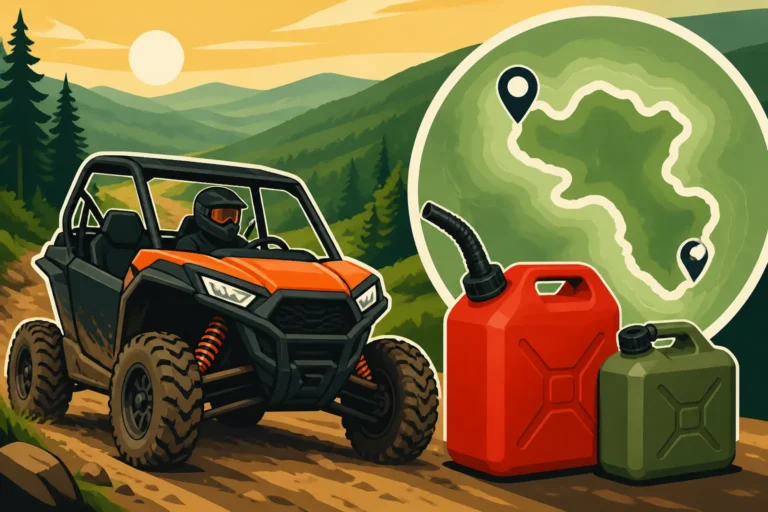
Before riding, identify where you are starting, which route you intend to take, and where you could safely stop or turn around. Save or review the map information before you lose service. onX Offroad may help you keep route details available offline, but confirm that your map reflects the area you plan to ride and compare it with current park guidance.
A map can show a road’s general shape without telling you whether it is muddy, obstructed, open, or suitable for your machine that day. Check posted notices and ask park staff when you have questions about access or conditions. Keep the map accessible without letting a phone distract the driver. A passenger can handle navigation, or the group can stop in a safe place to check the route.
Do not treat a GPS line as a reason to continue into poor visibility. If the road ahead is hidden, a screen cannot tell you whether there is a fallen branch, a sharp drop, or another rider around the bend. onX Offroad works best as one planning tool among several: route review, park information, weather awareness, and direct observation all matter.
Know when the safest ride is no ride
Fog does not always lift on a convenient schedule. Waiting may be reasonable if you have a safe place to stop and conditions are improving, but avoid lingering in a travel lane or on a blind curve. If the group cannot find a safe route back, contact park staff for guidance rather than attempting an unfamiliar detour.
Be especially cautious when fog combines with rain, fading daylight, cold temperatures, or fatigue. Wet surfaces can reduce traction, while poor light can make it harder to distinguish road edges. A delayed ride can be disappointing, particularly after traveling to Windrock, but it is better than making a stressful return on a narrow road with no clear view.
If you do ride, tell someone outside the group where you plan to go and when you expect to check in. Carry the essentials appropriate to your trip, keep your group together, and be willing to shorten the route. For broader planning, Planning Fuel for a Long Windrock Loop and Cell Dead Zones Across the North Cumberland WMA are useful reminders that a ride’s practical limits matter as much as the route itself.
Disclaimer
This article is for general informational purposes only and does not constitute professional advice. Laws, prices and regulations vary by location and change over time. Consult a qualified professional for guidance on your specific situation.