Camping at a Trail Resort in Pioneer
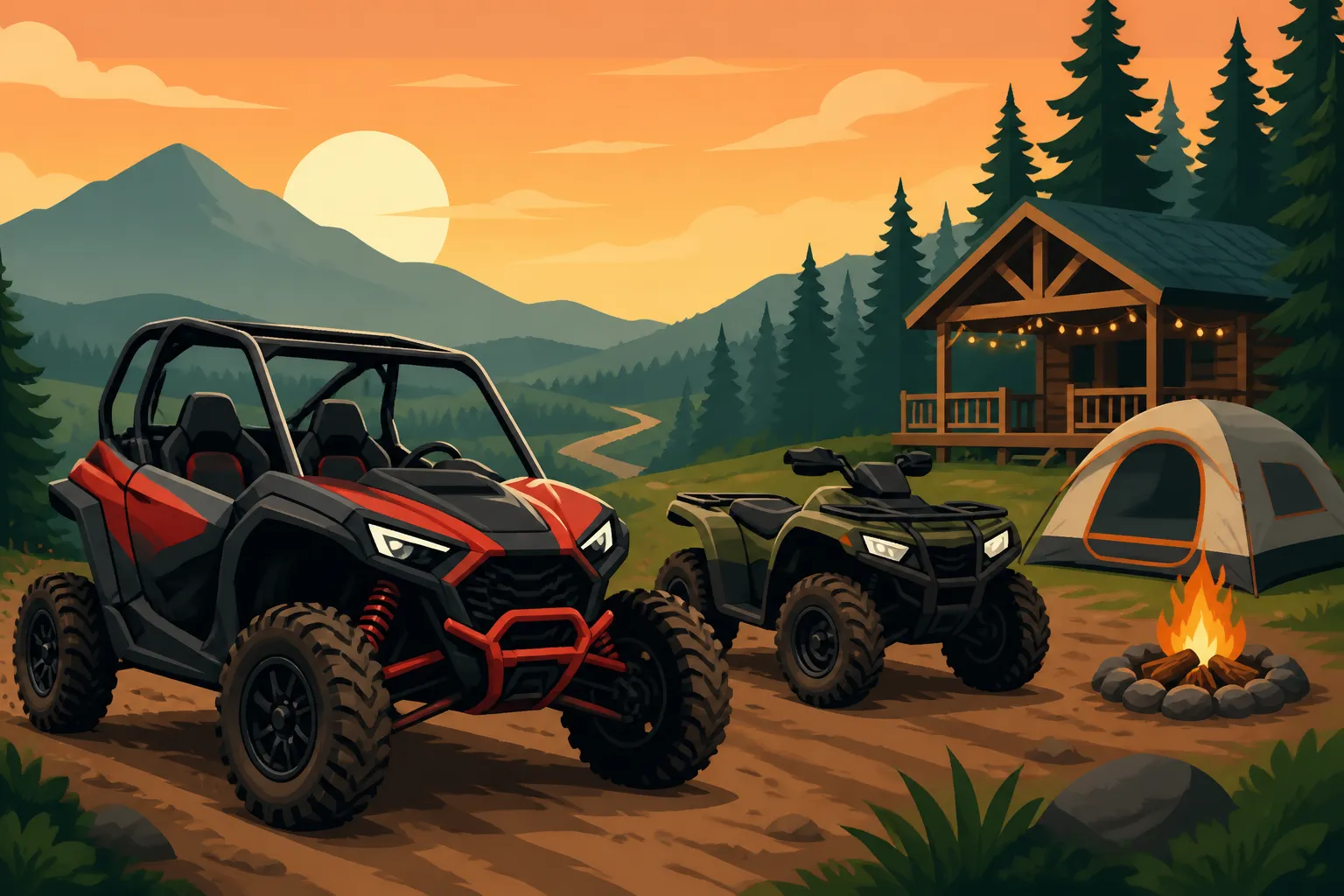
Camping at a trail resort in Pioneer, Tennessee, can make an ATV or UTV trip easier: you have a place to sleep near the riding area, less daily hauling, and more time for the trails. The details still matter, though. Before booking, check what lodging and parking are available, how trail access works, and what you need to ride legally.
Why stay at a trail resort in Pioneer
A convenient base near Royal Blue
Pioneer is a practical starting point for riders visiting the Royal Blue area of Tennessee’s North Cumberland region. Staying nearby can save you from repeatedly towing a machine between a distant hotel or campground and the trail area. That convenience is especially welcome after a long day on rocky, dusty, or muddy routes.
A resort-style stay can also make a group trip simpler. Instead of coordinating several vehicles across town, riders can meet at one base, review the plan, and sort out gear before heading out. If some people in your group are taking a break from riding, staying together can make meals and downtime easier to organize.
But “near the trails” does not always mean that every accommodation has direct trail access, or that you can ride from your site to every route you want. Ask the property where machines may be parked, how riders reach the permitted area, and whether a trailer is needed. For broader planning, [Ride Royal Blue From Pioneer] offers a useful next topic to explore.
What a trail resort may offer
A trail resort can mean anything from a campground with basic facilities to a property that combines cabins, RV spaces, parking, and access-oriented services. The exact setup varies, so do not assume that a listing includes a particular amenity just because it is described as a trail resort. Confirm the available lodging, restroom and shower arrangements, electrical hookups, food options, and machine-storage rules directly with the property.
Think about your needs before booking. A family in a cabin may prioritize beds, a kitchen, and a quiet place to rest. A group bringing its own machines may care more about trailer parking, space to unload, and a convenient route to the trail staging area. If you are comparing different kinds of stays, [Tennessee Lodging With Trail Access] can help you think through the trade-offs.
A resort stay also does not automatically include every riding cost or requirement. A lodging reservation and a trail permit are separate things unless the property explicitly says otherwise. Check the rules for the exact area you plan to ride, and confirm whether each rider or vehicle needs its own permit. [Tennessee Trail Permits Explained] is a helpful place to start.
Choose a campsite or cabin that fits the trip
Match the lodging to your group
The right accommodation depends on who is traveling and how they plan to ride. For a couple bringing a UTV, an RV site may suit the trip if the property has the hookups and parking space they need. A family with children may prefer a cabin or another fixed lodging option, especially if they want a comfortable place to change clothes and recover after a dusty ride.
For a larger group, avoid booking based only on the number of beds. Ask whether the property can accommodate the group’s trailers and tow vehicles, whether everyone can park close together, and whether there are restrictions on unloading machines. A site that looks spacious in a photograph may feel cramped once you add a truck, trailer, gear, and multiple machines.
Make a short needs list before calling or reserving:
- How many people need beds, and how many are comfortable camping?
- How many trucks, trailers, and riding machines are coming?
- Do you need electrical hookups, showers, or a kitchen?
- Will children or non-riders need activities or a quiet place to rest?
- Do you want to ride for one day or use Pioneer as a base for a longer trip?
The answers make it easier to compare options without being distracted by features your group will not use.
Ask the practical questions before booking
A few details can make a big difference on arrival day. Confirm check-in and check-out procedures, where to park a trailer, whether a machine can be unloaded on the property, and whether there are limits on where it may be driven. Ask about noise expectations and quiet hours too, particularly if your group plans to return late from a ride.
Also clarify what is included and what is not. A listing may mention trail access without making clear whether that means nearby trails, a staging location, or a permitted connection. Ask whether you must trailer to the trailhead and whether the property has specific instructions for reaching the riding area. If you are bringing a machine from out of town, [Tennessee Rules for a Visiting Rider] can help you consider the separate requirements that may apply to nonresident riders.
Write down the answers or keep the property’s confirmation message available during travel. That can prevent an awkward conversation when you arrive tired, dusty, and ready to unload.
Plan rides from your Pioneer base
Confirm permits, routes, and closures
The first ride-planning question is not simply, “Which trail looks fun?” It is, “Which trails are open and permitted for my machine and my group?” Trail access can depend on the specific property or public riding area, applicable permits, route restrictions, and closures. Do not assume a lodging reservation, a state permit, or an old map grants access to every nearby trail.
Before leaving home, identify the riding area you intend to visit and check its current access instructions. Keep the permitted route distinct from any public road or private property you may pass along the way. If the plan includes the North Cumberland Wildlife Management Area, review [Tennessee Rules for Riding a WMA] and [Does One Permit Cover Every North Cumberland Unit?]. These are useful reminders that access rules can depend on where you ride, not just where you are staying.
Use a map to plan, but treat it as one part of the preparation rather than a substitute for official access information. onX Offroad can help you organize routes and review map details for a ride, while the relevant land manager or riding-area operator remains the place to confirm closures and rules. Save the information you will need before heading into areas where cell service may be unreliable.
Build a realistic day around trail conditions
A long ride can take more time than the mileage suggests. Rough surfaces, steep climbs, stops to regroup, and changing weather all affect how quickly a group moves. Set a turnaround time that leaves room to return before dark, and make the route easier if children, new riders, or less experienced drivers are coming along.
Pioneer makes an appealing base for a multi-day visit, but avoid planning every day as a full-day ride. Allow time for unloading, checking machines, refueling, cleaning up, and resting. A shorter first ride can help everyone learn the local terrain and find out whether the group’s pace matches the plan. For help tailoring the route to the riders, [Tennessee Trails for Beginners] and [Tennessee Trail Difficulty Ratings] are useful reading.
Check the forecast and trail notices before each outing. Rain can make steep or rocky sections more challenging, while heat and dust can wear riders down faster than expected. Pack water, food, basic tools, and the gear needed for the conditions. Keep your route plan flexible rather than treating a planned loop as something you must finish at all costs.
Prepare your machine and campsite
Pack for riding and overnight comfort
Pack riding equipment separately from camping supplies so you can find essentials quickly. Helmets, eye protection, gloves, sturdy footwear, and weather-appropriate layers should be easy to reach. Bring any required permits and identification, and keep important documents protected from dust and moisture.
For the machine, check tires, brakes, lights, fluids, and fuel before the trip. Bring a small repair kit suited to your vehicle, along with a way to communicate your plan to the rest of the group. If you are camping in an RV or tent, add the basics that are easy to forget when your attention is on the machines: towels, drinking water, chargers, bedding, and clothes for the evening.
A simple packing approach is to split supplies into three groups:
| Category | Examples | Why it matters |
|---|---|---|
| Riding essentials | Helmet, eye protection, gloves, permit, water | Keeps required and frequently used items accessible |
| Machine supplies | Fuel plan, basic tools, tire repair items, machine documents | Helps with routine checks and minor issues |
| Camping supplies | Bedding, towels, food, lighting, weather layers | Makes arrival and recovery after riding more comfortable |
Use the property’s own checklist or directions to fill in anything that depends on the specific site. For example, a cabin may provide some household basics while a tent site may require you to bring nearly everything.
Respect the property and other riders
A trail resort is both a place to rest and a shared space. Follow the property’s instructions for parking, unloading, machine movement, waste disposal, and quiet hours. Keep riding to authorized areas, and do not assume that a campground road is open to recreational use just because it is wide enough for a UTV.
Secure machines and gear when you leave the campsite. Store fuel only as the property allows, and keep food and trash contained. If mud is unavoidable after a wet ride, ask where machines can be rinsed or cleaned rather than washing them wherever runoff might cause a problem.
It also helps to agree on a simple group routine. Decide who carries the map, who checks that everyone is accounted for at stops, and how the group will respond if a machine has a mechanical issue. A few minutes of planning at the campsite can prevent confusion later on the trail.
A simple booking and arrival checklist
Before you reserve, compare the property’s lodging options with your group’s actual needs. Confirm the number of people, available parking, trailer space, machine rules, check-in details, and the relationship between the resort and the riding area. Then verify permits and access separately. [Tennessee Trail Conditions Before You Ride] and [Tennessee Trail Closures to Check First] are useful reminders to check conditions close to departure rather than relying on an old plan.
On arrival, find out where your machines should be parked and how to reach the riding area legally. Keep the first evening low-pressure: unload, check the machines, organize permits and gear, and choose a manageable route for the next day. If you arrive late, do not rush to ride simply to make the most of the booking. Starting rested is usually a better decision than squeezing in an unfamiliar route after dark.
For the return trip, allow time to clean and secure equipment according to the property’s rules. Check the trailer, tie-downs, and documents before leaving. A well-planned stay in Pioneer is not about packing the schedule with as many miles as possible. It is about having a comfortable base, knowing where you are allowed to ride, and giving your group enough time to enjoy the area without turning the trip into a scramble.
Disclaimer
This article is for general informational purposes only and does not constitute professional advice. Laws, prices and regulations vary by location and change over time. Consult a qualified professional for guidance on your specific situation.