Baker Highway to the Brimstone Gate
Getting from Baker Highway to the Brimstone gate is straightforward once you know which entrance you’re aiming for, but navigation can get confusing when a map app treats a large trail system like one destination. This guide explains how to plan the drive, what to check before unloading, and how to avoid assuming that a road near the park is open to ATV or UTV riding.
Finding the Brimstone gate on Baker Highway
Set a destination for the entrance, not just the park
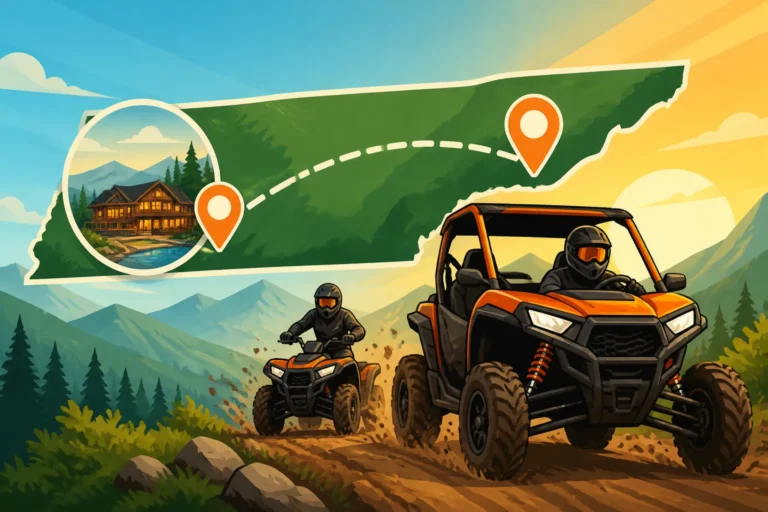
Brimstone Recreation is near Huntsville, Tennessee, and Baker Highway is an important reference point for reaching its main office and riding area. Because the property covers a large area, entering “Brimstone” into a navigation app may not direct you to the place where you need to check in or access the trails. Before leaving, confirm the entrance location with the park and save the specific gate or office destination.
This matters most if you’re towing a trailer. A navigation app may choose a route that looks shorter but is awkward for a long truck-and-trailer combination, or it may direct you toward a different access point than the one you intended. Check the route before you leave, and don’t assume that a pin labeled “Brimstone” automatically means the correct rider entrance.
The main Baker Highway access point is commonly associated with the Brimstone office. For a useful reference while planning, see [Brimstone's Baker Highway Headquarters]. If you’re meeting friends, share the same entrance pin with everyone rather than relying on a general description like “the Brimstone entrance.” That small step can prevent one vehicle from waiting at the wrong spot while another is already checking in.
Choose the right route for a truck and trailer
The drive toward Huntsville may feel simple in a passenger car but different when you’re towing. Before you start, review the full route, not just the estimated arrival time. Look for narrow roads, sharp turns, steep grades, construction notices, and places where you might safely pull over. A trailer can make a perfectly ordinary turn feel tight, especially if traffic is coming the other way.
If you use a dedicated off-road map app, onX Offroad can be useful for reviewing the broader area and saving points you’ll want to find again. Use it as a planning aid, not as a substitute for signs at the entrance or instructions from Brimstone staff. Confirm that your saved pin is the gate or office, and compare the route with a standard road-navigation app so you don’t accidentally follow a trail or private access road in your vehicle.
Give yourself time to correct a navigation mistake safely. If the app starts directing you onto an unpaved spur or a road that doesn’t appear to lead to the entrance, stop somewhere legal and safe before checking the route. Turning around with a trailer on a narrow shoulder can be stressful and may create a hazard for other drivers.
Understand the difference between the highway and the riding area
Reaching the gate does not mean you can ride your ATV or UTV on Baker Highway. A trail destination and the public road that leads to it are different places with different rules. Unless a road is specifically open to your machine under applicable rules, trailer the vehicle to an authorized access point rather than riding it along the highway or nearby roads.
It’s also worth checking whether your planned route between a lodging site, fuel stop, or trailhead uses public roads. A short distance on a map can still involve a road that isn’t open to off-highway vehicles. [Tennessee Rules for Riding a County Road] can help you understand why you shouldn’t treat proximity to a park as permission to ride on a county road.
What to do when you arrive
Check in before unloading
When you reach the entrance, follow posted signs and park instructions before unloading your machine. If you’re unsure whether to check in first, where to park, or which gate is open, ask staff rather than guessing. The right procedure can depend on where you’ve parked, what kind of permit you have, and the access instructions for your visit.
Have your identification, permit information, and any required paperwork ready. If several people are travelling together, make sure each rider knows who is checking in and what the group still needs to do. It’s easy for one person to assume a friend has handled the details while the friend assumes the opposite.
A few minutes spent confirming the entry process can prevent a frustrating start. In particular, don’t unload in a spot that blocks the office, gate, or other visitors. If you arrive during a busy weekend, patience and clear communication help everyone get moving safely.
Confirm your permit covers the place you plan to ride
Brimstone access requirements are separate from the process of driving to the Baker Highway entrance. Don’t assume that a permit from another Tennessee riding area will work at Brimstone. Each park or land manager can have its own access requirements, and a permit for one location should not be treated as a pass for another. The distinctions are explained in [Why a Tennessee Park Permit Does Not Travel].
Before the trip, review Brimstone’s permit instructions and confirm what each rider in your group needs. If you’re bringing passengers, young riders, or a rented machine, check whether any additional requirements apply to your particular situation. For an overview of the park’s access arrangement, see [Brimstone's Land Use Permits] and [Brimstone's Daily and Annual Permits].
Keep the permit information accessible after check-in. A permit left in a different vehicle or buried in a gear bag can turn a simple question at a gate into a delay. If you’re riding with a group, make sure everyone understands where to keep any required documents or proof of access.
Park and unload without creating a bottleneck
Use the designated parking or staging area and leave room for other trucks, trailers, and emergency access. Avoid blocking an entrance while securing tie-downs or unloading. If the lot is busy, move through the basic unloading steps efficiently, then do your gear checks somewhere that doesn’t obstruct traffic.
Before pulling away from the truck, confirm that your machine is ready for the ride. Check fuel, tires, lights, brakes, and any equipment you rely on for the terrain. Secure loose items, and make sure passengers understand how to ride safely before the group leaves the staging area.
For trailer-specific planning, [Parking a Trailer at a Tennessee Trailhead] covers practical issues that can be easy to overlook, such as choosing a safe place to leave your tow vehicle and keeping the route clear for other visitors.
Planning your ride beyond the entrance
Use the trail map before choosing a route
Arriving at the gate is only the beginning. Brimstone’s riding area is extensive, and the route that looks short on a screen may take longer than expected because of terrain, trail conditions, or stops along the way. Pick a ride that fits your group’s experience, machine capability, fuel range, and available daylight.
Study the park map before heading out. Identify your starting point, intended route, and a sensible way to return. Agree on what the group will do if riders become separated or if someone needs to turn back. [Reading a Tennessee Park Trail Map] offers a useful approach to interpreting trail information instead of treating a colored line as a promise that every rider will find the route easy.
If you use onX Offroad, save your starting point and any planned meeting location before leaving the gate. Map apps can help with orientation, but battery life, reception, and map coverage are not guaranteed everywhere. Carry a backup plan, keep your phone charged, and don’t rely on a screen alone to make decisions at a confusing junction.
Match the loop to your group
A beginner group, a family ride, and a confident group looking for challenging terrain may all be starting from the same entrance, but they should not necessarily choose the same route. Consider the least experienced rider, not only the person with the most powerful machine. A difficult climb or rocky section can become a long recovery problem when someone in the group isn’t comfortable with it.
Set a realistic turnaround time before you go. Leave room for breaks, slow sections, and the possibility that a machine needs attention. If anyone is unfamiliar with the park, choose a conservative route and make sure the group knows where to stop rather than pressing on when conditions feel wrong.
The scale of the area is one reason it helps to plan rather than improvise at the gate. [Brimstone's 300 Miles in Tennessee] provides context for the size of the riding network, but mileage alone doesn’t tell you how long a particular outing will take. Terrain and trail conditions matter just as much.
Check conditions and closures before setting out
Weather can change how a trail feels under your tires. A route that is manageable in dry conditions may become slippery or rutted after rain. Check park notices before you leave and again when you arrive, since closures or access instructions can affect your intended loop. [Tennessee Trail Conditions Before You Ride] is a helpful reminder to treat conditions as part of route planning, not an afterthought.
Follow posted signs and stay on authorized trails. Don’t assume a closed gate is temporary or that a track visible on a third-party map is open to riders. A map can show where a route exists without confirming that it is currently available for recreational use.
If you’re using onX Offroad to explore nearby lines, compare what you see with Brimstone’s own map and notices. Use the app to support your orientation, not to override a closure, a posted direction, or a staff instruction. When the information conflicts, ask park staff before continuing.
A practical Baker Highway arrival checklist
Use this checklist before you leave and again when you reach the entrance. It is especially useful for a group where different people are handling the trailer, navigation, permits, and gear.
| Before or after arrival | What to confirm | Why it matters |
|---|---|---|
| Before leaving | The exact Brimstone gate or office destination | A general park pin may not take you to the correct access point |
| Before towing | The full road route and a safe place to stop | Turning around with a trailer can be difficult on narrow roads |
| Before unloading | Check-in instructions and designated staging area | Prevents blocking the entrance or unloading in the wrong place |
| Before riding | Brimstone permit requirements for each rider | A permit for another park may not apply |
| Before choosing a loop | Trail map, closures, and group ability | Helps avoid an unsuitable route or an unexpected closed section |
| Before leaving the lot | Fuel, basic machine checks, phone charge, and a return plan | Reduces avoidable delays once the group is on the trail |
If the entrance, permit process, or trail access is unclear, pause and ask before riding. It is far easier to resolve a question at the gate than to discover halfway through a route that the group misunderstood where it was allowed to go. With the right destination saved, the trailer parked properly, and a realistic route in mind, Baker Highway can be a simple starting point for a well-planned Brimstone ride.
Disclaimer
This article is for general informational purposes only and does not constitute professional advice. Laws, prices and regulations vary by location and change over time. Consult a qualified professional for guidance on your specific situation.