Another Eleven If You Finance
You've finally found that perfect ATV or UTV, the one you've been dreaming of for tackling the trails of Windrock or exploring the vast expanses of the North Cumberland WMA. You've secured financing, picked out all your gear, and you're ready to head to the county clerk's office to get everything squared away. Then, BAM! Another fee. It's often the little, unexpected charges that can sting the most, especially when you think you've budgeted for everything. This guide is here to shed light on one such charge: the additional $11 lien fee you'll encounter when you finance your off-highway vehicle in Tennessee.
Understanding the Tennessee OHV Lien Fee
It's a moment many of us have faced: you're at the counter, perhaps at your local county clerk's office in Campbell or Anderson County, ready to finalize the title for your new ride. You've factored in the sales tax, the basic titling fee, and maybe even a plate if it's a street-legal machine, only to hear, "And that'll be an extra eleven dollars for the lien." Your eyebrows raise, a silent question hangs in the air, and you wonder, "What on earth is that for?" You're not alone. This fee is a common surprise for many first-time financed buyers.
What Exactly is This $11 Fee?
Let's cut right to it: this $11 charge is what Tennessee collects to officially record a lien on your vehicle's title. Think of it this way: when you finance an ATV or UTV, you're not paying for the machine entirely out of pocket. A lender – whether it's a bank, credit union, or the dealership's financing arm – is essentially fronting the money for you. To protect their investment, they need a legal claim on that vehicle until you pay them back in full. That legal claim is called a lien.
The $11 fee is the administrative cost associated with filing that lien with the state. It ensures that the state's records, and consequently your title, clearly show that there's an outstanding loan on the machine. This is crucial for both the lender and any future potential buyers. Without this official recording, it would be much harder for the lender to prove their interest, and it would create a lot of headaches if you ever tried to sell the machine before paying off the loan. It's not a hidden charge, but it's certainly one that doesn't always get highlighted in bold during the excitement of a new purchase. It's simply the cost of doing business when you're not paying cash.
When Does the Lien Fee Apply?
The Tennessee OHV lien fee applies anytime there is a loan secured by your off-highway vehicle. If you walk into a dealership in Chattanooga, pick out a brand new side-by-side, and pay for it outright with a check or cash, you won't see this fee. Similarly, if you buy a used quad from a private seller in Knoxville and have saved up enough to pay the full price, you'll dodge this particular charge. It's purely linked to financing.
This fee becomes part of your titling costs whenever a financial institution (the lienholder) requires their interest to be noted on the vehicle's certificate of title. So, if you're taking out a personal loan that isn't secured by the vehicle itself, this fee generally wouldn't apply because there's no lien to record on the title. However, most ATV and UTV loans are secured loans, meaning the machine itself serves as collateral. The lender wants that lien on the title to safeguard their investment. This is why when you go to [Titling at a Tennessee County Clerk] to get your new or new-to-you machine titled, and you've got a loan agreement in hand, the clerk will automatically add this fee to your total. It's a non-negotiable part of the process for secured loans.
The Titling Process with a Lien in Tennessee
Navigating the titling process, especially with a loan involved, can feel a bit like reading a map in the dark sometimes. You're usually handed a stack of paperwork, and it's easy for details like an $11 lien fee to get lost in the shuffle. But understanding why and how this process works can demystify it quite a bit. It’s all about ensuring clear ownership and financial responsibilities are documented.
Your County Clerk and the Lien Recording
When you head to your county clerk's office – whether that's in rural Scott County or bustling Davidson County – to get your OHV titled, you're engaging with the frontline of Tennessee's vehicle record-keeping system. This office is responsible for processing applications for titles, collecting sales tax, and, yes, recording any liens that exist on the vehicle. They are the official gatekeepers who ensure all the paperwork is in order before a new title is issued.
The county clerk isn't just taking your money; they're performing a critical function. They verify the information on your loan documents, cross-reference it with the vehicle's identification number (VIN), and then electronically submit this data to the state. This action legally attaches the lender's interest to your OHV. It's a quick, efficient process on their end, but it has long-term implications for you as the owner. They collect the [Tennessee's $11 Lien Fee] and send that, along with the other titling fees, to the appropriate state departments to maintain these vital records. This entire process ensures transparency and helps prevent any disputes over ownership or outstanding debts related to the vehicle down the line.
How the Lien Appears on Your Title
Once all the paperwork is processed and the fees are paid, you'll eventually receive your official Tennessee OHV title. This document is your proof of ownership, but if you've financed your machine, it will look a little different than a title for a machine you paid cash for. Instead of just listing you as the sole owner, your title will clearly indicate the name of the lienholder – that is, the bank, credit union, or financial institution that holds the loan on your ATV or UTV.
This notation typically appears in a dedicated section on the title, often labeled "Lienholder" or "Secured Party." It's not just a minor detail; it's a legal declaration. This printed name signifies that while you are the registered owner and have possession of the machine, the lender has a vested financial interest in it. You can't just sell it, trade it in, or give it away without addressing that lien first. The presence of the lienholder's name is a clear warning to anyone considering purchasing the vehicle that there's an outstanding debt that needs to be settled. It's a critical piece of information for everyone involved in the ownership chain, and it's why that $11 fee is so important for the state to record this detail accurately.
Why the Lender is Listed
So, why go through all this trouble to list the lender on your title? It boils down to risk management for the financial institution. When a bank lends you money to buy an ATV or UTV, they want to ensure they can recover their funds if, for some reason, you're unable to make your payments. By recording a lien, they establish a legal right to repossess the vehicle if you default on your loan. This is their primary form of collateral.
Imagine a scenario where you've financed a machine, but the lender's name isn't on the title. You could, theoretically, sell the machine to an unsuspecting buyer, collect their money, and then still owe the bank on your loan. The new buyer would then believe they own the machine free and clear, only to find out later that the bank has a claim to it. This would lead to a legal mess, and the bank might struggle to recover its collateral. The official recording of the lien on the title, facilitated by the $11 fee, prevents such situations by making the lender's interest transparent and legally binding. It's a protection mechanism that ensures financial agreements are honored and property rights are clear. Without it, securing a loan for recreational vehicles would be a much riskier proposition for lenders, potentially making financing options much harder to come by for us riders.
Navigating the Life of a Financed OHV Title
A financed OHV title isn't a static document; its status changes as you move through the ownership journey. From paying off your loan to potentially selling the machine, each step involves careful consideration of that recorded lien. Understanding these stages is key to avoiding future headaches and ensuring smooth transactions. This is where knowing the ins and outs of [Titling a Machine With a Lien in Tennessee] really comes in handy.
Releasing the Lien When You Pay Off Your Loan
The day you make your final payment on your ATV or UTV loan is a fantastic milestone! You’ve worked hard, budgeted, and now the machine is truly yours, free and clear. But your work isn't quite done. Just because you've paid off the loan doesn't mean the lien automatically vanishes from your title or the state's records. You'll need to take a few proactive steps to officially [Releasing a Lien on a Tennessee Title].
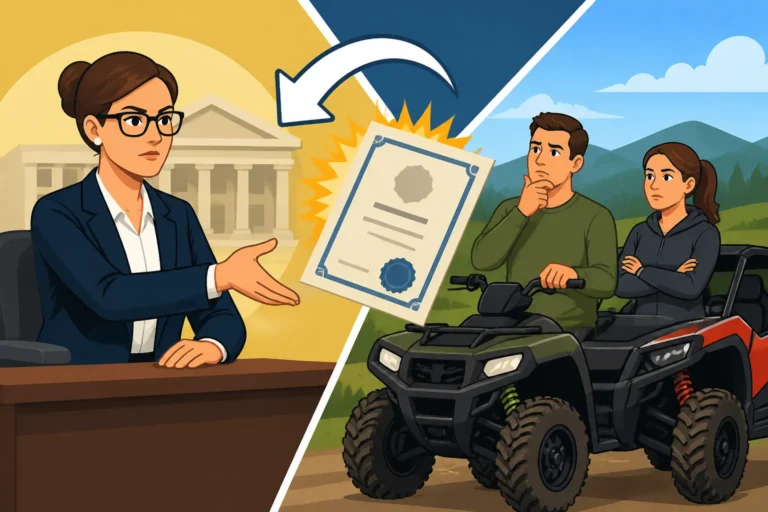
Typically, once your loan is paid in full, the lienholder (your bank or credit union) will send you a "lien release" document. This is a crucial piece of paper, often an official letter or a stamped document, confirming that they no longer have a financial claim on your vehicle. Once you receive this, you'll need to take it to your local county clerk's office. The clerk will process this document, update the state's records, and then issue you a new, "clear" title – one that no longer shows the lienholder's name. There might be a small fee for issuing this new title, but it's a necessary step to officially remove the lien. Don't procrastinate on this; having a clear title is essential for proving full ownership and for any future sale or trade.
Selling a Financed Machine
Selling an OHV that still has an active lien on its title is definitely more complicated than selling one you own outright. It's not impossible, but it requires careful coordination and transparency, especially if you're dealing with a private buyer. The key challenge is that you can't transfer a clear title to the new owner until the lien is satisfied and officially released.
Here's how it generally works: the sale price of your machine must be enough to cover the outstanding loan balance. You'll either pay off the loan in full before the sale, or more commonly, the buyer's funds will be used to pay off the lender directly at the time of the sale. This often involves a three-way transaction where the buyer's payment goes to the lienholder, the lien is released, and then the title can be signed over to the new owner. It can be a bit of a dance, sometimes requiring the sale to take place at the lienholder's branch or a bank to ensure funds are transferred correctly and the lien release is secured immediately. For example, if you're [Selling an OHV in Tennessee] and still owe $5,000, and the buyer is paying $6,000, that $5,000 would typically go straight to your lender, with the remaining $1,000 going to you. Then, the lien release process kicks in.
Buying a Used OHV with an Existing Lien
If you're on the other side of the transaction, looking to purchase a used ATV or UTV from a private seller, you need to be extra vigilant if the seller mentions or if you discover there's a lien on the title. This is where due diligence is paramount. Never, ever hand over your full payment directly to a seller who still has a lien on their machine without ensuring that lien is released first. Otherwise, you could end up paying for a vehicle that the bank still has a legal claim to, leaving you without a clear title and potentially out a lot of money.
Before you finalize any purchase, always perform a [Checking a VIN Before a Tennessee Purchase] check. Many state DMVs or third-party services can provide information on existing liens. If a lien is present, insist on a process that directly involves the lienholder. A common and safe approach is to conduct the sale at the seller's bank or at your own. This way, your payment can be made directly to the lienholder to satisfy the loan, and you can obtain the lien release document immediately. Only once you have proof of the lien release should you take possession of the machine and the signed-over title. A proper bill of sale, often facilitated by services like LawDepot (though LawDepot is primarily for creating documents, not for processing the lien release itself, it can help ensure your bill of sale properly reflects the lien situation), can further protect you by clearly outlining the terms of the sale and the agreement to clear the lien. It's a bit more work, but it ensures you end up with a clear, undisputed title to your new ride.
Practical Tips for Financing Your ATV or UTV in Tennessee
Financing an ATV or UTV can open up a world of adventure, allowing you to hit the trails sooner rather than later. However, it's crucial to approach the process with your eyes wide open, fully understanding all the associated costs and obligations. Little things, like that $11 lien fee, can add up, and being prepared means fewer surprises down the road. Let's make sure you're ready for everything when it comes to [What a Tennessee OHV Title Costs].
Budgeting for All the Costs
When you're excitedly calculating your monthly loan payment, it's easy to overlook the smaller, one-time fees that come with any vehicle purchase. The price tag on the ATV or UTV itself is just the beginning. Beyond that, you'll need to factor in several other expenses:
- Sales Tax: Tennessee charges sales tax on OHVs, and this can be a significant amount depending on the purchase price. This is typically paid at the county clerk's office when you title the machine.
- Titling Fees: There's a basic fee for issuing a new title in Tennessee, which also goes to the county clerk.
- The Lien Fee: As we've discussed, if you're financing, there will be an additional $11 fee to record the lien. This falls under [Tennessee's $11 Lien Fee].
- Registration/Permit Fees: While Tennessee doesn't "register" OHVs in the traditional sense for road use, you will need a permit to ride on most state-managed trails, like those in the North Cumberland WMA. These permits are separate from titling and have their own costs.
- Insurance: Most lenders will require you to carry comprehensive insurance on your financed OHV to protect their asset. Even if not required, it's always a smart idea.
- Accessories & Safety Gear: Don't forget helmets, goggles, gloves, proper riding boots, and any customizations you want to add to your machine. These can quickly add up.
Creating a detailed spreadsheet or simply listing out every potential cost before you commit to a purchase can help you avoid sticker shock at the county clerk's office or when you start shopping for gear. Being thorough in your budgeting ensures that the joy of your new ride isn't overshadowed by unexpected expenses.
Reading the Fine Print on Your Loan
No one loves reading lengthy financial documents, but when it comes to a loan for your ATV or UTV, taking the time to understand the "fine print" is absolutely essential. This isn't just about the interest rate; it's about understanding your full legal and financial obligations. Every loan agreement is a legally binding contract, and ignorance of its terms is rarely an excuse if something goes awry.
Here are some key things to pay close attention to:
- Interest Rate and APR: Understand the actual cost of borrowing.
- Loan Term: How many months or years will you be making payments? A longer term means lower monthly payments but often more interest paid over the life of the loan.
- Payment Schedule: When are your payments due? Are there any grace periods?
- Late Payment Penalties: What happens if you miss a payment or pay late? These fees can be substantial.
- Prepayment Penalties: Can you pay off the loan early without incurring extra charges? Many OHV loans do not have these, but it's good to confirm.
- Default Clauses: What constitutes a default on the loan, and what actions can the lender take if you default? This is where the lien comes into play, as it allows the lender to repossess the vehicle.
- Insurance Requirements: As mentioned, most lenders will stipulate the type and amount of insurance you must carry.
- Lien Release Process: While your lender won't detail the state's $11 fee, they should provide clarity on their process for releasing the lien once the loan is satisfied.
If you don't understand something, ask questions! Your loan officer is there to explain the terms. Don't be afraid to take the document home and review it carefully before signing. Taking a few extra minutes upfront can save you a lot of grief and money throughout the life of your loan. Understanding your [Tennessee OHV Title Paperwork] means more than just the physical title, it means understanding the financial agreements tied to it.
Disclaimer
This article is for general informational purposes only and does not constitute professional advice. Laws, prices and regulations vary by location and change over time. Consult a qualified professional for guidance on your specific situation.