Riding a Bench Road Above a Holler
A bench road can look like an easy ride: a relatively level track running along a Tennessee hillside, high above a narrow hollow. But the slope, loose rock, blind corners, weather, and changing trail conditions can turn a gentle-looking route into a serious challenge. This guide explains how to assess a bench road, prepare your machine, and ride it with care.
What a Tennessee bench road is really like
Why the trail sits above the hollow
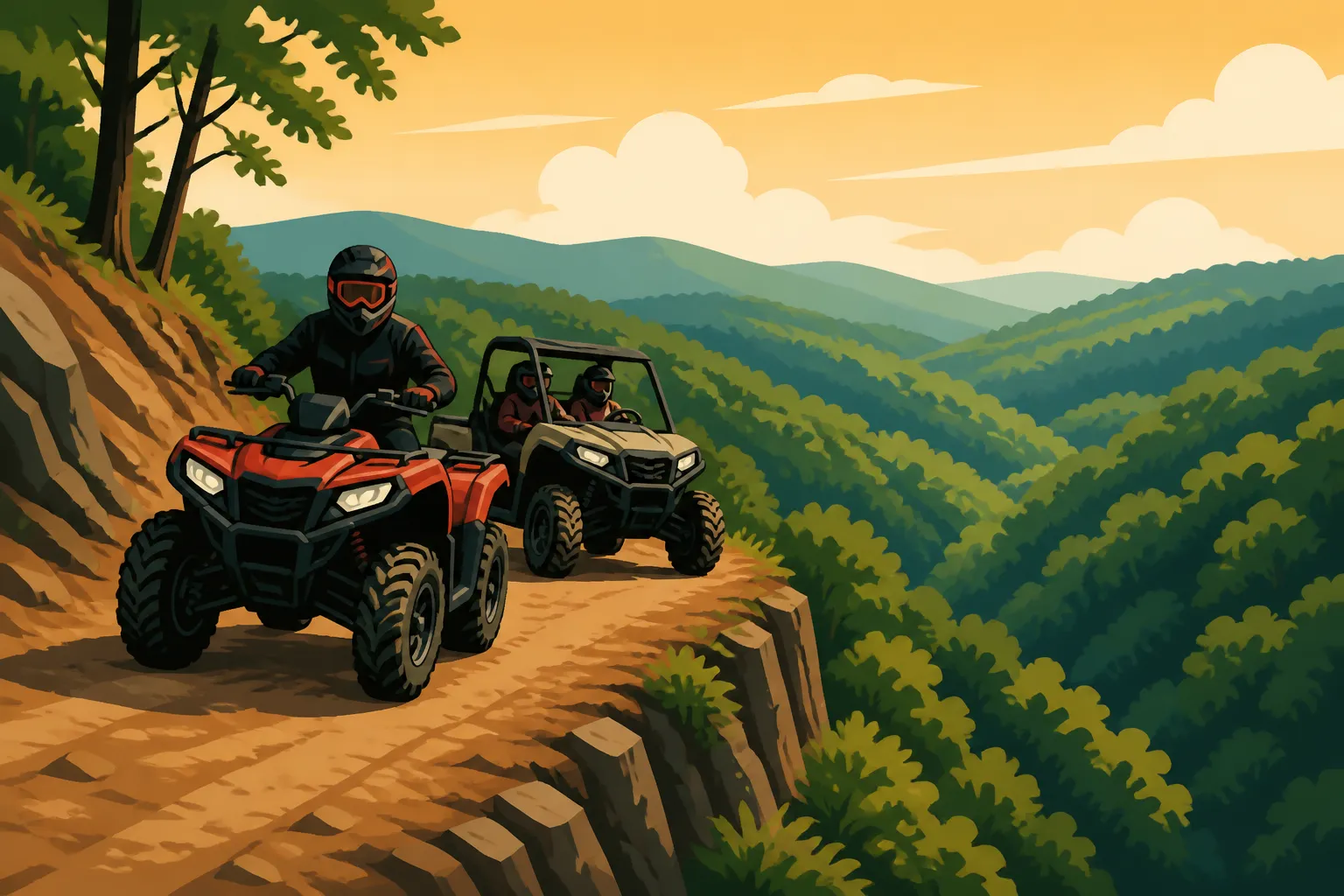
A bench road follows a shelf cut into a hillside rather than climbing straight up or dropping directly into a hollow. In East Tennessee’s Cumberland country, some routes follow old mining or logging roads, with a steep bank on one side and a drop toward the creek or valley on the other. The shelf may feel wide and forgiving in one stretch, then narrow quickly around a bend.
“Bench road” describes the shape of the route, not its difficulty rating or legal status. A road can be relatively flat and still have a sharp exposure, a rocky edge, or a muddy section where tires drift toward the outside. Don’t assume that a track is safe or open just because it appears on a map or has old tire marks.
A useful mental picture is a narrow hillside sidewalk with no guardrail. The center may be firm and predictable, while the outside edge is loose or undercut. Give yourself time to read each section before committing, especially if the route is unfamiliar.
What changes the difficulty
The slope is only part of the story. Surface conditions matter just as much. Packed dirt can become slick after rain; gravel may roll under the tires; exposed rock can become slippery when wet; and ruts can pull a machine sideways. In shaded hollows, damp ground may linger after the ridge has dried.
Width and visibility also affect how challenging a road feels. A wide, open bench with clear sightlines is different from a narrow shelf with brush at the edge and a blind turn ahead. A coal truck, maintenance vehicle, or another group may appear around a bend with little warning. On routes where work traffic is possible, plan to stop in a safe, visible place rather than trying to squeeze past on a narrow edge. See Meeting a Coal Truck on a Ridge Road for more on sharing these routes.
Before choosing a route, check its rating, the current trail notice, and the park or land manager’s rules. A route’s appearance in a navigation app does not establish that it is open to OHVs. For general background on a major riding area, start with Windrock Park at Oliver Springs, Tennessee or Brimstone Recreation at Huntsville, Tennessee.
Who should take extra care
A bench road may be a poor choice for a first ride if the driver is still learning how the machine responds on loose surfaces. Beginners can find it difficult to judge the outside edge, control speed while descending, or make a smooth stop on a slope. If you’re new, begin on a wide, clearly marked route with a lower difficulty rating and ride with someone experienced.
Passengers add another consideration. A passenger’s weight changes the machine’s balance, and sudden steering or braking can affect both people. Make sure the vehicle is designed for the number of occupants, everyone is properly secured, and the driver is comfortable handling the machine before taking a narrow or exposed route.
If the route feels beyond your skill, turn around at a safe, wide spot. There’s no shame in changing plans. A cautious decision on a quiet trail is far better than trying to recover a machine that has slid toward an edge.
How to prepare before riding a bench road
Check access, permits, and trail information
Start by confirming that the route is open to your type of machine and that you have the required permission or permit. Rules vary between private riding parks, wildlife management areas, and other land. A trail pass for one property may not be accepted at another, and public access does not mean unrestricted riding. Review [Tennessee Rules for Riding a WMA] if your plans include a wildlife management area.
Look for current closures, maintenance notices, and weather-related restrictions before loading the machine. A trail that was passable last weekend may be closed, damaged, or unsafe after heavy rain. Call the park or land manager if the notice is unclear, particularly when a route crosses a working property or an area with active equipment.
Use a map to understand the route, but treat it as a planning aid rather than a guarantee. onX Offroad can help riders review mapped routes and prepare navigation in advance. Check the map details against the land manager’s information, since access rules and closures can change. The Tennessee Trail Maps Worth Carrying guide can also help you think through what to bring beyond a phone.
Prepare for weak cell service and changing weather
Cell reception may be inconsistent in steep hollows and remote sections of the Cumberland region. Download or save the navigation information you need before leaving service, and bring a paper map or another backup if the route matters to your return. With onX Offroad, prepare offline access before heading into a dead zone rather than waiting until the screen stops loading.
Tell someone where you plan to ride and when you expect to return. If the plan changes, let them know when you have service again. Carry enough water, food, and basic recovery supplies for a delay, even if you expect a short outing. A minor flat or a blocked trail can add hours to a ride.
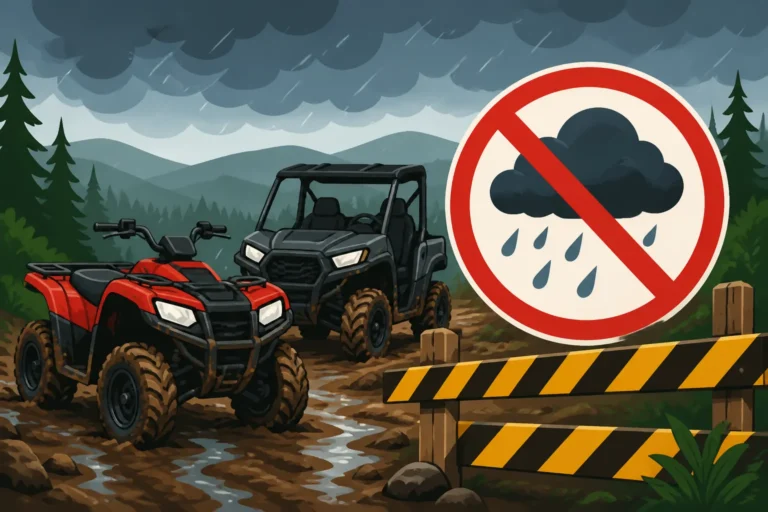
Weather can change the feel of a bench road quickly. Rain can wash gravel onto the track, create slick patches, and deepen ruts. Fog can hide the edge and reduce sight distance around turns. If visibility or traction is poor, slow down, stop where you are safely clear of traffic, or choose another route. For a closer look at fog-related hazards, see Riding a Windrock Bench Road in Fog.
Inspect the machine and pack practical gear
Before setting off, check tire condition and pressure according to your machine’s requirements. Look for loose components, damaged steering or suspension parts, and working brakes. Confirm that the lights function if the route or conditions could make you less visible. A machine that handles fine on a level driveway may behave differently on a narrow, uneven track.
Carry a first-aid kit, water, a charged phone, and equipment suited to your machine and the trail. Depending on the vehicle and route, that might include a winch or recovery gear, a tire repair kit, a basic tool kit, and a tow strap. Know how to use the gear before you need it. Recovery equipment is not a reason to attempt a route that exceeds your ability.
| Before you ride | What to check | Why it matters |
|---|---|---|
| Route access | Trail status, vehicle rules, and required permits | A mapped route may be closed or restricted |
| Weather | Rain, fog, and recent storms | Traction and visibility can change quickly |
| Navigation | Saved maps and a backup plan | Cell service may be unreliable in hollows |
| Machine | Tires, brakes, steering, and lights | Small mechanical issues can become serious on a slope |
| Group plan | Meeting point and turnaround time | Helps everyone respond if the group is delayed |
How to ride the shelf safely
Keep a controlled pace and look ahead
Ride slowly enough to stop within the distance you can see. Keep your eyes well ahead, scanning for loose rock, ruts, washouts, branches, and vehicles coming the other way. Avoid staring at the drop beside you; focus on the stable path you want your tires to follow.
Use smooth steering and throttle inputs. Abrupt acceleration, braking, or turning can unsettle a machine on a loose surface. Leave enough room between vehicles that you can see the route and stop without riding up on the person ahead. On a narrow section, wait for a safe place to pass rather than pressuring another rider to move toward the edge.
If you need to stop, choose a spot with enough width and firm ground. Don’t stop in the middle of a blind corner or on a soft outer shoulder if you can avoid it. Let the rest of your group know before you halt so that a rider behind you has time to respond.
Handle blind turns and oncoming traffic patiently
Approach blind corners as if someone could be coming toward you. Reduce speed before the turn, keep to the safest established line, and avoid cutting across the inside where loose debris may collect. If you meet another group, communicate calmly and use a wider, stable spot to sort out who moves first.
Never make a passing maneuver that puts a tire close to a soft edge or forces another rider toward a drop. If neither machine can pass safely, one group may need to back up slowly to a wider section. Agree on the plan before anyone moves, and use a spotter only if the person can stand well away from the machine’s path and remain visible to the driver.
Work traffic deserves particular caution. Give trucks and maintenance vehicles room, follow any instructions from staff, and don’t assume the driver can see you around a bend. If the road is active or conditions make passing unsafe, wait at a secure turnout or return another way if that option is permitted.
Know when to turn around
A route may become unsafe because of rain, fog, a fresh washout, unexpected traffic, or a mechanical problem. Turning back is a sound riding decision, not a failure. Use a wide spot, avoid attempting a tight turnaround near the edge, and have a passenger or riding partner help watch the machine if visibility is limited.
If a machine begins to slide, avoid sudden movements that could make the situation worse. Keep people clear of the vehicle’s path and don’t attempt a recovery from an unstable position. If the machine is stuck or damaged, assess the ground before using a winch or strap; an improvised pull on a steep slope can create additional danger. If you cannot recover safely, contact the park or land manager for help.
Don’t ride around a gate, closure sign, or damaged section just to complete a loop. Closed areas may be unsafe, under repair, or outside the permitted riding area. Check Tennessee Trail Conditions Before You Ride before setting out, and keep your route flexible enough to account for a closure.
Leave the route in good condition
Stay on the established road
Keep your machine on the marked, authorized route. Cutting a new line around mud, a puddle, or a blocked section can widen the trail and damage vegetation or the hillside. On a bench road, that damage can also weaken the edge or increase erosion toward the hollow below.
Respect gates, signs, and property boundaries. A road that looks like an old logging track may cross private land or a restricted work area. If you’re unsure whether you have permission, stop and verify rather than assuming that a visible track is open to riders. Tennessee Landowner Permission Requirements offers useful context for riding on private property.
Pack out trash and avoid disturbing wildlife, livestock, or nearby residents. Keep noise controlled, yield to other trail users where appropriate, and don’t block access for emergency or work vehicles. Small courtesies matter in places where recreation shares space with communities and active land use.
Make a sensible route plan for your group
For a group ride, choose a route that matches the least experienced driver and the least capable machine in the group. Agree on a lead rider and a sweep rider, set expectations for spacing, and decide where you’ll regroup. A short route that everyone can complete comfortably is usually better than a longer route that leaves one rider struggling on exposed terrain.
Tell the group that anyone can call for a stop or turnaround without having to justify it. Riders often feel pressure to keep up, especially when friends are waiting behind them. Making the plan flexible from the start helps people speak up before a difficult section becomes a dangerous one.
Finally, check the route information again before the next trip. Conditions, closures, and access arrangements can change. onX Offroad may be useful as part of your navigation plan, but pair it with land-manager notices and sound judgment on the ground. If the mapped route and posted signs disagree, follow the posted restrictions and verify the route before continuing.
Disclaimer
This article is for general informational purposes only and does not constitute professional advice. Laws, prices and regulations vary by location and change over time. Consult a qualified professional for guidance on your specific situation.