Washing Off at a Tennessee Park
A ride at Windrock, Brimstone, or another Tennessee trail area can leave your machine, boots, and truck coated in clay, coal dust, and grit. The tricky part is figuring out where you can wash up without breaking park rules, making a mess at camp, or sending muddy runoff somewhere it should not go. This guide covers what to check, what to bring, and how to clean up responsibly.
Check wash facilities before you unload
Do not assume a trail park has a public wash station
A park may have wash areas, rinse points, or cleaning services, but their availability and rules can vary by property, campground, and time of year. Some facilities may be limited to certain guests, closed during maintenance, or unsuitable for washing a machine. A hose beside a campsite is not automatically permission to wash an ATV or UTV there.
Before you leave home, check the park or campground’s current visitor information and contact staff if the details are unclear. Ask specifically whether machine washing is allowed, where it is allowed, and whether you need to bring a hose or other supplies. It is also worth asking whether the rules differ for day riders and overnight guests. A quick call can save you from arriving late, muddy, and discovering that the nearest approved wash area is somewhere else.
This matters at large riding areas such as Windrock Park at Oliver Springs, Tennessee and Brimstone Recreation at Huntsville, Tennessee, where riders may be staying at different properties or using different access points. Do not assume that facilities at a campground serve the entire riding area, or that a wash setup you used on a previous trip is still available.
Confirm the rules for your machine and your stay
When you ask about wash access, get clear answers to a few practical questions:
- Is there a designated place to wash an ATV, UTV, or both?
- Can day users use it, or is access limited to overnight guests?
- Are there restrictions on pressure washers, detergents, or hoses?
- Is there a separate place to rinse boots and gear?
- Are there hours when washing is permitted?
- What should you do if the wash area is closed or busy?
Policies may be different for personal machines and rentals. If you are renting, ask the rental company how it expects the vehicle to be returned. A rental agreement may explain what cleaning is expected, and the rental counter can clarify whether washing the machine yourself is permitted. For more on rental expectations, see What a Tennessee UTV Rental Includes.
It is sensible to check access details along with trail information. Tennessee Trail Conditions Before You Ride can help you think through changing conditions, while Tennessee Trail Closures to Check First is a useful reminder that access and operations can change. If you are planning to use public trail land, remember that a riding permit does not necessarily grant access to every facility. Review Tennessee Trail Permits Explained and follow posted instructions at the property.
Have a backup plan for a closed or crowded wash area
A wash station can be occupied just as a group arrives from a muddy loop. If the area has limited capacity, people may need to take turns, and a late return can leave you waiting when you are tired and eager to get on the road. Plan enough time for cleanup rather than treating it as a five-minute stop.
Your backup plan should not be “wash the machine wherever there is a drain.” Ask staff where an approved alternative is located. If there is no permitted machine wash area, remove loose mud with a brush or scraper where allowed, then transport the machine without creating a mess or letting debris fall onto public roads. Keep a tarp or washable mat in the trailer so muddy gear and tools do not spread grit through your vehicle.
| What you need to clean | What to check before washing | Practical backup |
|---|---|---|
| ATV or UTV | Approved location, hours, hose or pressure-washer rules | Brush off loose mud where permitted and secure the machine for transport |
| Boots and helmets | Whether a gear rinse point is available | Bring a small basin, towel, or boot brush |
| Trailer and tie-downs | Whether cleaning is allowed near the parking area | Use a tarp and contain loose debris |
| Rental machine | Return-cleaning expectations and permitted wash locations | Ask the rental counter before leaving the pickup area |
Clean the machine without causing new problems
Remove the heavy mud before rinsing
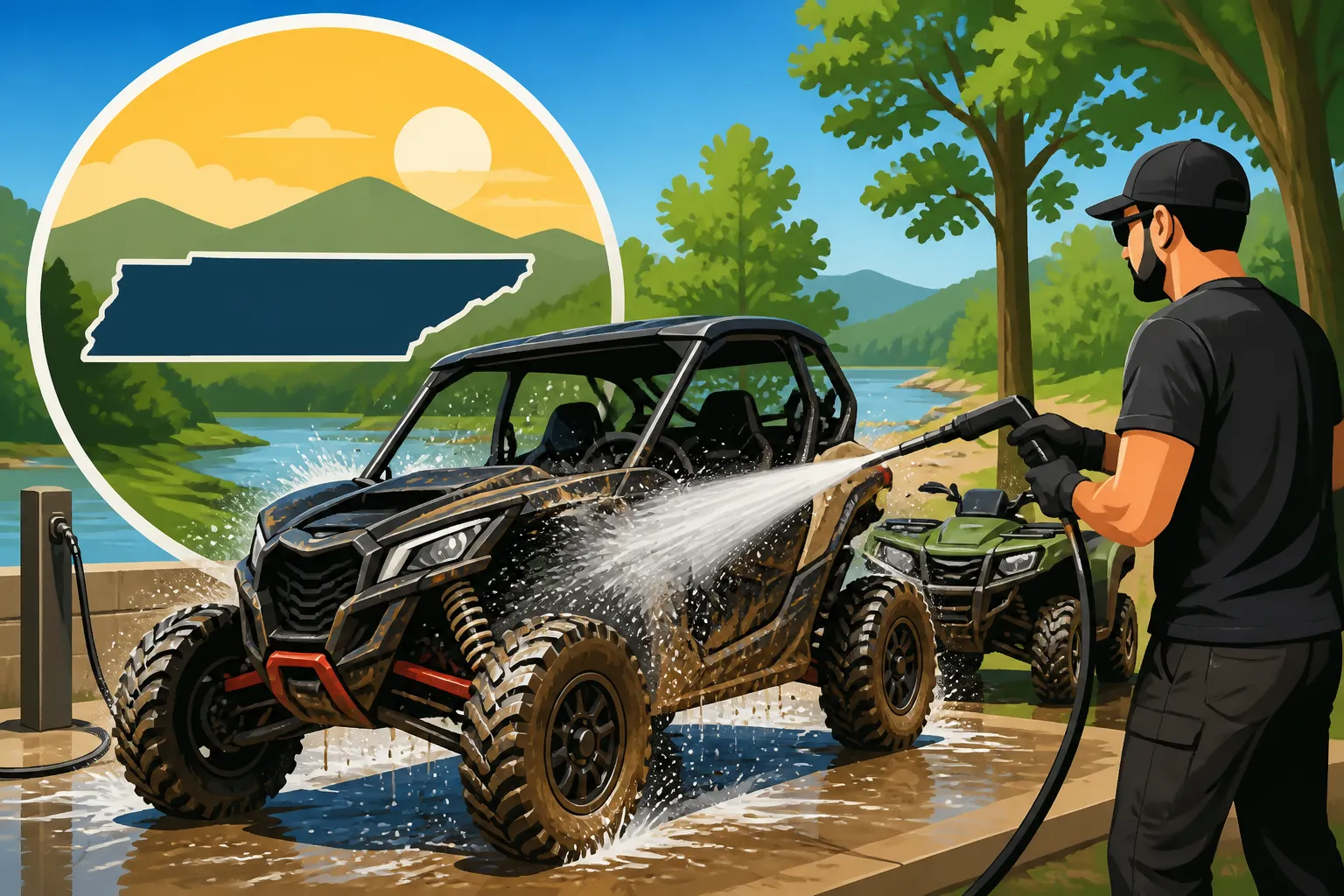
A thick layer of Tennessee mud is easier to manage before it dries, but it is still worth starting gently. Park only in an approved wash area, shut the machine down, and let hot components cool before working around them. Use a brush or plastic scraper to loosen packed dirt from fenders, floorboards, tires, and underbody areas. Avoid striking hoses, wiring, seals, or delicate fittings while scraping.
Coal dust and fine grit can cling in places that are easy to miss, especially around suspension components, guards, and the underside of a UTV. A quick exterior rinse may make the machine look cleaner while leaving abrasive debris tucked into corners. Use a soft brush for stubborn spots and work from the top down so loosened dirt does not settle back onto areas you have already cleaned.
If you use a pressure washer, follow the machine manufacturer’s guidance and keep the spray away from vulnerable components. High-pressure water aimed directly at bearings, electrical connectors, seals, radiator fins, or air-intake openings can cause trouble. When you are unsure, use a lower-pressure rinse and a brush rather than forcing water into tight spaces. A clean-looking machine is not worth a repair caused by an overly aggressive wash.
Keep runoff and cleaning products under control
Mud and grit should not be washed toward a creek, storm drain, trail, or neighboring campsite. Follow the park’s instructions about where wash water may go, and avoid detergents or degreasers unless they are explicitly allowed. Even products marketed as mild or biodegradable should not be treated as harmless to every surface or waterway.
The simplest cleanup often needs little more than water, a brush, and patience. If you carry cleaning products, use them only in the designated area and according to the label. Do not leave mud piles, packaging, or dirty rags behind. A wash area is shared space, and the next rider should not have to shovel out the remains of your cleanup.
The same care applies if you are staying at a private campground near a riding area. Ask where runoff is directed and whether the property has a specific wash policy. Camping Near Tennessee ATV Trails can help with planning an overnight stay, but facility details should be confirmed with the individual campground rather than assumed from its proximity to a trail system.
Inspect the machine while it is clean
Washing is a convenient time to notice damage that was hidden under dirt. Look for loose fasteners, torn boots, damaged guards, fresh scrapes, leaking fluid, and branches or debris caught around the undercarriage. Check that the radiator area is clear if your owner’s manual describes a safe way to inspect it. Do not reach into moving parts, and do not remove covers unless the manual says it is appropriate.
Mud can also disguise tire damage. Look over the tread and sidewalls for cuts or embedded debris, and check the machine according to the manufacturer’s maintenance guidance. Tennessee routes can combine slick mud, exposed rock, and rough climbs, so choosing suitable tires and checking them regularly can make a meaningful difference. Tire Choice for Tennessee Rock and Mud offers a related starting point for thinking about the terrain.
For a repeatable routine, take a few photos before and after washing. A quick record can help you spot a new scrape after a long weekend or document the condition of a rental before returning it. If you rely on a navigation app such as onX Offroad, you can use it to review your planned route and note where you stopped, but treat the park’s posted signs and staff directions as the authority for access and facility rules.
Get yourself and your gear clean too
Bring a small cleanup kit
A wash area may handle the machine but offer little for muddy boots, gloves, and clothing. Pack a simple cleanup kit before the trip so you are not improvising with a drinking-water jug or wiping grit across the inside of your truck.
A useful kit can include:
- A stiff boot brush and a softer brush for gear
- A few old towels or washable rags
- A small basin or collapsible tub
- A change of clothes and shoes
- A sealable bag for wet gloves and clothing
- A tarp or washable mat for the trailer
- A small container for used rags or muddy trash
Keep clean items separate from dirty ones. A dedicated bag for wet gear makes the drive home less unpleasant and helps prevent mud from grinding into upholstery. If you are traveling with children or a group, pack extra towels; one muddy passenger can turn a clean truck cab into a second cleanup project.
Avoid rinsing gear where it can create a hazard
Mud around a parking area can become slippery, especially where people are stepping between trailers, machines, and vehicles. Do not rinse boots or gear in a way that leaves a slick film on a walkway or ramp. Use the designated place if one exists, and clean up any mess you make.
Helmets deserve particular care. Follow the helmet manufacturer’s cleaning instructions, especially for padding and retention straps. Avoid harsh cleaners that could damage materials. Let the helmet dry fully before storing it, and do not leave it baking in a hot vehicle. Gloves, goggles, and riding clothes also benefit from thorough drying so they are not musty when you unpack them at home.
If no gear-rinse facility is available, brush off what you can, bag the dirty items, and clean them later at home. That is often better than creating runoff in a parking lot or using water where it is not allowed. Keep the machine and your personal gear separate in the trailer when possible, because sharp edges and hard parts can damage soft items during the drive.
Plan cleanup around weather and riding conditions
Rain can make a cleanup area muddy and crowded, while a dry ride may leave fine dust in clothing and filters. After a wet ride, give yourself more time to remove packed mud from the machine and trailer. After a dusty ride, avoid shaking out clothing beside other vehicles or tents. Keep dust and debris contained, and take care not to blow dirt toward people, food, or open equipment.
Weather affects the ride as well as the wash. Heavy rain can change trail conditions and may lead to closures, so check before heading out rather than assuming the route is unchanged. Tennessee Riding After Heavy Rain is relevant when deciding whether a ride is sensible and what kind of cleanup to expect. For navigation, onX Offroad may help you organize an offline route or mark a planned staging area, but it cannot replace current park notices or directions from staff.
Make cleanup part of the ride plan
Set aside time before the drive home
It is tempting to pack up immediately after the last ride, especially when the group is tired or facing a long drive. But leaving no time for cleanup can mean muddy gear gets jammed into the cab, tie-downs are coated in grit, or the trailer carries loose debris onto the road. Build a buffer into the day so you can wash or brush off equipment, inspect the machine, and secure everything properly.
If your group is riding at a large area, agree in advance on the meeting point and return time. An app such as onX Offroad can help riders keep track of a planned route or share a location, but make sure everyone knows how to follow the park’s trail signs and where to return. Cell service can vary across mountain terrain, so save useful information before you head out and do not rely on a live connection for every decision. See Tennessee Trails With Cell Coverage for more on planning around connectivity.
For trailhead logistics, including where to stage and how to manage a trailer, review Parking a Trailer at a Tennessee Trailhead. Avoid blocking access lanes or using a wash area as a staging spot if it is intended for active cleanup. If a line forms, be considerate: clear the area when you finish and let the next rider use the space.
Leave the property ready for the next visitor
A good cleanup ends with the wash area in better shape than you found it. Put away hoses only if staff ask visitors to do so, dispose of trash in the right place, and do not leave clumps of mud on a pad, ramp, or shared path. If something is broken, blocked, or overflowing, tell the property staff rather than trying an improvised fix.
The same principle applies to the trails. Stay on open routes, obey closures, and do not use a creek or roadside drainage as a convenient rinse point. A little extra care protects the property and makes it easier for the next rider to enjoy the area. That is especially important at popular destinations where trail users, campers, and local traffic share limited space.
A clean machine is only one part of a smooth trip. Check wash access before departure, bring supplies for yourself as well as the vehicle, and follow the rules at the place where you are riding or staying. With those details handled ahead of time, the end of a muddy Tennessee ride can feel like a manageable routine instead of a frustrating scramble.
Disclaimer
This article is for general informational purposes only and does not constitute professional advice. Laws, prices and regulations vary by location and change over time. Consult a qualified professional for guidance on your specific situation.