Paying for a Passenger at Brimstone
If you’re bringing a passenger to Brimstone Recreation, don’t assume the driver’s permit covers everyone in the side-by-side. A passenger may need their own Brimstone permit, and overlooking that requirement can turn an easy check-in into a delay. This guide explains what to confirm, how to plan for different ages and permit types, and what to sort out before you head to the trailhead.
Does a Brimstone passenger need a permit?
Plan for each rider to be covered
The safest approach is to plan for every person riding at Brimstone—including passengers—to have the required park permit. A driver’s permit should not be treated as a vehicle pass that automatically covers everyone in the cab. The park’s land-use permit and a Tennessee trail permit are separate things, and one does not automatically replace the other.
That distinction matters if you’re used to riding somewhere that charges by vehicle or includes passengers in a rental package. At Brimstone, ask specifically whether your passenger needs an individual permit for the kind of visit you’re planning. If you’re unsure, check with Brimstone before leaving home rather than relying on what a friend remembers from a previous trip. Permit terms, age categories, and check-in procedures can change.
For the broader reason passengers should be accounted for separately, see [Why a Tennessee Passenger Needs a Brimstone Permit]. And if you’re comparing park requirements, [Brimstone's Daily and Annual Permits] explains why it’s worth checking the rules for the specific riding area instead of assuming one permit works everywhere.
A passenger permit is not the same as a rental charge
A rental booking and a park permit are separate pieces of the trip unless the outfitter clearly says that a permit is included. If you’re renting a side-by-side, ask whether the quoted rental package covers the driver only, every person in the machine, or no park permits at all. Get the answer for the exact number of riders in your group.
This is easy to miss when you’re focused on picking a machine, choosing a pickup time, or working out whether everyone can fit comfortably. A rental company may have its own driver requirements, passenger limits, waiver process, and damage terms. Those do not necessarily tell you whether Brimstone’s land-use permit requirement has been met. For rental-specific planning, [Renting a Side-by-Side in Tennessee] and [Tennessee Rentals That Include the Permit] are useful places to start.
If the outfitter says the permit is included, ask how it is issued and whether each passenger is listed or otherwise covered. If the answer is vague, confirm with Brimstone directly. It’s much easier to resolve that question at home than when your group is waiting to ride.
What to confirm before paying for a passenger
Check the rider’s age and permit category
Before buying permits, confirm the age category that applies to each person in your machine. A child or teenager may fall under a different permit category from an adult, and the park’s age rules can affect more than the permit itself. They may also influence who can operate the vehicle, who must supervise, or what documentation is needed at check-in.
Don’t guess based on height, experience, or whether the passenger has ridden before. Use the rider’s actual age and ask Brimstone which category applies. If your group includes younger riders, check [Brimstone's Rate for Riders Seventeen and Under] and [Tennessee Rules for a Passenger on a WMA Trail]. The latter concerns a different type of riding area, so treat it as background on how rules can vary—not as a substitute for Brimstone’s own requirements.
For a family trip, write down each rider’s age before you contact the park or outfitter. That simple step helps prevent a last-minute scramble to correct a permit or rental reservation. It also makes it easier to check that the machine’s seating capacity is appropriate for the group.
Ask how daily and annual permits work for passengers
If you ride Brimstone more than once, compare the park’s daily and annual options for each person who will be riding. Avoid assuming that a driver’s annual permit covers a passenger, or that buying one annual permit for a vehicle covers the whole household. Confirm whether permits are issued to individuals, how the park identifies permit holders, and what proof riders need to carry.
A useful question is: “We’ll have one driver and one passenger. What permit does each person need for this visit?” If your passenger may join only part of the trip, ask whether the permit is still required for the period they ride. If someone in your group has an annual permit already, ask whether it remains valid for the visit and whether they need to bring photo identification or another form of proof.
For a multi-park trip, remember that permits generally do not travel from one riding area to another. Brimstone’s permit is not a universal Tennessee trail pass. The differences are covered in [Why One Park's Permit Is Worthless at the Next] and [Carrying Three Permits for Three Parks]. Check each park in your itinerary separately, even if you’re riding on consecutive days.
| Before you pay | What to confirm |
|---|---|
| Number of riders | Whether every driver and passenger needs a permit |
| Passenger’s age | Which age category and requirements apply |
| Rental booking | Whether permits are included for the driver and passenger |
| Permit type | Whether a daily or annual option fits each rider |
| Proof at check-in | What identification or permit confirmation to bring |
| Other parks on the trip | Whether each riding area requires its own permit |
How to make check-in easier
Match the permit details to the actual group
Make a final rider list before purchasing permits or arriving at the park. Include the driver, every passenger, and each person’s age. Then compare that list with the rental reservation and the permit confirmation. If a friend cancels or someone joins at the last minute, ask whether the group needs to update its permit arrangements before riding.
This matters especially when one person is handling the booking for several families. It’s easy to remember the number of machines and forget that the passenger count changed. For example, a family may reserve a four-seat side-by-side for two adults and two children, then invite another adult to ride along in a second machine. The rental reservation might be correct while the permit plan is not.
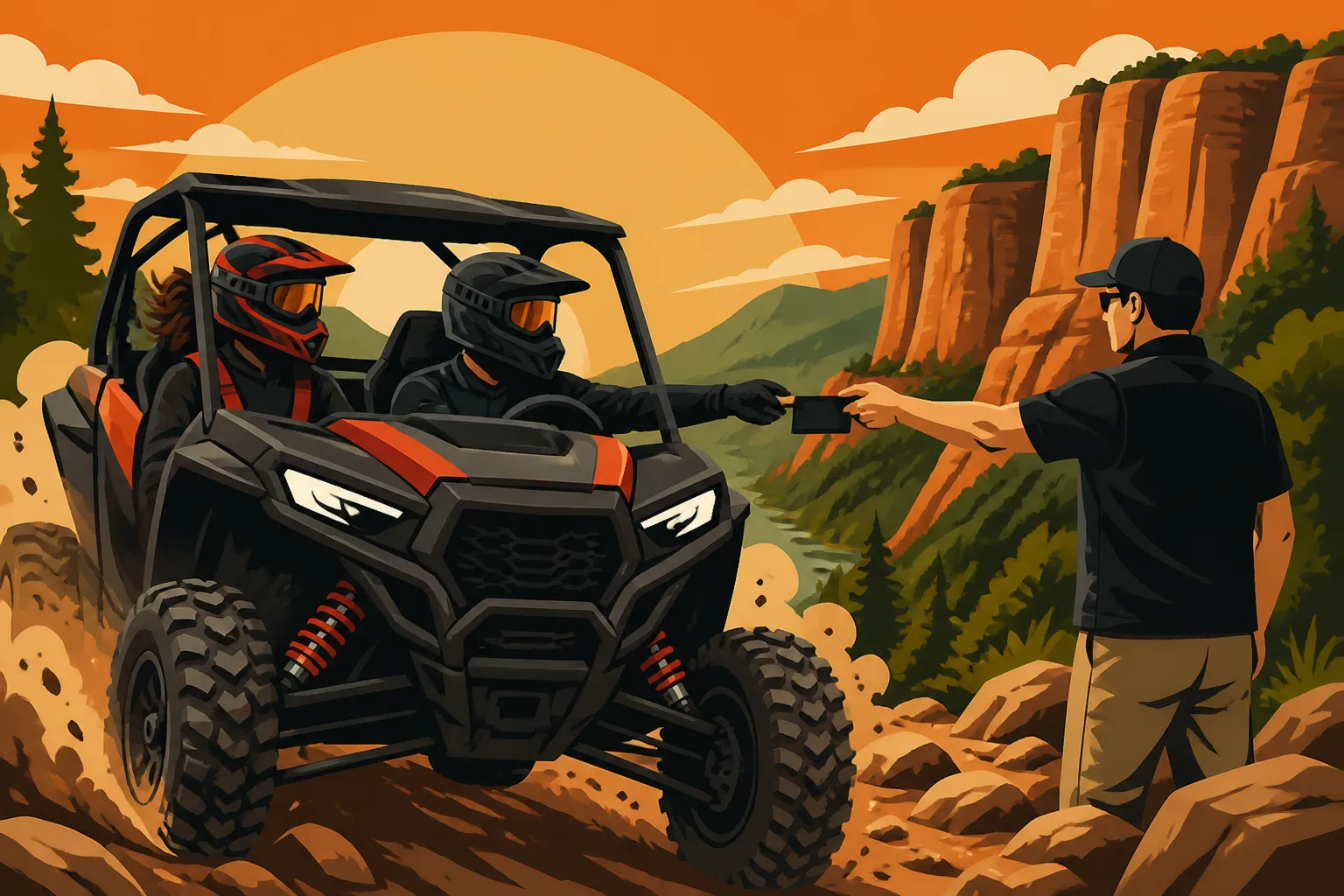
Keep confirmation details accessible, whether you save them on your phone or bring a printed copy. If the park asks for identification or proof of an annual permit, having it ready is less stressful than trying to search through email in a busy check-in area. When in doubt, ask the park what documentation to bring rather than assuming a payment receipt is enough.
Keep permit planning separate from trail navigation
Once the permit questions are settled, plan the ride itself: choose routes that fit your group’s experience, machine, daylight window, and comfort level. A passenger may be new to off-road riding or more affected by a long, rough route than the driver expects. Talk through the plan before setting out, and make sure the passenger knows how to communicate if they need a break.
A navigation app such as onX Offroad can help you review routes and understand the trail area before you ride. Use it as a planning aid, not as proof that a trail is open or that your permit is valid. Check Brimstone’s current trail information and closures as well. Trail conditions and access can change, and a route that appears on a map should not automatically be assumed open to your machine.
It helps to build a simple pre-ride routine: confirm permits, check the trail information, review the machine’s passenger restraints, and make sure everyone has appropriate protective gear. If you’re comparing navigation and preparation needs for different areas, [Reading a Tennessee Park Trail Map] offers a helpful reminder that a map is only one part of a safe ride plan. You can also use onX Offroad to plan where your group hopes to go, then verify access and conditions with Brimstone before you leave.
Common passenger permit mistakes to avoid
Don’t assume the vehicle’s permit covers its occupants
The most common misunderstanding is thinking that payment is attached to the side-by-side rather than to the people riding. That assumption can come from a rental package, a previous visit to another park, or a group leader’s experience with a different permit system. Confirm the rule for Brimstone itself and for every person in your vehicle.
Also avoid relying on an old permit or an old message from a group chat. Someone may remember what they paid or how check-in worked on a past visit, but that may not match the current process or the ages in your group today. The practical fix is simple: ask the park, state the number of riders, and confirm what each one needs before you pay.
If you’re visiting with a large group, have one person collect the answers and share them with everyone. A short written note—who needs a permit, what type, and what proof to bring—can prevent several people from repeating the same questions or arriving with different assumptions.
Don’t confuse Brimstone access with state or WMA permits
Tennessee’s trail and riding rules vary by land manager. A permit for a state-managed riding area, private recreation property, or another park may serve a different purpose and may not satisfy Brimstone’s requirements. The same goes in reverse: a Brimstone permit should not be assumed to cover a ride elsewhere.
If your itinerary includes another destination, check its permit rules independently. [Tennessee Permits for a Race or Event] and [Why Tennessee Has No Statewide Trail Sticker] illustrate why riders should identify who manages the land and what kind of access authorization applies. For Brimstone, ask the park about the passenger’s permit directly and keep that answer separate from any state or WMA paperwork.
A little preparation protects the part of the trip everyone is looking forward to: getting out on the trails without a preventable delay. Confirm the passenger requirement, check the age category, clarify whether a rental includes permits, and bring whatever proof the park requests. Then you can focus on choosing a route your whole group will enjoy.
Disclaimer
This article is for general informational purposes only and does not constitute professional advice. Laws, prices and regulations vary by location and change over time. Consult a qualified professional for guidance on your specific situation.