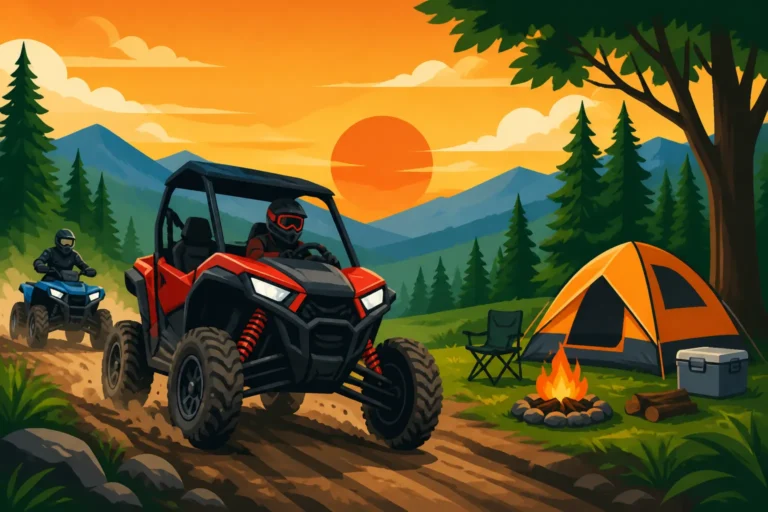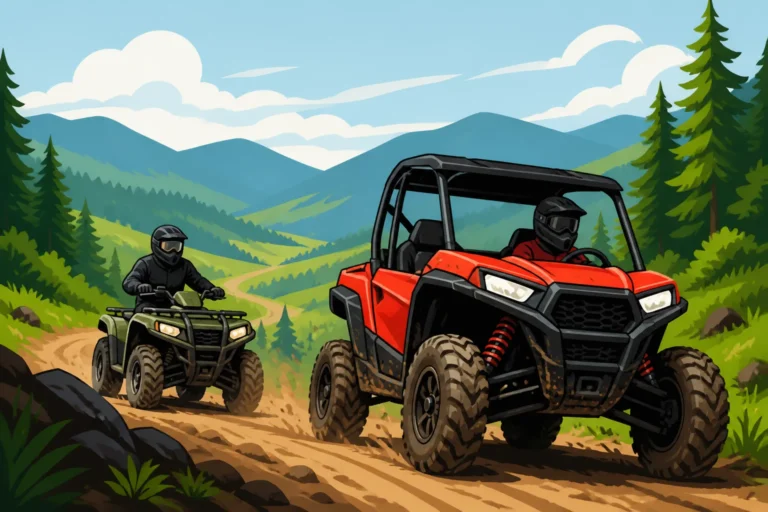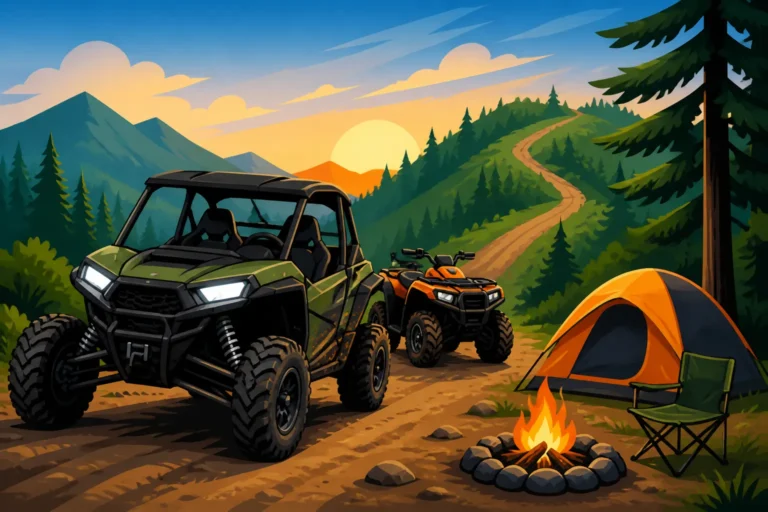
Trail 27 Open Around the Clock
Trail 27 at Royal Blue is known for its around-the-clock access, which can make a night ride feel like a rare chance to keep exploring after sunset. But “open all night” does not mean every nearby trail is open, easy to navigate, or safe in the dark. This guide explains how to plan for Trail 27, prepare your machine, and ride with care.
What Around-the-Clock Access Means on Trail 27
Trail access is not the same as open access everywhere
Trail 27’s around-the-clock status is a notable feature of riding in the Royal Blue area. It can give you flexibility when you want to ride after dark or fit a short outing around a busy day. Still, interpret the access description narrowly: it applies to the named trail, not automatically to every route, trailhead, connecting spur, or facility in the area.
That distinction matters because trail networks can include different routes, gates, and land-management rules. A route that appears nearby on a map may have different access conditions, and an open trail can connect to a section that is closed or restricted. Before you start, check the latest notices and map information for the area rather than assuming that a nearby route shares Trail 27’s status. Tennessee Trail Closures to Check is a useful related read when you are sorting out what may have changed.
Trail 27 is associated with Royal Blue and the broader North Cumberland riding area. These place names are sometimes used loosely in conversation, but they do not always mean the same thing operationally. If you are planning a route that extends beyond Trail 27, check which unit you are entering and what rules apply there. Royal Blue and Sundquist and Tennessee's North Cumberland WMA provide more context on how the riding areas fit together.
Around the clock does not mean without rules
Being able to ride at night does not remove the need to follow applicable trail rules. It also does not guarantee that an office, store, gate attendant, or other service will be available when you arrive late. Plan to handle access requirements before you set out, and do not treat a lack of staff at the trailhead as permission to skip them.
A frequent source of confusion is assuming that a permit for one riding area works everywhere. Permits can be area-specific, and rules for public-land riding may differ from those at a private riding park. If you are combining locations, confirm your permit covers the places you intend to ride. See [North Cumberland OHV Permit Cost] for a related explanation of permits in the area.
Also check for temporary closures, weather-related restrictions, or posted notices before unloading. A route’s usual access schedule is not a guarantee that it will be open on the particular night you visit. If signs at the entrance conflict with an old map, a saved route, or a trail app, follow the posted restriction and choose a permitted alternative.
A night ride needs a different plan from a daytime ride
After dark, familiar landmarks can disappear into shadows. A fork that seemed obvious in daylight may look much like the next turn, and it can be harder to judge the shape of a dip, rock, rut, or muddy patch. The result is that even a route you have ridden before can feel unfamiliar at night.
Give yourself more time than you think you will need. Avoid setting out late with a tight turnaround, especially if you are riding with children, new drivers, or a group whose pace varies. Decide in advance when you will turn around, and leave enough time to get back without rushing.
It also helps to share a simple plan with someone who is not riding: where you expect to go, which vehicle you are taking, and when you expect to be back. That is not a substitute for proper equipment or good judgment, but it gives another person useful information if your plans change.
Planning a Trail 27 Ride Before You Leave
Confirm the route and access details
A little checking before departure can prevent a frustrating arrival. Confirm that Trail 27 is the route you intend to ride, that access is allowed for your planned time, and that you understand where your route begins. If you are towing, make sure you have a reasonable staging plan and know where you can park without blocking traffic or access.
Use a map that is useful offline. Mobile service can be inconsistent across the North Cumberland area, so do not rely on an app loading the route only after you reach a trail junction. An app such as onX Offroad can help you review mapped routes and save information for offline use, but it should be one part of your plan—not a replacement for posted notices, official access information, or a paper backup. Tennessee Trail Maps Worth Carrying covers the practical value of having navigation information available when service drops.
Before leaving home, save your route and check that your phone or GPS device has enough battery for the ride. If your group is using more than one navigation device, confirm everyone understands the route and the meeting point. A saved map is only helpful if riders know how to read it and can access it when the signal disappears.
Match the plan to the group
A group that rides at different speeds should agree on a regrouping routine. Choose places where it is safe to stop, and make sure the lead and last riders know what to do if someone is delayed. On a dark trail, a rider at the back can fall out of sight quickly, especially if the group stretches out.
If someone in the group is new to riding at night, keep the outing short and uncomplicated. Pick a route plan with a clear turnaround point instead of improvising once everyone is tired. Ask riders to speak up if the pace feels uncomfortable; nobody should have to keep up by riding beyond their ability.
For families, confirm that every passenger is comfortable with the darkness, noise, and changing pace. Make sure helmets fit properly and that everyone understands how to communicate if they need to stop. A ride that is fun for an experienced adult may feel overwhelming to a child or first-time passenger after sunset.
Check the machine and carry essentials
A machine that ran well last weekend may still have a loose connection, low tire, or weak battery today. Inspect the tires, brakes, throttle, steering, lights, and fuel level before loading. For a night outing, test the lighting while stationary so you can see whether it works as expected before you leave the staging area.
Carry basic repair and recovery items suited to your machine and route. The right kit depends on what you ride, how far you plan to go, and what you know how to use. At minimum, think through how you would deal with a flat tire, a dead battery, or a machine that cannot continue under its own power. A tool you have never used in the garage is unlikely to feel straightforward on a dark trail.
Keep essentials accessible rather than buried beneath cargo. A phone, map, first-aid supplies, water, and any required documents should be easy to reach. If the ride stretches longer than expected, having those items close at hand can make a delay less stressful.
| Before the ride | What to confirm | Why it matters |
|---|---|---|
| Access | Trail 27’s current status and any posted restrictions | Usual access information may not reflect a temporary closure |
| Route | Start point, turnaround, and intended connections | Nearby trails may have different access rules |
| Navigation | Offline map, charged device, and backup plan | Service may be limited in parts of the riding area |
| Machine | Lights, tires, brakes, steering, and fuel | Small problems are harder to solve after dark |
| Group | Meeting points and regrouping routine | Riders can become separated more easily at night |
| Return plan | Expected return time and contact person | Someone should know if the group is delayed |
Riding Trail 27 Safely After Dark
Make visibility a priority
Your headlights help you see, but they also help other riders recognize your machine. Check that the lights work before entering the trail, and keep lenses clean enough to provide useful illumination. If your vehicle has additional lighting, aim it responsibly and make sure it does not create a hazard for riders approaching from the other direction.
Wear gear that helps you stay visible and protected. A helmet is essential, and eye protection can help keep dust and debris out of your eyes. Clothing that contrasts with the surroundings can make it easier for the group to keep track of one another when riders stop or move through a junction.
Do not assume that a bright light solves every visibility problem. Lights can flatten shadows, making holes and changes in terrain less obvious, while dust can reflect light back toward the driver. Reduce speed when visibility worsens, leave enough space between machines, and stop if you cannot see well enough to continue safely. For broader considerations about riding at night, read [Tennessee Rules for Night Riding at a Park].
Keep speed and following distance conservative
Darkness limits how quickly you can recognize and respond to a hazard. A turn, obstacle, or stopped vehicle may become visible later than it would during the day. The safest pace is the one that allows you to stop within the distance you can clearly see—not the pace that the most confident rider in the group prefers.
Leave more room between machines than you might on a familiar daytime ride. Dust, glare, and uneven terrain can make it difficult to judge distance, and a sudden stop by the lead rider can create a chain reaction. If you cannot see the machine ahead clearly, create more space or slow down until you can.
Treat unfamiliar branches and junctions with extra care. Stop in a safe place if the route is unclear rather than making a guess and hoping it reconnects. A short pause to check the map is far less disruptive than taking the group onto an uncertain route and having to retrace it in the dark.
Prepare for fatigue and changing conditions
Night riding can feel demanding even when the trail is manageable. You may be concentrating harder than usual, dealing with cooler air, or trying to keep your attention on both the route and other riders. If your focus starts to slip, end the ride or take a break in a safe location. Continuing because the destination is “only a little farther” is a common way for a relaxed outing to become an unpleasant one.
Weather can make night conditions more challenging. Fog, rain, and wet surfaces can reduce visibility and change how the machine responds. If you encounter conditions that exceed your comfort or experience, turn back. A route being open does not mean conditions are suitable for every rider or vehicle.
Keep the group together without pressuring slower riders. Agree that the lead rider will wait at predetermined safe points and that the last rider will communicate if there is a problem. If a machine develops an issue, move out of the travel path where possible and make the group’s presence visible before attempting repairs.
Navigation and Group Logistics in the Royal Blue Area
Use maps as a planning aid, not a permission slip
Trail apps can make route planning easier, especially when you want to see how trails relate to one another. onX Offroad may help riders review mapped routes before the trip and keep a saved map available when cell service is poor. But digital maps can be incomplete, outdated, or difficult to interpret at night, so check them alongside current area information and trail signs.
Set up the map before you ride. Download the information you need while you still have reliable service, identify your starting point, and mark a turnaround or regroup location. Avoid trying to learn the app while operating a machine. If you need to stop and check a route, pull over somewhere safe and make sure the rest of the group knows you are stopping.
Bring a backup navigation option if practical. That may mean a second device, a printed map, or simply ensuring another rider has the route saved too. A single phone that runs out of battery can otherwise leave the entire group without the route information it was relying on.
Plan for limited service and separated riders
Cell coverage can vary across the North Cumberland terrain. A group should not assume that a call or message will work at every point along the ride. [Cell Dead Zones Across the North Cumberland WMA] explains why it is sensible to plan as if service may be unavailable.
Before you depart, agree on a basic lost-rider procedure. For example, decide whether the group will wait at the next safe junction or return to the last agreed meeting point. Do not create a plan that depends on someone guessing which branch the others chose. Each rider should understand the plan before the machines start moving.
If a rider becomes separated, avoid sending multiple people in different directions without a clear plan. That can turn one separated rider into several. Use the last known location, map information, and agreed meeting points to make a deliberate decision, and prioritize safety over keeping to a schedule.
Be considerate at trailheads and on shared routes
A late start or finish can affect people who live, work, or camp nearby. Keep noise and idling to a minimum at staging areas, secure your trailer and gear, and avoid blocking access roads. When passing others on a trail, slow down and give them room, particularly if they are moving cautiously or have stopped.
In a wider Royal Blue ride, you may encounter vehicles or work activity that does not look like recreational traffic. Give other users space and do not assume that a machine or truck will see you immediately. The related guide [Meeting a Coal Truck at Royal Blue] offers a reminder to stay alert around shared-use areas.
Leave the trail as you found it. Do not ride around a closure, create a new route to bypass an obstacle, or leave trash behind. Responsible riding helps protect access for everyone and reduces the chance that avoidable damage will affect future use.
Common Mistakes to Avoid on Trail 27
Assuming a nearby trail has the same hours
The biggest planning mistake is treating Trail 27’s schedule as a blanket promise about the surrounding network. Riders may plan a long loop based on one trail’s access information, then discover that a connected route has a different status. That can be especially frustrating late at night, when the group is tired and would rather not retrace its path.
Keep your intended route within the trails you have checked. If you are uncertain about a connection, choose a simpler out-and-back plan or confirm the route before leaving. Do not rely on a map line alone as proof that a route is open to your machine at that time.
If you arrive and find a closed gate or notice, do not go around it. Change plans, use an authorized route, or return another time. A closure sign is not a puzzle to solve; it is information that should shape the ride.
Starting without enough fuel, light, or time
A night ride can take longer than a daylight trip because riders slow down, stop to regroup, and check navigation more often. Starting with just enough fuel for the route on a clear day leaves little margin if the group takes a wrong turn or needs to turn around.
The same is true of battery power and lighting. A weak battery or a light that fails partway through the ride can make navigation and visibility much harder. Check those items before departure and consider whether you have a backup light or charging option appropriate to your machine and trip.
Finally, avoid building the plan around the last possible minute. Leave enough time for loading, access checks, and an unhurried return. A generous schedule makes it easier to stop when conditions change instead of pressing on because the group is trying to get back by a fixed deadline.
Treating the trail’s reputation as a substitute for preparation
A trail being popular or frequently discussed does not mean it will be familiar to every rider. Conditions, visibility, and group ability still matter. Riders who have visited in daylight may be surprised by how different the same route feels at night.
Use the first part of the ride to settle in. Check how well the lights illuminate the route, whether everyone is comfortable with the pace, and whether the group is staying together. If the plan is not working, adjust it early rather than waiting until fatigue or confusion becomes more serious.
Trail 27’s around-the-clock access can make for a memorable outing, but a good ride depends on more than the clock. Confirm access, prepare for limited service, keep the route conservative, and be willing to turn around. That approach helps make the experience safer and less stressful for the whole group.
Disclaimer
This article is for general informational purposes only and does not constitute professional advice. Laws, prices and regulations vary by location and change over time. Consult a qualified professional for guidance on your specific situation.