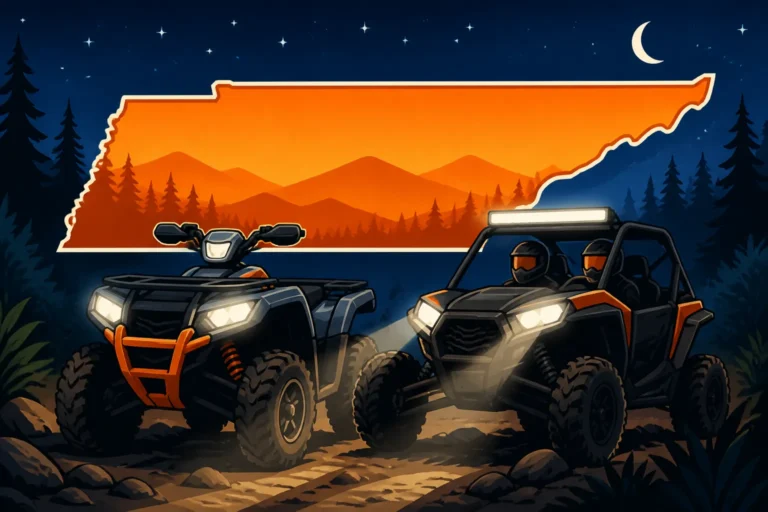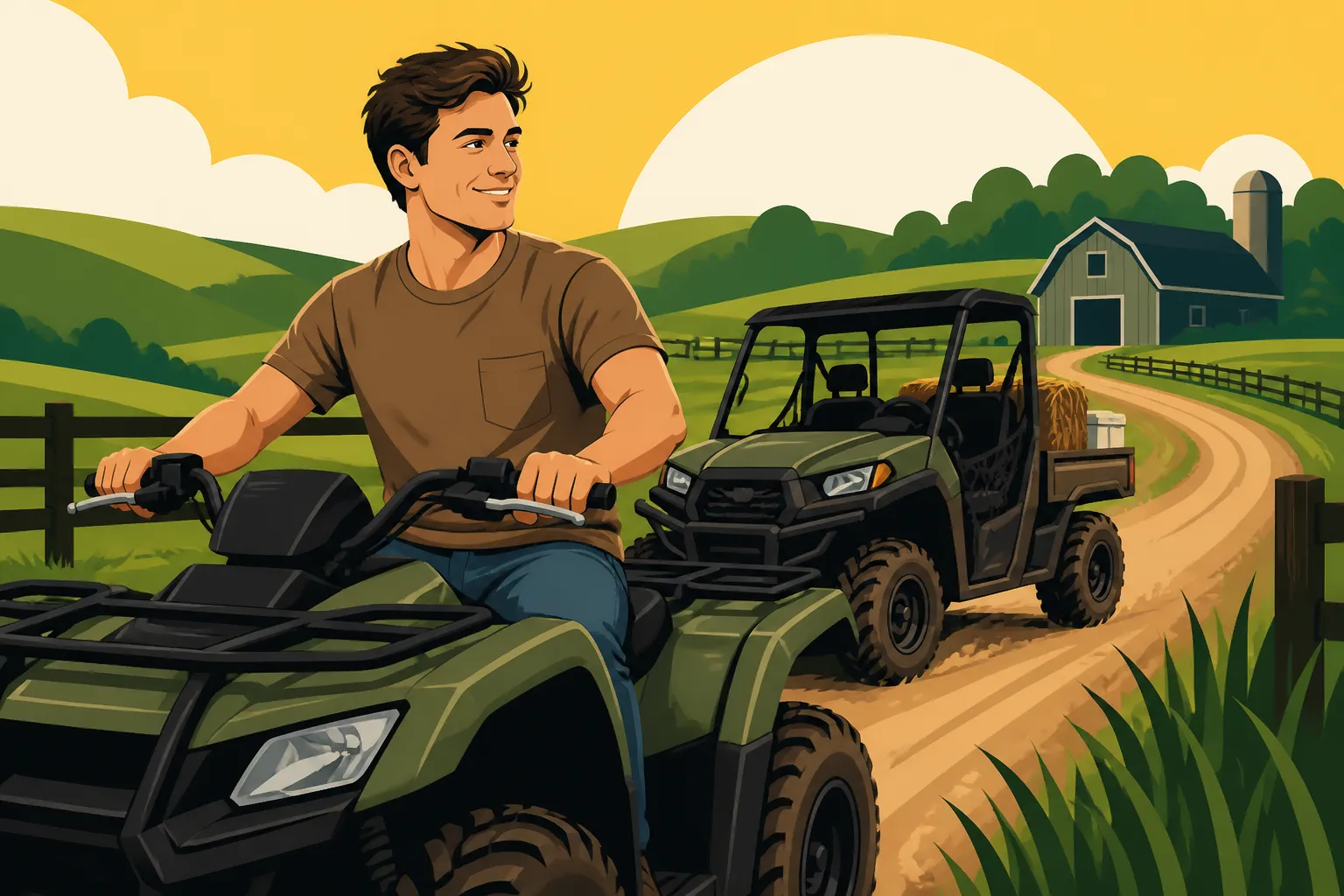
No Helmet on a Tennessee Farm Errand
Navigating the rules and regulations for ATVs and UTVs in Tennessee can feel like trying to solve a complex puzzle, especially when you're just trying to get a simple chore done. Many folks wonder about the helmet laws, particularly when they're using their machine for something practical, like heading down the road for a quick farm errand. This guide is here to clear up that confusion, explaining when you absolutely need a helmet on your OHV and when Tennessee law might make an exception for agricultural use.
Understanding Tennessee's General Helmet Law for OHVs on Roads
When you start thinking about taking your ATV or UTV onto any public road in Tennessee, even for a short distance, one of the first things that should come to mind is safety gear, specifically a helmet. It's not just a suggestion; for most situations, it's a legal requirement designed to keep you safe. The rules can be a bit different from what you might expect for street bikes, so it's worth diving into the specifics.
Who Needs a Helmet on a Tennessee Road?
Generally speaking, if you're operating or riding as a passenger on an ATV or UTV on any public road in Tennessee, a helmet is required. This isn't just for the driver; it extends to all passengers as well. The law is pretty clear on this point because the risks associated with these machines on paved or gravel roads are significant, especially when interacting with other vehicle traffic. Whether you're 16 or 60, if you're hitting a public thoroughfare, that helmet needs to be strapped on. There's a particular emphasis for younger riders, making sure they're protected. If you're looking for more details, check out [Tennessee Helmet Law for ATV Riders] and [Tennessee Helmet Law for Passengers].
It's about minimizing the potential for serious injury in the event of an accident. Helmets provide crucial protection for your head, which is, let's be honest, the most important part of you. Even at low speeds, a sudden stop or a collision can have devastating consequences if your head isn't properly protected. So, when you're preparing for a ride that involves public roads, think of the helmet as non-negotiable for anyone on the machine.
When and Where the Helmet Rule Applies
The Tennessee helmet rule for OHVs typically applies to any public road, whether it's a paved state highway or a winding county gravel road. The distinction often comes down to where you are riding and why. If you're using a road that's open to the public and maintained by a state or county entity, then you're generally subject to these helmet requirements. This means those scenic backroads or connecting stretches between trails often fall under the helmet mandate.
It's important to differentiate this from riding on private property or within designated off-road parks where the rules might be different or where helmets, while highly recommended, aren't legally enforced by state statute. But the moment those tires touch a public road, the rules shift. This can be a source of confusion for riders who are used to more relaxed rules on private land or within specific trail systems. Understanding [Tennessee Rules for Riding a County Road] is essential for making sure you're compliant. The time of day doesn't change the requirement either; whether it's bright noon or twilight, a helmet is part of the package for public road use.
Why Helmets Are So Important
Beyond the legal mandate, helmets are a cornerstone of rider safety. ATVs and UTVs, while incredibly fun and useful, have a high center of gravity and can be less stable than a traditional car. When you combine that with the varied surfaces and potential hazards of public roads – everything from potholes to distracted drivers – the risk of an accident goes up. A helmet is your primary defense against head injuries, which can range from concussions to life-altering brain trauma.
Think about it: even if you're just cruising slowly, an unexpected patch of gravel, a sharp turn, or even a minor collision could send you sprawling. The impact on an unprotected head can be severe. It's not just about what you do; it's also about what other drivers might do. That truck coming around the blind curve, or the car pulling out of a driveway unexpectedly, are all variables that are out of your control. Wearing a helmet is a simple, effective step you can take to mitigate those external risks and ensure you can ride again another day.
The Specific Farm Exemption: Riding Without a Helmet on an Errand
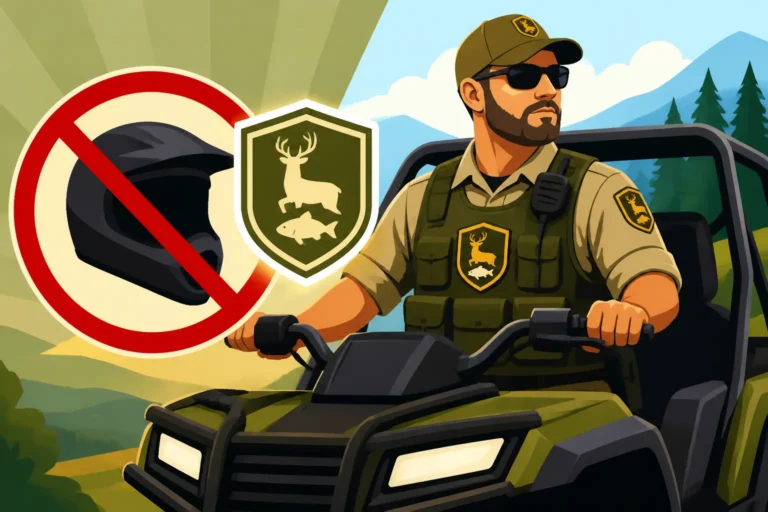
Now, here's where things get interesting for many rural Tennessee residents. While the general rule is "helmet on for public roads," Tennessee law does provide a specific exemption for ATVs and UTVs when they are being used for legitimate agricultural purposes. This exemption is a nod to the practical, utilitarian role these machines play in farming communities. However, it's crucial to understand the exact parameters of this exception so you don't inadvertently run afoul of the law.
Defining "Agricultural Purposes" in Tennessee Law
The key to the helmet exemption lies in the definition of "agricultural purposes." This isn't just about owning a farm; it's about the intent and action of your ride. Generally, this means using your OHV directly in connection with farming, ranching, or other agricultural operations. Examples include hauling feed to livestock, checking fences, transporting tools for field work, or moving between different parcels of farmland. If you're using your machine to get a part for a tractor, deliver produce, or even pick up supplies for animal care, these would typically fall under "agricultural purposes." This exemption is a lifeline for farmers who rely on their ATVs and UTVs as essential workhorses, allowing them to perform necessary tasks without the added hassle of a helmet for very short road transits. For a more complete picture, consider [Tennessee Rules for Agricultural Road Use].
It's important to draw a clear line here: "agricultural purposes" does not typically extend to recreational riding, joyrides, or even personal errands that have no direct connection to the farm. If you're heading to the grocery store for personal supplies, or going to a friend's house for a visit, even if you just left the farm, that's generally not considered an agricultural purpose in the eyes of the law. The exemption is very specific to the work of the farm.
Conditions for the Farm Exemption
Even when your ride truly qualifies as an "agricultural purpose," there are still conditions you need to meet for the helmet exemption to apply. This isn't a blanket pass to disregard all safety. The law often specifies that the machine must be operated during daylight hours, and usually, only on public roads that are not state highways. Typically, this means county roads, gravel lanes, or local access roads. The distance you can travel under this exemption might also be implicitly limited to what's reasonably necessary for the agricultural task at hand – usually, short distances between fields or to a nearby supplier.
Furthermore, your machine itself might need to meet certain criteria for this exemption. While the primary focus is on the purpose of the ride, the vehicle generally needs to be a standard ATV or UTV. If you're operating something heavily modified or a machine that clearly isn't designed for typical farm work, you might be scrutinized more closely. Always remember that while the helmet is exempt, other rules about how you operate your machine on the road, such as speed limits and yielding, still apply. The core idea is to allow practical farm work, not to open up public roads for casual, helmet-free riding.
What the Exemption Doesn't Cover
This is critical: understanding what the farm exemption doesn't cover is just as important as knowing what it does. As mentioned, it generally does not cover purely recreational riding. Taking your UTV out for a spin through the countryside, even if you live on a farm, would still typically require a helmet if you're on public roads. It also doesn't cover non-farm errands. Running into town for a non-farm item, like a movie or personal groceries, would likely fall outside the scope of the agricultural exemption, meaning you'd need that helmet.
Another common misunderstanding is that the exemption allows for any road use. This isn't usually the case. State highways, with their higher speed limits and greater traffic volumes, are almost always off-limits for helmet-free OHV travel, regardless of the purpose. The exemption is narrowly tailored to facilitate farm operations on lower-volume, lower-speed local roads. If you start venturing onto busier state routes or are simply out for enjoyment, you're expected to comply with the standard helmet laws. Always double-check [Tennessee Rules for Riding a State Highway] to understand these boundaries.
Other Road Use Requirements Beyond the Helmet
While the helmet rule and its farm exemption are big topics, they're only one piece of the puzzle when it comes to riding your ATV or UTV on Tennessee's public roads. There's a whole host of other regulations and equipment requirements you need to be aware of to ensure you're riding legally and safely. Ignoring these can lead to fines, citations, and even more serious consequences if an accident occurs.
Vehicle Equipment for Road Use
Just because your machine can hit a trail doesn't mean it's ready for the road. For most legal road use, your ATV or UTV will need to be equipped with certain safety features, much like a conventional vehicle. This typically includes working headlights, taillights, brake lights, a horn, and at least one rearview mirror. Some laws might even require turn signals, especially if you're talking about a UTV that's being made more "street-legal." These aren't just suggestions; they are often mandatory to ensure you can be seen and can communicate your intentions to other drivers.
Many riders turn to aftermarket suppliers like SuperATV for these necessary upgrades. They offer a wide range of accessories, from full street-legal kits with mirrors, horns, and turn signals, to DOT-approved tires, all designed to help bring your off-road machine into compliance for limited public road use. Investing in quality equipment is not only about following the law but also about enhancing your visibility and safety on shared roadways. You can find more specific requirements in [Tennessee Equipment Rules for Road Use].
Here’s a quick look at common equipment requirements for OHVs on Tennessee roads:
| Equipment Feature | General Requirement | Farm Exemption (Check Local Laws) |
|---|---|---|
| Headlights | Required, working order | Required |
| Taillights/Brake Lights | Required, working order | Required |
| Rearview Mirror | At least one, mounted to provide clear view | Recommended, often required |
| Horn | Required, audible from 200 ft | Required |
| Turn Signals | Often required for "street legal" conversions | Recommended, may not be mandatory |
| DOT-Approved Tires | Often required for "street legal" conversions | Not typically specified, but safer |
| License Plate/Sticker | TDR Sticker if titled; no traditional plate for OHVs | TDR Sticker if titled |
Driver Licensing and Insurance
Forget about just hopping on and riding if you're on a public road. Operating an ATV or UTV on a public road in Tennessee typically requires you to have a valid driver's license. This isn't a special OHV license; it's generally a standard Class D driver's license, just like you'd need to drive a car or truck. The minimum age for obtaining a driver's license in Tennessee is 16, which means anyone younger than that usually can't legally operate an OHV on a public road, even if they're skilled off-road. Check [Tennessee Driver's License Rules for UTVs] for the specifics.
Beyond the license, insurance is another critical requirement. While your homeowner's policy might cover some liability for your OHV on private property, it's highly unlikely to extend to road use. If you're going to use your ATV or UTV on public roads, you will almost certainly need a specific insurance policy that covers liability for road operation. This protects you (and others) financially in case of an accident. Driving uninsured can lead to hefty fines and legal complications, so it's not something to overlook. [Tennessee UTV Insurance Requirement] provides further insights into what you need.
Permitted Road Types and Restrictions
Tennessee has specific regulations about which roads ATVs and UTVs can even be on, regardless of helmet or equipment. Generally, OHVs are prohibited from interstates and major state highways where speeds are high and traffic is heavy. The most common places you might find an OHV legally operating on a public road are on designated county roads, rural roads, or specific routes within adventure tourism districts. Even then, there are often speed limits (like 35 mph or 45 mph, depending on the road and local ordinances) and restrictions on when you can ride (often daylight hours only).
It's not a free-for-all; counties or municipalities often have the authority to designate which roads are open and under what conditions. Just because a road is unpaved doesn't automatically mean it's open to OHVs. Always check local ordinances for the specific county or city you plan to ride in. For instance, [Tennessee UTV Speed Limit on Roads] will give you an idea of the speed restrictions. And if you're considering riding after dark, be sure to consult [Tennessee Rules for Riding After Dark] as those rules are even tighter.
Navigating the Nuances: Staying Legal and Safe
Understanding the letter of the law is one thing, but applying it in real-world scenarios, especially with the complexities of "agricultural purposes," requires a bit more thought. It's easy to make assumptions or misinterpret the rules, which can lead to unwelcome interactions with law enforcement or, worse, accidents.
Common Pitfalls and Misunderstandings
One of the biggest pitfalls riders face is assuming that if they live in a rural area, all local roads are fair game for helmet-free, untrailed OHV use. This simply isn't true. The farm exemption is specific, and just living in the country doesn't make every trip an "agricultural purpose." Many riders also confuse recreational trail riding with permitted road use. A trail that crosses a county road for a few yards might not require extensive road-legal modifications for that brief crossing, but riding down that county road for miles is a different story.
Another misunderstanding is the "implied permission" idea. Just because a farmer always rides their ATV down a particular stretch of road without a helmet doesn't mean it's universally legal or that all law enforcement officers will interpret the "agricultural purpose" the same way every time. It's vital to have a clear, direct connection to farm work for the exemption to stand up. If you're caught without a helmet and can't convincingly demonstrate an agricultural purpose, you could face [Tennessee Fines for Illegal UTV Road Use] or other penalties.
Documenting Farm Use
While you're not expected to carry a detailed manifest of your farm errands, having a clear understanding and being able to articulate the agricultural purpose of your ride can be helpful if questioned. If you're hauling tools to repair a fence line or carrying feed bags, that's often self-evident. If you're on your way to pick up a specific part for farm machinery, knowing the name of the part and what it's for could support your claim.
Sometimes, it's about the context. If your machine is laden with farm implements, or you're clearly moving between fields, the purpose is often apparent. For those gray areas, having a mental note of your exact mission can save you a headache. It's all about demonstrating a genuine connection to farming operations rather than recreational or personal use.
Prioritizing Safety Even When Exempt
Here's the most important takeaway: even when the law provides an exemption for helmets during agricultural use, choosing to wear one anyway is always the smartest decision. The exemption is for convenience, not because the risk of head injury magically disappears when you're on a farm errand. A tumble at 15 mph on a gravel road can be just as dangerous as one on a trail.
Many farmers choose to wear helmets as a matter of habit and personal safety, regardless of the legal requirement. They understand the unpredictable nature of operating these machines, especially on varied terrain and around livestock. Defensive driving, maintaining your machine in top condition, and avoiding distractions are also crucial. The goal isn't just to stay legal; it's to stay safe so you can continue to work your land and enjoy your machine for years to come. Remember, even with the exemption, personal responsibility for your well-being remains paramount.
Disclaimer
This article is for general informational purposes only and does not constitute professional advice. Laws, prices and regulations vary by location and change over time. Consult a qualified professional for guidance on your specific situation.