Finding the Restricted Road List Your County Published
Navigating where you can and cannot legally ride your ATV or UTV on Tennessee roads has historically been a confusing maze, leaving many riders feeling frustrated and unsure. With recent statewide changes aiming for more clarity, the burden now often falls on individual counties to publish specific "restricted road lists" that tell you exactly where OHVs are not permitted. This guide will walk you through precisely how to find these crucial lists and what to look for once you have them, ensuring you can ride responsibly and legally across the Volunteer State.
Understanding Tennessee's Road Use Regulations for OHVs
For years, the rules for riding ATVs and UTVs on Tennessee's public roads felt like a patchwork quilt, with each county or even individual municipality setting its own unique ordinances. This often led to situations where a rider might be perfectly legal on one county road, only to unknowingly commit an infraction just across the county line. It was confusing, frustrating, and made planning rides a real headache for those who wanted to connect trails or access amenities.
However, [What Tennessee's 2025 UTV Law Changed] marked a significant shift, creating a more standardized framework for road use. The new law acknowledged the growing popularity of OHVs and sought to provide clearer guidelines, while still allowing local control over which roads could be deemed off-limits. Essentially, the state now permits OHVs on county roads and certain state highways (those with a posted speed limit of 45 mph or less), with some key exceptions. The critical takeaway for riders is that while the default is now more open, counties retain the power to restrict specific roads. This is where those elusive "restricted road lists" come into play. They are the definitive word from your local government on where you simply cannot take your machine. Without checking them, you're riding blind, risking fines, or even worse, a collision in an area not meant for your vehicle.
Your Go-To Guide for Finding County Restricted Road Lists
So, where do you actually find these all-important lists? This is the million-dollar question for many riders. Since the responsibility for publishing these lists falls to the individual counties, your search will be very localized. There isn't a single, statewide portal where every county's list is neatly compiled. You're going to need to put on your detective hat and do a bit of digging, but don't worry, I'll point you in the right direction.
Starting Your Search at the County Level
The first and most reliable place to start your quest for a restricted road list is your county government's official website. Many counties, especially those within or adjacent to [Tennessee's Adventure Tourism Districts] like Scott, Anderson, or Campbell, have been proactive in publishing this information. Look for sections related to:
- County Clerk's Office: While primarily focused on [Titling an OHV in Tennessee] and issuing licenses, their website often hosts links to other county departments and relevant ordinances.
- County Commission or Legislative Body: These are the folks who voted on and enacted the local restrictions. Their meeting minutes, resolutions, or ordinances sections are goldmines of information. You might find the actual text of the resolution that approved the restricted roads, which will typically include the full list.
- Sheriff's Department or Highway Department: These departments are often tasked with enforcing and maintaining the roads, respectively. Their websites might have a dedicated page for OHV regulations or links to the relevant county documents. They are also likely to be the ones familiar with the practical application of the rules.
It’s not always immediately obvious, so you might need to use the website's search bar with terms like "OHV ordinance," "ATV road use," "UTV restrictions," or "restricted roads." Some counties might even have a dedicated PDF document that clearly outlines the rules and lists the roads.
Leveraging Local Resources and Communication
Beyond official websites, don't underestimate the power of local engagement. Sometimes, the most current information comes from the people on the ground.
- County Clerk's Physical Office: If online searches prove fruitless, a phone call or a visit to your county clerk's office can be incredibly helpful. The staff there are often well-versed in local regulations and can direct you to the right department or even provide a printout of the list. Remember, they are often the first point of contact for many vehicle-related inquiries, even if they don't directly manage road designations.
- Local News Outlets and Community Forums: Local newspapers (especially their online versions) and community social media groups can be excellent sources. When these laws were debated or passed, they were likely covered by local media. Engaging with other riders in county-specific online forums can also lead you to the information you need, as local riders are often the first to know about changes or where to find documents.
- OHV Clubs and Dealerships: Local ATV/UTV clubs and dealerships are another great resource. Many dealerships, like those selling machines with robust aftermarket parts from a company like SuperATV, make an effort to stay informed about local riding regulations to better serve their customers. They might have copies of the lists or know exactly where to direct you.
When you're searching, remember to be specific. A large county like Hamilton might have different rules than a more rural one like Morgan, even though both are in Tennessee. The more precise your query, the better your chances of finding the right information.
| Information Source | Best For | Typical Format | What to Look For |
|---|---|---|---|
| County Government Website | Official resolutions, ordinances, designated lists | PDF, Webpage, Meeting Minutes | Specific road names, sections, GPS coordinates if listed |
| County Clerk's Office | Direct guidance, printouts, contact info for relevant departments | Verbal, Printed Document | Confirmation of where to find the official list |
| County Sheriff's Dept. | Enforcement details, practical advice, understanding local nuances | Verbal, Departmental Memo | Roads where enforcement is common, safety guidelines |
| Local OHV Clubs/Groups | Rider experiences, shared knowledge, unofficial tips, community updates | Online Forums, Meetings | Rider-curated lists, discussions on recent changes |
Deciphering What's on a Restricted Road List
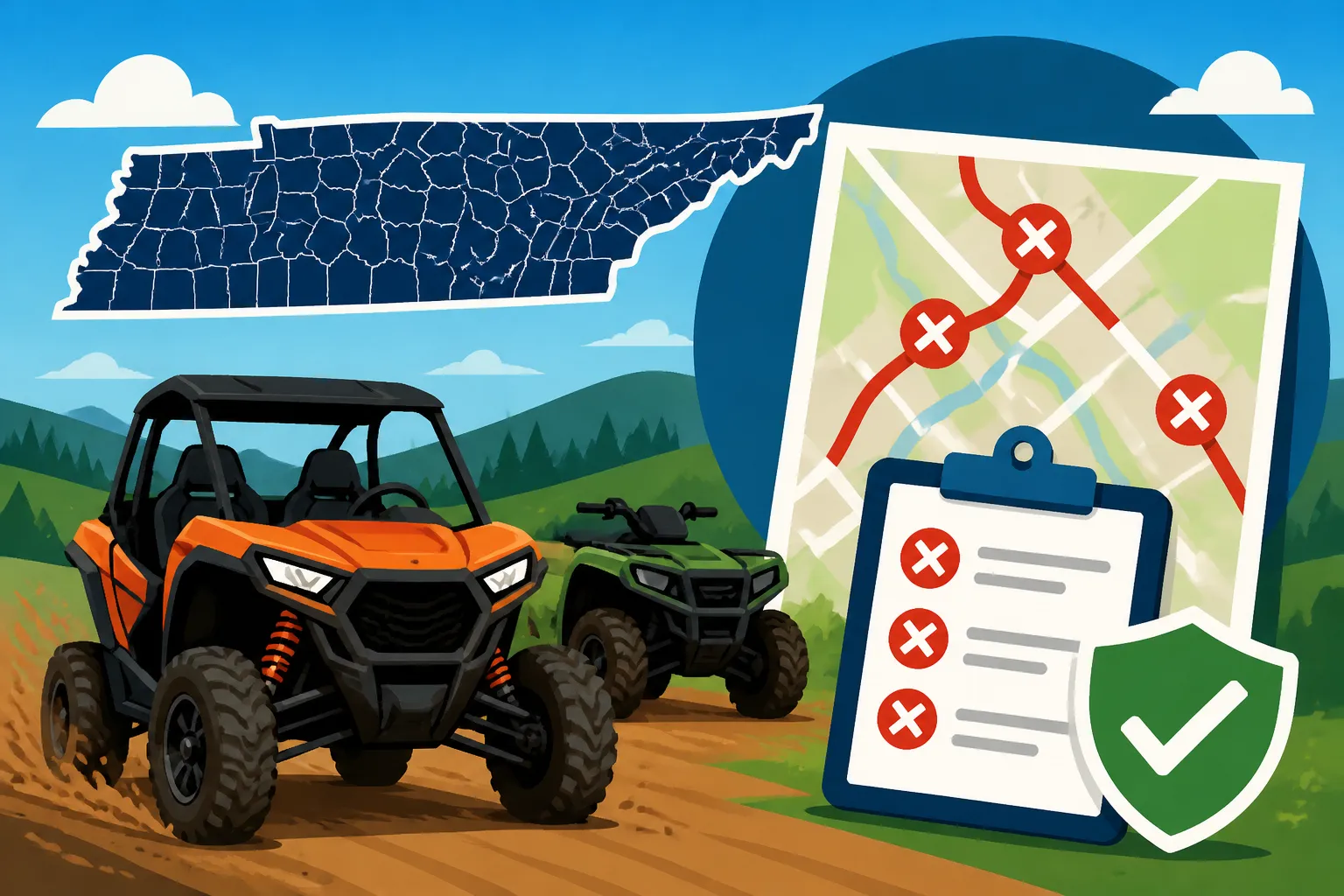
Once you've managed to track down your county's restricted road list, the next step is to understand what you're actually looking at. These lists aren't always presented in the most user-friendly format, but knowing what to expect can help you quickly identify the crucial information. This is where [Checking a Restricted Road List] becomes a critical skill for any responsible rider.
Identifying Restricted and Open Roads
A restricted road list will explicitly name the roads (or portions of roads) where OHV use is prohibited. This is important: it doesn't list where you can ride, but where you cannot. The implication is that any county road not on the restricted list is generally open for OHV use, provided you follow all other statewide rules for road use. You might find descriptions like:
- "State Route 63 (SR 63) from Mile Marker 5 to Mile Marker 12."
- "Any paved road within the city limits of LaFollette."
- "County Road 123 (Main Street) in its entirety."
It's common for counties to restrict major thoroughfares, roads with high traffic volumes, or those passing through densely populated areas for safety reasons. You'll also notice that some state routes might be restricted, while others are open. For instance, SR 63 in Campbell County has specific dates when it is open to OHVs for events, but otherwise remains restricted. It's crucial to distinguish between a state route and a county road when reviewing these lists, as the rules can differ.
Special Conditions and Exceptions
Beyond simply listing restricted roads, some documents might include special conditions or exceptions that are vital to understand.
- Time-Based Restrictions: Some roads, particularly those connecting to popular trail systems, might be open only during specific hours, like [Daylight Hours Only Under Tennessee Law]. While the general rule for OHV road use is sunrise to sunset, a local ordinance might further narrow that window or designate specific roads for limited access.
- Event-Based Openings: As mentioned, certain state routes might be temporarily opened for specific events or seasons, especially within [The Ten Counties Named in Tennessee Law] that are part of the Adventure Tourism Districts. Always double-check event calendars and local announcements before assuming a typically restricted road is open.
- Unpaved Roads: Tennessee law includes provisions for counties to open unpaved roads to OHVs via a two-thirds vote of their legislative body. If you're looking at a restricted list, it's worth noting if it makes a distinction between paved and unpaved county roads. Sometimes an unpaved section might be open even if the paved portion is restricted.
- Crossing Roads: Even if a road is restricted for riding on it, you might still be permitted to cross it. Tennessee law allows for [Crossing a Two-Lane at Ninety Degrees in Tennessee] at intersections, provided it's done safely and directly. This is often crucial for connecting otherwise legal routes.
Reading these lists carefully is paramount. Don't just skim for road names; look for any accompanying text that details conditions, dates, or specific sections of roads. If you're using aftermarket parts from a company like SuperATV to make your machine more road-friendly, make sure you're still adhering to every single line of the county's restricted list. Road-legal components are fantastic, but they don't override local prohibitions on specific routes.
Essential Rules for Riding Tennessee Roads (Even the Open Ones)
Even after you've thoroughly reviewed your county's restricted road list and confirmed a route is open, your journey isn't over. There are a host of statewide regulations that apply to all OHV road use in Tennessee. Ignoring these rules, even on an "open" road, can lead to fines, citations, or worse. This means understanding not just where you can ride, but how.
Key Road Use Requirements
Tennessee has established clear guidelines for operating ATVs and UTVs on any public road where they are permitted. These are non-negotiable and apply across the board:
- Speed Limits: You are only permitted to operate your OHV on roads with a posted speed limit of [Riding a Road Posted 45 mph or Under]. Anything higher than 45 mph is generally off-limits for continuous riding.
- Daylight Hours: All OHV road use must occur [Riding Only Between Sunrise and Sunset]. Night riding on public roads is strictly prohibited, even if the road itself is open during the day. This is a critical safety measure given the different lighting requirements and visibility of OHVs compared to traditional vehicles.
- Helmet Use: If you are under 18, [Tennessee Helmet Rules for Operator and Passengers] mandate that you wear a helmet when operating or riding as a passenger on a public road. While adults are not universally required to wear helmets on public roads for OHVs, it's always a good practice.
- Driver's License: Any operator of an OHV on a public road must possess a valid [Tennessee Driver's License Rules for UTVs]. This is not just a suggestion; it's a legal requirement to ensure operators have met basic driving competencies. The [Tennessee Minimum Age to Ride a Road] is 16 years old, coinciding with the typical age for obtaining a driver's license.
- Insurance: While specific details can vary, [Tennessee UTV Insurance Requirement] often applies for machines used on public roads. It's crucial to have at least liability coverage to protect yourself and others in case of an accident. Always carry proof of insurance with you.
- Machine Requirements: Your OHV must be equipped with essential safety features. This includes headlights, taillights, brake lights, turn signals, a horn, a rearview mirror, and a windshield (if designed with one). If you've accessorized your machine with quality parts from a brand like SuperATV, ensure they meet all these state and local safety standards for road use.
Understanding Designated Routes and Areas
Beyond the general rules, it's important to remember that some parts of Tennessee have specific designations that influence OHV road use. The [Tennessee's Adventure Tourism Districts] in counties like Scott, Anderson, Campbell, Morgan, and others, were created to promote tourism and allow for more OHV-friendly road networks. Within these districts, counties might have more liberal allowances for road use, or specifically designate connecting roads between trail systems. This can include arrangements like those found in Huntsville, TN, where certain streets are open from sunrise to sunset, or specific weekends when particular state routes are accessible.
Always refer to the most current information. These lists and regulations are not static; they can be updated by county commissions or state legislative actions. Before every significant ride that involves public roads, take a few minutes to re-verify the rules for your specific route and county. It's the best way to ensure a safe, legal, and enjoyable ride through Tennessee's beautiful landscapes.
Disclaimer
This article is for general informational purposes only and does not constitute professional advice. Laws, prices and regulations vary by location and change over time. Consult a qualified professional for guidance on your specific situation.