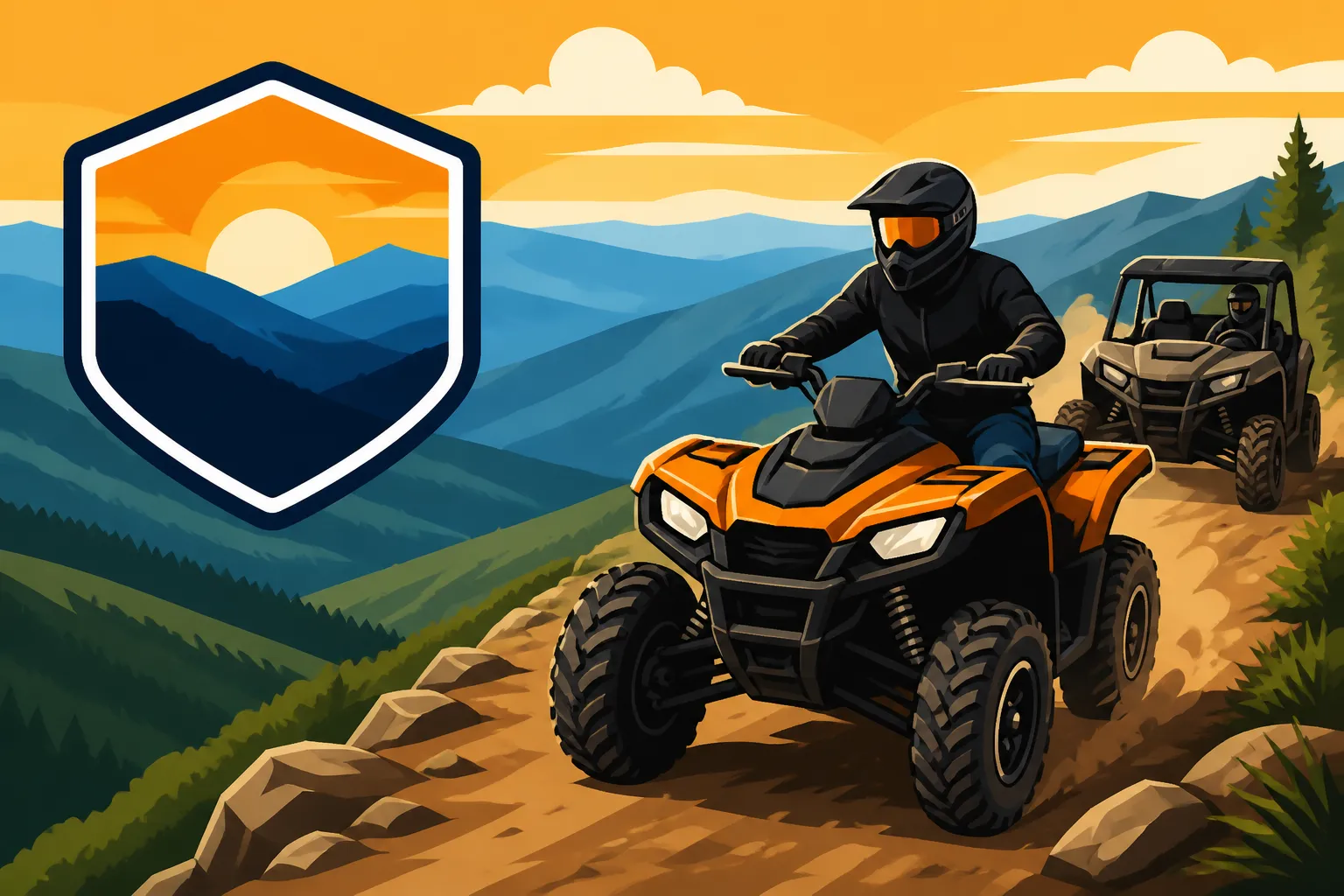
Tennessee Rules for Riding a Ridge Road
Ah, the ridge roads of Tennessee! There's nothing quite like the feeling of cresting a long climb, the trees parting to reveal a breathtaking vista stretching across the Cumberland Plateau or down into a deep holler. But here's the thing: many of us, myself included, have looked at these rough, unpaved paths winding along a ridge and wondered, "Can I actually ride my ATV or UTV on this, or am I asking for trouble?" It's a valid concern, as Tennessee's rules for off-highway vehicles (OHVs) on public roads can be as winding and unpredictable as the roads themselves. This guide is here to help you navigate those rules, understand what's permitted, and ride those stunning ridge roads legally and responsibly.
Understanding Ridge Roads in Tennessee's ATV Landscape
When we talk about "ridge roads" in Tennessee, we're often picturing those unpaved, sometimes gravel, sometimes just packed dirt and rock paths that follow the contours of elevated terrain. These aren't your typical paved county roads, and they're certainly not state highways. They tend to be remnants of old logging operations, mining access routes, or just very rural connectors between scattered homes or properties. The challenge arises because their appearance often blurs the line between a designated trail and a public thoroughfare, leading to a lot of confusion for riders eager to explore.
The Allure and Treachery of Ridge Roads
The draw of a ridge road is undeniable. Imagine the crisp morning air, the scent of pine and damp earth, and then that moment when the forest opens up to reveal a panoramic view – maybe a patchwork of fall colors, or the mist-shrouded valleys waking up below. They offer a unique blend of adventure and scenic beauty that paved roads simply can't match. They feel wilder, more remote, and promise an authentic connection with Tennessee's rugged landscape. It's the kind of riding that truly defines the spirit of off-roading here.
However, these same characteristics that make them so appealing also contribute to their inherent dangers and legal ambiguities. Ridge roads can be narrow, often with steep drop-offs on one or both sides. They might be poorly maintained, riddled with washouts, fallen timber, or unexpected obstacles. They can be slick with mud after rain, icy in winter, or obscured by dust in dry spells. The term "road" might be used loosely, covering anything from a two-track path to a slightly improved dirt lane. This varied and often challenging terrain demands a keen eye and a well-maintained machine, perhaps with some robust aftermarket parts from a company like SuperATV to handle the abuse.
Legal Ambiguity: When a Trail Becomes a Road
Here's where it gets really tricky for many riders. In many parts of Tennessee, especially in areas historically rich in logging and coal mining like the eastern mountains, there's a dense network of these unpaved paths. Some are clearly within designated [Tennessee ATV Trails Near Knoxville] or recreation areas like Windrock or Brimstone. Others seem to just exist, connecting private properties or leading to forgotten clearings. The critical question becomes: at what point does this path cease to be an unregulated "trail" and become a "road" subject to specific traffic laws?
The appearance alone isn't enough to tell you. A dirt road that looks like a trail could still be a county-maintained public right-of-way. Conversely, a seemingly well-used dirt path might be entirely on private property, making it a trespass issue if you don't have permission. This ambiguity is a significant source of frustration for riders who just want to enjoy the scenery without breaking the law. It’s not always obvious, and a quick glance often isn't enough to clear things up.
Navigating Tennessee's Legal Framework for Ridge Roads
Tennessee's approach to OHVs on public roads has evolved, but it remains complex, especially for those unpaved ridge roads. The foundational rule is that OHVs are generally not permitted on public roads. However, there are significant exceptions, primarily depending on the type of road and its location within certain designated districts. It's not a blanket "yes" or "no," which is why understanding the nuances is so vital.
County Roads vs. State Highways: A Critical Distinction
The first, and arguably most important, distinction to make when considering a ridge road is whether it's a county road or a state highway. The vast majority of ridge roads, if they are indeed public, fall under county jurisdiction.
- State Highways (e.g., TN-63, US-27): For the most part, OHVs like ATVs and UTVs are strictly prohibited on state highways, even if they are unpaved in sections. There are very limited, specific exceptions, such as crossing a state highway at a right angle, but continuous travel on them is generally illegal. You can learn more about this in [Tennessee Rules for Riding a State Highway]. These roads are usually well-marked with state route numbers, so identifying them is usually straightforward.
- County Roads: This is where the situation becomes more flexible, but also more complicated. Prior to recent legislative changes, counties had broad authority to open or close their roads to OHVs. Now, the state has provided a framework. A county legislative body can, by a two-thirds vote, designate certain unpaved roads within its jurisdiction as open for OHV use. This decision is typically made in the interest of promoting adventure tourism or connecting trail systems. It's crucial to understand that unless a specific county road has been designated as open, it remains closed to OHVs for general travel. This means that assuming a dirt road is open just because it's dirt is a risky proposition. You need to verify if the specific road has been opened.
This means that even if a ridge road looks like a private drive or an unmaintained path, if it's legally classified as a county road, the county's rules apply. Riders are often caught off guard because they're used to riding on private land or designated trails without these restrictions.
Adventure Tourism Districts and Their Impact
To further complicate (and, for riders, sometimes simplify) matters, Tennessee has established "Adventure Tourism Districts." These are specific geographic areas, currently encompassing ten counties, where the state recognizes the economic benefit of OHV tourism. Within these districts, there are specific provisions that can allow for greater OHV access on public roads. You can find more details in [Tennessee's Adventure Tourism Districts].
The ten counties currently named in the statute as having specific adventure tourism district benefits are: Scott, Anderson, Campbell, Morgan, Jackson, Johnson, Perry, Unicoi, Fentress, and Hickman. If you're riding a ridge road in one of these counties, your chances of it being a designated open road are higher, but it's still not automatic. These counties are empowered to designate roads, but each designation still requires a local vote and publication of restricted road lists.
For example, in Scott County, an area synonymous with OHV riding and home to parts of Brimstone Recreation, specific roads are designated as open. But even here, not every dirt or gravel road on a ridge is open. You need to find the specific lists published by the county. Ignorance of these lists is not a defense, and deputies in these areas are well-versed in where OHVs are permitted. It's why doing your homework before you load up the machine is absolutely paramount. Knowing [Finding the Restricted Road List Your County Published] can save you a lot of grief.
Here’s a simplified breakdown of the general road types and OHV access:
| Road Type | Typical Surface | OHV Access (General Rule) | Key Considerations |
|---|---|---|---|
| Interstate | Paved | Strictly Prohibited | Absolutely no OHVs allowed. |
| State Highway | Paved/Unpaved | Generally Prohibited | Limited exceptions for crossing at 90 degrees or specific designated sections. Continuous travel typically illegal. Look for specific route numbers (e.g., SR 63, US 27). |
| County Road | Paved/Unpaved | Prohibited, UNLESS designated open | Most ridge roads fall here. A county must pass a 2/3 vote to open specific unpaved roads. Always check the county's published list. Presence within an Adventure Tourism District makes designation more likely but not guaranteed. |
| Designated Trail | Unpaved | Permitted (with permit) | Within private parks (Windrock, Brimstone, Royal Blue) or WMA units (North Cumberland). Requires specific permits (e.g., [North Cumberland OHV Permit Cost]). Usually well-marked. |
| Private Land | Unpaved | Permitted (with permission) | Requires explicit landowner permission. Trespassing laws apply if no permission. |
Essential Rules for Safe and Legal Ridge Road Riding
If you've done your homework and confirmed that a particular ridge road is, in fact, open to OHV traffic, congratulations! You've cleared a major hurdle. However, simply being "open" doesn't mean it's a free-for-all. There are still crucial rules and requirements you must adhere to to ensure your safety and stay on the right side of the law.
Equipment, Permitting, and Rider Requirements
Before you even think about putting tires on a public road, even an unpaved ridge road, your machine and your readiness need to meet specific criteria. This isn't just about avoiding a ticket; it's about making your machine safe for shared use and protecting yourself.
- Proper Equipment: While your machine might be trail-ready, road-readiness is different. If you intend to ride on any public road, even a county-designated ridge road, your OHV must be equipped with:
- Headlights (operational, required during daylight hours as well for visibility)
- Taillights and brake lights
- A horn
- A rearview mirror (or mirrors, typically one on the left side)
- An adequate muffler with a spark arrestor (especially important on shared roads near homes or forest land)
- Tires that are designed for road use and are not excessively aggressive or prone to damaging the road surface. Many riders upgrade their machines with products from SuperATV, knowing that their robust components can handle the rigors of both trail and occasional road use, ensuring reliability when you're far from pavement.
- Permits and Registration: Your machine still needs to be titled in Tennessee. While Tennessee doesn't "register" OHVs in the traditional sense like cars, you do need a title and a [Tennessee's TDR Sticker Explained] to show that you've paid your taxes and fees. This sticker proves your machine is legally titled in the state. For riding in designated parks or WMAs, you will also need the appropriate trail permit (e.g., a [North Cumberland OHV Permit Cost] or a permit from a private park like Windrock).
- Rider Age and License: For operating an OHV on any public road in Tennessee, the operator must be at least 16 years old and possess a valid driver's license. [Tennessee Minimum Age to Ride a Road] is a hard rule. This isn't just a suggestion; it's a legal requirement, and deputies will enforce it. Passengers also have rules; for example, helmets are required for passengers under 18 years of age.
- Helmets: While Tennessee has some exceptions for helmets during agricultural use, if you are riding an ATV or UTV on a public road, the [Tennessee Helmet Law for ATV Riders] generally applies. Operators and passengers under 18 must wear a helmet. Many riders, regardless of age, choose to wear helmets for all riding, especially on unpredictable ridge roads.
Operational Restrictions: Speed, Hours, and Conduct
Even on an open ridge road, you can't just ride however you please. There are important operational rules to follow that ensure safety for everyone.
- Speed Limits: Unless otherwise posted, a general speed limit of 35 mph applies to OHVs on designated county roads. However, if the road is posted with a lower speed limit (e.g., 25 mph), you must adhere to that. The new laws often specify that OHVs are restricted to roads posted 45 mph or less. So, [Riding a Road Posted 45 mph or Under] is the key. You absolutely cannot exceed the posted speed limit or the state-mandated maximum, whichever is lower. Remember, these are often winding, unpaved roads with limited visibility, making excessive speed dangerous.
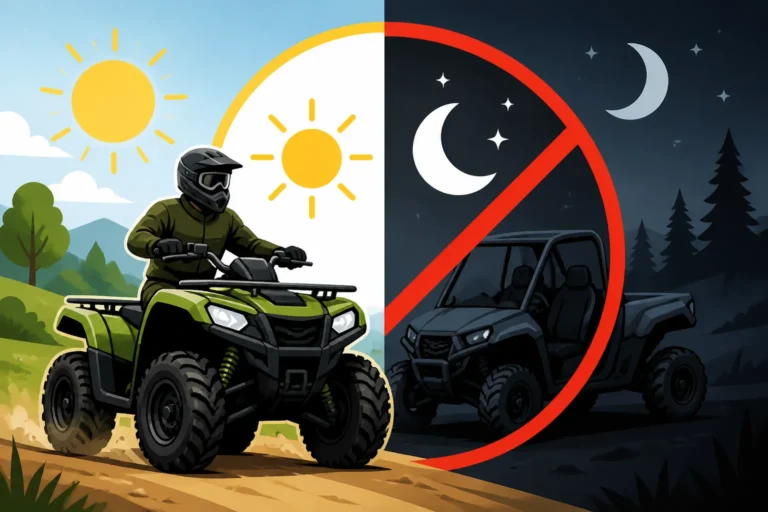
- Daylight Hours Only: OHVs are typically restricted to riding on public roads only between sunrise and sunset. [Riding Only Between Sunrise and Sunset] is a critical rule for road use. Night riding on public roads is generally prohibited unless specifically exempted by local ordinance, which is rare for unpaved ridge roads. If you're out past dark, even with your lights on, you could face a citation.
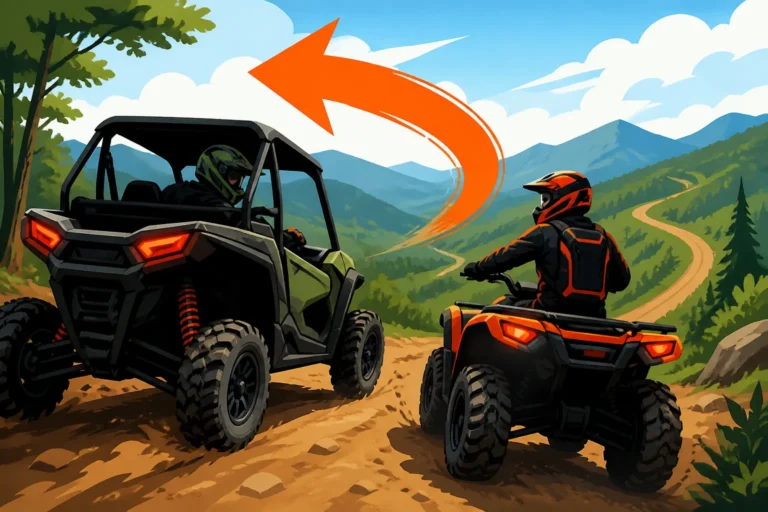
- Passing and Courtesy: Treat these ridge roads as you would any other shared public space. Yield to oncoming traffic, especially larger vehicles like logging trucks or farm equipment. Be mindful of dust, especially when passing or approaching homes. Give pedestrians, cyclists, and equestrians a wide berth. These are often shared-use areas, and respectful conduct goes a long way.
- No Reckless Operation: Stunting, excessive speeds, driving under the influence (DUI laws apply to OHVs on public roads just as they do to cars), or any other form of reckless operation will result in severe penalties, including fines and potential impoundment of your machine. Tennessee takes [Tennessee DUI Rules for ATV Riders] seriously.
Practical Tips for Riding Ridge Roads Responsibly
Beyond the legalities, there's a lot to consider to make your ridge road adventure safe, enjoyable, and respectful of the environment and other people. These practical tips come from years of riding and learning from experience – often the hard way!
Pre-Ride Checks and Preparedness
A little preparation goes a long way when you're heading out onto unpredictable terrain.
- Machine Inspection: Always perform a thorough pre-ride check. Inspect your tires for proper inflation and damage, check fluid levels, test your brakes and lights, and ensure your steering is tight. A loose component or a worn tire can be far more dangerous on a winding ridge road than on a flat trail. Consider upgrading crucial parts like ball joints, tie rods, or A-arms with heavy-duty components from a reputable manufacturer like SuperATV to withstand the rough and rocky conditions you might encounter.
- Weather Awareness: Ridge roads are highly susceptible to weather conditions. Rain can quickly turn a dirt road into a muddy, slick mess, while prolonged dry spells can create thick dust clouds, reducing visibility to almost zero. Always check the forecast and be prepared for changing conditions. [Riding a Windrock Ridge in Rain] or [Fog on a Cumberland Ridge at Dawn] require different skills and preparedness.
- Navigation: Don't rely solely on cell service, as many remote ridge roads will be in dead zones. Carry a detailed map (paper or downloaded offline on a GPS device) of the area you plan to explore. Know your route and have a plan for unexpected detours.
- Emergency Supplies: Pack a basic tool kit, a tire repair kit, a first-aid kit, extra water and snacks, and a way to signal for help (whistle, charged phone, satellite communicator). Let someone know your planned route and estimated return time. It's always better to be over-prepared, especially when you're miles from the nearest paved road or town.
- Fuel Planning: Many ridge roads are far from gas stations. Plan your fuel stops carefully, especially if you're doing a long loop. Carry extra fuel if necessary, secured safely. [Planning Fuel for a Long Windrock Loop] is something seasoned riders always do.
Respecting the Environment and Other Users
Riding these beautiful Tennessee ridge roads comes with a responsibility to protect them and to be a good neighbor.
- Stay on Designated Paths: Even on open ridge roads, do not venture off into adjacent fields or forests unless you have explicit permission from the landowner. [Tennessee Trespass Rules for Riders] are clear and strictly enforced.
- Minimize Environmental Impact: Avoid spinning your tires unnecessarily, especially on loose soil, which can contribute to erosion. If you encounter mud, ride through it, not around it, to prevent widening the trail. Pack out everything you pack in, and leave no trash behind.
- Share the Road: You may encounter other users on ridge roads – hikers, mountain bikers, horseback riders, local residents in cars or trucks, or even logging operations. Be courteous, slow down, and yield the right-of-way. Give them space and avoid startling horses or kicking up dust onto pedestrians. Many of these roads serve multiple purposes, and shared enjoyment depends on mutual respect.
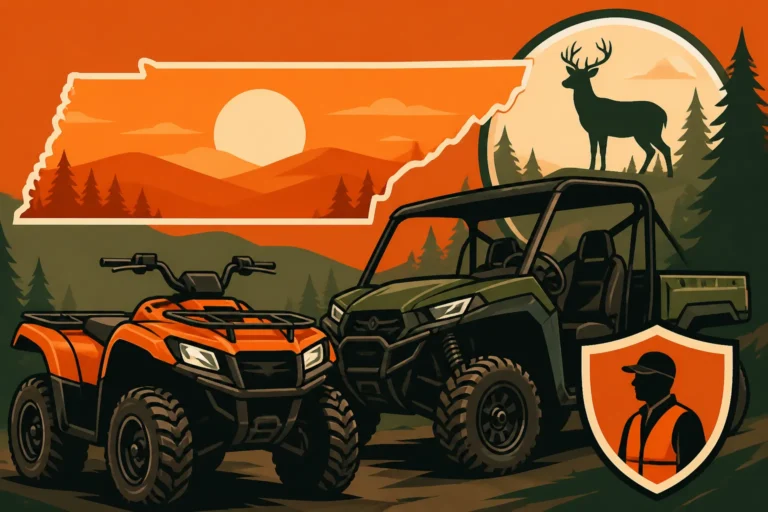
- Hunting Seasons: If you're riding during hunting season, especially on roads that might border wildlife management areas (WMAs), be extra vigilant. Consider wearing blaze orange, especially during gun and muzzleloader seasons. [Blaze Orange on a Tennessee November Ride] isn't just for hunters; it's a smart choice for riders too. Be aware that you may encounter hunters accessing their stands or tracking game, and give them the space they need.
Riding Tennessee's ridge roads can be an incredibly rewarding experience, offering unparalleled views and a true taste of off-road adventure. By understanding the legal framework, ensuring your machine is properly equipped, and riding responsibly, you can enjoy these spectacular routes without worry. Always verify the current status of the roads you plan to ride with the local county clerk or sheriff's office, as regulations can change.
Disclaimer
This article is for general informational purposes only and does not constitute professional advice. Laws, prices and regulations vary by location and change over time. Consult a qualified professional for guidance on your specific situation.