Tennessee Rules for Riding a Town Street
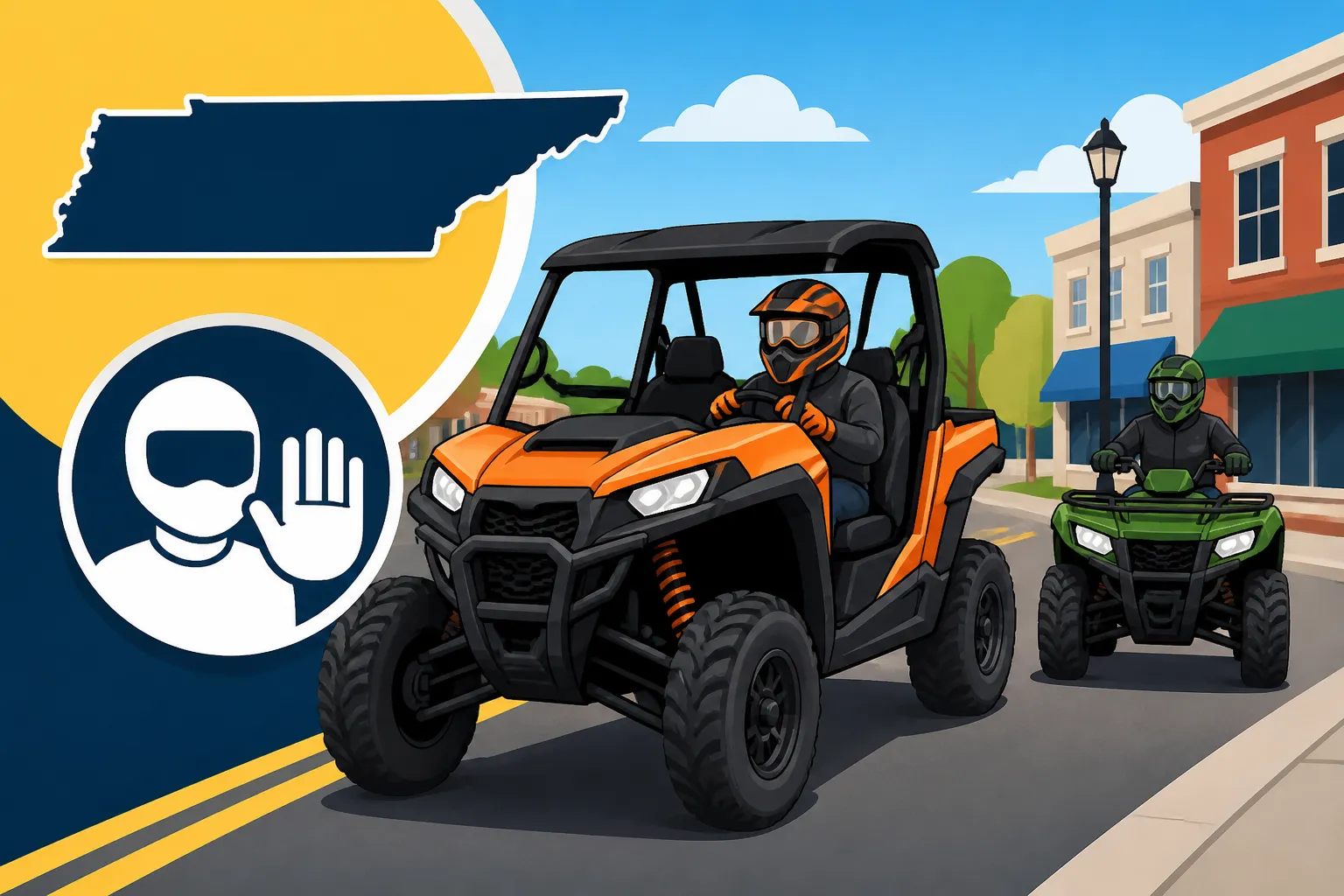
It’s a truly frustrating experience, isn't it? You’ve got your side-by-side or ATV, gassed up and ready to roll, but the moment you hit town, you’re left wondering: can I even ride this on Main Street? The patchwork of rules across Tennessee counties and cities can make you feel like you need a law degree just to take your machine to the local ice cream shop. This guide is here to untangle the confusion, helping you understand Tennessee’s specific rules for riding a town street and how to navigate those local ordinances.
Understanding Tennessee's Evolving UTV Road Laws
For years, it felt like a Wild West situation for UTV and ATV riders in Tennessee. Every county and often every small town had its own take on whether these machines could legally use public roads, and the answer was often a resounding "no" or an incredibly convoluted "maybe, if…" It created a huge headache for riders who just wanted a clear path to get from their campsite to a local store or to connect trail systems without having to trailer their machine everywhere.
The Shift Towards a Statewide Standard
Thankfully, the legislative landscape has started to evolve, offering a bit more clarity, even if it still requires some homework on your part. Recent state legislation, such as [What House Bill 810 Changed in 2025], has moved Tennessee towards a more uniform approach, aiming to provide a clearer framework for off-highway vehicles (OHVs) on public roads. This was a huge win for riders tired of the county-by-county guesswork, but it doesn't mean every road is automatically open. The intent was to streamline things, giving local governments a foundation to work with rather than leaving them to create entirely separate rulebooks.
However, it’s important to understand that while the state sets the overarching framework, it often grants local municipalities, like cities and towns, the authority to designate which roads are permissible for OHV use. This means you still can't just assume every street is open. You'll need to be savvy about checking local rules because a street that’s perfectly legal for your side-by-side in one town might be a ticket magnet just a few miles down the road. The goal, ultimately, is a more consistent experience, reducing the stress of unknowingly breaking a local ordinance. It’s all part of the journey toward [One Statewide Standard Replacing County-by-County Rules] in the future.
Why Local Control Still Matters
Even with statewide efforts to standardize, local control remains a significant factor when it comes to riding your OHV on town streets. Cities and towns often have unique traffic patterns, population densities, and public safety concerns that influence their decisions regarding OHV access. What works in a small, rural community might not be feasible in a bustling city center. This is why the state often empowers local governments to decide on specific road designations, rather than making a blanket rule that may not suit every community.
For example, a town might designate certain less-traveled streets or those leading directly to trailheads as permissible for OHVs, while keeping high-traffic main arteries off-limits. They might also impose specific hours of operation or special equipment requirements beyond the state minimums. It's not about making things intentionally difficult; it’s about balancing the desires of riders with the safety and well-being of all residents and visitors. So, while you'll be dealing with a state framework, always remember that the final say on specific town streets often rests with the local city council or municipal government. This is why knowing [Tennessee Cities That Allow UTVs on Streets] is so critical.
What Makes a Town Street "Open" to OHVs?
So, how do you know if that quaint Main Street in a charming Tennessee town is open for your ride? It really boils down to whether the local government has taken specific action to allow it. It's rarely an implied permission; it's almost always an explicit designation.
The Designation Process: How Towns Open Roads
A Tennessee town doesn't just spontaneously become OHV-friendly. There's usually a formal process involved, often requiring a vote by the local governing body, like a city council. This means a town or city council has held discussions, considered public input, and then passed an ordinance specifically allowing OHVs on certain roads. This process can be quite involved, often balancing community desires with safety concerns. For a road to be legally open to OHVs, it must be explicitly designated, and this designation usually comes with specific conditions and rules.
This local designation is key. It's not enough for a state law to permit general road use; the town itself must activate that permission for its own streets. You might find a town that opens all of its unpaved county roads, or perhaps only a few select paved streets that serve as connectors to nearby trail systems. The exact wording and scope of these local ordinances can vary significantly, so it’s essential to look for the precise legal language rather than making assumptions. Understanding [How a Tennessee Town Opens Its Roads] is vital for any rider.
Road Designations and Restrictions
Once a town decides to open its streets, they don't necessarily open all of them. Many towns will publish a list of designated roads or restrict OHV use to specific areas. You might find that only roads posted "45 mph or less" are allowed, or perhaps only those within a designated "adventure tourism district." This is where local signage becomes your best friend. Look for official signs that explicitly state OHVs are permitted, or signs that indicate a speed limit of 45 mph or under, which is a common threshold.
Crucially, towns often prohibit OHVs on state highways (which often run through towns) or on busy arterial roads. Interstates are always off-limits. You might also encounter restrictions on operating hours, such as "daylight hours only," or specific times when OHVs are not permitted to help manage traffic flow during peak periods. For instance, [Riding Main Street in Huntsville] might be allowed, but perhaps only during certain hours or on specific days, while a state route running through Huntsville, like SR 63, might remain completely off-limits except for specific exceptions like [SR 63's Two Open Weekends a Year]. Always be on the lookout for official notices, signs, and published lists of permissible streets.
Essential Gear and Rules for Town Street Riding
Even if you find a town that welcomes your OHV on its streets, you can't just roll out in your trail gear and call it good. Riding on public roads, even designated town streets, comes with a specific set of equipment and operational requirements designed to ensure safety for everyone. Think of it like this: your OHV needs to be "street-ready," not just "trail-ready."
Required Equipment for Road Use
Tennessee law, and often local ordinances, dictate that any OHV operating on a public road must be equipped similarly to other motor vehicles. This is where your side-by-side or ATV might need some upgrades if it's primarily a trail machine. At a minimum, you'll generally need:
- Headlights: Functional headlights, typically required to be on during operation, especially during "daylight hours only" restrictions.
- Taillights and Brake Lights: Essential for visibility from the rear and signaling when you're slowing down or stopping.
- Turn Signals: Required for indicating turns, just like a car. Many trail machines don't come with these factory-installed, so this is a common aftermarket addition. Companies like SuperATV offer robust turn signal kits designed specifically for UTVs that meet road-legal requirements.
- Rearview Mirror(s): At least one rearview mirror, providing visibility to the rear. Some regulations might require two.
- Horn: A working horn for signaling other drivers or pedestrians.
- Windshield: While not always explicitly required by state law for all OHV types, many local ordinances or common sense suggest one for safety and protection from debris, especially in a town environment.
- Fenders/Mudguards: To prevent debris from being thrown by tires.
- Seatbelts: If your machine has seats and is designed for them, working seatbelts are usually mandatory.
- Spark Arrester: To prevent wildfires, particularly if you're transitioning from trail to road.
It's a good idea to ensure your OHV is equipped to handle the demands of road travel, not just off-road ruggedness. For example, [Tennessee Equipment Rules for Road Use] lays out the state-level requirements.
Operational Rules and Safety Guidelines
Beyond the equipment, there are crucial operational rules you must follow when riding your OHV on town streets. These are often similar to standard vehicle laws, but with specific considerations for OHVs:
- Driver's License: The operator must possess a valid driver's license. Typically, the [Tennessee Minimum Age to Ride a Road] is 16, and a valid license is required.
- Insurance: [Tennessee UTV Insurance Requirement] is a real thing. Your OHV must be covered by liability insurance, just like a car. Carry proof of insurance with you.
- Helmet Use: While state law may have nuanced rules regarding helmets off-road, when operating on a public road, Tennessee's helmet laws become more stringent. Typically, riders under 18 are required to wear a helmet, and some local ordinances might extend this requirement to all riders regardless of age. Always check local rules. For more details, see [Tennessee Helmet Law for ATV Riders].
- Speed Limits: You must adhere to posted speed limits. Often, OHVs are restricted to roads with a speed limit of 45 mph or less, and you cannot exceed that limit. [Tennessee UTV Speed Limit on Roads] often maxes out at 35 mph, even if the posted limit is 45 mph. Always prioritize caution and yield to other traffic.
- Daylight Hours Only: Many regulations restrict OHV operation on public roads to [Riding Only Between Sunrise and Sunset]. If you're out past sunset, you risk a citation. Make sure your headlights and taillights are functioning properly if you are caught out late, but it’s always best to be off the road after dark.
- Passengers: Adhere to the manufacturer's recommendations for passenger capacity. Overloading your OHV is not only unsafe but illegal. If your machine is a [Four Passengers on a Tennessee Class I], ensure everyone has a seat and is properly belted.
- Road Crossing: In areas where full road use isn't permitted, you might still be allowed to cross a road at a right angle. [Crossing a Two-Lane at Ninety Degrees in Tennessee] is a common allowance, but even then, safety and yielding to traffic are paramount.
Always remember, when you're on a town street, you're sharing the road with cars, trucks, and pedestrians. Your responsibility for safe operation is paramount. A deputy at a roadside stop will be checking for all these elements, and a violation could result in fines or even a Class C Misdemeanor.
Finding Local Ordinances and Staying Informed
The biggest challenge for OHV riders is often simply knowing what the rules are in a specific town. It takes a bit of proactive research, but it's far better than getting pulled over and facing a fine because you didn't know.
Your County Clerk and Local Government Websites
One of the most reliable places to start your research is your local county clerk's office, or the equivalent municipal office for the specific town you plan to visit. While the county clerk mainly handles [Titling at a Tennessee County Clerk] and sticker issues, they are often a great resource for pointing you in the right direction regarding local road ordinances. They might not have the ordinance text readily available, but they can usually tell you which department or website to consult.
More often than not, the actual ordinances will be found on the town or city's official government website. Look for sections related to municipal codes, ordinances, or public safety. Many towns will publish a list of [Restricted Road Lists Published in October 2025] or designated roads right on their site. Don't be shy about calling the local police department (non-emergency line, please!) or the city hall directly if you can't find the information online. They are there to help clarify local regulations and can provide definitive answers about where you can and cannot ride.
Local Rider Groups and Trail Associations
Another fantastic resource is the local riding community itself. Online forums, social media groups dedicated to Tennessee ATV and UTV riding, and local trail associations are often treasure troves of information. Experienced riders who frequent specific areas can provide firsthand knowledge about which towns are open, what the enforcement is like, and even practical tips for navigating local areas. They might be able to tell you, for example, that [Riding LaFollette's Designated Streets] is absolutely fine, but to be wary of crossing into another specific jurisdiction nearby.
However, always cross-reference anecdotal information with official sources. While rider groups are incredibly helpful, rules can change, and what was legal last year might have been updated. Always double-check with official town sources to ensure you have the most current information before heading out. This due diligence will save you a lot of potential headaches and ensure your town street riding is legal and enjoyable.
Conclusion
Navigating the rules for riding your ATV or UTV on Tennessee town streets doesn't have to be an impossible task. While it requires a bit more research and preparation than simply hitting a designated trail, the possibility of legally connecting to a local store or restaurant on your machine is a huge convenience and can greatly enhance your riding experience. Remember to prioritize safety, ensure your machine is properly equipped, carry the necessary documentation, and always, always know the local rules before you hit the pavement. With a little homework, you can confidently explore towns like Oneida, LaFollette, or Huntsville and enjoy what they have to offer, all from the seat of your favorite OHV.
Disclaimer
This article is for general informational purposes only and does not constitute professional advice. Laws, prices and regulations vary by location and change over time. Consult a qualified professional for guidance on your specific situation.