Why Farm Work Exempts a Tennessee Helmet
It's confusing enough trying to figure out all the rules for riding your ATV or UTV in Tennessee, let alone understanding why certain situations have completely different guidelines. Many folks are left scratching their heads, wondering why they need a helmet for a quick trip down the county road on their side-by-side but seem to be exempt when they're hauling hay on their farm machine. This guide aims to clear up that very specific point, diving deep into Tennessee's agricultural helmet exemption and helping you understand when and why this rule applies to your off-highway vehicle (OHV) operations on the farm.
Understanding Tennessee's General Helmet Law for OHVs
Let's start by looking at the bigger picture: Tennessee generally takes helmet safety pretty seriously, especially when it comes to riding ATVs and UTVs. The state wants to protect riders, and a helmet is one of the most basic, yet effective, pieces of safety gear you can wear. This isn't just about protecting yourself from a nasty fall; it's about minimizing the risk of severe head injuries that can have life-altering consequences.
When Helmets are Typically Required on Tennessee Roads
Most of the time, if you're operating an OHV on a public road in Tennessee, even if it's a designated county road where UTVs are permitted, you're expected to wear a helmet. This applies to both the operator and any passengers. The rationale here is simple: public roads introduce you to higher speeds, other vehicles, and unpredictable traffic situations that aren't present on private trails. The risk of a collision or an accident that sends you flying is significantly higher, and the state's laws reflect that heightened danger. It’s important to remember that these aren't just suggestions; they're codified into law, and violating them can lead to fines. You might be just going a short distance, but the law doesn't care about your commute length when it comes to safety.
Many riders, especially those new to Tennessee, get caught off guard by these requirements. They might be used to riding without helmets in other states or on private land, only to find themselves facing a citation from a local deputy for not conforming to Tennessee's specific rules for public road use. This is why knowing the specifics, like [Tennessee Helmet Law for ATV Riders] and [Tennessee Helmet Law for Passengers], is absolutely crucial before you even think about putting a tire on a paved surface.
Tennessee Helmet Law Off-Road and for Younger Riders
When you're strictly off-road—on a private trail system like Windrock or Brimstone, or even just your own property—the helmet laws can shift a bit, especially for adults. However, for younger riders, Tennessee often maintains a stricter stance regardless of where they are riding. Generally, anyone under the age of 18 operating or riding as a passenger on an OHV, even off-road, is still required to wear a helmet. This is a common safety measure aimed at protecting minors who might have less experience, less developed judgment, and are more vulnerable to severe injury.
For adults riding strictly on private property or designated off-road trails, the requirements can sometimes be more flexible, depending on the specific park rules or the landowner's stipulations. However, advocating for helmet use in all situations, regardless of the law, is always the safest bet. After all, a rock garden on a difficult trail can be just as unforgiving as a paved road. It’s a common misconception that "off-road means no rules," but even when the state law might relax slightly for adults on private land, common sense and personal safety should always lead the way. [Tennessee Helmet Law Off-Road] explains this more in-depth.
The Specifics of Tennessee's Agricultural Exemption for Helmets
Now, let's get to the heart of the matter: the special carve-out for farm work. Tennessee law recognizes that OHVs, particularly UTVs and larger ATVs, are invaluable tools for agricultural operations. Farmers use these machines for everything from checking fences and herding livestock to hauling feed and tools across their property. These aren't recreational rides; they're essential equipment, often used in environments where typical road safety rules don't quite fit.
What Qualifies as "Farm Work" Under the Exemption
The agricultural exemption specifically states that a helmet is not required when an OHV is being used for agricultural purposes on a farm. But what exactly does "agricultural purposes" mean in the eyes of the law? Generally, this refers to activities directly related to the cultivation of land, raising livestock, and producing agricultural products. Think about hauling fencing supplies to a distant pasture, spraying crops in a field, moving equipment between barns, or checking on cattle. These are all tasks where an OHV might be critical.
It’s not about joyriding on the back forty; it’s about performing necessary duties that contribute to the operation of a farm. This means if you’re using your side-by-side to take the kids for a spin around the fields just for fun, that probably doesn't fall under "agricultural purposes" and the exemption wouldn't apply if you were to briefly hop onto a public road. The intent and nature of the activity are key. The law makes a distinction between a farmer going about their daily chores and someone using a machine primarily for recreation, even if it happens to be on farmland. The whole point of [Tennessee's Agricultural Exception] is to facilitate legitimate farming operations, not to create a loophole for recreational riders.
Limitations and Nuances of the Exemption
While the farm exemption is a huge relief for many farmers, it's not a blanket pass to ignore all safety rules. The exemption is primarily for on-farm use or when moving the machine between parts of a farm that might be separated by a public road, but only for the purpose of carrying out agricultural work. It's crucial to understand that if you take your farm-used OHV off the farm for a recreational trip to a local trail park, the exemption immediately ceases to apply. You would then be subject to the standard helmet laws for public road use and trail riding.
Another nuance is about the nature of the OHV itself. While many farm machines are clearly utility-focused, some recreational machines can be adapted for farm use. The exemption hinges on the use of the vehicle at that specific moment, not necessarily its design. If you've got a powerful utility UTV from SuperATV, kitted out with heavy-duty cargo beds and a winch, and you're using it to clear brush on your land, you're likely covered. However, if you load up that same machine and head to a local festival for a parade, you'd better have your helmets on if you're on public streets. Always err on the side of caution and consider what a law enforcement officer might interpret as "agricultural purpose" in context.
Why the Farm Exemption Exists: Practicality and Purpose
The existence of the agricultural helmet exemption isn't just a random act of legislative kindness; it’s rooted in very practical considerations unique to farming and the use of OHVs in that environment. Lawmakers recognize that farmers often operate in different circumstances and have different needs than recreational riders.
The Realities of Farm Life and OHV Use
Imagine a farmer who needs to hop on their ATV to quickly check a water line in a distant field, then head back to the barn to grab a tool, and perhaps make another short trip to inspect a gate. Throughout the day, these short trips are constant, often involving getting on and off the machine numerous times. Donning and doffing a helmet for every five-minute trip can be incredibly cumbersome, time-consuming, and frankly, impractical. When you're dealing with livestock, heavy machinery, or sensitive tasks, an obstructed view or hearing can be more of a hazard than a benefit. Helmets, while vital for high-speed, high-impact scenarios, can sometimes limit peripheral vision and muffle important sounds, which are critical for situational awareness on a bustling farm.
Moreover, many farm-based OHV tasks involve working in tight spaces, under low tree branches, or in environments where a helmet could snag or become a nuisance. The average speed of an OHV engaged in farm work is often much lower than what you'd encounter on a trail or road, reducing some of the impact risks. The legislature understood that mandating helmets in these specific, low-speed, practical work scenarios would create an undue burden on an industry vital to the state's economy, potentially hindering efficiency without a proportional gain in safety for these specific circumstances.
The Distinction Between Work and Recreation
This exemption really highlights the philosophical difference the state draws between using an OHV as a work tool versus using it as a recreational vehicle. When a farmer is driving their UTV across a muddy field to retrieve a bogged-down tractor, it's a necessary part of their livelihood, often under pressure and in conditions far removed from a leisure ride. The vehicle is an extension of their farm equipment, much like a tractor or a combine. Expecting them to conform to the same personal safety gear requirements as someone tearing up a trail at a park might seem illogical given the context.
The law isn't saying farm safety isn't important; rather, it's acknowledging that safety protocols for farm work might need to be tailored to the specific environment and tasks. For example, while a helmet might not be required, a farmer would still be expected to operate their machine responsibly, avoid excessive speeds, and ensure the vehicle is in good working order. It's a pragmatic approach to legislation, recognizing the unique operational demands of agriculture.
Navigating Road Use: When the Farm Exemption Applies (and When it Doesn't)
The trickiest part about the agricultural exemption often comes into play when a farmer needs to use a public road to get from one part of their farm to another. This is where the lines can feel a bit blurry, and understanding the law is paramount to avoid issues.
Using Public Roads for Farm-Related Travel
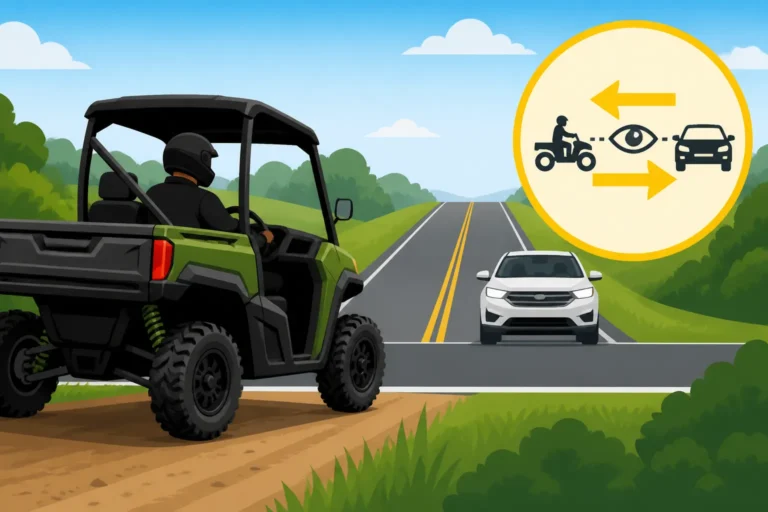
Tennessee law makes provisions for farmers to use OHVs on public roads for agricultural purposes. This means if your farm is bisected by a county road, and you need to move your UTV (perhaps carrying tools or feed) from one parcel of land to another, you generally can do so without a helmet, provided you are actively engaged in agricultural work. This isn't an invitation to drive your side-by-side into town for groceries, but rather a practical allowance for the fragmented nature of many Tennessee farms.
However, even when using a public road under the farm exemption, you're not exempt from all rules. You would still need to comply with certain other road-use regulations. For instance, your machine should typically be equipped with basic safety gear like headlights, taillights, and brake lights, and you should adhere to traffic laws like stopping at stop signs and yielding the right of way. While the helmet may be waived, responsible operation and basic vehicle safety remain essential. This is where articles like [Tennessee Rules for Agricultural Road Use] become incredibly valuable, offering specific guidance on what is and isn't allowed.
When the Exemption Does Not Apply on Public Roads
It’s absolutely critical to understand that the moment your use of the OHV shifts from agricultural work to anything else, the helmet exemption typically vanishes. If you finish your farm chores and decide to take your ATV for a quick recreational spin on a nearby county road, you are then subject to the general helmet laws. This is a distinction that often gets overlooked and can lead to unwanted interactions with law enforcement. The intent behind your trip is what the law will scrutinize.
Consider a scenario: you're moving your Polaris Ranger, fully loaded with tools, across a county road from your main barn to your hayfield. No helmet needed under the exemption. But if you then decide to take a detour to visit a neighbor purely for social reasons, or to pick up non-farm-related supplies from a store down the road, your activity is no longer "agricultural," and a helmet would likely be required. This is why knowing [Tennessee Rules for Riding a County Road] and [Tennessee Rules for Riding a State Highway] in general is important, even for farmers. The flexibility offered by the exemption is specific to the purpose of the ride.
Beyond the Helmet: Other Considerations for Farm-Used OHVs in Tennessee
While the helmet exemption is a big deal, it's just one piece of the puzzle when it comes to operating OHVs for farm work in Tennessee. There are other regulations and best practices that farmers should be aware of to ensure safe and legal operation.
Licensing, Insurance, and Equipment for Farm Machines
Even with the agricultural helmet exemption, you still need to consider who is driving the machine. While many farm tasks take place on private property where licensing rules are different, if you're operating on a public road, even for farm use, the operator generally needs a valid driver's license. This is a common requirement for operating any motor vehicle on a public roadway, regardless of its specific classification. So, a teenager operating a UTV on the farm might be fine on private land, but if they cross a public road for farm work, they should ideally possess a license. You can find more details on [Tennessee Driver's License Rules for UTVs].
Insurance is another key consideration. While personal liability insurance might cover accidents on your private property, if you're using your OHV on public roads, even under the farm exemption, you might need specific coverage. Many standard auto insurance policies won't automatically cover OHVs, so it's wise to check with your provider to ensure you have adequate protection. [Tennessee UTV Insurance Requirement] is a good place to start. Furthermore, farm-used OHVs on public roads should also meet basic equipment standards, such as working lights, brakes, and mirrors, for visibility and safety, especially if you're considering enhancing your machine with accessories from companies like SuperATV that provide everything from upgraded lighting to heavy-duty bumpers, ensuring your farm machine is as safe and capable as possible.
General Safety Practices for Farm OHV Use
Regardless of exemptions, common sense and safety should always be paramount. The farm environment itself can be dangerous, with uneven terrain, hidden obstacles, and the presence of other heavy machinery. Even if you're not required to wear a helmet, consider factors like speed, loading capacity, and passenger limits. Overloading a UTV with feed or tools, or allowing too many passengers, can compromise stability and significantly increase the risk of an accident. Regular maintenance of your OHV is also crucial; ensuring tires are properly inflated, brakes are in good working order, and fluids are at correct levels can prevent breakdowns and accidents.
It’s also wise to remember that while the state allows the helmet exemption for farm work, there are no laws preventing you from wearing one if you feel it's safer. Many farmers, especially when performing tasks that involve higher speeds or greater risk, still opt for a helmet. The exemption provides flexibility, but personal safety is ultimately a choice. Think about the specific task, the terrain, and your comfort level. A durable machine, perhaps with reinforced components from SuperATV designed for tough conditions, is a great start, but coupling that with careful operation and sound judgment is always the best approach to staying safe on the farm.
| Activity Type | Helmet Required (Generally) | Agricultural Exemption Applies |
|---|---|---|
| Recreational riding on public road | Yes | No |
| Recreational riding off-road | Yes (under 18) / No (adults) | No |
| Farm work on private farm land | No | Yes |
| Farm work crossing public road | No | Yes (if actively farming) |
| Hauling non-farm items on public road | Yes | No |
| Moving OHV to recreational trail park | Yes | No |
Disclaimer
This article is for general informational purposes only and does not constitute professional advice. Laws, prices and regulations vary by location and change over time. Consult a qualified professional for guidance on your specific situation.