Why Your Class Decides Your Road Rights
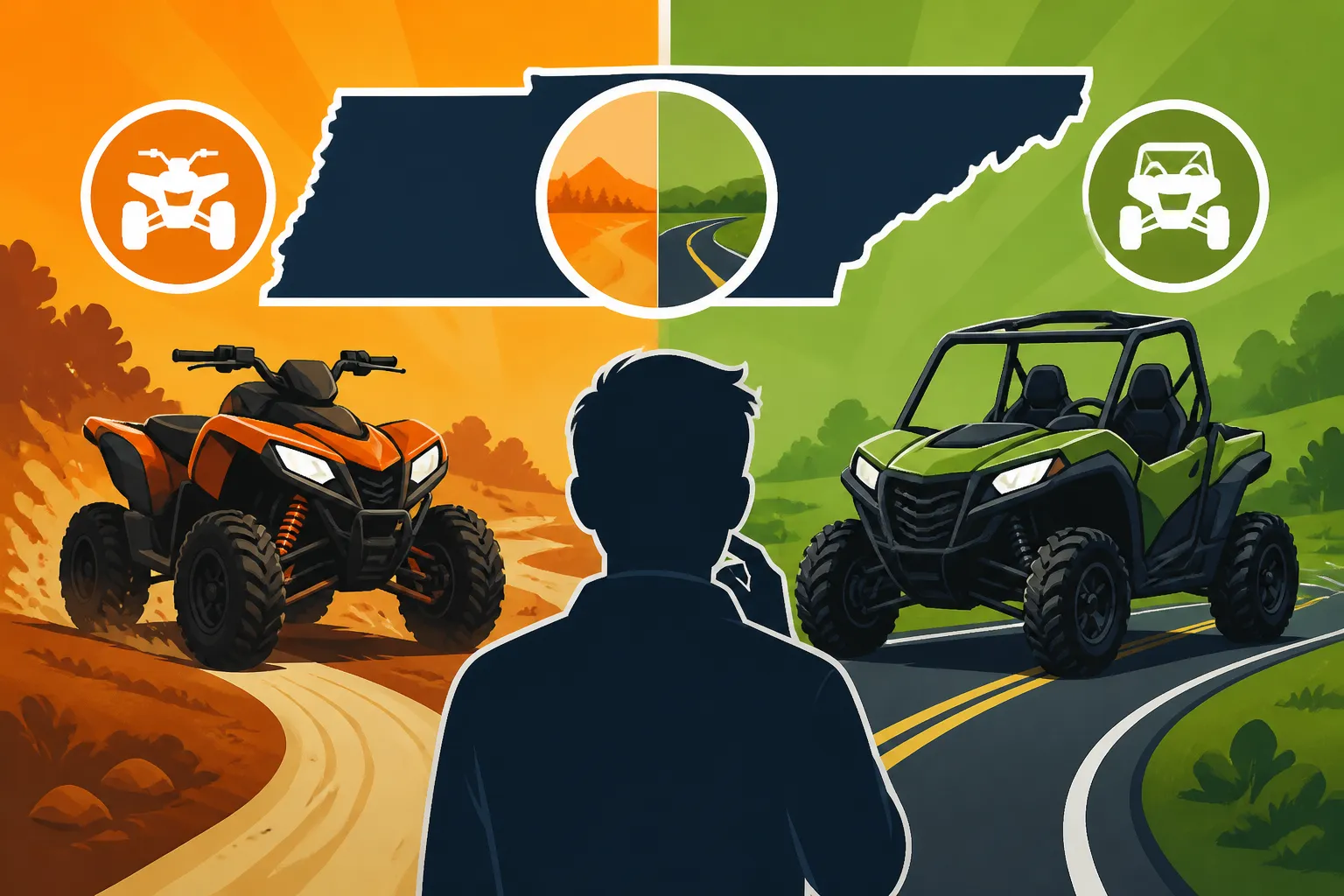
Trying to figure out where you can legally ride your ATV or UTV on Tennessee roads can feel like navigating a legal minefield, with conflicting information and frustrating dead ends. It's not as simple as having a cool machine and wanting to take it to the store. This guide will cut through the confusion and explain precisely why your machine's official classification in Tennessee dictates whether it can even touch a paved road, helping you understand the rules and ride legally.
The Foundation: Understanding Tennessee's Vehicle Categories
Before we even talk about road rights, we have to understand the language Tennessee uses to classify these machines. It’s not just "ATV" or "UTV" in the eyes of the law; there are distinct categories that carry very different implications for where you can ride. This is often the first hurdle riders face, assuming all off-road vehicles are treated the same, when in reality, the state has carefully carved out specific definitions.
Defining the Off-Highway Vehicle (OHV) Classes
Tennessee primarily defines off-highway vehicles, or OHVs, into two distinct classes based on their size and intended use. These definitions are crucial because they immediately set the stage for whether a machine is considered suitable for any public road, let alone a state highway. If your machine falls into one of these categories, its road access is severely restricted by default.
First, we have [Tennessee's Class I OHV Definition]. This typically covers your standard ATVs, quads, and many side-by-sides. To be a Class I OHV, a machine must weigh 2,500 pounds or less, be 80 inches wide or less, and be designed to carry four passengers or fewer. Think of most of the machines you see out on the trails at Windrock or Brimstone. These are purpose-built for off-road terrain, with suspensions, tires, and gearing meant for dirt, mud, and rocks, not asphalt. They often lack many of the safety and equipment features required for on-road vehicles, like turn signals, DOT-approved tires, or specific lighting configurations. Their very design is a testament to their off-highway intent.
Then there's [Tennessee's Class II OHV Definition]. This category is for the bigger, heavier, or wider off-road machines. If your machine exceeds the 2,500-pound weight limit, or it's wider than 80 inches, or it's designed to carry more than four passengers, it generally falls into Class II. This might include larger utility vehicles, some custom-built rock crawlers, or [Sand Rails Under Tennessee Class II]. While still intended for off-highway use, their increased size and weight sometimes make them feel even less suited for mixing with traditional road traffic. The key takeaway for both Class I and Class II is that they are OHVs – Off-Highway Vehicles – which means their primary purpose, and legal designation, is for use off the highway.
Stepping Onto the Road: Low Speed and Medium Speed Vehicles
Now, here's where the distinction becomes incredibly important for road access: Tennessee also defines categories for vehicles intended for limited road use. These are not OHVs in the traditional sense, even if they share some characteristics or a similar appearance. They are designed and equipped with specific features that allow them to operate on public roads under certain conditions.
The first of these is the Low Speed Vehicle (LSV), which you can read more about in [Tennessee's Low Speed Vehicle Category]. These are typically small, four-wheeled electric vehicles, often resembling golf carts but built to higher safety standards. They usually have a top speed of 20 to 25 miles per hour and must meet federal safety standards, including features like headlamps, tail lamps, stop lamps, turn signals, mirrors, seatbelts, and a vehicle identification number (VIN). They are designed for short trips, often within planned communities or on designated local roads. You won't be taking an LSV on an interstate, ever, but they have a clear, albeit limited, place on public roadways.
Next up are Medium Speed Vehicles (MSVs), which [Tennessee's Medium Speed Vehicle Category] covers in more detail. These machines are a step up from LSVs, capable of speeds generally between 30 and 35 miles per hour. Like LSVs, they must be purpose-built and equipped with a full suite of safety features to operate on roads. They're often seen in similar environments to LSVs but can cover slightly more ground. The critical difference between LSVs/MSVs and OHVs is their design intent and required equipment. An LSV or MSV is manufactured with road safety and compliance in mind from the ground up, whereas an ATV or UTV is built for rugged terrain, with road use being, at best, a secondary and highly restricted consideration. This fundamental difference is what truly shapes your road rights.
Why Classification Matters for Road Access
Understanding these vehicle classifications isn't just a matter of semantics; it's the absolute core of determining where you can legally ride in Tennessee. The state has intentionally created these distinct categories to manage safety, traffic flow, and environmental impact. Ignoring these distinctions can lead to significant fines and even serious accidents. Many riders get frustrated when they realize their expensive UTV, which feels perfectly safe, can't be legally driven to a nearby store, and this frustration often stems from not understanding the legal framework.
The Limited Road Rights of OHVs
This is where the rubber meets the road, or more accurately, where the knobby tire doesn't meet the road in most cases. For both Class I and Class II OHVs, general road use is severely restricted. Your typical ATV or side-by-side is not considered "street legal" for widespread use on Tennessee’s public roads. This means you can't just hop on your quad and ride it down Main Street to grab some groceries, or take your side-by-side on a state highway to connect trails. The laws are very clear on this.
The primary reason for these restrictions is safety. OHVs are not designed for the speeds, traffic, or safety requirements of public roads. Their suspension, braking, tire type, and lack of certain safety features (like turn signals, windshields, and proper headlights for road use) make them ill-suited for coexisting with cars and trucks. For instance, [Tennessee Road Use Rules for ATVs] make it clear that while there are exceptions, they are very specific and limited. You might be able to cross a road at a ninety-degree angle to get to another trail or private property, or use it for certain agricultural purposes on private land. But general recreational travel on public roads? That's typically a no-go for OHVs. This often catches out-of-state riders or new owners by surprise, leading to citations and disappointment, especially if they've ridden legally on roads in other states.
Equipment and Speed: The LSV/MSV Advantage
Now, contrast that with Low Speed Vehicles (LSVs) and Medium Speed Vehicles (MSVs). These machines are built with road legality in mind, and their design reflects it. They come equipped with all the necessary safety features to make them visible and controllable in road traffic. This includes DOT-approved tires, proper lighting (headlights, tail lights, brake lights, turn signals), mirrors, seatbelts, and often a windshield. Without these features, they wouldn't qualify for their respective categories, and thus, wouldn't be allowed on the road.
The permissible speed limits are also a critical factor. LSVs are capped at 20-25 mph, making them suitable for low-speed environments. MSVs can typically go up to [35 mph on a Tennessee Road], allowing them on a wider range of local roads, but still generally excluding higher-speed state highways. This integration of equipment standards and speed limitations is what grants them their limited road-use privileges. They are designed to be predictable and visible within the flow of low-speed traffic, which is a stark contrast to the design and operational characteristics of an OHV. So, while an OHV is often more powerful and rugged, an LSV or MSV is the one engineered to safely and legally operate on designated public roads.
Navigating the Nuances: Exceptions and Local Ordinances
Just when you think you've got it all figured out, Tennessee law throws in a few curveballs – specific exceptions where even OHVs can touch the pavement. These aren't blanket permissions, though. They're narrowly defined circumstances, often designed to support local economies, specific industries, or practical necessities. Understanding these nuances is key to avoiding legal trouble and making the most of your machine in the volunteer state.
Adventure Tourism Districts and Local Opt-Ins
One of the most significant developments for OHV enthusiasts in recent years has been the creation of Adventure Tourism Districts in Tennessee. These districts, primarily found in the eastern part of the state, recognize the economic impact of off-road tourism and have paved the way for limited road access for OHVs. [Tennessee's Adventure Tourism Districts] allow certain counties, through local ordinances, to designate specific county roads where OHVs can be legally operated.
Counties like [Scott, Anderson and Campbell Counties] have embraced this, allowing riders to connect trails, access fuel, food, and lodging, or simply enjoy scenic routes on designated roads. However, this isn't a free-for-all. Roads must be explicitly designated, often with speed limits of 45 mph or less, and typically only during daylight hours. You'll often find signs indicating which roads are open to OHVs. For example, [Unincorporated Scott County's Open Roads] would be a specific list of these designated paths. It’s vital to check with the specific county or municipality you plan to ride in, as the rules can vary greatly. Many local governments have strict criteria for what roads can be opened, sometimes requiring a [How a Two-Thirds Council Vote Opens Unpaved Roads] for less-traveled routes. Don't assume that if one road is open, all roads are. Always verify. For those looking to advocate for more open roads or formalize a local riding group, resources like LawDepot might offer templates for drafting letters or proposals to local councils, ensuring your message is clear and professional.
Agricultural Use and Short Crossings
Beyond the adventure districts, there are a couple of practical, albeit limited, exceptions for OHV road use that many rural residents rely on. The most common is for agricultural purposes. If you're using your ATV or UTV for bona fide farm work, such as moving equipment between fields, checking fences, or transporting feed, you generally have more leeway to operate it on short stretches of public road that abut or cross your property. This is a common-sense exception that acknowledges the utility of these machines in farming communities. However, this is strictly for agricultural use and not for recreational riding. A quick trip to the gas station isn't usually considered "agricultural use" unless it's directly tied to immediate farm operations.
Another allowance is for crossing a road. If your trail system or private property is bisected by a public road, you can typically [Crossing a Two-Lane at Ninety Degrees in Tennessee]. The key here is the "ninety-degree angle" and "direct crossing" rule. You're not meant to ride along the road for any significant distance; you're just getting from one side to the other as quickly and safely as possible. This requires extreme caution, yielding to all traffic, and ensuring you have clear visibility in both directions. These exceptions are about utility and practicality, not about opening up public roads for widespread OHV recreation.
Practical Steps for Road-Legal Use and Staying Compliant
Given the complexities, knowing how to navigate Tennessee's road-use rules for your OHV or road-legal vehicle is paramount. The last thing any rider wants is a citation, or worse, an accident, because they misunderstood the law. Being prepared and informed can save you a lot of headache and expense, allowing you to focus on enjoying your ride.
Converting or Choosing the Right Machine
If your goal is to have a machine that can legally operate on Tennessee roads for more than just a quick crossing or specific agricultural task, you need to think carefully about the type of vehicle you acquire. Trying to "convert" a true Off-Highway Vehicle (Class I or Class II) into a street-legal machine that meets all LSV or MSV requirements is often an uphill, expensive, and ultimately impractical battle. OHVs simply aren't designed with the necessary safety features or federal motor vehicle standards in mind. Adding a horn, turn signals, and a windshield might seem like enough, but it often falls short of the rigorous structural, braking, and lighting requirements for on-road vehicles.
Instead, if significant road use is your objective, your best bet is to purchase a machine that is manufactured as a Low Speed Vehicle (LSV) or Medium Speed Vehicle (MSV) from the outset. These vehicles are designed, tested, and certified to meet the federal and state safety standards for road use, making them genuinely road-legal within their respective speed and road class limitations. While they might not be as robust for extreme off-roading, they provide the peace of mind of legal road access. This means doing your research before you buy, ensuring the vehicle you choose has the proper designation and equipment for your intended use.
Understanding Local Ordinances and State Law
State law provides the framework, but local ordinances fill in many of the crucial details, especially concerning OHV access in Adventure Tourism Districts. It's not enough to know the state law; you absolutely must familiarize yourself with the specific rules of any county, city, or town where you plan to ride on public roads. These local rules can define which roads are open, specific hours of operation (e.g., [Riding Only Between Sunrise and Sunset]), age restrictions, and any additional equipment requirements.
Many counties will publish maps or lists of designated roads, sometimes even online. Before you trailer up for a weekend trip to a new area, take the time to call the local county clerk's office, sheriff's department, or consult their official website. For instance, if you're planning to ride [LaFollette's Designated Roads Since 2017], you'll need to check the specific ordinances for that area. Ignoring these local rules can lead to a [Tennessee Fines for Illegal UTV Road Use] or a Class C misdemeanor. While understanding official documents can be daunting, legal template services like LawDepot can be useful resources if you ever need to create formal requests for information from local government or draft agreements for private land access on your way to public roads. They help ensure your communications are clear and legally sound.
Essential Documentation and Preparation
No matter what type of machine you ride or where you plan to ride it, having your documentation in order is non-negotiable. For any machine legally permitted on Tennessee roads, you'll need:
- Driver's License: For LSVs and MSVs, the operator must possess a valid driver's license. For OHVs in adventure tourism districts, this is also often a requirement. [Tennessee Driver's License Rules for UTVs] clearly outline these expectations.
- Proof of Insurance: [Tennessee UTV Insurance Requirement] applies to any vehicle operating on public roads. You'll need to carry proof of liability insurance, just like with a car.
- Vehicle Title/Registration (if applicable): While OHVs don't have traditional registrations, an LSV or MSV will have a title and, in some cases, require tags. [What a Tennessee OHV Title Costs] and the titling process are important to understand for any machine. For OHVs, having your [What the TDR Sticker on Your Title Means] visible and your title handy to prove ownership is always a good idea.
- Permits (for adventure districts): If riding an OHV in an adventure tourism district, ensure you have any required permits or passes for that specific area, like those for Windrock or Brimstone. This isn't for road use, but essential for connecting trails.
Always perform a pre-ride inspection to ensure your lights, brakes, horn (if applicable), and tires are in good working order. If you’re riding an OHV on a designated road, make sure you are in compliance with any specific equipment rules, such as [Tennessee Equipment Rules for Road Use] or even [Tennessee Helmets for Operator and Passengers] if required by local ordinance. Having a resource on hand, like a printed copy of the local ordinance or a map of designated roads, can also be invaluable if you encounter law enforcement.
| Vehicle Type | Typical Road Use | Speed Limit | Required Equipment (General) | Primary Design Intent |
|---|---|---|---|---|
| Class I OHV | Highly Restricted: Crossings, Ag. Use, Designated AD* | N/A (off-road focused) | Headlights, Tail lights, Spark arrester (often minimal for road) | Off-Road Recreation |
| Class II OHV | Highly Restricted: Crossings, Ag. Use, Designated AD* | N/A (off-road focused) | Headlights, Tail lights, Spark arrester (often minimal for road) | Off-Road Utility/Rec. |
| Low Speed Vehicle | Limited Road Use: Local streets, private communities | 20-25 mph max | Headlights, Tail lights, Brake lights, Turn signals, Mirrors, Seatbelts, Windshield, VIN | On-Road Commuter |
| Medium Speed Vehicle | Limited Road Use: Local streets, roads < 45 mph | 30-35 mph max | Headlights, Tail lights, Brake lights, Turn signals, Mirrors, Seatbelts, Windshield, VIN, Horn | On-Road Commuter |
*AD = Adventure Tourism District designated roads, subject to local ordinance.
Disclaimer
This article is for general informational purposes only and does not constitute professional advice. Laws, prices and regulations vary by location and change over time. Consult a qualified professional for guidance on your specific situation.