Titling an Inherited Machine in Tennessee
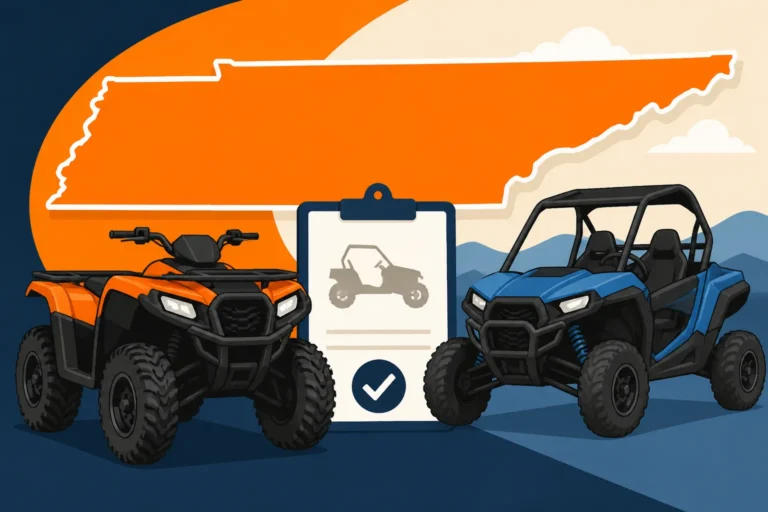
Losing someone you care about is incredibly difficult, and the last thing you want to deal with amidst grief is a mountain of paperwork. Yet, when a loved one passes, their personal property, including things like ATVs or UTVs, often falls into a legal gray area that needs sorting. This guide is here to walk you through the often-confusing process of titling an inherited off-highway vehicle (OHV) in Tennessee, helping you understand the steps, gather the right documents, and navigate the county clerk's office with a bit more confidence during a challenging time.
Understanding Tennessee's Approach to Inherited OHV Titles
When a family member or dear friend passes away, the thought of sorting through their assets can feel overwhelming. An ATV or UTV might seem like a simple piece of property, perhaps a beloved machine with sentimental value, but in the eyes of the law, it's a vehicle with a title that needs to be properly transferred. Ignoring this step can lead to significant headaches down the road, from legal complications to issues when you eventually decide to sell or even just ride the machine yourself.
Why Titling Matters Even for Inherited Machines
It's easy to assume that if an OHV belonged to your loved one, it automatically becomes yours. Unfortunately, the state of Tennessee has a very specific process for formalizing ownership, even in cases of inheritance. Without a properly transferred title, you don't legally own the machine. This isn't just a bureaucratic formality; it has real-world implications. Imagine trying to sell the ATV years from now, only to find you can't provide clear proof of ownership. A buyer would rightfully be hesitant, and you'd be stuck trying to untangle a mess of old paperwork while trying to recall details from a difficult period.
Furthermore, clear title ensures that if anything ever happens—say, the machine is stolen, or involved in an incident—you have the necessary documentation to prove it's yours. It protects your rights and ensures you're recognized as the rightful owner. It prevents future disputes among family members if there's any ambiguity about who inherited what. Think of the title as the OHV's birth certificate and deed rolled into one; without your name on it, its legal identity is incomplete in your hands.
The Role of the Estate and Probate in the Process
In Tennessee, when someone dies, their assets, including an ATV or UTV, become part of their "estate." How this estate is handled dictates how the OHV's title will be transferred. If your loved one had a will, it typically names an executor responsible for carrying out their wishes, including distributing property. If there was no will, the state's laws of intestacy kick in, and a court will usually appoint an administrator to manage the estate. This process often involves "probate" court, where a judge oversees the validation of the will (if one exists) and the orderly distribution of assets.
The executor or administrator will obtain official court documents, like Letters Testamentary (when there's a will) or Letters of Administration (when there isn't). These documents are incredibly important because they legally authorize that individual to act on behalf of the deceased's estate. Without these specific papers, the county clerk's office won't be able to process the title transfer, as they need official proof that you have the legal right to claim the OHV. It's the court's way of ensuring everything is handled fairly and legally. For smaller estates, Tennessee does offer a simplified process called a "Small Estate Affidavit," which can sometimes bypass full probate, making the process a bit quicker and less costly, but it still requires specific documentation.
Essential Documents for Titling an Inherited OHV
Gathering the correct paperwork is often the most daunting part of titling an inherited OHV. It's not just one form; it's a collection of documents that tell the complete story of ownership from the deceased to you. Missing even one crucial piece can send you back to square one, causing frustrating delays.
The Deceased's Original Title and Proof of Death
First and foremost, you'll need the original Tennessee title for the ATV or UTV. This piece of paper is paramount because it proves the deceased was the last legal owner. Without it, you're starting from a more challenging position, which we'll discuss later. Go through your loved one's important papers, safe deposit boxes, or any place they kept official documents. The title should clearly identify the vehicle by its Vehicle Identification Number (VIN) and the owner's name.
Alongside the title, you'll need an official copy of the deceased's death certificate. This document, typically issued by the state's vital records office, serves as formal proof that the previous owner is no longer living. Most county clerks will require a certified copy, not just a photocopy, so ensure you have the correct version. This certificate validates the entire premise of an inherited transfer.
Documents from the Probate Court or Small Estate Affidavit
Depending on how your loved one's estate is being handled, you'll need specific court documents. If a will was probated, the executor will have "Letters Testamentary" issued by the probate court. These letters empower the executor to manage and distribute the estate's assets, including signing over the OHV title. If there was no will and an administrator was appointed, you'll need "Letters of Administration" which serve the same purpose. These are official court orders, typically embossed with a seal, that unequivocally state who has the legal authority to act on behalf of the estate.
For situations where the total value of the deceased's estate falls below a certain threshold (which can vary, so always check current Tennessee guidelines), you might be able to use a "Small Estate Affidavit." This legal document, signed under oath, essentially states that you are the rightful heir and that the estate qualifies for this simplified process, bypassing full probate. You can often find templates for these affidavits through legal resource platforms like LawDepot, which can guide you in creating a document that meets Tennessee's specific requirements. Just be sure to verify that the estate indeed qualifies for this route. Along with these, you'll need your own valid government-issued identification, such as a driver's license, to prove who you are when you present these documents at the county clerk's office.
Preparing Your Application and Required Forms
Once you have the original title (or a plan for a missing one), the death certificate, and the necessary probate or small estate documents, your next step is to prepare the actual application for a new title. The Tennessee Department of Revenue provides the standard application for title, often referred to as a Form RV-F1317001. This form will need to be filled out completely and accurately with your information as the new owner, details about the OHV, and information about the deceased owner. It's crucial to double-check all VINs and owner names against the original title to avoid any discrepancies.
Some county clerks might have additional specific forms for inherited vehicles or affidavits you need to complete locally. It's a smart move to call your county clerk's office beforehand to ask about their specific requirements for Titling an Inherited Machine in Tennessee and to confirm which forms you'll need. They can also tell you if you need to provide a bill of sale, even in an inheritance scenario, though typically this isn't required unless the machine is being sold out of the estate to someone other than a direct heir. Having everything filled out (but not signed until you're in front of the clerk, if required) before you go can save you a return trip.
Navigating the Titling Process at Your County Clerk's Office
After all the emotional weight and paperwork gathering, the actual transfer happens at a very practical place: your local county clerk's office. This is where all those documents you've carefully collected come together to officially change the ownership of the OHV.
Locating Your Local County Clerk and What to Expect
In Tennessee, OHV titles are processed at the county level. This means you'll need to visit the County Clerk's office in the county where you reside. You can't just go to any county; it should be your county of residence. A quick search online for "[Titling at a Tennessee County Clerk]" for your specific county will usually provide their address, hours of operation, and often a list of services.
When you arrive, expect a process similar to renewing your driver's license or registering a car. You'll likely take a number and wait for your turn. The staff at the counter are there to help, but they rely on you having all your ducks in a row. They will review all your documents, verify the VIN on the original title, check the death certificate, and confirm the validity of your probate documents or Small Estate Affidavit. It’s always a good idea to bring extra copies of everything, just in case, though they usually want to see the originals. Be prepared for questions and understand that they are simply following established procedures to ensure the legal transfer of the OHV.
Transferring Ownership and Paying Applicable Fees
Once the clerk verifies your documents, they will guide you through completing the title transfer. This usually involves signing the application for a new title. In many cases, if an executor or administrator is involved, they will have already signed the existing title over to the heir(s) using their authority derived from the Letters Testamentary or Letters of Administration. If you are using a Small Estate Affidavit, you will typically sign as the affiant and new owner.
There are several fees involved in this process. You'll pay a state title fee, which covers the cost of issuing the new title itself. In addition to that, the county clerk charges a separate [Tennessee County Clerk OHV Fee] for their services in processing the paperwork. If there was a lien on the OHV (meaning it was financed and still owed money), and that lien needs to be recorded or released, there might be a separate [Tennessee OHV Lien Fee]. Generally, inherited vehicles transferred directly to an heir are exempt from sales tax at the time of transfer because it's not considered a "sale." However, always clarify this with your county clerk, as rules can sometimes have nuances. The total [Tennessee OHV Title Cost] will be a combination of these various fees.
Understanding the Tennessee TDR Sticker
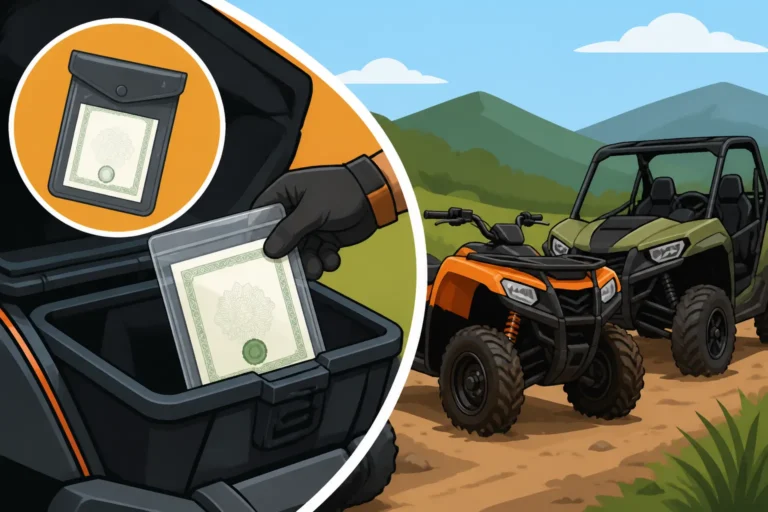
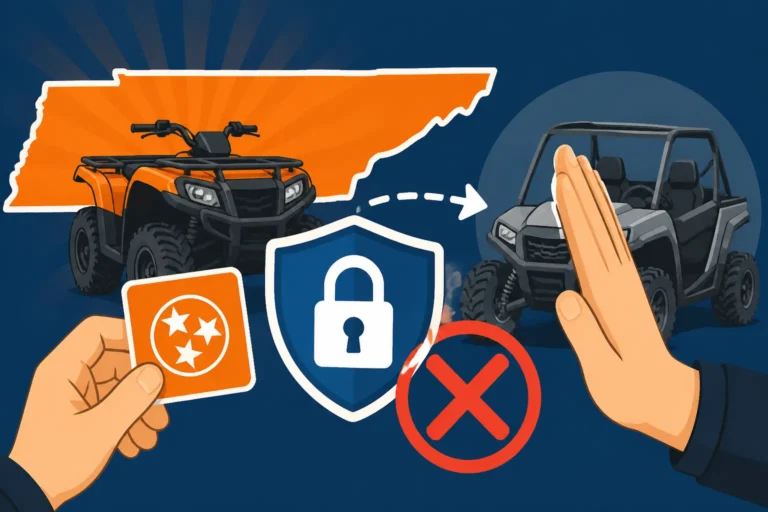
Once the title transfer is complete, you'll receive a new title in your name. Attached to this title, or issued as a separate sticker, will be the Tennessee Department of Revenue (TDR) sticker. This sticker is vital and something every OHV owner in Tennessee needs to understand. [Tennessee's TDR Sticker Explained] clarifies that this sticker acts as proof that your OHV has a valid title on file with the state. It's not a registration that grants road use; rather, it's a confirmation of ownership and titling.
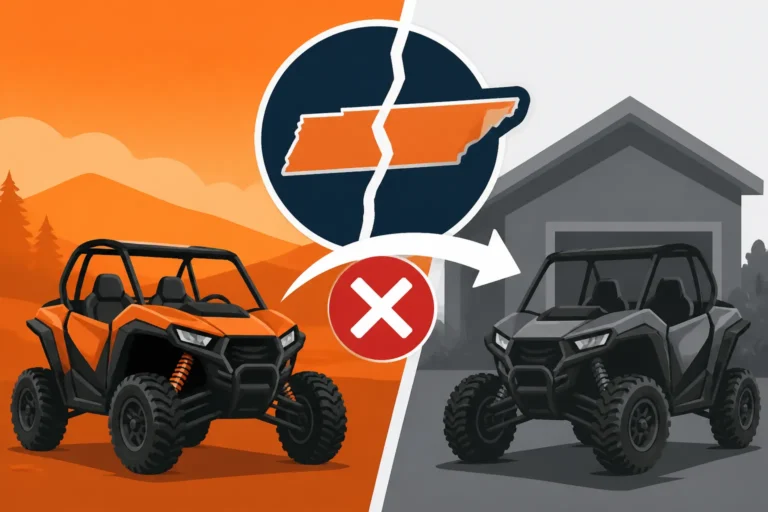
The [A Sticker That Proves a Tennessee Title Exists] is typically affixed to the OHV itself, in a visible location. However, it’s important to know that this sticker is specific to the owner and the title. What does this mean for you? It means that when you transfer the title of an inherited machine into your name, the old TDR sticker (if there was one) is considered void. [Why a Tennessee Sticker Dies With the Sale] explains this principle. The county clerk will issue you a brand new TDR sticker with your new title, reflecting that you are now the legally titled owner. This ensures that the state's records are always up-to-date with the current owner's information.
Special Considerations and Common Hurdles
While the basic steps are straightforward, real life often throws curveballs. Dealing with an inherited OHV can come with unique challenges, especially when key documents are missing or when multiple family members are involved. Being prepared for these hurdles can save you a lot of stress.
When the Original Title is Missing
It's an all-too-common scenario: you've inherited a beloved ATV, but for the life of you, you can't find the original paper title. Perhaps it was lost, damaged, or simply misplaced somewhere in the shuffle of life. Don't despair; there's a process for this, though it adds a few extra steps. If the original title is missing, you'll need to apply for a duplicate title. This can be tricky when the owner is deceased, as you can't simply fill out the form as if you were the original owner.
In this situation, the executor or administrator of the estate, armed with their Letters Testamentary or Letters of Administration, would typically be the one to apply for a duplicate title in the deceased's name first. Once that duplicate title is issued (which can take some time), they can then proceed with signing it over to you as the heir, following the standard inheritance process. Alternatively, some county clerks might accept an application for a new title from the heir, accompanied by a robust Small Estate Affidavit or court order clearly stating the OHV is yours, along with a special affidavit explaining why the original title is missing. It's crucial to check with your specific county clerk on their preferred procedure for [Replacing a Lost Tennessee OHV Title] in an inheritance context, as policies can vary slightly. They'll guide you on any additional forms or affidavits you might need to swear.
Handling Multiple Heirs or Complex Estates
Sometimes, an OHV isn't bequeathed to a single individual but to multiple heirs—perhaps siblings or several children. In such cases, the process becomes a bit more complex. If the intention is for all named heirs to co-own the machine, then all of their names would appear on the new Tennessee title. This creates what's known as joint ownership. [Tennessee OHV Title With Two Owners] explains that joint ownership means all parties have a legal stake in the machine. Any future decisions regarding the OHV, such as selling it, would typically require the consent and signatures of all owners listed on the title.
If the estate is particularly complex, involving disputes among heirs, or if there are specific conditions in the will that make the transfer less straightforward, seeking legal counsel is highly advisable. A probate attorney can help mediate disagreements and ensure that the court's orders are clear regarding the distribution of specific assets like an OHV. It's far better to resolve these issues upfront with legal guidance than to create a title that might become problematic later on.
Selling an Inherited OHV Immediately After Titling
You might find yourself in a position where you inherit an OHV that you don't intend to keep. Perhaps it's not your style of riding, or you simply need to liquidate assets as part of the estate. While it's tempting to try and sell it directly "from the estate," the cleanest and most straightforward approach is almost always to first title the OHV in your name (or the name of all heirs, if applicable). Once the title is legally in your possession, you can then proceed with selling it as you would any other vehicle you own.
This two-step process—first titling in your name, then selling—simplifies things immensely for the buyer. They will receive a title directly from you, rather than navigating the complexities of an estate sale. When you sell, you'll need to provide a [A Tennessee Bill of Sale for an OHV] to the buyer, clearly stating the sale price, date, and details of the OHV. At that point, the buyer will pay sales tax on their purchase price when they go to title it in their own name. This ensures a clean chain of ownership and avoids any confusion for the next owner, making the machine much easier to sell.
Legal Assistance and Resource Options
While this guide aims to provide a clear roadmap, the legal landscape surrounding estates and vehicle titling can be intricate. There are times when DIY solutions fall short, and professional help becomes invaluable. Knowing when and where to seek that help can make a world of difference.
When to Seek Legal Counsel
It's important to reiterate that this article is for general informational purposes. While we strive to be thorough, every estate and family situation is unique. You should seriously consider seeking legal counsel if:
- The estate is complex: If there are significant assets, multiple properties, or a high net worth, a probate attorney can ensure all legal requirements are met and liabilities are properly handled, protecting you from future legal challenges.
- There is no will (intestacy): Navigating Tennessee's intestacy laws without a will can be confusing. An attorney can help identify rightful heirs and guide the administrator through the proper legal steps for asset distribution.
- Disputes among heirs arise: If family members disagree on who should inherit the OHV, or other assets, a lawyer can act as a mediator or represent your interests in court if necessary.
- The original title is irrevocably lost or has issues: While county clerks have procedures, some situations might require a court order to establish ownership, especially if the VIN is unclear or there's a history of undocumented transfers.
- There are outstanding liens or debts: If the deceased had significant debts, or the OHV had a lien that needs to be addressed, an attorney can advise on the legal implications for the estate and the heir.
A qualified attorney specializing in probate or estate law can provide personalized advice based on the specifics of your situation, ensuring you navigate the process legally and smoothly.
Utilizing Online Resources for Forms and Guidance
For many, the initial steps of gathering forms and understanding basic legal documents can be managed with the help of online resources. The Tennessee Department of Revenue website is your primary source for official state forms, such as the application for title. Your specific county clerk's website is also invaluable, often providing local requirements, fee schedules, and sometimes even downloadable forms or checklists. These resources are designed to help you prepare before you visit the office in person.
Additionally, online legal document platforms can be incredibly useful. For instance, if your loved one's estate qualifies as a "small estate" in Tennessee, you'll need a Small Estate Affidavit. Platforms like LawDepot offer templates and guided processes to help you create legally sound documents, including various affidavits, bills of sale, or even basic wills. While these tools don't replace an attorney, they can empower you to create the necessary paperwork efficiently and accurately, reducing the intimidation factor. Just remember to always cross-reference any generated documents with current Tennessee state and county requirements to ensure compliance. Having these documents prepared correctly will make the process of [Tennessee OHV Title Paperwork] much smoother when you eventually visit the county clerk.
Key Documents for Inherited OHV Titling in Tennessee
| Scenario | Key Documents Required | Additional Considerations |
|---|---|---|
| With a Will | – Deceased's Original Title – Certified Death Certificate – Letters Testamentary (from Probate Court) – Completed Application for Tennessee Title – Valid Photo ID of Executor/Heir |
Executor signs the existing title over to the heir as per the will; ensure the will has been properly probated. |
| Without a Will | – Deceased's Original Title – Certified Death Certificate – Letters of Administration (from Probate Court) – Completed Application for Tennessee Title – Valid Photo ID of Administrator/Heir |
The court appoints an administrator; distribution follows Tennessee's intestacy laws; administrator signs over title. |
| Small Estate Affidavit | – Deceased's Original Title – Certified Death Certificate – Tennessee Small Estate Affidavit – Completed Application for Tennessee Title – Valid Photo ID of Affiant/Heir |
Must meet Tennessee's asset limits for small estates; typically used when no formal probate is opened. Platforms like LawDepot can assist in generating this affidavit. Confirm eligibility with the county clerk. |
| Lost Original Title | – All documents from applicable scenario above – Application for Duplicate Title (often filed by executor/administrator first in deceased's name) – Affidavit of Non-Receipt or Lost Title (may be required) |
This adds complexity and potential waiting periods. Consult your county clerk on the exact procedure for [Replacing a Lost Tennessee OHV Title] when the owner is deceased, as steps may vary. |
| Multiple Heirs | – All documents from applicable scenario above – Consent/Signatures from all heirs on title application (if co-owning) – Clear court order of distribution (if only one heir is to receive it) |
If co-owned, all names will appear on the new title. Decisions like selling will typically require all owners' consent. Attorney recommended for complex disputes. [Tennessee OHV Title With Two Owners] for joint ownership considerations. |
Disclaimer
This article is for general informational purposes only and does not constitute professional advice. Laws, prices and regulations vary by location and change over time. Consult a qualified professional for guidance on your specific situation.