2,500 Pounds on the Scale
When you're diving into the world of off-highway vehicles (OHVs) in Tennessee, one number that pops up with surprising regularity, and often causes a bit of head-scratching, is 2,500 pounds. This specific weight threshold isn't just a random figure; it's a critical dividing line that helps define how your ATV or UTV is categorized under state law. This guide will walk you through exactly what that 2,500-pound mark means for you as an OHV owner in Tennessee, clearing up the confusion and helping you understand its implications for titling, road use, and overall compliance.
Understanding Tennessee's OHV Classifications by Weight
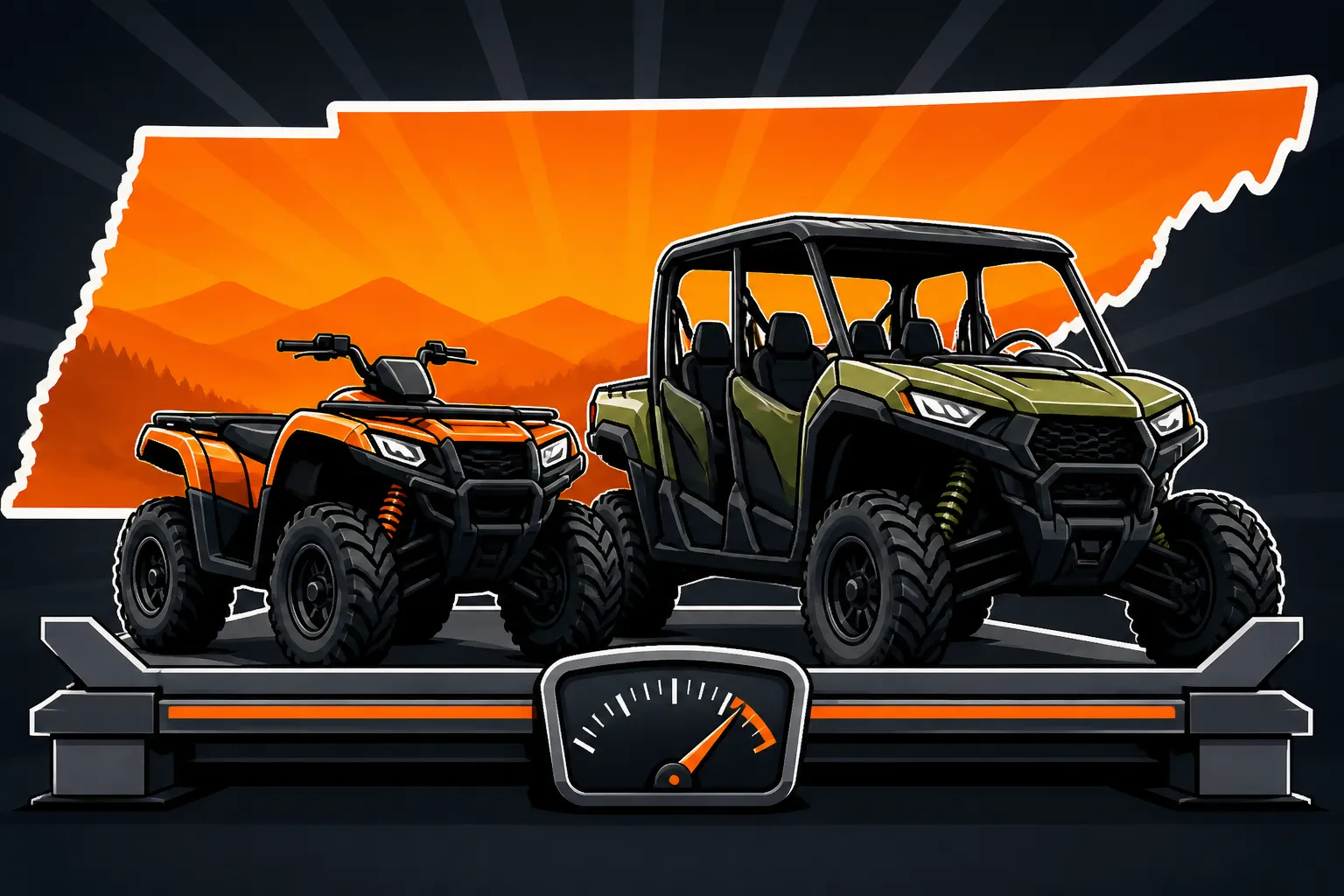
Tennessee, like many states, has a system for categorizing off-highway vehicles, and a big part of that system revolves around dimensions, especially weight. The number 2,500 pounds is central to distinguishing between what the state calls a Class I and a Class II OHV. It's not just semantics; these classifications carry different implications for how your machine is viewed legally, even if the general titling process remains the same.
The Significance of the 2,500-Pound Mark for Class I OHVs
For many riders, the 2,500-pound limit is the first hurdle in figuring out their machine's identity. In Tennessee, a Class I off-highway vehicle is defined as a motorized vehicle that is 80 inches or less in width, has a dry weight of 2,500 pounds or less, and is designed for travel over unimproved terrain. This typically encompasses the vast majority of traditional ATVs (all-terrain vehicles) and many smaller, two-to-four-seat side-by-sides or utility vehicles (UTVs).
Imagine you've just bought a brand-new quad or a compact side-by-side that you plan to take to Windrock Park. You check the manufacturer's specifications, and it lists a dry weight of 1,200 pounds. Right away, you know you're dealing with a Class I OHV. This classification is crucial because it sets the foundational understanding for all subsequent regulations. While the process for [Titling an ATV in Tennessee] or [Titling a Side-by-Side in Tennessee] might feel similar regardless of class, the underlying legal definition of your machine is tied to these numbers.
Knowing your machine falls into Class I means you're operating within a specific set of parameters that the state has established. This definition isn't just about weight; it also includes the width, another key dimension. The combination of these factors ensures that vehicles truly designed for off-road recreation, without being excessively large, fit neatly into this category. If you're ever creating a bill of sale for your machine, perhaps using a template from a service like LawDepot, understanding its official classification can be a useful detail to include for clarity and future reference.
Beyond 2,500 Pounds: What is a Class II OHV?
Now, let's consider what happens when your machine tips the scales past that 2,500-pound threshold. If your off-highway vehicle has a dry weight exceeding 2,500 pounds but is still 80 inches or less in width, it is categorized as a Class II OHV. This distinction is where many of the larger, more robust UTVs, often equipped with more seating capacity, heavier-duty components, or specialized features, find themselves. You might also find vehicles like certain sand rails or purpose-built rock crawlers falling into this category.
Think of a situation where you're looking at a formidable six-seat UTV, fully loaded with a winch, sound system, and heavy-duty tires. When you look up its dry weight, it comes in at 2,800 pounds. Immediately, you know this machine is a Class II OHV. While both Class I and Class II machines are generally subject to the same titling requirements in Tennessee – needing a title issued by the state's Department of Revenue and handled through your county clerk's office – their different classifications become more pronounced when considering other aspects of OHV operation, particularly when venturing onto public roads. We delve deeper into this specific classification in our guide, [Tennessee's Class II OHV Definition].
It's important to recognize that Tennessee's classification system also includes other categories beyond OHVs, such as low-speed vehicles and medium-speed vehicles, each with their own distinct weight, speed, and design criteria. Understanding [Tennessee's Four Vehicle Categories] provides an even broader context for how your OHV fits into the state's regulatory landscape.
Why Your OHV's Weight Class Matters for Titling and Road Use
While the actual process for getting your OHV titled at your local county clerk's office typically doesn't differ between a Class I and Class II machine, the underlying classification based on that 2,500-pound limit is silently at work. This classification isn't just a label; it carries practical weight (pun intended!) for a couple of key reasons, especially when it comes to hitting the trails or, more critically, considering any form of road use.
Titling a Class I vs. Class II OHV in Tennessee
When you go to [Titling at a Tennessee County Clerk] to process the paperwork for your newly acquired OHV, whether it's a nimble 600-pound ATV or a beastly 3,000-pound side-by-side, the fundamental steps are largely the same. You'll need your bill of sale, the manufacturer's certificate of origin (for new machines), or the previous owner's title (for used machines), and you'll pay the applicable fees and sales tax. The county clerk isn't going to pull out a scale and weigh your machine on the spot. Instead, they rely on the manufacturer's specifications as listed on the MCO or the previous title to determine the dry weight and, by extension, the classification.
However, the designation of Class I or Class II will be recorded in the state's vehicle database. This information, derived from the manufacturer's stated weight, is part of your OHV's permanent record. Even though the application for a title for your smaller Class I machine is functionally identical to that for a larger Class II UTV, the state officially categorizes it based on that critical 2,500-pound limit. This means that while you're gathering your [Tennessee OHV Title Paperwork], you can rest assured that the process itself won't change, but the official record of your machine's type will be precise. For instance, when obtaining a legally sound bill of sale or other ownership documents, services like LawDepot can provide customizable forms that help ensure all pertinent details, including the machine's class, are accurately captured.
Road Use Implications of Weight and Class
Here's where the 2,500-pound distinction truly starts to show its teeth: when you consider taking your OHV onto public roads. While Tennessee has made strides in allowing OHV use on certain public roads, especially in designated "Adventure Tourism Districts," the specific class of your machine can absolutely influence where and how you're permitted to ride.
For instance, state law often has provisions that differentiate between how Class I and Class II OHVs can be operated on county roads or within specific zones. A Class I OHV, being generally lighter and often perceived as more agile, might have slightly different allowances or restrictions compared to a bulkier Class II machine. This is a critical point that many riders overlook until they encounter a local ordinance or a law enforcement officer on a trail access road. For a deeper dive into this, check out [Why the Class Matters on a Tennessee County Road].
It’s not uncommon for local jurisdictions to publish lists of designated roads where OHV use is permitted. In these instances, the exact specifications of your machine, including its weight classification, become paramount. Trying to ride a Class II UTV on a road designated only for Class I machines could lead to a citation. Therefore, while titling itself might be straightforward for both, always be acutely aware of your machine's classification, especially if you plan to ever traverse paved surfaces.
Practical Steps for Identifying Your OHV's Class
So, you're now well aware that the 2,500-pound mark is a big deal in Tennessee. But how do you actually determine which side of that line your OHV falls on? It's often simpler than you might think, but it does require a bit of careful checking. Knowing your machine's exact classification will save you a lot of headaches down the road, whether you're just titling it or planning your next adventure.
Checking Your Machine's Specifications
The most reliable way to identify your OHV's class is by consulting its official specifications. When your machine was new, it came with a Manufacturer's Certificate of Origin (MCO). This document is a treasure trove of information, listing critical details like the vehicle identification number (VIN), make, model, year, and, crucially, the dry weight. The dry weight is the weight of the vehicle without any fluids (like fuel, oil, coolant) or accessories. It's the baseline weight provided by the manufacturer.
If you bought your machine used and don't have the MCO, don't fret! The previous title should also list the dry weight. If that's not available, a quick search online for your specific make and model, often on the manufacturer's official website or reputable enthusiast sites, will usually yield the official dry weight. For instance, if you look up your Polaris RZR Pro XP and see its dry weight is around 1,900 pounds, you know it's a Class I machine. If you're looking at a Can-Am Defender MAX XT HD10 and its dry weight is 2,700 pounds, you're squarely in Class II territory.
Now, what about accessories? This is a common point of confusion. Many riders add winches, heavier bumpers, roll cages, sound systems, or even bigger tires. While these additions certainly increase the actual weight of your machine, the official classification for titling purposes typically relies on the manufacturer's stated dry weight. This prevents constant reclassification as you customize your ride. However, if you've added significant modifications that could dramatically alter the vehicle's characteristics, especially for road use, it's always wise to be aware of the actual weight you're carrying, even if the titled class remains the same. When preparing legal documents, a service like LawDepot can assist in ensuring all necessary vehicle details are accurate.
Verifying Weight at a County Clerk or Inspection
In most cases, the county clerk will rely on the documentation you provide (MCO or previous title) for the weight information. They aren't equipped to weigh every OHV that comes through their doors. However, if there's ever a dispute, an anomaly in the paperwork, or if you're titling a custom-built machine where no official dry weight exists, they might require a verified weight.
This could involve taking your OHV to a certified scale, such as those found at truck stops, recycling centers, or even some agricultural co-ops. You'd get an official weigh slip to present as proof. This scenario is less common for standard, factory-produced ATVs and UTVs but can arise with unique builds or machines with unclear origins. For instance, if you're pursuing [Titling a Homebuilt Machine in Tennessee], you will almost certainly need to provide a certified weight. The key is to be prepared with accurate information, whether it's from manufacturer documents or an official weigh-in.
Common Questions About OHV Weight and Tennessee Law
The 2,500-pound weight distinction for OHVs in Tennessee can spark several follow-up questions, especially for those who are new to the state's regulations or are considering purchasing a new machine. It's an area that often generates confusion, so let's clear up some of the most frequently asked queries.
Does the 80-Inch Width Matter with Weight for Class I?
Absolutely! While the 2,500-pound dry weight is a critical factor, it's only one half of the equation for defining a Class I OHV in Tennessee. The other equally important dimension is width. A Class I OHV is specifically defined as a motorized vehicle that is 80 inches or less in width AND has a dry weight of 2,500 pounds or less.
This means that if you have a massive UTV that, despite being under 2,500 pounds, measures 85 inches wide (which is rare for a sub-2,500 lb machine, but theoretically possible), it wouldn't qualify as a Class I OHV. Conversely, a machine that's well under 80 inches wide but weighs 2,800 pounds is also not a Class I. Both conditions must be met. This dual requirement ensures that the vehicles categorized as Class I are generally compact and suitable for traditional ATV trails. We elaborate on this precise combination of dimensions in our article, [2,500 Pounds and 80 Inches], which provides a complete picture of the Class I definition.
What About Modified Machines and Weight?
This is a fantastic question that many experienced riders ponder. As mentioned earlier, for titling purposes, the state generally relies on the manufacturer's stated dry weight. This weight is what's recorded on the MCO and, subsequently, the title. So, if you add a heavy-duty bumper, a full skid plate package, larger tires, or a sound system, your machine's official "class" as recorded on the title isn't likely to change.
However, it's crucial to understand that while your titled classification might remain Class I, your actual operating weight has increased. This increased weight can have implications for how your machine performs, its braking distance, and even its impact on certain trails or surfaces, especially if you're navigating areas with weight restrictions. More importantly, if you ever had to weigh your vehicle for a specific purpose (like a competition, or in an unusual enforcement scenario for a custom build), the scale would reflect the actual weight.
For most day-to-day riding and titling, stick with the manufacturer's dry weight for classification. But always be mindful of the added mass from accessories, as it affects the dynamics of your ride. When dealing with the sale or transfer of a heavily modified machine, it's always good practice to clearly document any significant additions, perhaps through a detailed bill of sale prepared with the help of resources like LawDepot, to ensure transparency between buyer and seller.
Here's a quick reference table to help visualize the key differences based on weight:
| Feature | Class I OHV | Class II OHV |
|---|---|---|
| Dry Weight | 2,500 pounds or less | Exceeds 2,500 pounds |
| Width | 80 inches or less | 80 inches or less |
| Common Examples | ATVs, smaller 2-4 seat UTVs/side-by-sides | Larger 4-6 seat UTVs, heavy-duty side-by-sides |
| Titling Process | Same as Class II | Same as Class I |
| Road Use | Subject to specific local ordinances/state law | Subject to specific local ordinances/state law |
| Primary Definition | Lightweight, compact off-road vehicles | Heavier, robust off-road vehicles |
Understanding these distinctions, particularly the significance of the 2,500-pound threshold, is fundamental to being a responsible and compliant OHV owner in the Volunteer State. It empowers you to navigate titling, understand road use rules, and fully appreciate the capabilities and limitations of your machine under Tennessee law.
Disclaimer
This article is for general informational purposes only and does not constitute professional advice. Laws, prices and regulations vary by location and change over time. Consult a qualified professional for guidance on your specific situation.