Tennessee OHV Sales Tax at Titling
Bringing home a new-to-you ATV or UTV in Tennessee is a blast, but often, the excitement gives way to a bit of head-scratching when it's time to deal with the paperwork. One of the most common questions I hear is about sales tax: "Do I really have to pay it when I title my OHV, and how does that work?" It's a totally valid frustration, because the rules aren't always crystal clear. This guide will walk you through everything you need to know about Tennessee OHV sales tax specifically at the titling counter, so you can avoid surprises.
Understanding Sales Tax on Your OHV in Tennessee
When you purchase an off-highway vehicle (OHV) in Tennessee, whether it's a quad, a side-by-side, or another type of machine, sales tax is almost always part of the equation. Unlike traditional vehicles like cars and trucks, which are registered with plates and annual renewals, OHVs primarily go through a titling process that helps establish ownership. However, the state still wants its share of the sale, and that's where the sales tax comes into play during the titling process. Many folks assume that because OHVs aren't "registered" in the same way, they might escape sales tax, but that's just not the case.
This tax isn't just a random charge; it's the state's way of collecting revenue on the sale of personal property. For OHVs, this collection point is typically consolidated at the county clerk's office when you go in to apply for your title. This means you don't necessarily pay it at the point of sale, especially if you're buying from a private individual. Instead, it becomes a crucial part of the [Tennessee OHV Title Paperwork] you'll handle at the counter, alongside other fees. It’s a moment where a lot of riders realize their total cost just jumped a bit higher than they initially budgeted, and that's a common, understandable frustration.
It's important to distinguish the sales tax from other charges you'll encounter. When you head to the county clerk's office to get your OHV titled, you'll face a few different line items on your receipt. There's the state title fee, which is a set amount for the administrative process of issuing your official ownership document. Then, there's the county clerk's fee, which is what the local office charges for their services. On top of these, you might also have a lien filing fee if you've financed your purchase. The sales tax, however, is calculated separately based on the purchase price of your machine, and it's almost always the largest single charge you'll pay beyond the cost of the OHV itself. This is really [Tennessee Sales Tax at the Title Counter] in action, ensuring the state gets its due.
Why Sales Tax is Applied at Titling
The reason Tennessee collects sales tax at the point of titling for OHVs, rather than at a dealership, has a lot to do with the nature of these machines and how they're commonly bought and sold. While many new OHVs are purchased from licensed dealers who are set up to collect sales tax at the point of sale, a massive number of transactions happen privately, between individuals. If the state waited for private sellers to collect and remit sales tax, it would be a logistical nightmare, and a huge amount of revenue would simply go uncollected.
By linking the sales tax collection to the mandatory [Titling an OHV in Tennessee] process, the state ensures that virtually every OHV that changes hands within or into Tennessee has its sales tax paid. It creates a centralized, unavoidable point of collection. Without a title, you wouldn't technically own the machine in the eyes of the state, and trying to ride it on public lands or even many private parks without proper documentation can lead to problems, including potential fines. So, for the vast majority of riders, getting that title is essential, and paying the sales tax comes right along with it.
Differentiating Sales Tax from Other Fees
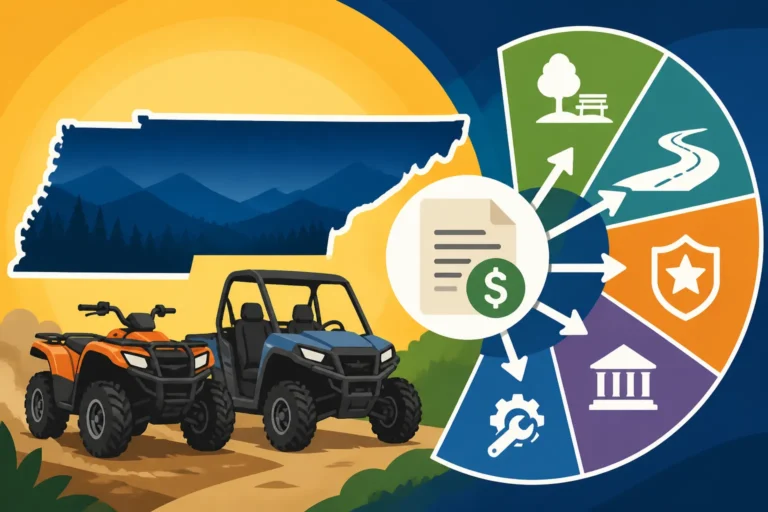
It's easy for all the numbers at the county clerk's office to blur into one big "government charge." However, understanding what each fee is for can help you budget better and feel more in control of the process. The sales tax is specifically a percentage of your OHV's purchase price, designed to fund state and local services generally. It’s not for the administrative cost of the title itself.
For instance, you'll pay a small, fixed [Tennessee County Clerk OHV Fee] for the work the clerk's office does, and then there's the state portion for the title. These are relatively minor. The sales tax, however, can be substantial, often hundreds or even thousands of dollars depending on the value of your machine. This is why it's so critical to calculate it correctly and be prepared for it. Think of it this way: the other fees cover the cost of the paperwork, but the sales tax covers the privilege of buying that machine in the first place, or at least, that's how the state sees it.
How Tennessee Sales Tax for OHVs is Calculated
Calculating the sales tax for your OHV isn't overly complicated, but it does require knowing a few key numbers: the state sales tax rate, any applicable local sales tax rates, and, most importantly, the actual purchase price or fair market value of your OHV. Getting this right is crucial to avoid underpaying (and potentially facing issues later) or overpaying.
Tennessee has a statewide sales tax rate, which applies to most purchases, including your OHV. However, what often catches people off guard is that counties and sometimes even cities can levy their own local sales taxes on top of the state rate. This means the total sales tax percentage you pay can vary slightly depending on where you reside and where you're titling the machine. It's a patchwork that can be confusing, but your local county clerk's office will have the definitive rate for your area. Always verify the combined rate for your specific county before you go in.
Base State and Local Sales Tax Rates
The state sales tax rate is a consistent percentage across Tennessee. However, counties can add a local option sales tax, typically up to a certain percentage limit. This local add-on is capped, meaning there's a maximum combined state and local sales tax rate you'll pay on most items. For OHVs, this combined rate applies to the first portion of the purchase price, and then a lower state-only rate often applies to the remaining balance above a certain threshold. It’s a tiered system that can be a bit tricky to follow.
For example, if your county has a 2.75% local sales tax, and the state rate is 7%, you'd pay a combined 9.75% on the first portion of your OHV's price. For any amount above the initial cap, you would only pay the lower state-only rate. This specific structure helps to ease the tax burden on very expensive purchases, but it still means a significant amount of tax for most OHVs. It's wise to call your local county clerk's office for the precise breakdown for your county and the current thresholds, as these figures can change.
Calculating Tax for New vs. Used OHVs
The method of calculating sales tax changes slightly depending on whether you're buying a brand-new OHV from a dealer or a used one from a private seller.
- New OHVs from a Dealer: If you're purchasing a brand-new machine from a licensed dealership, they will typically collect the sales tax directly from you at the time of sale. The tax is based on the agreed-upon purchase price of the OHV, minus any trade-in value (more on that later). The dealer then remits this tax to the state. When you go to [Titling an OHV in Tennessee] at the county clerk's office, you'll present documentation from the dealer proving the sales tax has already been paid, and you won't be charged again. This streamlines the process for you.
- Used OHVs from a Private Seller: This is where many people get tripped up. When you buy a used OHV from a private individual, that seller isn't set up to collect sales tax. Instead, you are responsible for paying the sales tax directly to the county clerk's office when you apply for your title. The tax is calculated on the agreed-upon purchase price as stated on your bill of sale. It's crucial to have a clear and accurate [A Tennessee Bill of Sale for an OHV] to present to the clerk. If the clerk suspects the stated purchase price is artificially low, they may refer to guides like NADA or Kelley Blue Book to assess the machine's fair market value and charge tax based on that, even if you paid less. This is why having all your ducks in a row for [Buying a Used OHV in Tennessee] is so important.
The Importance of a Bill of Sale for Private Sales
For private sales, your bill of sale isn't just a formality; it's the primary document the county clerk uses to determine the sales tax amount. It needs to clearly state the seller's name and address, your name and address, the date of sale, a description of the OHV (including VIN), and, most critically, the agreed-upon purchase price. Without a properly executed bill of sale, the clerk might have to use their discretion to determine the value, which could lead to you paying more tax than you expected.
Many people find it helpful to use a template for a bill of sale to ensure all necessary information is included. Resources like LawDepot offer easy-to-use templates that help you generate a comprehensive bill of sale, ensuring it meets the general requirements for such a document in Tennessee. Having a professional-looking, detailed bill of sale simplifies the process at the county clerk's office immensely, and it provides a clear record for both buyer and seller. A vague or handwritten note might raise red flags, so take the time to create a solid document.
Example Sales Tax Calculation
Let's look at a hypothetical example to illustrate the calculation. Imagine you bought a used side-by-side for $10,000. Let's say your county has a combined state and local sales tax rate of 9.25% on the first $1,600 of a sale, and then a state-only rate of 7% on the remaining amount above $1,600 (these figures are illustrative, check current rates with your clerk).
Here's how it would break down:
| Purchase Price Segment | Tax Rate | Tax Calculation | Tax Amount |
|---|---|---|---|
| First $1,600 | 9.25% (State + Local) | $1,600 * 0.0925 | $148.00 |
| Remaining $8,400 | 7% (State Only) | ($10,000 – $1,600) * 0.07 | $588.00 |
| Total Sales Tax | $736.00 |
As you can see, the sales tax alone is a significant portion of the [Tennessee OHV Title Cost]. This calculation can vary, so always confirm with your local county clerk for the exact rates and thresholds applicable when you title your machine. Being prepared for this amount means no nasty surprises when you're already trying to juggle your new machine and get it ready for the trails.
The Titling Process and Sales Tax Collection
The moment of truth for paying sales tax on your OHV typically happens when you visit your local county clerk's office. This is where you'll apply for your certificate of title, get your machine properly documented, and, yes, settle up on any outstanding sales tax. It's a relatively straightforward process once you have all your documents in order, but knowing what to expect can definitely smooth things over.
The county clerk acts as the agent for the Tennessee Department of Revenue (TDR) in collecting these taxes and fees. They have the forms, the calculators, and the authority to ensure that all requirements are met before your title is issued. This is why when you hear about [Titling at a Tennessee County Clerk], it's not just about proving ownership; it's about fulfilling financial obligations to the state. Don't worry, they handle hundreds of these transactions every week, so they're well-versed in the specifics.
Who Collects the Tax and When
As mentioned, if you bought your OHV from a licensed Tennessee dealer, they would have collected the sales tax at the time of purchase. You'll just need to bring proof of that payment (usually noted on your purchase agreement or sales invoice) to the county clerk's office. They'll verify it, and you'll be good to go.
However, for private sales or [Buying an Out-of-State Machine for Tennessee], you'll pay the sales tax directly to the county clerk. This payment is due at the same time you apply for your title. You can typically pay with cash, a check, or a debit/credit card, though some counties might have specific payment policies or charge a small processing fee for card transactions. It's smart to call ahead to your specific county clerk's office to confirm their accepted payment methods and any associated fees. This is part of [What a Tennessee County Clerk Charges on Top] of the actual sales tax and title fees.
Required Paperwork for Sales Tax Assessment
To ensure the sales tax is assessed correctly, you'll need to bring several key documents with you to the county clerk's office. The most critical is the bill of sale for private purchases, or the dealer invoice if bought from a licensed dealer. This document unequivocally states the purchase price.
Other essential documents include:
- Manufacturer's Statement of Origin (MSO) or previous title: This proves the OHV's origin and chain of ownership.
- Your photo ID: To verify your identity.
- Proof of Tennessee residency: Such as a driver's license or utility bill.
- Any necessary forms provided by the county clerk's office, often available online beforehand.
For private sales, if the bill of sale lists a price significantly below the OHV's market value, the clerk may request additional information or use a valuation guide. This isn't to be difficult; it's to prevent tax evasion. Ensure your bill of sale is legitimate and reflects the true transaction. Using a reputable template from LawDepot can really help make sure all the necessary details are there, minimizing any questions from the clerk.
Out-of-State Purchases and Sales Tax
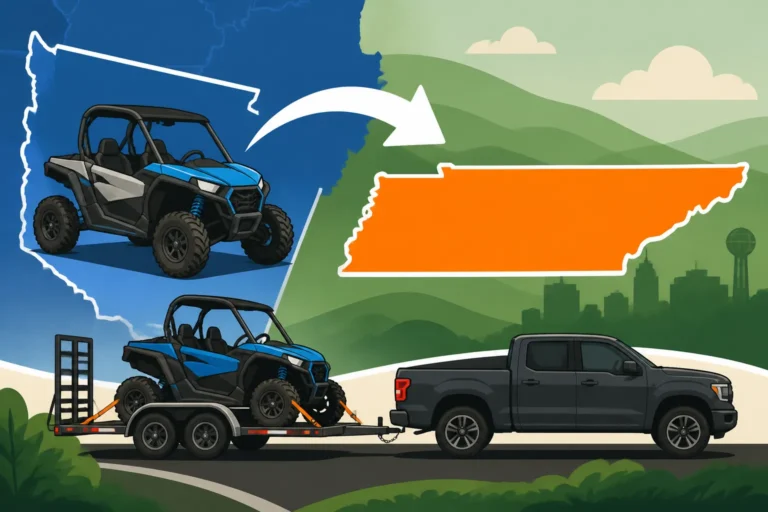
Buying an OHV from a dealer or private seller outside of Tennessee adds a layer of complexity but doesn't exempt you from Tennessee sales tax. When you bring an OHV into Tennessee that you purchased out-of-state, you're generally responsible for paying Tennessee's sales tax on that machine when you title it in Tennessee.
The process is similar to a private sale within Tennessee: you'll present your bill of sale (or dealer invoice if applicable) showing the purchase price, and the county clerk will calculate and collect the Tennessee sales tax. If you paid sales tax in the state where you purchased the OHV, Tennessee typically offers a credit for taxes paid to other states, up to the amount you would have paid in Tennessee. This prevents double taxation. You'll need to provide clear proof of sales tax paid in the other state, usually an official receipt or statement from the selling dealer or the other state's revenue department. This is a common scenario for many riders, especially those living near state borders, so it's a good idea to research [Buying an Out-of-State Machine for Tennessee] thoroughly before you make your purchase.
Common Scenarios, Exemptions, and Pitfalls
Navigating OHV sales tax can feel like a maze, especially with various situations like gifts, trade-ins, or agricultural use. Knowing how these scenarios impact your tax liability is key to avoiding surprises. It’s not always as simple as "pay X percent of the purchase price," and a little foresight can save you a headache (and potentially some money) down the line.
The Tennessee Department of Revenue is quite clear about its intent to collect sales tax on the transfer of ownership for nearly all OHVs, regardless of how they come into your possession. However, there are nuances and specific exemptions that are worth exploring. Understanding these can ensure you're compliant without overpaying, and more importantly, without incurring penalties for not understanding the rules. The last thing you want is to be hit with [Tennessee Fines for an Untitled OHV] or unpaid taxes after you've already started enjoying your new ride.
Sales Tax on Gifts and Inherited OHVs
What if you didn't buy the OHV, but received it as a gift or inherited it? This is a common question, and the answer can sometimes surprise people.
- Gifts: In Tennessee, if an OHV is truly a gift (meaning no money or other consideration exchanged hands), it is generally exempt from sales tax. However, you'll need to prove it's a legitimate gift, not a "sale masquerading as a gift" to avoid tax. A notarized statement of gift or a specific type of bill of sale stating "Gift" with a zero-dollar value is usually required. The county clerk will scrutinize these transactions, so make sure your documentation is clear. Both the giver and receiver should sign a statement declaring it a gift. LawDepot can provide template documents for gifting, which can lend credibility to your claim.
- Inherited OHVs: When you inherit an OHV, it's typically transferred as part of an estate. This transfer of ownership is also usually exempt from sales tax, as it's not considered a "sale." You'll need to provide documentation such as a will, probate court orders, or an affidavit of inheritance to the county clerk when you apply for the title transfer. This process is similar to a standard [Tennessee OHV Title Transfer] but with specific documentation about the inheritance.
Trade-Ins and Their Impact on Sales Tax
If you're buying a new OHV from a dealer and trading in your old machine, this can significantly reduce the amount of sales tax you pay. In Tennessee, sales tax is generally calculated on the net purchase price after the trade-in value has been deducted. This is a substantial benefit to trading in a machine rather than selling it privately first.
For example, if you're buying a new UTV for $15,000 and the dealer gives you $5,000 for your trade-in, you'll only pay sales tax on the $10,000 difference ($15,000 – $5,000). This can save you a good chunk of change compared to paying tax on the full $15,000 purchase price. This benefit typically only applies to trade-ins at licensed dealerships, not private party exchanges. Always ensure your dealer invoice clearly itemizes the trade-in value to avoid any confusion at the county clerk's office.
Agricultural and Commercial Use Considerations
Tennessee offers limited exemptions for sales tax, and sometimes, agricultural or certain commercial uses can come with specific considerations. However, these are generally narrow and don't exempt the initial purchase from sales tax for the vast majority of OHVs.
For example, farm machinery used exclusively for agricultural purposes might have specific sales tax exemptions, but OHVs like ATVs and UTVs are often classified differently. If you are purchasing an OHV specifically and exclusively for agricultural use, you would need to consult with the Tennessee Department of Revenue directly to understand if any specific exemptions apply to your situation, as general OHV sales are almost always taxable. The burden of proof for such an exemption would be entirely on you. Most riders using their machines on private farm land for leisure, even if they occasionally assist with chores, will still owe sales tax.
Consequences of Avoiding Sales Tax
Attempting to avoid paying sales tax on your OHV can lead to serious consequences. If you present a bill of sale with an artificially low price, and the county clerk suspects it, they have the right to challenge it and assess the tax based on the fair market value. This means you could end up paying more than you anticipated, plus face delays in getting your title.
Furthermore, intentionally misrepresenting the purchase price to avoid sales tax is considered tax evasion. This can result in penalties, fines, and even legal action. It's simply not worth the risk. When you go to [Titling an OHV in Tennessee], paying the correct sales tax is a mandatory part of the process. Being honest and transparent ensures a smooth transaction and prevents future headaches, allowing you to focus on enjoying your adventures on the trails.
Disclaimer
This article is for general informational purposes only and does not constitute professional advice. Laws, prices and regulations vary by location and change over time. Consult a qualified professional for guidance on your specific situation.