Brimstone as a Tennessee Polaris Outfitter
Brimstone’s connection with Polaris Adventures can give visitors a way to ride without hauling their own machine, but a rental is not the same as an all-inclusive trail package. Before booking, confirm what vehicle, permits, gear, rider requirements, and support are included—and what you must arrange separately.
What Brimstone as a Polaris Outfitter Means
Brimstone Recreation is a trail destination in Tennessee, and Polaris Adventures is a network through which participating outfitters offer guided or self-guided experiences with Polaris vehicles. When Brimstone operates as a Polaris outfitter, visitors may be able to arrange a machine through that operation rather than bringing an ATV or side-by-side from home.
That distinction matters because people sometimes use “rental,” “tour,” and “park access” as if they mean the same thing. They are separate parts of a trip:
- The vehicle arrangement determines what machine you can use, how long you have it, and who may drive.
- The riding experience may be self-guided or accompanied by a guide, depending on the available option.
- Trail access depends on the park’s current rules and the required permit.
- Equipment and protection depend on what the outfitter supplies and what you choose to bring.
- Other costs and conditions may include a deposit, damage terms, fuel arrangements, a waiver, or a separate permit.
A listing that offers a Polaris vehicle does not, by itself, establish that trail access, a passenger’s permit, protective gear, fuel, or recovery support is included. Check each item directly with the outfitter before paying or traveling. If the information on a booking page is brief, ask the provider to confirm the details in writing.
Brimstone’s trails are not simply a public-road route where any machine can be driven. The experience takes place under the park’s access rules, and conditions can vary by trail, weather, operating schedule, and machine. A rental booking should therefore be treated as one part of a trail-day plan, not as a guarantee that every trail or service will be available.
If you are new to the area, read Brimstone’s 300 Miles in Tennessee for an overview of the riding destination, and Tennessee Trail Permits Explained for context on why a permit can be a separate requirement from renting a vehicle. The practical takeaway is simple: identify who provides the vehicle, who controls trail access, and which parts of the outing each party is responsible for.
What to Confirm Before Booking
A useful booking conversation gets past the headline and spells out what the reservation actually covers. Rental options can differ in vehicle type, length of use, rider limits, supervision, and included equipment. Even if two listings both advertise a Polaris side-by-side, their terms may not be comparable.
Start with the machine. Ask for the exact vehicle type and seating configuration, not just a general description such as “UTV.” A two-seat machine and a four-seat machine can work very differently for a family or group. Confirm the number of permitted occupants, whether every passenger must meet age or size requirements, and whether the vehicle has any restrictions that affect the trails you plan to ride. Never assume that an advertised seat count means every seat is appropriate for every passenger.
Next, establish whether the outing is guided. A self-guided rental gives the driver more independence, but it also means the group must understand the route, stay within the allowed area, and manage its pace. A guided outing can provide direction and local context, but you should ask how the guide handles the route, group size, stops, and a rider who needs to turn back. A guide does not necessarily remove the need for a permit or make every trail suitable for a beginner.
Then ask what the quoted booking includes. A clear answer should address the vehicle, the reservation period, any required orientation, and whether the provider supplies helmets or other gear. Clarify trail access and permits separately. A park permit might be included, sold by the outfitter, or left for you to obtain through another channel. If a passenger needs a separate permit, establish who must arrange it. The same goes for a waiver: ask who must sign, whether a parent or guardian has to be present for a minor, and whether every rider must complete paperwork.
| Booking detail | What to ask | Why it matters |
|---|---|---|
| Vehicle | What exact machine and seating configuration is reserved? | Helps ensure the machine fits the group and planned ride. |
| Driver eligibility | What age, license, or other requirements apply? | The person who books may not be the person allowed to drive. |
| Passengers | Who may ride, and what limits apply? | A passenger’s age or the vehicle’s capacity may affect eligibility. |
| Guided or self-guided | Is a guide included, optional, or unavailable? | Changes how much route-finding and trip management your group handles. |
| Permit and access | Is the Brimstone permit included, and does it cover everyone? | Vehicle rental and permission to ride are distinct questions. |
| Gear | Which helmets or other equipment are supplied? | Prevents arriving without required or properly fitting gear. |
| Fuel and return | How is fuel handled, and what condition is expected at return? | Avoids misunderstandings at pickup or drop-off. |
| Deposit and damage terms | What hold, inspection, and damage process applies? | Helps you understand your financial responsibility before departure. |
| Schedule and cancellation | What are the pickup, return, late, and cancellation rules? | A late arrival or changing weather can affect the plan. |
Ask about the total cost structure rather than relying on a single advertised figure. The provider can explain the current rental charge, any deposit or card hold, whether a permit is separate, and whether additional charges could apply for damage, fuel, cleaning, late return, or recovery. Costs and terms can change, so check the current details with the provider. For a broader checklist of common rental terms, see Tennessee Rental Deposits and Damage Holds and Tennessee Rental Fuel Policy.
If you are comparing a direct booking with a marketplace, compare the full terms, not just the displayed price or photographs. Polaris Adventures may provide information about participating outfitter experiences, while a platform such as Viator may show experiences offered through local providers. Do not assume that every provider or date appears on every platform, or that marketplace booking includes the same add-ons as booking directly. Confirm the actual operator, meeting location, permit arrangement, cancellation policy, and contact process before committing.
Permits, Trail Access, and Who Is Responsible
The most important planning distinction is between having a vehicle and having permission to ride in the intended area. A rental reservation confirms a relationship with the rental provider; it does not automatically answer every question about trail access. Ask whether the rental includes the required Brimstone permit, whether the permit is issued to the driver or to the machine, and whether passengers have any separate requirements.
Get the answer for every person in the group. A booking may be made in one person’s name, while the park’s requirements may apply to riders individually or to the vehicle in a particular way. A passenger should not assume that the driver’s paperwork covers them. For a dedicated explanation, see Does a Rental Cover a Brimstone Passenger? and Brimstone’s Daily and Annual Permits.
Also make sure you know where the permit must be obtained or shown. It may be handled at a rental counter, a park office, or through another approved process, but the specific arrangement should be confirmed for your booking. Ask whether you need identification, a confirmation email, a waiver receipt, or any other document at check-in. Save relevant confirmations on your phone and, if practical, keep an offline copy in case service is unreliable.
Trail access can be more complicated than choosing a destination on a map. A provider may limit where a rented machine can go, and trails can be affected by closures, maintenance, or conditions. Ask whether the rental is restricted to certain routes or areas, whether riders may leave the advised route, and how to check for a closure during the day. Follow the instructions given at pickup and obey posted signs. A route shown in an older photo or on an unofficial map should not override current park direction.
The vehicle’s own capabilities are another factor. A machine advertised as appropriate for the park is not necessarily appropriate for every trail, and a rental provider may prohibit certain routes. Be candid about your group’s experience and ask for recommendations based on the actual machine, weather, and intended ride. If you are unsure what the route will demand, choose a conservative plan and ask about easier options rather than assuming you can turn any rental into an advanced ride.
Clarify who handles problems after you leave the pickup point. Ask for a contact number and instructions for a breakdown, a stuck vehicle, a trail blockage, or a rider who becomes unwell. Find out whether the rental includes any support, whether recovery is available, and whether a recovery or transport charge could apply. Do not infer that assistance is included just because the outfitter operates at the same destination.
These responsibilities are easier to keep straight when you think of the trip as a chain: the outfitter supplies or arranges the vehicle; the park sets access conditions; and the rider must follow the rules and instructions that apply to the ride. Sometimes one organization handles several of these tasks, but confirm that rather than assuming it.
If you are traveling from outside Tennessee, check whether your own machine’s registration or documentation matters for your trip, but do not confuse those questions with the rental’s permit arrangement. For a rental, focus first on the outfitter’s requirements and the park’s current instructions. General information on rentals and access is available in Tennessee Rules for a Rented Machine and Why a Tennessee Park Permit Does Not Travel.
Choosing a Rental That Fits Your Group
The right choice depends less on the brand name and more on the people riding, their experience, and the kind of day they want. A Polaris machine may be a good solution for visitors who do not own an ATV or UTV, but the particular model, configuration, and rental terms determine whether it is practical for your group.
Match the vehicle to the riders
Start by counting riders and checking the vehicle’s permitted capacity. Do not plan around squeezing in an extra passenger, carrying someone on a seat not designed for them, or exceeding the rental provider’s limit. For a family, ask about age restrictions, passenger eligibility, and any height or fit considerations. Make sure every rider can sit securely and use the required restraint or protective equipment properly.
For a group with mixed experience, think about whether everyone will be comfortable with the same machine and pace. A driver who is confident on familiar terrain may still find an unfamiliar trail challenging. If one person is new to off-road riding, ask whether a guided option or a shorter, easier outing is available. If it is not, plan the day around the least experienced rider rather than pressuring them to keep up.
Decide between self-guided and guided riding
A self-guided rental is a better fit for people who are comfortable following directions, staying together, and adjusting their plans if the trail is slower or more difficult than expected. Before setting out, understand the allowed riding area, the return time, and how the outfitter wants you to respond to a closure or mechanical problem.
A guided experience can be useful when the group wants help navigating or would rather not make route decisions throughout the day. Still, ask what “guided” means in practice. Does the guide remain with the group, lead from a separate vehicle, or provide an orientation and route recommendation? Is the outing private or shared? Are there requirements for the group to stay together? The answers affect whether the experience suits a cautious beginner, an experienced rider, or a family.
A guided tour is not automatically an easy ride. Terrain, pace, weather, and group capability still matter. Tell the provider what the riders have done before and what they hope to experience. Be clear if anyone has mobility limitations, is uncomfortable on steep ground, or needs frequent stops. The provider can then explain whether the outing is a reasonable match.
Consider gear, comfort, and conditions
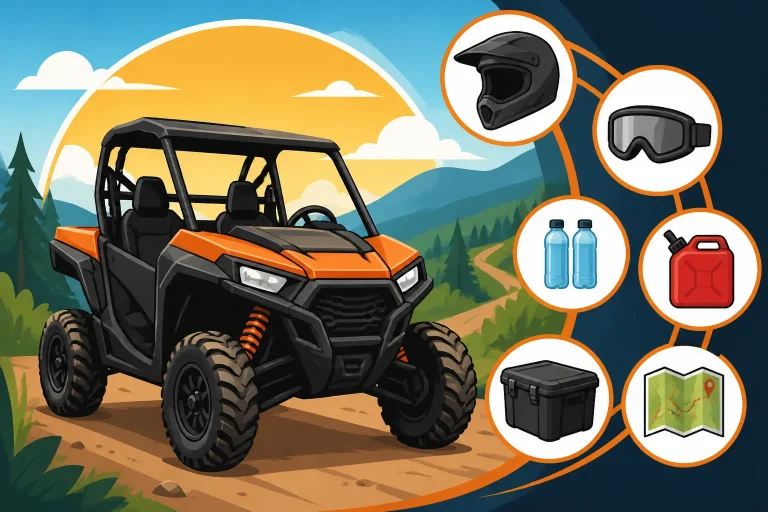
Ask what protective equipment is required and what is provided. If helmets are supplied, ask whether sizes are available for everyone in the group and whether you may bring your own properly fitting gear. Goggles, gloves, sturdy clothing, and footwear that stays secure can make a difference on a dusty, muddy, or rocky ride. Dress for changing conditions rather than assuming the temperature at the parking area will match the conditions on the trail.
If children are riding as passengers, verify the provider’s policy rather than relying on general expectations. The child must be able to sit safely and comply with the machine’s restraints and the outfitter’s rules. Bring any personal gear that helps with fit or comfort, but do not substitute it for required equipment.
Weather is part of the decision. Rain can change traction and visibility; hot conditions can make a long ride tiring; and cold or damp weather can make exposed riding uncomfortable. Ask whether the park or outfitter has a weather-related change or cancellation process. A rental policy may not match the park’s operating decision, so know whom to contact if weather worsens.
A rental is also a poor fit if the group expects to wander outside the designated riding area, ignore the return time, or take a machine onto routes the provider has prohibited. Make sure every driver understands the rules before departure. If the group cannot agree on a safe pace or plan, a guided option or a shorter ride may be a better choice.
Planning the Day and Avoiding Common Surprises
A smooth rental day starts before arrival. Confirm the pickup location, check-in time, required identification, payment method, and any forms the group should complete in advance. Make sure the person who booked knows whether every driver must be present at pickup. If more than one adult may drive, ask whether each must meet the same requirements and be listed or approved.
Build in time for the fitting and orientation. The actual ride begins after check-in, not when you pull into the parking area. You may need time to review rules, inspect the machine, adjust helmets, understand the controls, and ask questions. Arriving late can reduce ride time or create pressure to depart before everyone is ready. Check the return time and plan a route that leaves a sensible margin for slower travel, stops, and unexpected delays.
Before leaving, inspect the vehicle with the rental representative. Note visible damage and make sure it is recorded through the provider’s process. Confirm that you know how to use the controls, lights, seat belts, parking brake, and any basic safety equipment. Ask how the provider wants you to report a new issue. Taking clear photographs at pickup can help create a record of the machine’s condition, but follow the outfitter’s inspection process as the official method.
Ask about the return condition. A muddy ride may leave the machine dirty, but cleaning expectations differ. Clarify whether you should refuel, where to return the vehicle, and what to do if the group is running behind. Avoid assuming that a late return is harmless because there is no next reservation visible. The provider’s schedule and fees are governed by its current terms.
Bring essentials that make sense for an off-road day: water, weather-appropriate layers, eye protection, personal medication, and a charged phone. Keep belongings secure and avoid bringing items that can fall from the vehicle or interfere with safe operation. Cell service can be inconsistent in rural riding areas, so ask what the provider recommends for navigation and emergencies. Let someone outside the riding group know the general plan if the outing is lengthy.
Use the pre-ride briefing. If something is unclear, ask before leaving. A short question about braking, shifting, trail markings, or how to contact the provider is easier to handle at the starting point than after the group is separated. Keep the ride within the limits explained by the outfitter, maintain a safe following distance, and stop in a safe place if someone needs help. Do not let a desire to cover more ground push the group into unfamiliar routes or a rushed return.
For visitors comparing rental and guided options elsewhere in the region, Renting at Brimstone in October Color and Renting a Machine at a Coal Country Trail Resort offer related planning angles. To compare an outfit’s bundled experience against other rental approaches, see Tennessee Rentals That Include the Permit and Tennessee Guided UTV Tours. A bundle can be convenient, but only if the inclusions and limitations fit what you need.
Before you leave home, make one final confirmation with the actual operator. Verify the date and time, the machine configuration, rider eligibility, permit coverage, gear, payment and deposit process, cancellation terms, and the number to call if plans change. If the booking came through a third-party marketplace, also confirm whether questions or changes go to the platform or directly to the outfitter. Clear answers help prevent a common disappointment: arriving with a confirmed vehicle reservation but uncertainty about what else the group needs in order to ride.
Frequently Asked Questions
Is Brimstone a Polaris Adventures outfitter?
Brimstone is associated with Polaris Adventures outfitter experiences, but availability and the details of an offering can change. Confirm the current vehicle, date, and booking terms with the provider.
Does a Polaris rental automatically include a Brimstone permit?
Do not assume that it does. Ask whether the permit is included, how it is issued, and whether every passenger or rider needs separate access documentation.
Can a beginner rent a Polaris machine at Brimstone?
That depends on the current rental requirements and the experience offered. Tell the provider that you are new to off-road riding and ask whether a guided or easier option is available.
Should I book directly or through a marketplace?
Compare the operator, cancellation rules, inclusions, and contact process. A marketplace listing such as Viator may not have the same details or availability as a direct booking, so verify the terms for the specific reservation.
Disclaimer
This article is for general informational purposes only and does not constitute professional advice. Laws, prices and regulations vary by location and change over time. Consult a qualified professional for guidance on your specific situation.