Why Racing Is Barred on North Cumberland
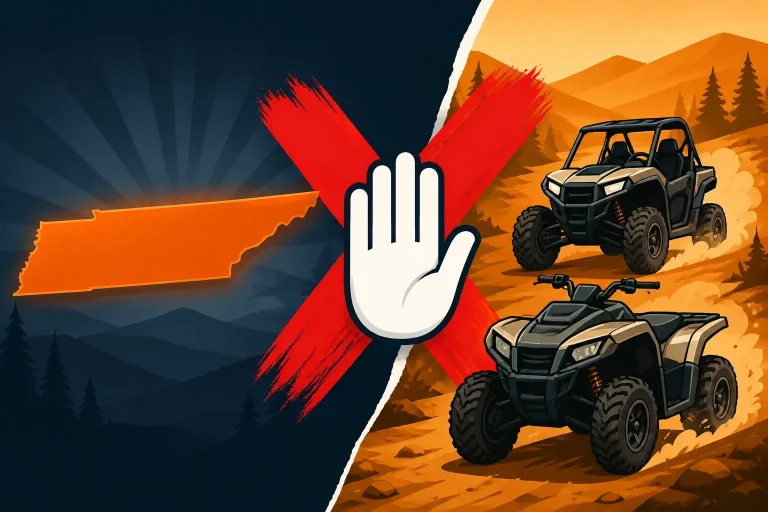
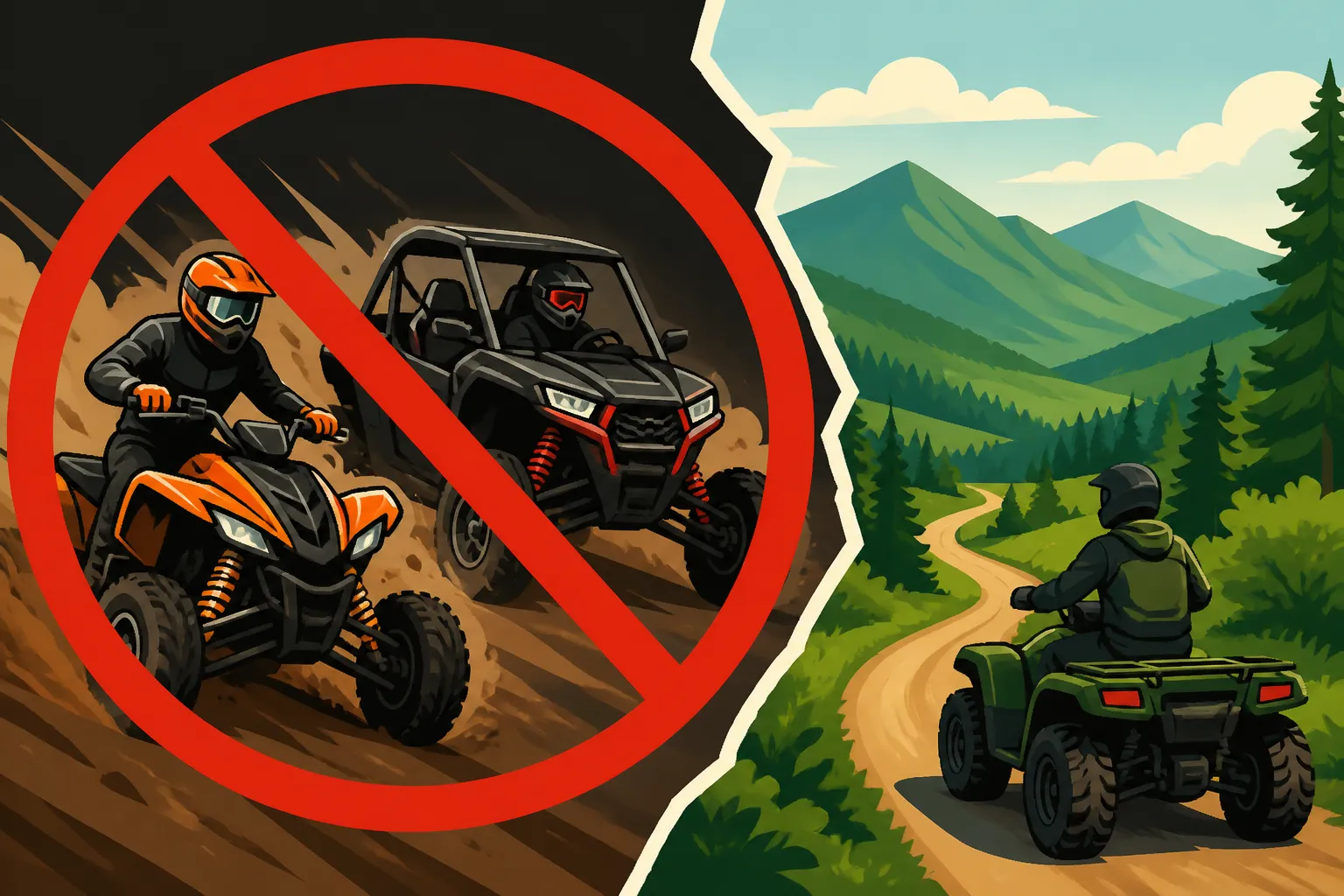
North Cumberland’s trails can invite fast riding, but a trail permit is not permission to race. Competitive riding creates risks for other trail users, wildlife, and the land itself. The practical distinction is between riding a marked route at a controlled pace and turning it into a speed contest. Knowing why racing is barred helps you plan a ride that stays within the area’s rules.
Why North Cumberland bars racing
North Cumberland is a Wildlife Management Area, not a closed-course motorsports venue. Its trails and roads are managed for multiple uses, with riding subject to designated routes, operating rules, and conditions set by the managing agency. A permit lets an eligible rider use the area under those rules; it does not convert the WMA into a place for competition.
Racing changes the nature of trail use. Riders in a contest may focus on beating another machine or a clock rather than responding to hazards, slowing for other users, or staying within posted limits. That pressure can make a narrow trail, blind rise, loose gravel, or sudden encounter much more dangerous. In a mixed-use area, other riders, hunters, workers, and people on foot may be around a bend with little warning.
The concern is not limited to collisions. A race can draw more machines into a small area, increase noise, encourage passing where there is not enough room, and push riders toward unsafe speeds or off-trail shortcuts. Those effects are harder to control on a large network of public-land routes than on a closed track with barriers, marshals, controlled access, and emergency staff.
The rule also gives managers a clear standard. Rather than trying to judge whether a particular contest is “fast enough” or “organized enough” to count, riders should treat racing and competitive events as off limits unless the managing agency explicitly authorizes a specific activity. An ordinary riding permit should not be taken as that authorization.
For a broader overview of public-land requirements, see Tennessee Rules for Riding a WMA. The distinction matters: being allowed to ride a route is not the same as being allowed to organize an event or use the route for competition.
| What you are doing | How to think about it | Practical approach |
|---|---|---|
| Riding a marked trail with friends | Group riding, not automatically a race | Keep a steady pace, leave space, and follow posted rules |
| Trying to pass another machine | A maneuver that can create a race-like hazard | Pass only when permitted and clearly safe |
| Timing a run or competing for the fastest time | Competitive riding | Do not assume a regular trail permit allows it |
| Hosting a group event | Organized activity with added responsibilities | Check requirements before advertising or gathering riders |
| Riding hard to beat another group | Racing behavior, even without a formal event | Back off and ride at a controlled pace |
A trail permit is not a race permit
A common source of confusion is the word “permit.” North Cumberland’s OHV permit is for riding under the area’s rules. It does not grant blanket approval for every activity a rider might want to do there. Paying for access, carrying a permit, or riding with a large group does not by itself authorize a race.
That applies whether the competition is formal or informal. A planned event with a start time, course, prizes, or organized competitors is plainly different from a few friends making their way along a trail. But a race can also develop informally when riders chase one another, time sections, or treat a public route as a course. The safest choice is not to rely on a narrow interpretation of what “counts” as a race. Keep the ride recreational and within the posted rules.
Organizers should take extra care. An event can affect more than the people who sign up: it may bring spectators, parked vehicles, trail congestion, and requests for access to a particular route. Do not promote a competitive event or assume that a standard permit covers it. Check directly with the land manager before planning any organized activity, and be prepared for the possibility that racing cannot be authorized there. Tennessee Rules for an Organized Ride explains why group size and event planning can involve separate considerations.
The same caution applies to commercial outings. A guided ride and a race are not the same activity, but commercial use can have its own requirements. If a guide, outfitter, or business is involved, confirm the applicable rules instead of treating an individual rider’s permit as permission for the whole operation. See Tennessee Rules for a Commercial Guide for the distinction.
A practical way to plan is to ask three questions before setting out:
- Is the route currently open to the kind of machine you are bringing?
- Does the activity involve competition, timing, prizes, or a planned event?
- Have you confirmed with the managing agency that the activity is allowed, rather than assuming a riding permit covers it?
If the answer to the second question is yes, do not treat the trip as ordinary trail riding. Seek an explicit answer from the responsible agency before making plans. When the activity is racing, the published prohibition means the default should be that it is not allowed.
Safety and land-management reasons
North Cumberland’s terrain makes speed especially consequential. A route may include narrow sections, uneven surfaces, steep grades, loose rock, ruts, water, or limited visibility. Conditions also change: rain can wash material across a road, and dust can reduce what a rider can see. A pace that seems manageable on a familiar stretch may be unsafe after weather or when traffic is heavier.
Racing also makes it harder for riders to respond to each other. On a controlled ride, people can keep a safe following distance, signal hazards, and pause when necessary. In a contest, a rider may be more likely to close the gap, pass without adequate room, or continue when a slower pace would be wiser. Those decisions can affect passengers and other trail users who did not agree to participate in the competition.
Land protection is another part of the picture. Staying on designated routes helps limit damage to vegetation, soils, drainage, and wildlife habitat. Competition can create incentives to cut corners, use unauthorized lines, or accelerate hard where traction is poor. Even when most participants intend to follow the route, repeated traffic and shortcuts can leave lasting damage. That is why rules against racing fit with broader requirements to stay on open, designated routes. For related guidance, see Tennessee Rules for Riding Off the Trail.
Sound and speed rules also help keep recreation compatible with other uses. A rider should not assume that a machine’s capability sets the permitted pace. Follow signs and agency guidance, including the rules discussed in North Cumberland’s Speed Limit in Tennessee. The applicable limit and local conditions both matter; riding below a posted maximum does not make racing acceptable.
| Risk created by racing | Why it matters on a WMA route | Better riding habit |
|---|---|---|
| Reduced stopping time | A hazard or another user may appear around a bend | Moderate speed where sight lines are short |
| Close following | Dust, rocks, and sudden braking can affect the rider behind | Leave enough room to stop safely |
| Risky passing | Trails may be too narrow or visibility too limited | Wait for a clearly safe, permitted place |
| Trail departure | A rider may cut a corner or avoid an obstacle off route | Stay on the marked, open route |
| Noise and congestion | A group can affect other users and nearby land | Keep the group controlled and avoid blocking routes |
Conditions and closures can affect where riding is allowed on a particular day, so check current notices before traveling. A permit does not override a gate closure or make a closed trail available. Tennessee Trail Closures to Check can help with that part of trip planning.
How to ride with friends without turning it into a race
Riding as a group is not automatically racing. Friends can travel together, stop at viewpoints, and enjoy a challenging route while keeping the outing recreational. The difference is in the behavior: riders should not time one another, compete for position, or pressure anyone to go faster than they can safely manage.
Before the ride, agree on a few simple expectations. Set a pace that works for the least experienced rider and the conditions. Decide where the group will stop and how to handle a separation. Make sure everyone understands that passing is not a goal and that nobody should leave the marked route to catch up. A passenger’s comfort and safety should also take priority over keeping pace with another machine.
During the ride, adjust speed to visibility, surface, traffic, and weather. Leave room between machines, especially in dust or on rough ground. If a faster rider catches up, do not turn the encounter into a challenge; give way only where it is safe and allowed. If someone wants to practice machine control or acceleration, use a legal, purpose-built setting rather than a public WMA trail.
It also helps to make the ride plan easy to follow:
- Check that the route is open and permitted for your machine.
- Carry the required permit and any other required documents.
- Review posted restrictions and obey signs at gates and trail junctions.
- Keep the group size manageable and avoid blocking access.
- Stop in a safe place if the group becomes separated or conditions worsen.
- Turn back when weather, damage, visibility, or fatigue makes continuing unwise.
If you encounter someone racing, avoid confronting them while machines are moving. Give them room, move to a safe place if possible, and report the concern through the appropriate land-management or enforcement channel. A roadside stop or citation can have consequences, so riders should not assume that a valid permit protects them from enforcement when they violate other rules. A Citation at a Tennessee Trail Gate offers related context on what can happen when a rider is found out of compliance.
The point is not that every quick stretch of riding is automatically a race. It is that North Cumberland is managed as a shared public-land riding area, and competition can undermine the safety and land protections its rules are meant to support. Treat the trail as a route to ride, not a course to win.
Disclaimer
This article is for general informational purposes only and does not constitute professional advice. Laws, prices and regulations vary by location and change over time. Consult a qualified professional for guidance on your specific situation.