A Georgia Rider Buying a Tennessee Permit
A Georgia rider planning an ATV or UTV trip in Tennessee may need more than proof of ownership or a permit from home. The right access permit depends on where you ride: a state-managed wildlife area and a private trail park do not share one universal pass. Here’s how to identify the permit you need, buy it, and avoid assuming it covers more than it does.
First, match the permit to your riding destination
Tennessee does not have one trail permit that automatically covers every place an ATV or UTV can ride. The first question is not where you live, but where you plan to unload and ride.
For a Georgia rider heading to North Cumberland Wildlife Management Area, the relevant permit is the state’s special-use permit for riding there. A permit for Windrock, Brimstone or another private riding property is a separate matter. Each operator sets its own access requirements, and a permit for one property generally does not grant access to another.
| Destination | What to check before you go | What not to assume |
|---|---|---|
| North Cumberland Wildlife Management Area | The current Tennessee WMA permit options, eligibility and rules for your riding dates | That a Georgia registration or a private park pass replaces the WMA permit |
| Windrock | Windrock’s current trail permit and access instructions | That a state WMA permit pays for access at Windrock |
| Brimstone | Brimstone’s current land-use permit and property rules | That a Windrock permit works at Brimstone |
| Another private riding area | The property’s own permit, reservation and vehicle requirements | That a pass from another Tennessee park transfers |
If you are deciding between state land and a private riding property, start with Tennessee Trail Permits Explained. For questions about a specific area, check Tennessee Rules for Riding a WMA, Windrock’s Trail Permits or Brimstone’s Land Use Permits.
This distinction matters because “permit” can mean different things. A state access permit allows use of a particular managed area under its rules. A private park permit is the operator’s permission to ride its property, often with its own check-in, waiver and vehicle conditions. Neither should be treated as a substitute for the other.
Tennessee title paperwork is another separate issue. A title or sticker associated with an off-highway vehicle does not, by itself, buy trail access. Likewise, a trail-use permit does not prove ownership or make a machine legal for every road. Keep the paperwork categories separate when planning: ownership documents, any applicable vehicle identification or title requirements, and the access permit for the riding location.
What a Georgia rider should know about reciprocity
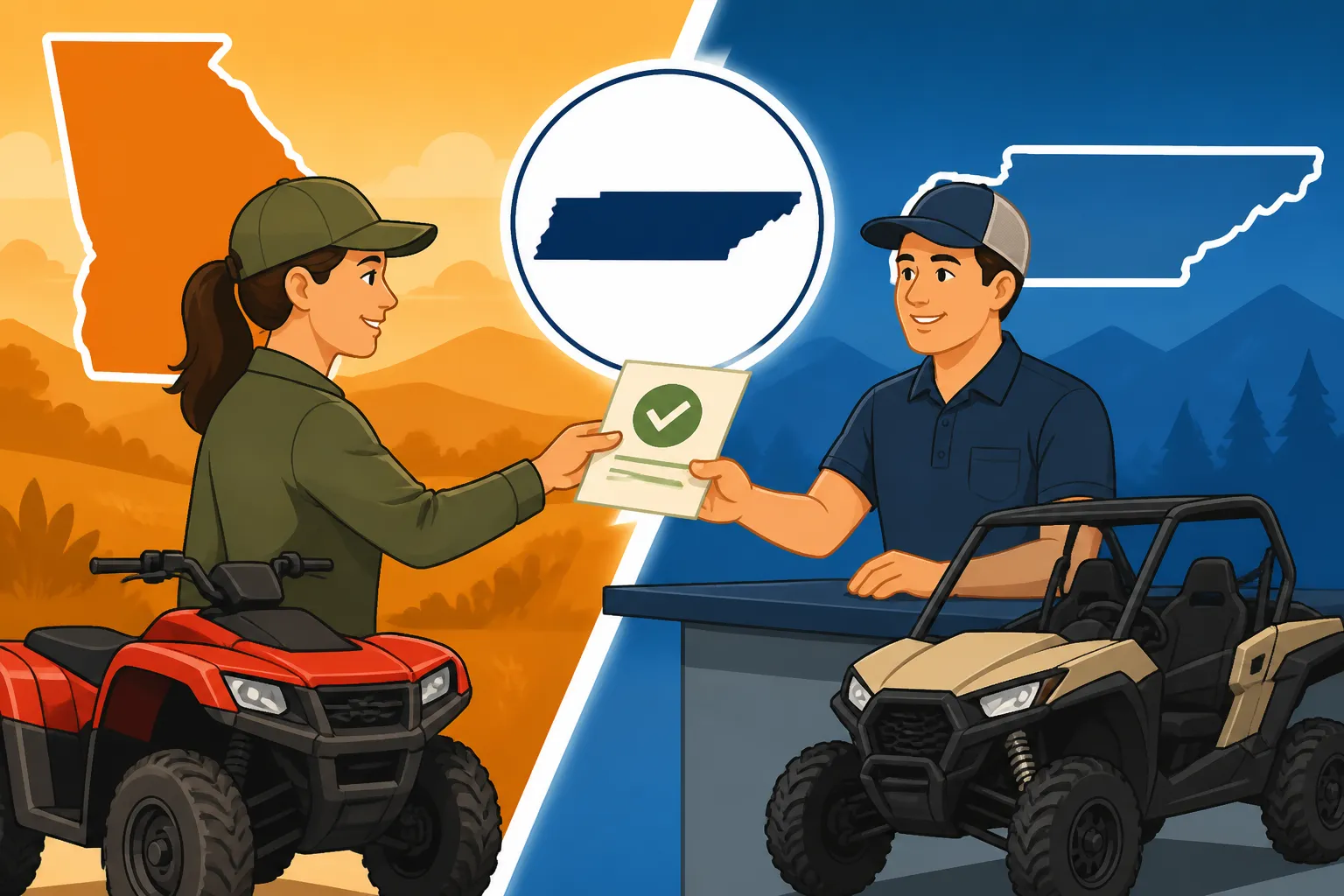
A Georgia registration, decal or other home-state document may help establish information about the machine, but it should not be treated as a Tennessee trail permit. Tennessee access requirements are tied to the place where you ride, and a visiting rider needs to follow the destination’s rules. Read Tennessee Rules for a Visiting Rider and Does Tennessee Honor Out-of-State Registration? if you are sorting out what your Georgia paperwork does and does not establish.
The practical takeaway is simple: do not travel on the assumption that Tennessee honors a Georgia permit as a substitute for its own access permit. Check the specific Tennessee area before leaving home. The broader issue is explained in Why Tennessee Reciprocates Nothing.
For a North Cumberland trip, use the official state permit information and select the product that matches your residency status and planned use. A Georgia address generally means you should not select a Tennessee-resident option simply because you are visiting, staying with family, or owning property in the state. Residency definitions and documentation requirements can be specific, so use the permit portal’s current instructions rather than guessing from a mailing address or the location where you purchased the ATV.
Do not confuse reciprocity with whether your machine is titled, registered or insured in Georgia. Those documents may be relevant to other questions, including transport or road use, but they do not automatically satisfy a Tennessee WMA permit requirement. For road access, separate laws may apply; a trail permit does not grant permission to ride on public roads.
If you are riding only at a private park, ask that park whether it requires a state permit for any part of your planned route. Do not infer the answer from another rider’s setup. A person who stays on a private property may have a different permit requirement from someone who also rides a state-managed area.
Buying the right permit before you leave Georgia
The safest approach is to identify the riding area, verify the permit, and save proof of purchase before loading your machine. Online availability and permit products can change, so follow the current official portal instructions rather than relying on an old receipt or an online discussion.
- Name the exact riding area. “East Tennessee” is not specific enough. Confirm whether the trip is to North Cumberland, Windrock, Brimstone or another property.
- Check who manages access. State-managed land and private riding property can have different systems. If your route includes more than one area, check each one separately.
- Choose the correct residency category. Enter your actual residence information and read the portal’s eligibility rules. Do not select a resident permit just because you are buying it while in Tennessee.
- Match the permit duration to your plans. Compare the available day, multi-day or annual options, if offered. Check the dates the permit covers and any expiration rules before paying.
- Review who needs a permit. The requirement may depend on the rider, vehicle, or both. Confirm the current terms for adults, passengers and youth rather than assuming one purchase covers everyone in your group. One Adult per Vehicle With a Permit is useful context, but the current official instructions control.
- Save the confirmation. Keep the receipt or permit details accessible offline as well as on your phone. Cell reception can be unreliable in some trail areas.
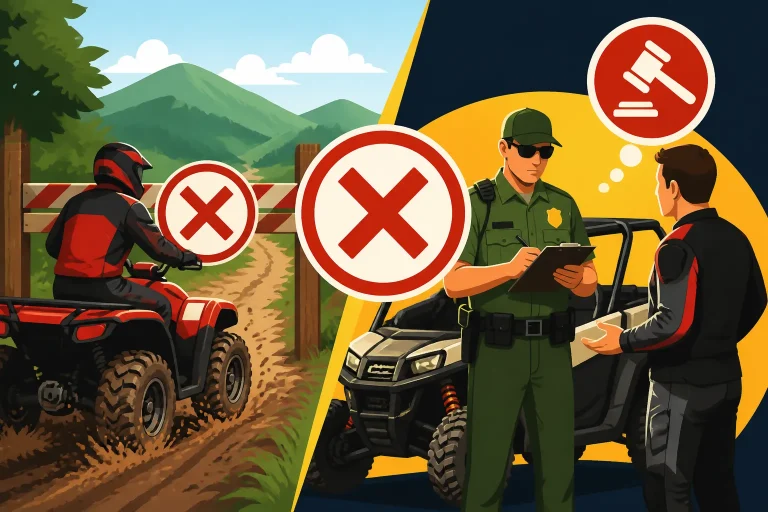
- Check the gate and area rules again before riding. A valid permit does not override closures, seasonal restrictions, designated-route rules, equipment limits or posted directions.
When using an online portal, confirm that the product name matches your destination. A state permit for North Cumberland is not the same thing as a private operator’s pass. If the portal’s wording is unclear, contact the issuing office or property operator before paying; it is easier to resolve a product question at home than at a trail entrance.
For North Cumberland specifically, verify whether the selected permit covers the unit or units you intend to ride. The area includes multiple units, and a rider should not assume that buying any permit automatically authorizes travel everywhere. Check Does One Permit Cover Every North Cumberland Unit? and follow the current map and access notices.
Buying online is usually the most convenient way to prepare, but it does not eliminate the need to understand the terms. See Buying a Tennessee Permit Online for the purchase process. Keep the permit confirmation with the documents you carry for the trip, and make sure the name, dates and product correspond to your plans.
Avoiding common permit mistakes on a Tennessee trip
The most common mistake is purchasing a permit for the wrong place. A Georgia rider might search for “Tennessee ATV permit,” see a state product, and assume it covers every trail. It does not. Identify the property first, then use the permit system associated with that property.
Another mistake is treating a trail permit as a general vehicle credential. A permit may authorize access to a particular riding area, but it does not replace a title, prove a sale, or grant public-road privileges. If your trip includes road sections, check the road rules separately. Access to a trail and permission to operate a vehicle on a public road are different questions.
It is also easy to assume that one purchase covers a whole group. Before checkout, check whether each adult needs a permit, whether a passenger is covered, and whether a young rider has additional requirements. These details can differ between a state-managed area and a private park. Confirm with the actual issuer, especially if you are bringing multiple machines or riders.
Finally, do not rely on an old screenshot, a friend’s receipt or a permit bought for a prior trip. Products, dates, costs and operational rules can change. Confirm the current details with the state portal for WMA riding and with the individual park for private property. For park-specific limits, Why a Tennessee Park Permit Does Not Travel explains why a pass from one property should not be expected to work at another.
A quick pre-trip check can prevent most problems:
- Confirm the exact trail area and its current operating status.
- Buy the permit from the correct issuer.
- Select the appropriate nonresident option when required.
- Verify the covered dates, riders and units.
- Save the receipt and permit details where you can access them without cell service.
- Carry any other documents the location requires.
- Recheck closures and posted rules before unloading.
For a Georgia rider, the reliable rule is to treat every Tennessee riding destination as its own access decision. Home-state paperwork is not a substitute for the Tennessee permit required at a particular site, and a Tennessee permit is not automatically valid at another park. Confirm the destination, purchase the matching permit, and check the current terms before the trip.
Disclaimer
This article is for general informational purposes only and does not constitute professional advice. Laws, prices and regulations vary by location and change over time. Consult a qualified professional for guidance on your specific situation.