Tennessee Rules for an Electric Machine on Trails
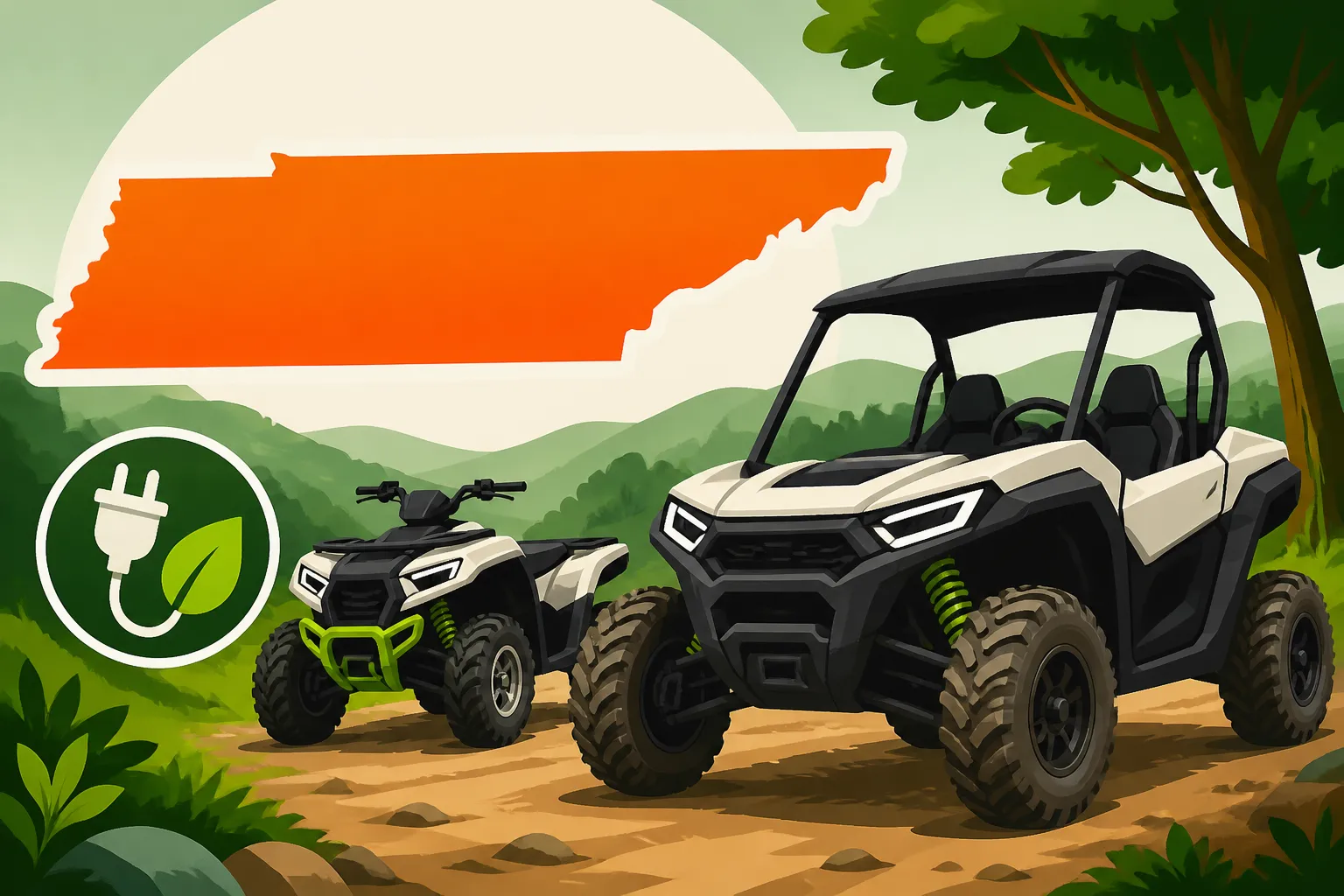
An electric ATV or UTV can seem like an easy fit for Tennessee trails: it is quiet, has no exhaust, and may need less routine engine maintenance. But its battery does not automatically exempt it from permits or access rules. The practical question is whether the trail manager accepts your particular machine and what permits, equipment, and limits apply there.
Electric power does not automatically change trail rules
On a Tennessee trail, an electric machine is not automatically treated as a bicycle or given a special permit exemption just because it has no gasoline engine. If it is an ATV, UTV, or other off-highway vehicle, the land manager’s access rules still matter. Those rules can cover vehicle type, dimensions, rider permits, safety equipment, speed, noise, and where you may ride.
The first step is to identify what you have. A four-wheeled electric ATV, a side-by-side, an electric dirt bike, and a low-speed neighborhood vehicle are not interchangeable categories. Their appearance, seating, controls, and intended use can affect how a property classifies them. Do not assume that a machine marketed as “off-road” is accepted on every trail, or that calling it an e-bike makes it one under the rules.
If you are unsure how a particular public-land rule applies, start with Tennessee Rules for Riding a WMA and confirm the machine’s eligibility with the managing office. For private trail systems, ask the park directly. A staff member may need more than the brand name or a photo to answer confidently.
Have the machine’s details ready before calling:
- Make and model
- Number of wheels and seats
- Overall width and approximate weight
- Maximum speed and whether it can be limited
- Whether it has pedals, a throttle, or both
- Battery type and charging method
- Any required safety equipment, such as lights, a horn, or a restraint system
A machine’s top speed can be particularly important. A small electric vehicle designed for neighborhood use may not qualify as an off-highway vehicle at all, while a full-size electric UTV may be handled under the same trail-access framework as a gas-powered UTV. The manager—not the marketing description—can confirm which rules apply at that site.
Do not treat silence as approval. If a permit portal or trail map does not mention electric models, ask before buying a permit or towing the machine to the trailhead. A permit may authorize a person to ride in a particular area without guaranteeing that every vehicle type is allowed there.
Permits depend on the trail system, not the power source
Tennessee does not have one statewide trail sticker that grants access to every riding area. Access is controlled by the agency or private operator responsible for the land. That means an electric machine may need a state permit on one property, a separate park permit on another, and no motorized access at all on a third.
For the North Cumberland Wildlife Management Area, check the current OHV permit rules and vehicle conditions before you go. A permit is not a general license to use all trails in Tennessee. It applies to the area and activity specified by the program, and riders need to follow the site’s rules while there. Does One Permit Cover Every North Cumberland Unit? explains why it is important to check the particular unit and trail you plan to ride.
Private riding areas set their own access and permit conditions. Windrock and Brimstone, for example, have their own trail access systems. A North Cumberland permit should not be treated as a substitute for a private park’s permit, and a private park permit does not grant access to public WMA trails. Check Windrock’s Trail Permits or Brimstone’s Land Use Permits for the relevant property, then contact the operator about electric-machine acceptance.
| Where you plan to ride | What to check before loading | Does an electric drivetrain remove the need to check? |
|---|---|---|
| North Cumberland WMA | Current permit, eligible vehicle type, unit access, trail restrictions, and equipment rules | No |
| Windrock or Brimstone | The park’s own permit, vehicle acceptance, trail limits, and charging arrangements | No |
| Big South Fork riding areas | Which routes permit your vehicle and what rules apply to that route | No |
| Private land or a private club trail | Written permission, membership or event conditions, and vehicle restrictions | No |
Different permits are not interchangeable. A permit can be required for a rider, vehicle, or activity, and its scope depends on the program. Confirm who must hold one, whether it must be displayed or carried, and whether a passenger or second adult needs a separate permit. For public-land requirements, Why Tennessee Has No Statewide Trail Sticker provides useful context; for another public riding area, review Tennessee Rules for Riding Big South Fork.
Out-of-state plates or registration do not necessarily replace a Tennessee trail permit. Registration and trail access answer different questions: registration concerns a vehicle’s legal status under the applicable system, while a trail permit or land-use authorization concerns permission to ride on a particular property. If you are visiting from elsewhere, check the local requirement rather than assuming that your home-state paperwork travels with you.
Machine limits and equipment still matter
Electric power may remove some concerns associated with a combustion engine, such as exhaust fumes or fuel storage, but it does not erase other trail requirements. A quiet motor does not make a machine eligible if it is too wide, too fast, or not an approved vehicle type. Nor does it permit riding on closed trails, outside designated routes, or in areas closed to motorized use.
Rules can also concern noise, safety equipment, lights, helmets, passengers, and operating conditions. If a property sets a sound limit, do not assume that an electric machine is exempt without checking the wording and enforcement practice. The motor may be quiet while tires, drivetrain, or other equipment still produce noise. Follow the same posted operating limits unless the land manager confirms a specific exception.
Pay particular attention to these points:
- Width and vehicle class: Some trails or properties have limits or vehicle categories. Measure the machine as operated, including any accessories that extend beyond the body.
- Speed: A machine’s advertised top speed may not match its permitted use. Ask whether the property restricts speed or accepts only certain vehicle types.
- Passengers: The number of seats and the property’s passenger rules both matter. A fitted seat does not by itself establish that passengers are permitted.
- Helmets and protective gear: Electric drive does not make a collision or rollover less serious. Follow the applicable law and the property’s own safety requirements.
- Lights and visibility: If riding hours, weather, or trail conditions make visibility important, verify which lighting equipment is required and whether the property allows operation after dark.
- Closed routes: A quiet electric motor is still motorized use. Do not use it on a route closed to motor vehicles or leave the designated trail.
Battery capacity introduces practical questions that gas-machine riders may not face in the same way. Check the estimated range under off-road conditions, not just the manufacturer’s best-case figure. Hills, mud, cold weather, low tire pressure, passenger weight, and repeated acceleration can reduce usable range. A long route may be a poor choice if there is no safe way to recharge or return to the staging area.
Plan charging before the ride. Ask whether charging is allowed at the property, where outlets are located, whether you need to bring your own compatible charger, and whether leaving a machine plugged in unattended is permitted. Do not assume a campground outlet or a public building is available for vehicle charging. Also confirm that your route stays within a conservative return range; a dead battery on a steep or remote trail can become a recovery problem.
Carry the charger only if the operator allows it and you have a safe way to transport it. Protect battery connections from water, mud, impact, and loose cargo. Use the manufacturer’s charging and storage instructions, and do not charge a damaged battery. If the pack has been struck, submerged, or overheated, stop using it and follow the manufacturer’s safety guidance rather than trying to ride through the problem.
How to confirm your machine will be accepted
A quick call or email before the trip can prevent a wasted permit purchase and a long tow to a closed gate. Give the land manager exact model information and ask direct questions. “Do you allow electric ATVs?” may not be enough if the property distinguishes between an electric quad, a side-by-side, and a dirt bike.
Use this checklist:
- Identify the riding area and route. A park may have different rules across separate parcels, units, or trail types. Confirm the specific place you intend to ride.
- Describe the machine accurately. Provide its make, model, seating, dimensions, maximum speed, and control layout. Do not rely only on a retailer’s category.
- Ask whether that exact vehicle type is allowed. Confirm if the answer covers your model, not just electric machines in general.
- Confirm permit requirements. Ask which permit applies, who needs one, how it must be carried or displayed, and whether it is valid for your planned area.
- Check restrictions beyond the permit. Ask about width, speed, trail difficulty, passenger limits, hours, sound rules, and required safety gear.
- Ask about charging and recovery. Find out whether charging is available or permitted and what assistance is offered if the machine runs out of charge.
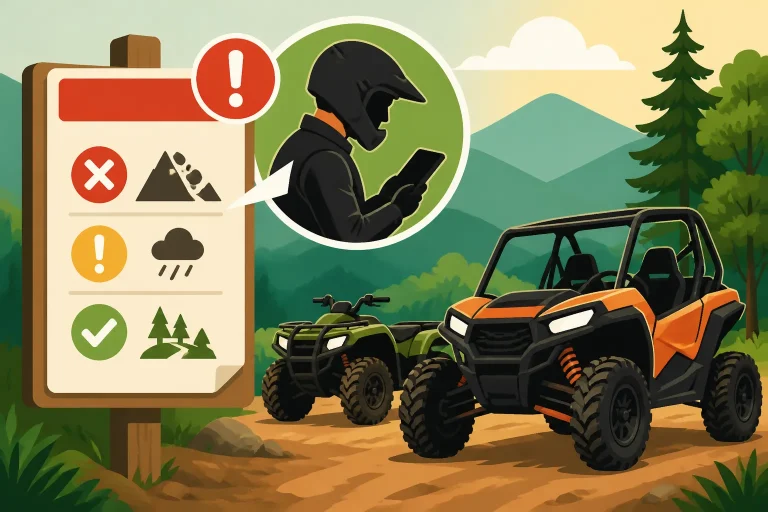
- Check for temporary closures. A route can be closed because of weather, maintenance, hunting activity, or other site conditions. Review the latest notices before leaving.
If the staff cannot answer immediately, ask where the written rule is published and whether someone responsible for trail operations can confirm it. Keep the response or the rule page available during the trip, but remember that a previous answer does not override a later closure or updated notice.
For private land, get permission from the owner or operator before riding, even if the property looks open or a neighboring trail is accessible. An electric machine is still a motor vehicle for access purposes where the landowner’s rules treat it that way. See Tennessee Rules for Riding Private Property for the distinction between having a capable machine and having permission to use the land.
In short, plan around the trail’s rules rather than the machine’s fuel source. Verify access, permits, vehicle eligibility, and charging before departure. If the operator confirms your electric ATV or UTV is allowed and you meet the same applicable conditions as other riders, the quiet drivetrain can be a practical advantage—but it is not a permit, an exemption, or a promise of access.
Disclaimer
This article is for general informational purposes only and does not constitute professional advice. Laws, prices and regulations vary by location and change over time. Consult a qualified professional for guidance on your specific situation.