Tennessee Supervision Rules for Young Riders
A child may be ready to ride an ATV or UTV before it is clear whether the land, machine, and permit rules allow it. In Tennessee, supervision requirements depend on where the ride takes place, and an adult’s presence does not automatically make every vehicle or trail appropriate. Here’s how to plan for a young rider without confusing trail permits with age, equipment, or road-use rules.
What supervision means on Tennessee trails
There is no single supervision rule that automatically applies to every ATV and UTV ride in Tennessee. Requirements can differ between a wildlife management area, a private pay-to-ride park, a road, and private land. The first question is therefore not only “How old is the rider?” but also “Who manages the place where the ride will happen?”
On North Cumberland Wildlife Management Area trails, young riders should not assume they can operate alone. The WMA has age-related conditions, including adult accompaniment requirements for younger operators. Check the current rules for the specific unit and age group before loading. Confirm who qualifies as the accompanying adult and whether the adult must be operating another machine or may ride as a passenger. Do not rely on an old permit, a friend’s recollection, or rules from a different park.
The WMA’s conditions also sit alongside Tennessee’s general OHV laws. A trail permit is not a substitute for supervision, and an adult’s presence does not waive other requirements. Riders may still need the correct permit, a helmet, and a machine suitable for their age and size. For more on the permit system, see [Tennessee Rules for Riders Under 16] and Tennessee Rules for Riding a WMA.
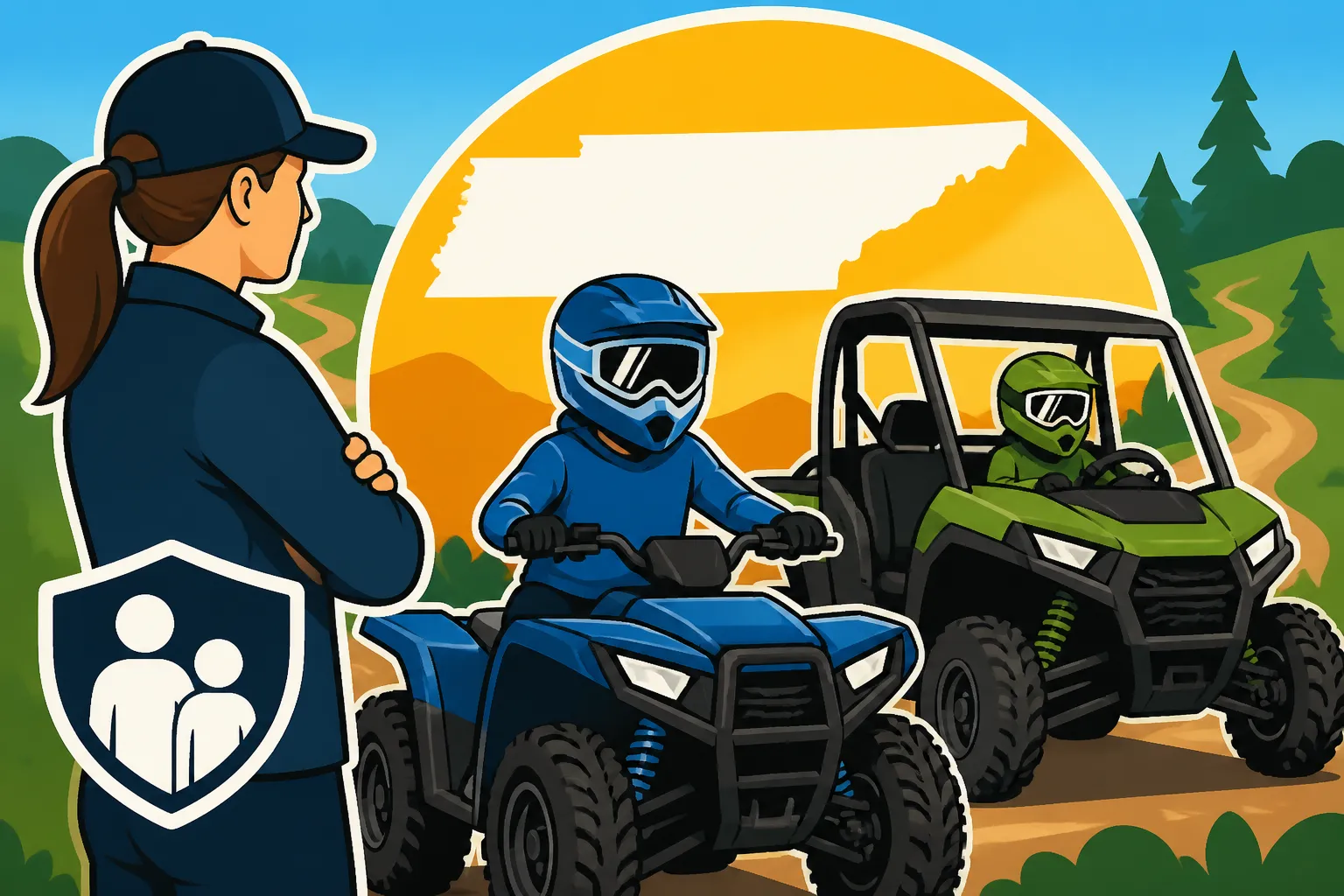
In practical terms, supervision should mean an adult is actively responsible for the young rider throughout the outing. That is a sensible safety standard even when a posted rule does not spell out every detail. The adult should know the route, stay close enough to respond, and be able to help if the rider gets stuck, hurt, or separated from the group. Letting a child ride far ahead while the adult follows later is a poor substitute for close supervision.
A supervising adult also needs to understand that a child’s ability to ride on one property does not transfer to another. A young rider permitted on a private trail system may face different limits on a WMA trail or a public road. Check the rules at the actual destination, not just the rules for the machine or the rider.
Age groups are useful for planning, not a substitute for checking rules
Families often think in broad age bands: under 13, 13 to 15, and 16 or older. Those categories can help organize questions, but they do not establish a universal permission to ride. A park may set its own minimum age, passenger policy, or supervision conditions. A state rule may apply to a particular type of road or public land rather than to every private trail.
| Rider’s situation | What to verify before riding |
|---|---|
| Young child operating a machine | Minimum age, machine size, supervision condition, helmet rule, and whether the trail permits that vehicle |
| Rider under 16 on a WMA | Current age-specific WMA conditions, adult accompaniment, permit, and required protective equipment |
| Teen riding at a private park | Park’s minimum-age and supervision rules, waiver requirements, machine limits, and passenger policy |
| Young passenger in a UTV | Whether the vehicle has an appropriate passenger seat and restraint, and whether the park allows a child passenger |
| Any rider on a public road | Road-use eligibility, licensing and equipment rules, and whether that particular road is open to the vehicle |
For a youth rider on North Cumberland, check the current rules for riders under 13 specifically rather than assuming that a child who is old enough to ride elsewhere can operate there. Riders Under 13 on a North Cumberland Trail is a useful related topic. Rules for a 13-year-old can also be different from rules for a younger child, so see Tennessee Rules for a Rider Aged 13 if that is the rider’s age.
Match the child, machine, and route
Adult supervision cannot make an oversized or unsuitable machine safe. Before the ride, consider whether the child can reach the controls, steer without strain, use the brakes reliably, and understand how the machine behaves on slopes, loose gravel, mud, or rocks. A child who can operate a small ATV in an open area may not be ready for a fast group ride on a narrow, rutted trail.
A good match is about more than engine size. Check the machine’s design and the manufacturer’s age guidance, and make sure the child can use the controls while wearing gloves and protective gear. If the rider cannot comfortably stop, turn, and manage the machine without an adult physically controlling it, choose a smaller vehicle or a different activity.
UTVs need their own assessment. A child riding as a passenger should have a proper seat and restraint for that position, and the vehicle’s instructions should permit that use. Do not carry a child on someone’s lap or let a passenger ride where there is no designed seating position. A seat belt is only useful when the passenger fits it correctly and can stay inside the vehicle’s protective structure.
The route should match the least experienced rider, not the most capable adult. Start with a short, manageable trail and agree on where the group will stop. Avoid making a child keep pace with adults who are riding faster or taking obstacles the child has not practiced. If the route becomes more difficult than expected, turn back rather than treating the adult’s presence as a reason to push on.
A simple pre-ride check can prevent many problems:
- Confirm the land manager’s current age and supervision rules.
- Check that each operator has the required permit and that the permit is valid for that riding area.
- Inspect the machine and confirm the child can operate it comfortably.
- Fit a properly sized helmet and other appropriate protective gear.
- Agree on a pace, stopping points, and a plan if the group gets separated.
- Keep the child within close sight and hearing, adjusting the distance to the terrain and the rider’s ability.
Helmets should fit securely and be appropriate for the activity. A loose or adult-sized helmet is not a useful stand-in for properly fitted gear. If shopping online, including through Amazon, check the manufacturer’s fit guidance and the helmet’s safety certification details; a product listing alone does not tell you whether a particular helmet fits a particular child.
Permits and park rules do not replace supervision
A Tennessee trail permit is permission to use a specific area under its conditions. It does not certify that a child is old enough to operate a machine, cancel an adult-accompaniment rule, or make a vehicle suitable for the rider. Likewise, a permit bought for one riding area should not be assumed to work at another. The broader rules are covered in Tennessee Trail Permits Explained and Why One Park’s Permit Is Worthless at the Next.
For North Cumberland WMA, confirm the permit requirements for the rider and the vehicle before the trip. Do not assume that a supervising adult’s permit covers a young operator. Make sure the adult knows whether the youth needs an individual permit or whether a different arrangement applies. If anything is unclear, contact the land manager before leaving home rather than trying to settle the question at a gate.
Private parks set their own operating conditions. One may allow a young rider only on certain trails, require an adult to accompany the group, or prohibit a child from operating particular machine types. Another park may use different age limits or require a parent or guardian to sign a waiver. A permit, waiver, or booking confirmation does not necessarily mean that every rider in the group is cleared to operate every vehicle.
Rentals add another layer. Rental businesses can set minimum driver ages, require a licensed adult, or limit who may operate a rented ATV or UTV. Those rental conditions may be stricter than the land manager’s trail rules. A parent who rides in a separate vehicle should not assume that the rental company permits a child to drive. Confirm both the outfitter’s requirements and the park’s rules before booking.
Public roads are a separate issue. Adult accompaniment on a trail does not give a young rider permission to use a road that is closed to OHVs or override age, equipment, and operating restrictions. Even where some road use is allowed, riders need to follow the rules for that road and vehicle category. See Tennessee Minimum Age to Ride a Road and Tennessee Rules for Riding a County Road before considering any road portion of a trip.
A useful planning habit is to keep the rules for each destination together: permit confirmation, park or WMA age requirements, rental conditions if applicable, and any road-use information. If the rules conflict, follow the stricter requirement and ask the responsible operator or land manager to clarify. A verbal assurance from someone who does not manage the property is not a reliable substitute.
A safer supervision plan for the day
The adult’s role begins before the machines start. Explain the basic hand signals, stopping procedure, and what the child should do if the group separates. Keep the route simple enough that the young rider does not have to navigate alone. A phone may be useful, but coverage can be limited in remote areas, so do not make it the only safety plan.
During the ride, place the child where the adult can monitor them and respond. That may mean leading at a pace the child can maintain or following closely enough to see how they handle turns and obstacles. Avoid having several adults assume that someone else is watching the young rider. Name one responsible adult for each child or small group.
Take breaks before the child becomes tired. Fatigue can make it harder to steer, judge distance, and follow directions. Heat, cold, dust, and trail conditions can also change how well a young rider manages the machine. If the child is uncomfortable, frightened, or no longer following instructions, stop and reassess instead of insisting on finishing the planned loop.
Adults should model the behavior they expect: stay on marked routes, obey posted closures, wear protective gear, and avoid riding beyond their ability. A child may copy the fastest rider in the group even when that rider’s choices are not appropriate. Set the pace and boundaries clearly, and be willing to turn around.
Before each outing, ask the same practical questions: Is this child allowed to ride here? Does the place require adult accompaniment? Is this machine appropriate? Does the child have the right gear and permit? Is the planned route manageable? If any answer is uncertain, pause and confirm it with the park or land manager. That small check is far easier than arriving at a gate with a child who cannot legally or safely ride.
Disclaimer
This article is for general informational purposes only and does not constitute professional advice. Laws, prices and regulations vary by location and change over time. Consult a qualified professional for guidance on your specific situation.