Why a Tennessee Park Permit Does Not Travel
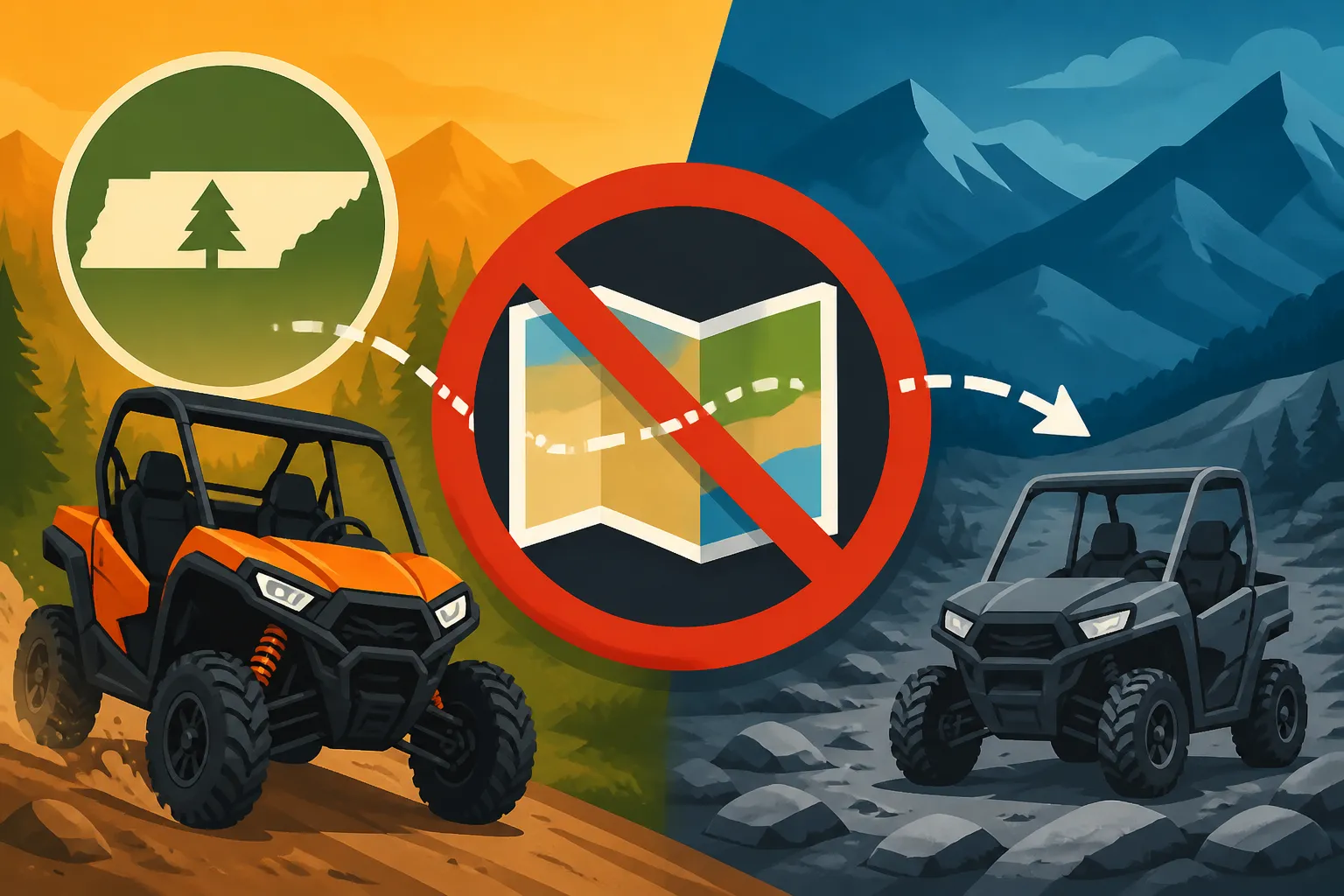
A Tennessee trail permit can feel like a pass for the whole riding trip, especially when several parks sit within the same region. It usually is not. Each permit is tied to a particular land manager, riding area, or operator, so the useful question is not just whether you have a permit, but where it is valid.
What a Tennessee park permit actually covers
A permit is permission to use a defined riding area under the rules set by the organization that manages it. That organization might be a state agency, a private off-road park, or another land manager. The permit is not a universal credential for every ATV or UTV trail in Tennessee.
The word “park” can blur important differences. Riders may use it for a private trail resort, a state-managed wildlife management area, or a trail system that connects to other parcels. Those places can have different operators, access rules, permit systems, and boundaries. A permit purchased for one does not automatically provide permission to ride on another.
This is separate from ownership documents and road-use rules. A title or vehicle sticker does not replace a trail-access permit, and a trail permit does not make an ATV or UTV legal on public roads. For the basic distinction between permits and broader state rules, see Tennessee Trail Permits Explained and Why Tennessee Has No Statewide Trail Sticker.
| Where you plan to ride | Who sets access terms | What to verify before riding |
|---|---|---|
| A state-managed riding area | The relevant state land manager | Permit type, dates, allowed units, rider requirements, and closures |
| A privately operated park | The park operator | Whether each rider or vehicle needs a permit, where it is valid, and current park rules |
| A second park on the same trip | That park’s own manager | Whether it accepts any outside permit; do not assume it does |
| A public road between trail areas | State or local road authorities | Whether the vehicle and route are authorized for road use; a trail permit is not road permission |
A permit may be limited by location, time period, rider, vehicle, or activity. The exact terms depend on the issuer. One permit might authorize riding in a defined state-managed area during an eligible period; another might grant access to trails operated by a private park. Read the terms for the permit you are buying rather than relying on the general word “permit.”
Also check whether the permit is personal or connected to a vehicle. Some systems may require each rider to have a permit, while a private operator may set terms involving each machine, passengers, or both. Do not infer the rule from another park’s practice. Confirm what the specific issuer requires.
Why permits do not travel between parks
A park permit is not a statewide trail pass because no single permit issuer controls every riding area. A state agency cannot grant access to privately managed land simply by issuing a permit, and a private park cannot authorize riding on state-managed land. Each land manager controls access to its own area, subject to its own rules and any applicable public requirements.
Even nearby trail systems may be separate. A common region, similar scenery, shared local businesses, or a trail map that shows several destinations does not mean that the same permit covers them all. Boundaries can be easy to miss on the ground, especially where trails, roads, private property, and public land are close together.
A permit is a permission, not a portable registration
A permit usually answers a limited question: has the rider met the access conditions for this particular area? It does not register the machine for general use, grant permission to cross every adjoining parcel, or authorize riding on roads that are otherwise closed to the vehicle.
This is why a permit from one operator does not usually function like a plate or state credential. It is linked to the rules and land of the issuer. If you leave that area and enter another, you need to know whether the next land manager requires its own permission.
Nor does a permit establish that a trail is open. A valid permit does not override a temporary closure, a seasonal restriction, or a route-specific rule. Check current notices for the actual riding area, and confirm that the route you plan to use is open.
Similar names and nearby trails can be misleading
The names of parks and surrounding areas are not always a reliable guide to permit coverage. A private resort can be near a state-managed trail system without sharing its permit. One operator may manage access to a set of trails while a state agency manages another area nearby. The permit’s stated coverage, not the destination’s broad regional name, is what matters.
The same caution applies to permits purchased through a nearby store or online portal. The sales location does not determine where the permit is valid. Check the issuing organization and the area named in the permit details.
For a closer look at why one operator’s access permission should not be assumed to apply elsewhere, see Why One Park’s Permit Is Worthless at the Next. The practical takeaway is straightforward: treat every move to a different managed area as a fresh permit check.
State-managed areas and private parks are different systems
The difference between public land and private parks is a major reason riders need to check more than one permit system. A Tennessee state-managed area follows the requirements of its managing agency. A private park sets access terms for the land it operates. Neither system automatically substitutes for the other.
State-managed riding areas
State-managed areas may have permit requirements that apply to a designated group of lands or units. If you are riding in the North Cumberland area, for example, make sure you understand the permit’s stated coverage and which units it applies to. Do not assume that every nearby destination is included just because it appears in the same regional riding plan.
The question is not always “Do I need a separate permit for every trail?” It may instead be “Which units does this permit cover, and are there additional conditions for this particular unit or activity?” Check the permit instructions and current land-management notices before you ride. Does One Permit Cover Every North Cumberland Unit? addresses that boundary question in more detail.
State-managed land can also have restrictions that go beyond holding a permit. Routes may close, special rules may apply to particular areas, and land-use conditions can change. Permit possession is one requirement, not a guarantee that every route is open or suitable for every machine.
Private parks and trail resorts
A private park controls entry to the land it manages and may have its own permit, waiver, operating hours, trail classifications, or vehicle and passenger rules. A permit bought for one private park should be treated as valid only for the named park or area unless its operator clearly says otherwise.
For example, review the specific terms for Windrock’s Trail Permits or Brimstone’s Land Use Permits before planning a ride there. If your itinerary includes Ride Royal Blue, check Ride Royal Blue Permit Requirements separately. The fact that these destinations are all in Tennessee does not merge their access systems.
Private park rules may also distinguish between a daily and longer-term permit, a driver and passenger, or a vehicle and its occupants. The details can change, so use the operator’s current information rather than an old receipt, social media post, or another rider’s recollection. If anything is unclear, contact the park before traveling.
The same trip can involve more than one permit
A multi-park trip may require a separate permit for each destination. That is not necessarily a duplicate charge for the same land; it may be payment for separate access rights under separate operators. If the destinations have different managers, each one can set its own conditions.
Planning the trip in advance helps identify the right permits, but it does not make one permit transferable. A pass may cover a stated period at its issuing park without covering any other park during that same period. Think of validity as both a time limit and a location limit.
How to check permit coverage before you ride
The safest approach is to verify the permit with the organization that issues it and match its coverage to your actual riding plan. This takes a few minutes and can prevent a costly or frustrating surprise at a gate.
- Name each riding area in your itinerary. Use the park or land unit’s full name rather than a broad regional description. Include any planned stop at a second park, even if it is nearby.
- Identify the land manager for each area. Determine whether the area is state-managed, privately operated, or managed by another organization.
- Use the issuer’s current permit information. Confirm the area covered, valid dates, who needs a permit, and whether passengers or separate vehicles have additional requirements.
- Check for closures and restrictions. Review current notices for the riding area and the specific trails you want to use. A permit does not make a closed trail available.
- Ask about anything the written terms do not answer. If the map, wording, or boundary is unclear, contact the land manager or park operator before leaving home.
- Keep proof accessible. Follow the issuer’s instructions for displaying or carrying the permit. Save the confirmation where you can retrieve it if phone service is weak.
A useful planning habit is to make a simple list of stops and permit status:
| Trip stop | Permit issuer | Checked current coverage? | Other item to confirm |
|---|---|---|---|
| First riding area | State agency or park operator | Yes or no | Unit boundaries and closures |
| Second riding area | Separate manager, if applicable | Yes or no | Separate permit and rider rules |
| Overnight or next-day ride | Relevant issuer for that area | Yes or no | Dates and operating schedule |
Do not rely only on a search result snippet, an old screenshot, or a permit someone else bought. The other rider may be using a different area, date, machine, or permit category. A quick check with the issuer is more dependable than assuming that a past trip explains today’s rules.
Keep your proof of purchase and permit information easy to find. A saved digital copy can help when you need to check details, but follow the issuer’s direction on whether a printed permit, decal, or other display is required. If you keep paper records in a vehicle, a waterproof document pouch, including one available from Amazon, can help protect them from rain and mud; it does not replace any required official display.
For trip preparation beyond permits, check Tennessee Trail Conditions Before You Ride and review the rules for visitors in [Tennessee Rules for a Visiting Rider]. A permit solves only the access question, not every safety, equipment, or road-use question.
Common assumptions that cause permit problems
Most permit mix-ups come from treating the word “Tennessee” as if it means one statewide access program. The state has different land managers and private operators, and access permission is tied to the area each one controls.
“I bought a Tennessee permit, so I can ride anywhere in Tennessee”
A Tennessee permit is not automatically valid statewide. Read its terms to identify the issuer and the covered area. If your itinerary includes another managed area, check that area’s requirements separately. Why Tennessee Reciprocates Nothing explains why riders should not expect one permit system to honor another by default.
“The parks are close together, so the permit should cover both”
Distance does not establish permit coverage. Two destinations can be close on a map yet have separate boundaries and operators. Do not cross a gate, trail junction, or property boundary based on a guess. Confirm the permitted area and follow its marked routes.
“My permit is valid today, so it covers every place I visit today”
A valid date is only one part of a permit’s terms. Location matters too. A permit can be current but still not cover the next park on your itinerary. Check both where and when the permit applies.
“The park allows my machine, so I do not need another permit”
Vehicle eligibility and access authorization are different issues. A park may allow your ATV or UTV but still require you to hold its permit or meet other entry conditions. Verify both the machine rules and the permit requirements.
“A trail permit lets me ride the public road to another trail”
A trail permit does not grant road privileges. Road use depends on separate rules and on the particular road, vehicle, and circumstances. Do not use a public road as a connector just because two riding areas are nearby. Confirm the road rules independently and use authorized transport between areas when required.
“An old permit or receipt proves I am covered now”
A previous permit can show that you once paid for access, but it may not cover a new date, different person, different machine, or another location. Check the current terms each time you plan a ride. Do not assume that a long-term permit remains valid without checking its expiration and coverage.
Frequently Asked Questions
Can I use one Tennessee park permit at another park?
Usually, no. A permit is tied to the issuer and the area it manages. Check the second park’s requirements directly; do not assume it accepts another operator’s permit.
Does a state-managed area permit cover every nearby private park?
No. A state permit does not grant access to private land. The private park’s operator sets its own access terms, which may require a separate permit.
Does one permit cover all units in a state-managed riding area?
It depends on the permit’s stated coverage and the rules for the area. Confirm the included units and check current notices before riding. Do not infer coverage from the region’s name.
Does a trail permit make my ATV or UTV street legal?
No. Trail access and public-road authorization are different matters. A trail permit does not by itself allow road use.
What should I do if the permit boundary is unclear?
Pause and check with the permit issuer or land manager before riding into the uncertain area. A map, gate sign, or direct confirmation can help establish where the permit applies.
Disclaimer
This article is for general informational purposes only and does not constitute professional advice. Laws, prices and regulations vary by location and change over time. Consult a qualified professional for guidance on your specific situation.