Tennessee OHV Title for a Trailered Machine
It's a common scenario across Tennessee: you've got a shiny new (or new-to-you) ATV or UTV, but it lives almost exclusively on a trailer, only seeing the light of day when you haul it to Windrock, Brimstone, or your favorite private hunting land. The thought often crosses riders' minds, "If it's mostly trailered and never sees a public road, do I really need to go through the hassle of getting a title for it?" This guide is here to unravel that very question, explaining why titling your off-highway vehicle (OHV) in Tennessee, even a trailered machine, is not just a good idea, but often a necessary one, and how to navigate the process with ease.
Why a Title Matters Even for Trailered Machines in Tennessee
The idea that a title is only for vehicles driven on public roads is a pervasive misconception, especially when it comes to off-highway vehicles that spend their lives hitched to the back of a truck. However, for your ATV or UTV in Tennessee, a title serves far more purposes than just road legality, offering crucial protections and benefits that every owner should consider, regardless of how often their machine hits the pavement.
Proof of Ownership and Theft Protection
Think of your OHV's title as its birth certificate and deed rolled into one. It's the definitive legal document that establishes you as the rightful owner. Without it, proving that the machine belongs to you can become incredibly difficult, especially in unforeseen circumstances like theft. Imagine parking your rig at a trailhead, enjoying a day of riding, and returning to find your prized UTV gone from its trailer. The first thing law enforcement will ask for is proof of ownership. A clear, properly registered title is your strongest defense. Without it, reporting a stolen machine and having any hope of recovery can turn into a bureaucratic nightmare. Even if it's recovered, getting it back without proper documentation can be an uphill battle. This document is your shield against potential disputes and a cornerstone for any future legal claim.
Facilitating Future Sale or Transfer
Let's be realistic: very few OHVs stay with their original owner forever. Eventually, you might want to upgrade, sell, or even gift your machine to a family member. When that day comes, having a clean Tennessee title in your name will make the process infinitely smoother. Buyers are naturally wary of purchasing machines without a title, as it raises red flags about potential liens, past theft, or dubious ownership history. Trying to sell an untitled ATV or UTV can drastically reduce its market value and limit your pool of potential buyers to those willing to take on significant risk. A proper title provides transparency and peace of mind for both the seller and the buyer, ensuring a legitimate and secure transaction. Whether you're selling or buying, having a professionally drafted bill of sale is crucial. Resources like LawDepot can provide templates for [A Tennessee Bill of Sale for an OHV] that, when combined with a clear title, solidifies the transaction.
Financial Security and Lending
Many riders invest a significant amount of money in their ATVs and UTVs. These machines can represent a substantial asset. If you ever need to use your OHV as collateral for a loan, or if you initially financed the purchase, a title is absolutely essential. Lenders require a clear title to place a lien on the vehicle, ensuring their security interest. Without a title, most financial institutions won't even consider your OHV as collateral. For those who initially financed their purchase, the lienholder will hold the title until the loan is paid off, at which point the lien is released, and the title is transferred solely into your name. Understanding [Titling a Machine With a Lien in Tennessee] is vital in these situations, as it directly impacts your financial flexibility and ownership rights.
Understanding Tennessee's Titling Requirements for OHVs
Tennessee's approach to OHV titling can sometimes feel a little convoluted, especially since the state doesn't register off-road machines in the traditional sense, like cars or trucks. This often leads to confusion, particularly for owners of trailered machines who think they might slip under the radar. However, understanding the distinctions and requirements is key to legal and stress-free ownership.
What Is a Tennessee OHV Title?
In Tennessee, an OHV title is a legal document issued by the state Department of Revenue, typically through your local County Clerk's office, that formally identifies the owner of an off-highway vehicle. Unlike highway vehicles, OHVs are categorized differently and are generally not intended for sustained public road use. Tennessee defines OHVs under specific categories, primarily Class I and Class II. [Tennessee's Class I OHV Definition] covers machines like ATVs and some smaller side-by-sides, while [Tennessee's Class II OHV Definition] includes larger, heavier machines such as wider side-by-sides or sand rails.
The crucial point here is that while Tennessee doesn't require a traditional registration (which usually comes with annual renewals and license plates), it does require a title for most OHVs. This title is proof of ownership and facilitates the collection of sales tax. This is where many owners get tripped up: they confuse "no registration" with "no title needed." The state decided many years ago that [Why Tennessee Does Not Register Off-Road Machines], but it maintained titling to track ownership and collect revenue.
Exemptions and Realities of Trailered Machines
While the general rule is that most OHVs require a title in Tennessee, there are a few very specific, narrow exemptions. The most common one involves machines used exclusively for bona fide agricultural purposes on private land. If your ATV or UTV is solely used for farm work, never leaves your private property, and is never driven on public roads (even to cross them, unless specifically permitted by law for agricultural operations), it might fall under [Tennessee's Agricultural Exception].
However, even with this exemption, consider the practical realities. If you ever plan to sell that "farm use only" machine, the buyer will likely want a title. If you decide to take it to a recreational park like Windrock or Brimstone, they will require proof of ownership, and some might even look for the associated TDR sticker. It's truly a "better safe than sorry" situation. Many owners who initially believe their machine qualifies for an exemption often find themselves in a bind later when circumstances change, or they want to engage in activities that require a title. Therefore, even for a machine that spends 99% of its life trailered or on private land, proactively titling it saves a lot of potential headaches down the road.
The Role of the County Clerk and the TDR Sticker
The process of titling your OHV in Tennessee always begins at your local County Clerk's office. This is the frontline for all vehicle titling and registration in the state, including OHVs. When you visit the clerk, you'll pay the necessary fees and submit your paperwork. The clerk then processes your application, sends the information to the Tennessee Department of Revenue (TDR), and eventually, you'll receive your official title in the mail.
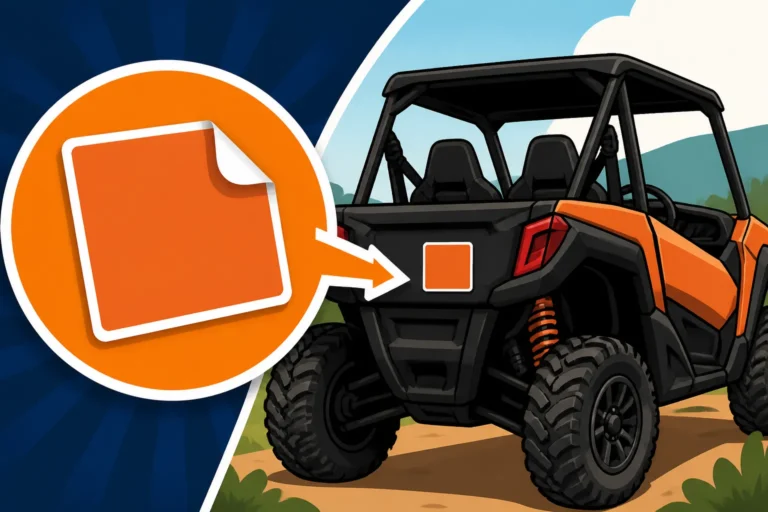
A unique feature of Tennessee OHV titling is the TDR sticker. This is not a registration sticker that you renew annually. Instead, [Tennessee's TDR Sticker Explained] as a small, adhesive sticker that is proof that your OHV has been issued a Tennessee title. [What the TDR Sticker on Your Title Means] is simply that it has a valid title. You'll typically affix this sticker to a visible part of your OHV, usually near the VIN. While your trailered machine might not be going on public roads, this sticker is often required for entry into many Tennessee OHV parks and for general identification, making it an essential part of the titling package. You can learn more about [Why a County Clerk Issues the Tennessee Sticker] and why it's so important.
The Titling Process for Your Trailered OHV in Tennessee
Getting your trailered OHV titled in Tennessee might seem like a daunting task, but it's a straightforward process once you know what to expect and what documents to gather. A little preparation goes a long way in making your visit to the County Clerk's office smooth and efficient.
Gathering Your Paperwork
Before you even think about heading to the County Clerk's office, you need to ensure you have all the necessary documentation in order. This is the most critical step to avoid multiple trips and frustration. Here's what you'll typically need:
- Manufacturer's Statement of Origin (MSO) or Previous Title: If you bought a new machine from a dealer, you'll have an MSO. If you purchased a used OHV, you'll need the previous owner's Tennessee title, signed over to you. If you bought an out-of-state machine, ensure you have its title or equivalent document from that state. Be sure to check [Buying an Out-of-State Machine for Tennessee] for specific considerations.
- Bill of Sale: Even with an MSO or previous title, a bill of sale is highly recommended, especially for private party purchases. This document confirms the sale price, which is used to calculate sales tax. A detailed bill of sale protects both buyer and seller. Services like LawDepot offer customizable templates for [A Tennessee Bill of Sale for an OHV] that can help ensure you don't miss any critical details.
- Proof of Identification: You'll need a valid government-issued photo ID, such as a driver's license.
- Proof of Residency: This could be your driver's license or another document showing your current Tennessee address.
- Payment for Fees and Taxes: Be prepared to pay Tennessee sales tax (if applicable), the state title fee, and the County Clerk's fee. While specific figures can fluctuate, you'll typically face the state title fee, which applies to all titled vehicles, plus a separate fee collected by the county. If you’re financing your OHV, there will also be a lien fee. We'll detail costs shortly.
It's always a good idea to double-check with your specific County Clerk's office website or give them a call before your visit, as requirements can sometimes have minor local variations or updates. Having all your [Tennessee OHV Title Paperwork] organized will save you time and stress.
Visiting the County Clerk's Office
Once your paperwork is in order, it's time to head to your local [Titling at a Tennessee County Clerk] office. Here’s a breakdown of what to expect:
- Present Your Documents: Hand over your MSO or previous title, bill of sale, and identification to the clerk.
- VIN Verification: The clerk may need to verify the Vehicle Identification Number (VIN) on your paperwork against the VIN on the machine itself. While they typically don't require the physical OHV to be present for titling (unless there are unusual circumstances), having your VIN readily available and accurately recorded on your bill of sale is crucial. [Tennessee OHV VIN Requirements] are strict for a reason.
- Calculate and Pay Fees: The clerk will calculate the total amount due, including sales tax (if you bought it privately or from an out-of-state dealer who didn't collect it), the state title fee, and the local processing fee. Expect a fee to the county for processing. [Tennessee's $8.50 County Clerk Fee] is a standard charge, and if you financed the machine, there's another [Tennessee's $11 Lien Fee] on top of that. [Tennessee Sales Tax at the Title Counter] is collected at the point of titling.
- Process Application: The clerk will enter your information into the state system and provide you with a temporary receipt.
- Receive Title and TDR Sticker: Your official Tennessee title will usually be mailed to you within a few weeks. Along with your title, you will receive the unique Tennessee Department of Revenue (TDR) sticker.
The TDR Sticker and Its Importance for Trailered Use
As mentioned earlier, the TDR sticker is a key component of Tennessee OHV titling. This sticker signifies that your OHV has a valid Tennessee title and sales tax has been paid. [What the TDR Sticker on Your Title Means] is proof of this. Even for a machine that is primarily trailered, this sticker is important for several reasons:
- Park Entry: Many private and public riding parks in Tennessee, such as Windrock or Brimstone, require proof of ownership and compliance. While they may not register your machine, they will often look for this TDR sticker as an indicator of legitimate ownership and that your machine isn't stolen. [Titling Before a Trip to a Tennessee Park] ensures you have this in place.
- Identification: It acts as a quick visual confirmation that your machine is properly documented in Tennessee.
- Non-Transferable and Non-Renewable: It's important to understand that [Why the Tennessee Sticker Cannot Be Transferred] and [Why the Tennessee Sticker Cannot Be Renewed]. This sticker is tied to the specific title and owner at the time of issue. If you sell the machine, the sticker becomes void. The new owner will need to title it in their name and obtain a new sticker. [Why a Tennessee Sticker Dies With the Sale] means the buyer needs to apply for a fresh one.
Benefits Beyond Legality: Why You'll Be Glad You Titled It
Beyond the immediate legal requirements and the avoidance of potential pitfalls, having a properly titled OHV in Tennessee offers a host of practical advantages that contribute to peace of mind and the overall enjoyment of your machine. Even if your pride and joy spends most of its time on a trailer, these benefits are undeniable.
Peace of Mind and Investment Protection
There's a significant psychological benefit to knowing your major purchase is fully legitimate and documented. An OHV is a substantial investment for most people, and having a clear title confirms your ownership beyond a shadow of a doubt. This peace of mind extends to knowing that if your machine is ever stolen, law enforcement has a clear record to work with, making recovery efforts more effective. It also means you're less likely to run into unexpected legal hurdles down the line. You've protected your asset, and that's a weight off your shoulders, allowing you to focus on enjoying the trails rather than worrying about paperwork.
Simplified Park Entry and Compliance
Tennessee boasts some incredible OHV parks and riding areas. While the state doesn't register OHVs, many of these parks have their own rules and permit requirements. Often, proving ownership or showing a valid Tennessee title (indicated by the TDR sticker) is a prerequisite for entry. For example, if you're planning a trip to Windrock Park at Oliver Springs, Tennessee, or Brimstone Recreation at Huntsville, Tennessee, having your titled machine ready means one less thing to worry about at the gate. You've got your permit, and your machine is properly identified with its TDR sticker. This prevents delays or even denial of entry, ensuring your much-anticipated riding day isn't ruined by a bureaucratic snag. It also demonstrates you're a responsible owner, which contributes to a safer and more enjoyable environment for everyone.
Streamlined Transactions and Insurance Processes
Imagine you've found the perfect upgrade, and it's time to sell your current trailered OHV. As discussed, a title makes [Selling an OHV in Tennessee] much easier and more attractive to potential buyers. The same holds true for insurance. Most insurance companies will require proof of ownership, typically your title, before they'll issue a policy. Trying to get comprehensive coverage on an untitled machine can be difficult, if not impossible. With a title, you can easily secure insurance that protects your investment against damage, theft, and liability, even if it's just sitting on your trailer in the backyard. Furthermore, if you ever need to make a claim, a clear title simplifies the process, reducing the back-and-forth with your insurance provider. For private sales, a robust bill of sale created with resources like LawDepot can clarify all terms, but the title remains the ultimate proof of legal transfer.
The Bottom Line: Title It!
Even if your OHV rarely, if ever, touches a public road, getting it titled in Tennessee is almost always the smartest move. The relatively small cost and effort upfront are far outweighed by the protection, flexibility, and peace of mind it provides throughout your ownership. From protecting your investment against theft to simplifying future sales and ensuring smooth access to Tennessee's fantastic riding opportunities, a title is an indispensable document for every OHV owner in the Volunteer State. Don't let the "trailered machine" assumption lead you astray—title your OHV and ride with confidence.
Here's a quick overview of key considerations for titled vs. untitled OHVs:
| Feature | Titled OHV in Tennessee | Untitled OHV in Tennessee |
|---|---|---|
| Proof of Ownership | Definitive legal proof (title) | Often relies on bill of sale, could be disputed |
| Theft Recovery | Clear VIN record, easier for law enforcement to track/recover | Difficult without formal state record; may be impossible |
| Selling/Transferring | Smooth transaction, higher market value, broad buyer pool | Limited buyers, lower value, potential legal complications |
| Financing/Lien | Can be used as collateral, lender can place lien | Generally not accepted as collateral |
| Sales Tax Payment | Confirmed paid at titling | May still be owed if bought privately, subject to audit |
| Park Entry (OHV Parks) | TDR sticker often accepted as proof of ownership/compliance | May require additional proof of ownership, could be denied |
| Insurance Coverage | Easier to obtain comprehensive insurance | Difficult to insure, limited coverage options |
| Interstate Travel | Clear documentation for other states' requirements | Could face issues proving ownership or legality elsewhere |
Disclaimer
This article is for general informational purposes only and does not constitute professional advice. Laws, prices and regulations vary by location and change over time. Consult a qualified professional for guidance on your specific situation.