Copperheads on a Warm Ledge
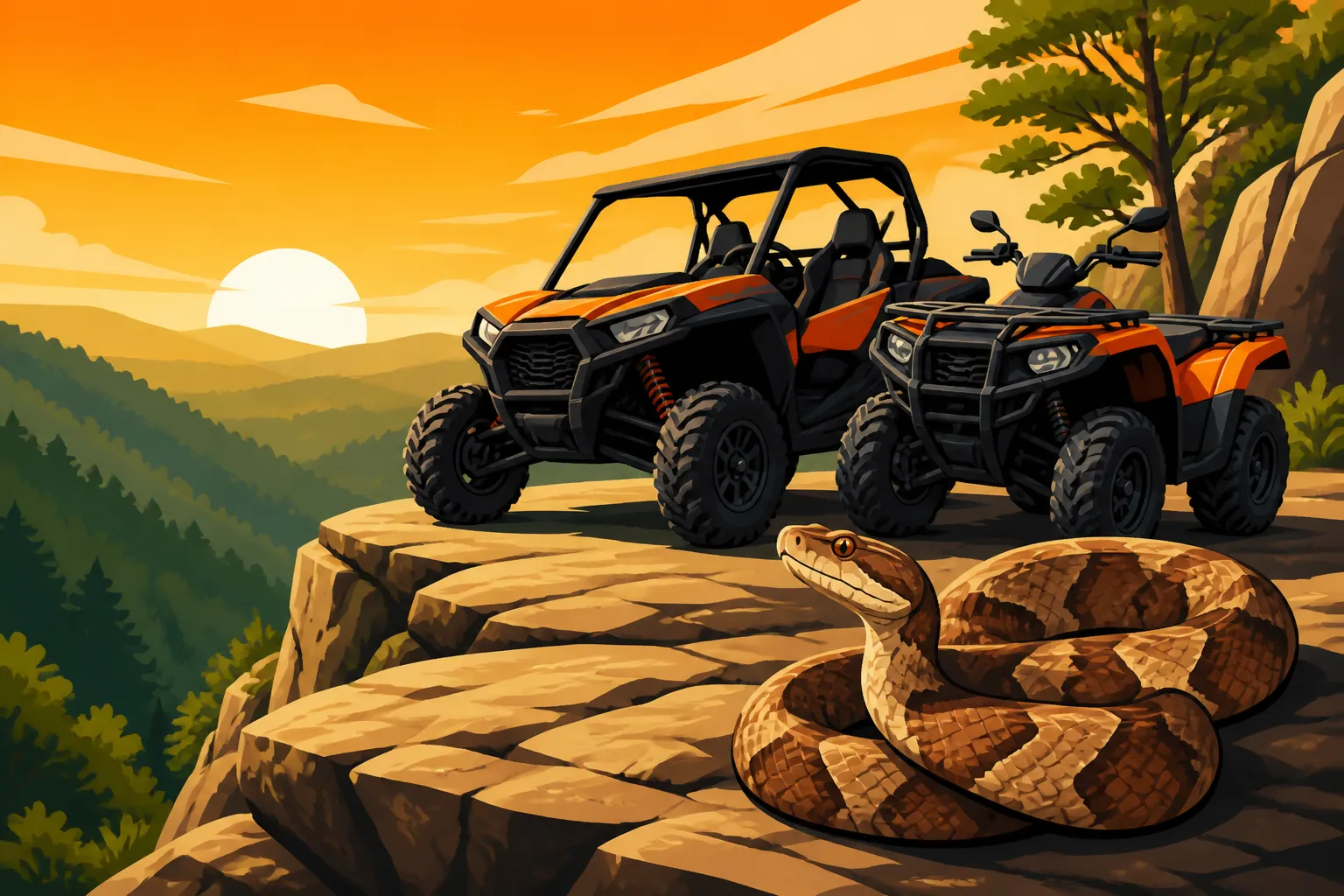
A warm rock ledge can look like the perfect place to pause on a Tennessee ATV ride, but it can also hide a copperhead in plain sight. These snakes blend into leaves, stones, and trail edges, making a surprise encounter unsettling. This guide explains where to watch, how to respond safely, and what to do if someone is bitten.
Why copperheads can be hard to spot on Tennessee trails
Warm rocks, shade, and leaf litter create tricky visibility
Copperheads are venomous snakes found in Tennessee, and their patterned coloring can make them difficult to distinguish from dry leaves and mottled ground. A snake resting beside a rock or tucked into leaf litter may not stand out until you are close. That can matter on trails around Windrock, Brimstone, Royal Blue, or the North Cumberland area, where riders may pass rocky slopes, wooded edges, and narrow bench roads.
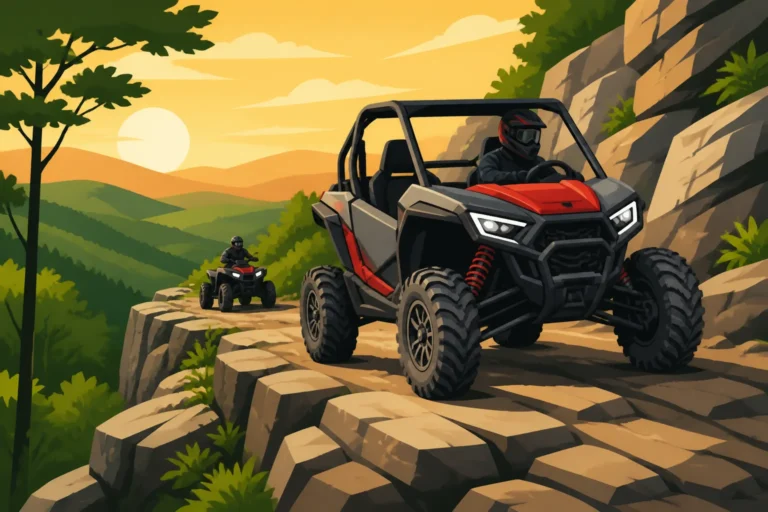
A “warm ledge” does not mean there will be a snake there. It simply describes the kind of place where a rider should slow down and look carefully, especially when the trail surface and surrounding cover make it hard to see what is ahead. Copperheads may be encountered on the ground or close to it, so a glance from a seated position on a machine may not reveal everything along the trail edge.
The frustration is familiar: you want to keep the group moving, but stopping to inspect every patch of leaves is impractical. The sensible middle ground is to reduce speed when sightlines are short, keep hands and feet away from brush, and avoid stepping blindly off the trail. The same cautious approach helps when looking out for other hazards, such as those covered in [Ticks on a Tennessee Summer Trail](Ticks on a Tennessee Summer Trail).
Trail features that deserve an extra look
Pay closer attention where vegetation crowds the route, rocks meet leaf litter, or a bend hides the trail beyond it. A narrow bench road can leave little room to maneuver, while a steep bank may make it difficult to see the ground beside the machine. If rain, dust, or changing light reduces visibility, slow down further rather than relying on someone ahead to spot everything.
At a staging area or trail stop, choose an open place where you can see the ground before getting off. Avoid putting hands under rocks, logs, or piles of leaves, even when retrieving a dropped glove or checking a tire. If you need to move a branch or clear debris, use a tool where practical and keep your body out of the area you cannot see.
A trail map helps with navigation, not wildlife detection. Tools such as onX Offroad can help riders review a route and plan where to stop, but a map cannot tell you whether a snake is lying beside a rock. Check route information before leaving, then stay alert to what is physically on the trail. For more preparation, see [Reading a Tennessee Park Trail Map](Reading a Tennessee Park Trail Map) and [Tennessee Trail Conditions Before You Ride](Tennessee Trail Conditions Before You Ride).
How to ride and stop more safely around snakes
Use a pace that leaves room to react
A rider travelling too quickly has less time to see a snake, alert the group, or stop without creating a second hazard. On unfamiliar ground, around blind bends, or where the trail narrows, choose a speed that gives you a clear view of the riding line. Do not assume the rider in front has seen a snake or that the path is clear simply because another machine passed moments ago.
If someone notices a snake, the group should stop in a safe location without blocking the trail or forcing riders into brush. Keep distance, do not crowd the animal, and give it a route to move away. Never try to push it off the trail with a boot, stick, or machine. If it remains near the route, wait for it to move or turn around if there is a safe way to do so.
A dust cloud can make it harder for riders behind to see the ground, while fog or low light can hide detail even at a slower pace. Conditions such as those described in [Riding a Windrock Bench Road in Fog](Riding a Windrock Bench Road in Fog) call for extra caution, not just because of snakes but also because of other riders, rocks, and sudden changes in the trail.
Get off the machine carefully
When you stop, look at the ground around the machine before stepping down. Place your feet where you can see, rather than into grass, leaves, or a gap beside a rock. Before sitting on a log or setting a bag on the ground, check the area first. These small habits can feel fussy when everyone is ready to ride again, but they are easier than dealing with a bite or a panicked scramble.
Wear sturdy footwear and long pants when practical, particularly if you expect to walk around a wooded trail or help with a repair. Clothing is not a guarantee against a bite, so do not treat it as permission to handle a snake or reach into hidden spaces. Keep children close during stops and tell them not to poke, pick up, or approach any snake they see.
If the group rides across multiple units or through areas with limited cell service, agree on a basic stop-and-rejoin plan before setting out. A navigation app such as onX Offroad may help you follow a planned route, but riders should also discuss what to do if the group separates or someone needs help. In remote areas, [Cell Dead Zones Across the North Cumberland WMA](Cell Dead Zones Across the North Cumberland WMA) is a useful reminder to plan for communication gaps before they become urgent.
| Situation | Safer response |
|---|---|
| A snake is visible on or beside the trail | Stop at a safe distance and give it room to move away |
| You cannot see clearly around a bend or ledge | Slow down and avoid crowding the edge |
| You need to step off the machine | Check the ground before placing your feet |
| A snake is under a rock, log, or debris | Do not reach in or try to move it by hand |
| Someone is bitten | Move away from the snake, limit movement, and seek emergency care |
What to do if you see a copperhead or get bitten
Give the snake space and leave it alone
If you see a copperhead, do not approach for a closer look or try to identify it from a few feet away. Do not attempt to kill, catch, or move it. Many dangerous encounters happen when a person tries to handle or corner a snake. From a safe distance, alert the riders behind you and give the animal an unobstructed chance to move away.
If it does not move, do not assume it is harmless or dead. A snake that appears still may still be capable of striking if approached. Depending on the trail layout, wait in a safe place, carefully turn around, or seek another route rather than squeezing past it. Keep pets away as well; a curious dog can move much closer before anyone has time to react.
When using an app such as onX Offroad to navigate around a problem area, make sure the alternate route is actually permitted and suitable for your machine. Do not create a new trail or ride off marked routes to avoid a snake. Trail access rules and closures still apply, so check [Tennessee Trail Closures to Check First](Tennessee Trail Closures to Check First) before changing plans.
Treat a suspected bite as an emergency
A suspected copperhead bite needs prompt medical attention, even if the person initially feels well or the bite marks are difficult to see. Move away from the snake without trying to catch it. Call 911 or arrange emergency medical care, and follow instructions from emergency responders. If you are in a remote area, tell dispatch where you are, what trail or access point you used, and how rescuers can reach you.
Keep the bitten person as calm and still as possible while help is arranged. Remove rings, watches, or tight clothing near the affected area before swelling makes them difficult to remove. Do not cut the wound, try to suck out venom, apply ice, or use a tourniquet. Avoid giving the person alcohol or attempting folk remedies. Do not delay medical care to take photos or search for the snake.
If you can do so without approaching the animal, remember its general appearance and where the bite happened. That information may be useful to medical professionals, but identifying or capturing the snake is not worth another injury. Riders should also avoid assuming that a person can safely drive themselves from a trailhead after a bite. Get emergency guidance and follow it.
Build snake awareness into your ride plan
Prepare before leaving the staging area
Before the ride, check the trail map, route conditions, and any closures. Choose a route that suits the group’s experience and the day’s visibility, and make sure everyone knows where to stop if a rider spots a hazard. A quick reminder to keep hands out of brush and to watch footing during breaks can prevent a lot of confusion later.
Navigation apps such as onX Offroad can be useful for planning and following a route, but download or review any map information you expect to need before entering areas with weak reception. Keep a paper or otherwise accessible backup if appropriate for your group. Most importantly, do not let navigation distract the driver: pull over safely before checking a screen.
Think through the practical details, too. Carry a charged phone, know the park or trail access point, and tell someone outside the group where you expect to ride. If the route crosses steep, rocky terrain, consider how long it might take to reach help from a remote section. A little planning is especially useful on longer rides, where the group may be far from the staging area when an incident occurs.
Make good trail habits part of the group routine
At each stop, choose visible, open ground and check the area before walking around. Keep children and pets close. Ask riders to call out hazards clearly and early, then stop without sudden swerving or forcing anyone toward the trail edge. These habits also help with ordinary trail dangers such as loose rock, washouts, and people approaching from the opposite direction.
Seasonal conditions change what you can see and how you ride. In warm weather, riders may be eager to move quickly or take frequent breaks in shaded spots. In wet conditions, mud and leaf cover can hide rocks and other obstacles. Use the same careful approach on coal benches and steep climbs described in [Coal Benches and Steep Climbs in Tennessee] and around creek crossings discussed in [Creek Crossings in an East Tennessee Holler].
No rider can make the outdoors completely predictable, and seeing a snake does not mean you have done anything wrong. The goal is to avoid surprising or provoking it, make deliberate choices when visibility is poor, and know what to do if a bite occurs. With a calm group plan, an open eye on the trail, and respect for wildlife, you can handle an encounter without turning it into a dangerous confrontation.
Disclaimer
This article is for general informational purposes only and does not constitute professional advice. Laws, prices and regulations vary by location and change over time. Consult a qualified professional for guidance on your specific situation.