Orange During Gun and Muzzleloader Seasons
Riding a Tennessee trail during deer season can put you near hunters, even when you are following a marked route and minding your own business. Blaze orange helps make you visible, but riders often aren’t sure how much to wear, when the rule applies, or whether orange on the machine counts. This guide explains how to plan for a safer ride and check the rules for your destination.
When Tennessee riders need blaze orange
The basic rule on wildlife management areas
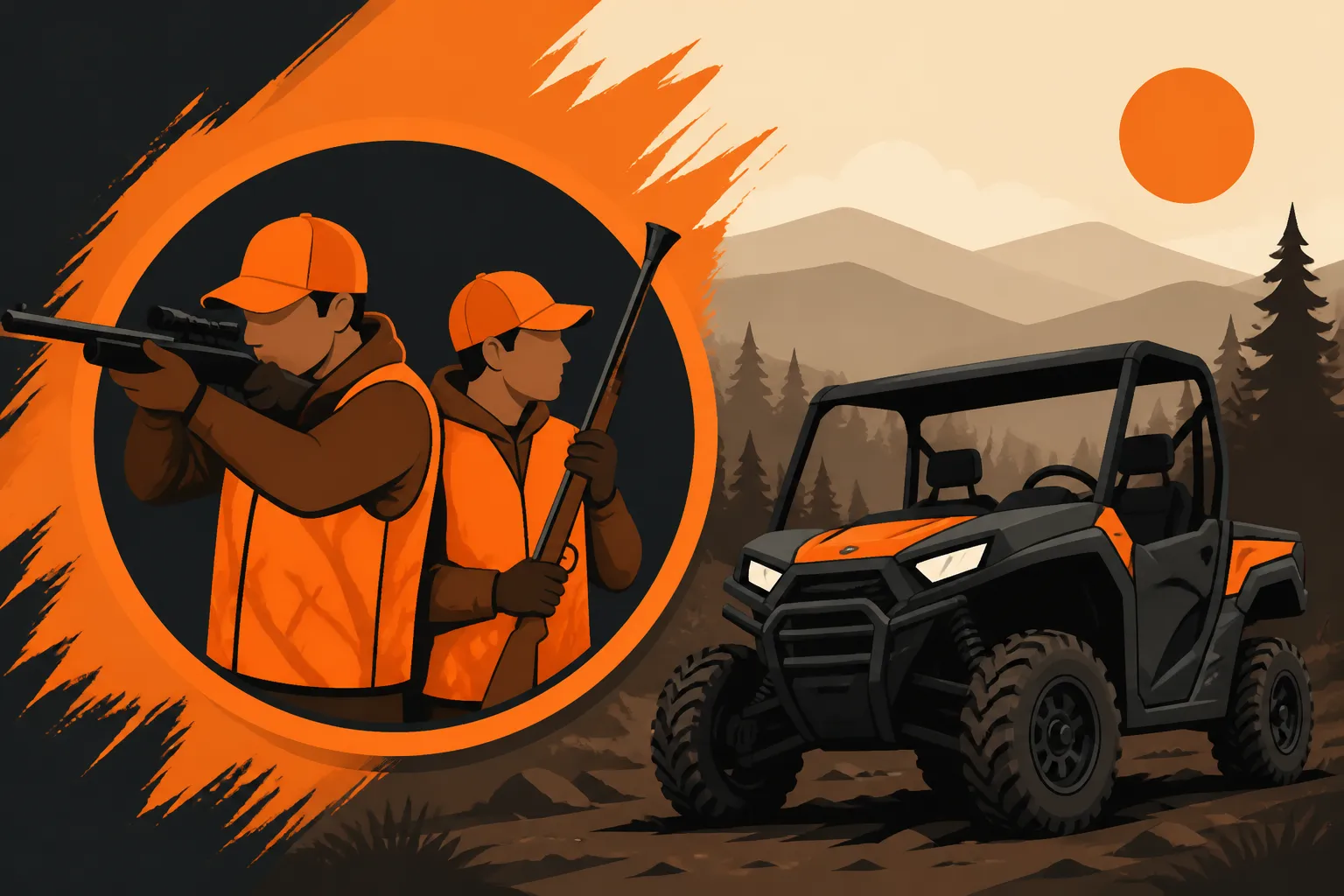
On Tennessee wildlife management areas, riders may be required to wear blaze orange during big-game gun and muzzleloader seasons. A commonly cited standard is 500 square inches of visible blaze orange above the waist. That’s a substantial patch of color: a small hat or a few orange decals on a UTV won’t necessarily meet the clothing requirement.
The important detail is that the rule is tied to the area and season, not simply to whether you expect to see a hunter. A trail can feel quiet, and a group of riders may not notice anyone nearby, yet hunting activity may still be underway elsewhere in the same management area. Treat orange as part of your riding gear whenever your planned route crosses a WMA during a period when the requirement applies.
The exact rules and season dates can vary by location and hunting activity. Before you load the trailer, check the rules for the specific unit you plan to ride and the dates of your trip. If your route crosses more than one unit, check each one. [Tennessee Orange Requirements for Riders] offers another starting point for understanding what riders should look for.
What seasons and locations make a difference
The phrase “gun and muzzleloader seasons” refers to particular hunting periods, not every day of the year. Those periods can differ from archery seasons, and hunting schedules may vary by species or management area. Don’t assume that the opening and closing dates you remember from last year apply to this year’s ride.
Location matters just as much. A private off-road park, a public WMA, a county road, and a trail on privately leased land may have different rules. Riders heading toward the North Cumberland area, for example, should check the relevant WMA notices and unit information rather than relying on what a friend wore at a different park. [Tennessee's North Cumberland WMA] can help you identify the broader riding area, but confirm the rules for the particular unit and date before setting out.
This is especially important on a multi-day trip. You might ride a privately operated park one day and a public management area the next. The gear that was adequate at one destination may not satisfy the requirements at another. When you aren’t sure, wearing clearly visible orange is a sensible safety choice, but it doesn’t replace checking the rules.
Why the rule matters even on a marked trail
A marked OHV trail doesn’t make riders invisible to hunters, and it doesn’t guarantee that every hunter is positioned where you expect. A person on foot may be in timber near a trail, waiting at a clearing, or moving between hunting locations. A rider’s helmet, dark jacket, and vehicle can blend into the background, especially in shadow or at a distance.
Visibility also matters in a group. The lead rider may see an open stretch of trail, while the last rider is partly hidden by dust, trees, or a bend. Bright clothing gives people more chance to recognize that a person is present before they approach. [Sharing a WMA With Deer Hunters] is useful context for thinking about how recreation and hunting can take place in the same public area.
Orange does not mean a rider can ignore other precautions. Stay on authorized routes, keep speeds appropriate for trail conditions, and slow down near intersections, gates, parking areas, and places where people may be on foot. If a trail is closed or a posted notice limits access, don’t treat visible clothing as permission to ride through.
Choosing orange gear that works on an ATV or UTV
Wear orange on your body, not only on your machine
A blaze-orange vest or jacket is often the simplest way to add a large, visible area of color. The key is that the orange should be worn where it can be seen. A flag, decal, or orange panel on the hood may be useful as an additional visibility aid, but it is not a substitute for required clothing when the rule calls for orange worn by the rider.
Check how your gear sits once you are riding. A jacket covered by a dark rain shell won’t help much. A vest partly hidden under a backpack or a UTV’s shoulder belt may also be less visible than you intended. Before leaving home, put on your helmet, pack, and riding layers and look at what remains visible from the front, side, and back.
A simple gear check can prevent an annoying last-minute scramble at the trailhead:
- Put on your normal riding layers and helmet.
- Add your orange vest or outer garment.
- Sit in your ATV or UTV as you would during the ride.
- Check that the orange remains visible and is not covered by luggage, a seat belt, or a rain layer.
- Bring a backup orange garment in case the first one gets wet, muddy, or damaged.
Make visibility practical in changing weather
Tennessee riding weather can shift quickly, especially in the hills. A cool morning may turn into a warm afternoon, while rain can make a bright garment muddy and hard to distinguish. Choose orange gear that you can wear comfortably over your usual layers and keep it accessible if you need to add a rain shell.
For a UTV, think about every passenger, not just the driver. If the rules apply to people using the area, each rider should have appropriate orange clothing. A group that has only one vest tucked behind the driver’s seat may discover the problem after arriving, when the nearest store is a long drive away.
Dust and mud deserve attention, too. A garment that began the ride bright may become dull after a wet trail or a dusty convoy. Bring a spare or plan to clean the garment between rides. Don’t assume a small orange logo on a dark shirt will remain noticeable after several hours of riding.
| Gear choice | What it helps with | What to check |
|---|---|---|
| Blaze-orange vest | Adds a large area of visible color over riding clothes | Make sure it stays visible while seated and belted in |
| Orange jacket | Combines visibility with warmth or weather protection | Check that another outer layer does not cover it |
| Orange hat or helmet detail | Adds color near the head | Don’t rely on a small area if a larger amount is required |
| Orange flag or vehicle panel | Makes the machine easier to notice | Treat it as an added aid, not a replacement for clothing |
| Spare orange garment | Provides a backup if gear gets wet or dirty | Keep it reachable rather than buried under cargo |
Keep orange distinct from other safety equipment
A bright orange garment is not the same thing as a headlight, a reflective vest, or a trail flag. Each can help with visibility in a different way, but one item may not satisfy a rule that specifies blaze-orange clothing. Likewise, a headlight that helps other riders see you on a shaded trail does not necessarily meet a hunting-season clothing requirement.
Pay attention to the color and the amount of visible material. A garment described as fluorescent yellow, red, or high-visibility lime may be easy to notice in traffic but may not count as blaze orange under a particular rule. If the regulation specifies blaze orange, use gear clearly intended for that purpose rather than guessing based on a product’s general “high visibility” label.
If you already use a trail-mapping app such as onX Offroad, it can help you review your planned route and identify where your ride may pass through a public riding area. Use mapping as a planning aid, not as proof that a route is currently open or that orange is optional. Check the applicable land manager’s rules separately.
Planning a ride during hunting season
Check the trail, unit, and dates before departure
Start with the exact place you intend to ride. “We’re going to ride near Oneida” or “we’re heading to North Cumberland” may not be specific enough if the trip could involve different units, land managers, or access rules. Identify the trailhead, the management area, and the route you expect to take. Then check the rules for that location and the dates you’ll be there.
Make this a routine part of trip planning rather than something you do only when a sign catches your eye. Review posted notices, trail closures, seasonal restrictions, and any hunting-related requirements. [Tennessee Trail Closures to Check First] can help you think through the kinds of access information to confirm. If you’re unsure whether a route enters a WMA, ask the relevant land manager or park office before riding it.
Mapping tools can help you understand the shape of a route, but maps aren’t always a complete record of current closures or temporary restrictions. onX Offroad may help you trace a route and see nearby land boundaries, but use official notices to confirm access and hunting-season rules. A quick phone call before loading up can save a long drive and an awkward conversation at a gate.
Prepare everyone in the group
One rider’s good preparation doesn’t solve the problem for the rest of the group. Before the trip, tell passengers and riding partners whether orange is required and what each person should bring. If someone is renting a machine, ask what safety equipment is provided and whether riders need to bring their own orange garments. Do not assume rental gear includes clothing that meets a hunting-season requirement.
For a family ride, check children’s clothing as carefully as adult gear. A child’s small orange cap may be noticeable, but it may not provide enough visible area if a larger clothing requirement applies. Have the child wear an appropriate vest or outer layer before you reach the trailhead, and make sure it stays comfortable in the seat and doesn’t interfere with a secure fit.
A short group check before departure helps catch easy-to-miss problems:
- Each rider has the correct orange garment.
- Orange remains visible over the person’s riding layers.
- The garment is not hidden by a pack, jacket, or seat belt.
- Everyone knows which trails and areas are on the plan.
- The group has checked for closures and date-specific notices.
Ride with hunters and other trail users in mind
Be predictable around places where hunters may be present. Slow down near parking areas and trail junctions, avoid unnecessary noise when people are nearby, and give anyone on foot room to move safely. Don’t leave the marked route to investigate a vehicle, camp, or person you see off trail. Respect posted boundaries and private property.
If you meet hunters, stop at a safe distance and let them know your group is passing. A calm pause is better than revving an engine and surprising someone at close range. Keep passengers seated and wait until the route is clear before proceeding. If a hunter or official tells you a route is closed, turn around and confirm where riding is allowed rather than arguing at the trail.
Orange improves visibility, but it does not remove the need for good judgment. Keep your group together, use a pace that allows everyone to respond to trail conditions, and be especially attentive around blind corners and narrow sections. [Tennessee Trail Conditions Before You Ride] is a useful reminder to consider conditions as well as access when planning a trip.
Common questions about blaze orange for Tennessee riders
Does orange on my ATV or UTV count?
Don’t rely on orange mounted on the machine to meet a requirement for orange clothing. A flag or bright vehicle panel can make the machine more noticeable, but the rider may be separated from it, hidden behind a windshield, or seated in a way that obscures the color. Wear the required orange on your body and use machine-mounted visibility aids only as an extra precaution.
Is a small orange hat enough?
Not necessarily. If the rule calls for a particular amount of visible blaze orange, a small hat may not provide enough. The safest approach is to check the specific regulation and choose a vest or outer garment that offers a clearly visible area of orange above the waist. [The 500 Square Inch Orange Rule] can help clarify why a small accent may not be sufficient.
Do the same rules apply at every Tennessee riding park?
No. The requirements depend on where you ride and which rules apply there. A privately operated park, a WMA, and another public land area may not have identical regulations. Even within a broader riding region, different units can have different notices or access conditions. Check the destination’s rules rather than assuming a garment policy from another park carries over.
What if we are only crossing the WMA briefly?
A short crossing can still put your group on land where a rule applies. Don’t assume that a quick passage, a trail transfer, or a stop at a scenic spot creates an exception. Confirm whether the route enters the area and follow the rules for the people using it. If the route is unclear, ask before riding rather than trying to sort it out on the trail.
Can a mapping app confirm that orange is required?
A mapping app can help you see where a route goes, but it shouldn’t be treated as the final authority on seasonal clothing rules or closures. onX Offroad can be helpful for reviewing route context and planning around land boundaries. Confirm regulations, current trail access, and hunting-season notices with the responsible land manager.
What should I do if I arrive without enough orange?
Don’t assume that a small item or vehicle accessory will make up the difference. If you can’t meet the applicable requirement, pause and find out whether there is a suitable garment available nearby or choose another lawful activity. It’s frustrating to make the drive and then have to change plans, but checking the rules before leaving home—and keeping spare orange in the truck—can prevent that situation.
Disclaimer
This article is for general informational purposes only and does not constitute professional advice. Laws, prices and regulations vary by location and change over time. Consult a qualified professional for guidance on your specific situation.