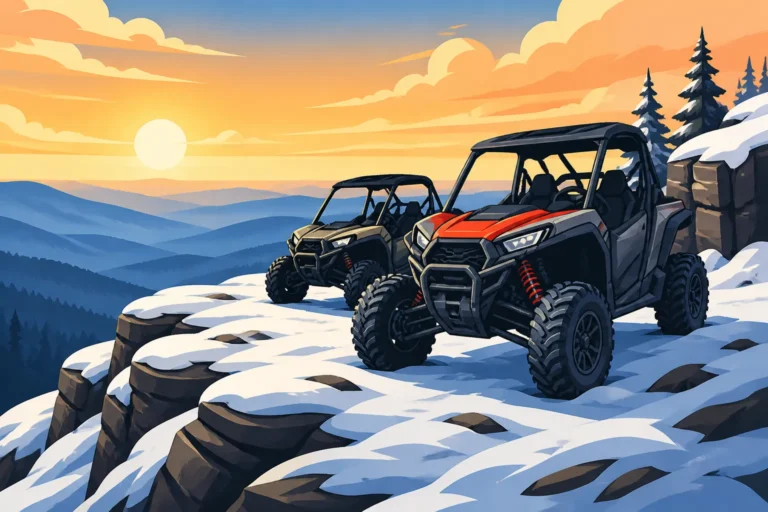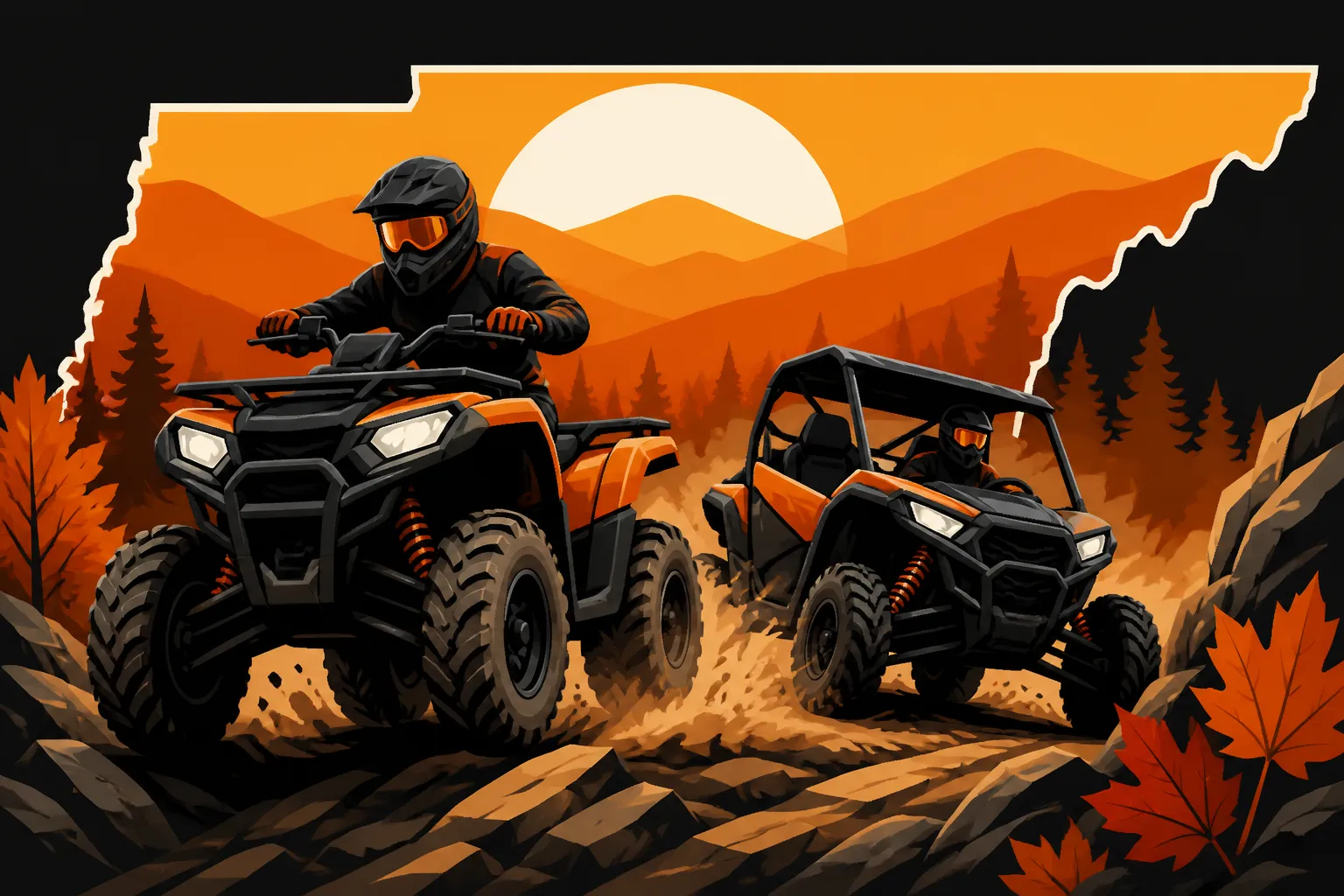
Riding Brimstone in September
September can be a lovely time to ride Brimstone, but the season doesn’t guarantee cool weather, dry trails, or fall color. A sunny start can turn into a muddy afternoon, and a long loop can feel longer when you misjudge fuel or daylight. This guide covers how to prepare, what to check before you leave, and how to make a Brimstone ride more enjoyable.
What September riding at Brimstone can be like
Plan for changing weather and trail conditions
Brimstone Recreation is near Huntsville in East Tennessee, where September can bring warm afternoons, cooler mornings, and sudden rain. Conditions can vary from one part of the trail system to another. A shady section may stay slick after a shower while an exposed ridge dries quickly, and loose rock can feel different under your tires when it is wet.
Pack for both ends of the day rather than dressing only for the forecast high. A light rain layer, an extra shirt, and gloves that still feel comfortable when damp can make a real difference. If you ride an open machine, consider how wind on a ridge will feel after you have worked up a sweat climbing a trail. Keep a dry layer in a sealed bag so a wet ride does not leave you cold on the way back.
September is not a reliable promise of peak autumn color. Some trees may begin changing, but the timing varies from year to year and across elevations. If fall scenery is the main reason for your trip, treat it as a bonus rather than planning around a guaranteed display. [Riding Brimstone in September] is worth approaching as a seasonal ride with variable conditions, not as a fixed foliage event.
Choose trails to match the day, not just the machine
A capable ATV or UTV can still have a difficult day if the route does not suit the driver, passengers, tires, or weather. Before setting out, think about the least experienced rider in your group. A steep climb or muddy section that feels manageable to one driver may be stressful for someone new to off-road riding.
Start with a conservative route and adjust only when the group is comfortable and conditions support it. If rain has made the ground slick, avoid treating a trail’s usual difficulty as a guarantee of how it will ride that day. Build in time to stop, check the map, and turn back if a route becomes a poor fit. [Brimstone's 300 Miles in Tennessee] gives a sense of the system’s scale, but a large trail network is not a reason to try to cover as much ground as possible in one outing.
It also helps to agree on a simple group plan before anyone starts the engine: who leads, who rides at the back, and where the group will stop if it gets separated. Pick meeting points that are easy to identify on your map. If someone misses a turn, the group should stop somewhere safe rather than having every rider scatter in search of one another.
Prepare your machine, permits, and route
Check access requirements before leaving home
Do not assume a Tennessee title, registration document, or permit for a different park automatically gives you access to Brimstone. Trail access rules and permit arrangements can differ between riding areas. Check Brimstone’s current visitor information directly before your trip, including which permits are needed, where they can be obtained, and what rules apply to operators and passengers. The details in [Brimstone's Land Use Permits] and [Why a Tennessee Passenger Needs a Brimstone Permit] are useful reminders to check the requirements for everyone riding, not just the person driving.
If you are riding multiple parks on the same trip, verify each park separately. A permit for one riding area should not be treated as permission to ride another. [Carrying Three Permits for Three Parks] explains why it is safer to think of access as park-specific rather than portable from one trail network to the next.
Confirm the route to your staging area, too. Brimstone’s [Baker Highway to the Brimstone Gate] can help you orient your arrival, while [Brimstone's Baker Highway Headquarters] is a useful reference when planning where to begin. Check for any changes to access, closures, or operating arrangements before loading up; directions saved from an earlier visit may not answer every question for your planned day.
Give the machine a practical pre-ride check
A quick inspection can prevent a small problem from turning into a long walk or a difficult recovery. Before leaving, check tire condition and pressure, brakes, steering, lights, battery connections, and the fuel level. Look for loose fasteners, visible leaks, and damage that could worsen on rough ground. For a machine that has been sitting between rides, pay particular attention to the battery and tire condition.
Carry basic items that suit your machine and the group’s experience. That might include a tire repair kit, a pump, a tool kit, a first-aid kit, water, and a way to contact your riding group if the machines become separated. A winch can be helpful, but it is not a substitute for choosing a safe line or knowing how to use recovery equipment without putting people in danger.
Tire choice should reflect the surface you expect, while leaving room for conditions to change. If your plans include both rocky stretches and possible mud, the trade-offs matter: a tire that works well in one setting may not feel ideal in another. [Tire Choice for Tennessee Rock and Mud] is a useful place to think through that decision before you arrive.
Carry a map and a backup plan
Do not depend on cell service being available everywhere you ride. Save or carry the information you need before leaving a reliable connection, and make sure the group knows how to use it. A paper map or an offline map on a phone can help when reception drops, but a map only helps if riders know where they are on it and keep enough battery to refer to it.
onX Offroad can be useful for reviewing routes and keeping a map available when service is limited. Download the area ahead of time, check that the map opens offline, and carry a charging option if you plan to use your phone throughout the day. It is still sensible to have a backup and to follow Brimstone’s posted instructions. A mapping app should not be treated as confirmation that a trail is open or appropriate for every machine.
Agree on a turnaround time before setting out. A route that seems short on the screen can take longer when riders stop, encounter difficult terrain, or need to regroup. When the group reaches its planned cutoff, head back rather than relying on a phone screen to solve a late return in fading light.
Plan your day around daylight, fuel, and the group
Start with a realistic route and schedule
For a September ride, make your plan around the time you have, not around the full amount of trail available. Choose a loop that leaves room for slower travel, breaks, and unexpected stops. If your group is unfamiliar with Brimstone, a shorter first outing gives everyone a chance to learn the terrain and the day’s conditions before deciding whether to ride farther.
| Before the ride | What to check | Why it matters |
|---|---|---|
| Access | Current permit and visitor requirements | Rules can differ between parks and for passengers |
| Trail status | Closures, restrictions, and posted notices | A route shown on a map may not be open |
| Weather | Rain, heat, and changing conditions | Surface grip and comfort can shift during the day |
| Machine | Tires, brakes, steering, lights, and fuel | Small mechanical issues are easier to address before departure |
| Route | Distance, difficulty, and turnaround time | A manageable plan reduces pressure to rush |
| Group | Roles, meeting points, and communication | Riders can regroup safely if separated |
Tell someone who is not riding where you expect to be and when you plan to return. Keep the plan specific enough to be useful, and update that person if your itinerary changes. If you are riding with children or new drivers, use a pace that allows the group to stay together without anyone feeling pushed to take a line they are not comfortable with.
For a family or mixed-experience group, agree that anyone can ask to stop or turn around. That makes it easier for a new rider to speak up before discomfort becomes a problem. A relaxed pace often produces a better day than trying to keep up with the fastest driver in the group.
Manage fuel, breaks, and weather changes
Fuel planning is easy to underestimate when a ride includes slow technical sections, detours, or time spent waiting for the group. Start with a full tank where practical, know your machine’s typical range under riding conditions, and leave a reserve. Do not assume you can find fuel close to the trail when you need it. [Fuel Between East Tennessee Towns] can help you think about the wider trip, but check your intended route and refueling options before you head out.
Water matters even when the weather feels mild. Pack enough for the expected ride and more if the day is warm or the route is demanding. Take breaks before people are exhausted, not only after someone starts making avoidable mistakes. Fatigue can affect judgment and control, especially late in the day when riders are eager to get back.
If rain begins, pause and reassess. A trail that was comfortable earlier may become slippery, and water can hide changes in the surface. Check the group’s comfort level and machine condition before continuing. If visibility drops or the route feels unsafe, choose a conservative way back rather than pressing on to finish a planned loop.
Leave room for trail closures and local instructions
Trail conditions can change after weather, maintenance, or other access decisions. Check Brimstone’s notices before you ride and pay attention to signs and barriers once you arrive. Do not assume that a trail shown as available in an older saved map remains open. [Tennessee Trail Conditions Before You Ride] and [Tennessee Trail Closures to Check First] offer practical reminders to verify conditions rather than relying only on memory.
If a trail is closed, do not ride around a barrier or look for an unofficial bypass. A closure may protect riders from a hazard or reflect a land-access restriction. Use the marked route alternatives if available, and keep the group together while you adjust the plan.
Also remember that access on a trail system does not automatically mean every nearby public road is open to off-highway machines. Keep trail riding separate from road use, and check the rules for any road section before using it. When in doubt, ask the park staff rather than treating a map line or another rider’s route as permission.
Make the trip more comfortable and safer
Pack for a full day, not just the ride itself
The ride begins before you reach the trail and ends after the machine is loaded again. Bring the practical extras that make those parts easier: drinking water, snacks, a dry change of clothes, a trash bag, basic first aid, and a way to keep personal items protected from dust and rain. If you are trailering, check tie-downs and lights before departure, and leave enough time to secure the machine properly after the ride.
A helmet and suitable riding gear should be part of the plan for every rider. Eye protection is especially useful when dust, grit, or branches are part of the route. Dress for a range of temperatures, since a warm parking area can feel much cooler once you are moving on an exposed trail. Check park rules and applicable safety requirements before the trip rather than assuming that one gear setup covers every situation.
Keep keys, identification, permit details, and emergency contacts secure and accessible. Avoid leaving essential items loose in a cargo bed where they could bounce out. A small waterproof pouch can keep a phone or documents protected when the ride gets muddy.
Respect other riders and the place you came to enjoy
Brimstone is a shared riding area. Keep a pace that allows you to respond to changing trail conditions, give other riders room, and slow down where visibility is limited. Dust, blind corners, and steep approaches can make it difficult to see someone coming the other way. If you meet another machine in a tight spot, stop where it is safe and communicate clearly before proceeding.
Stay on designated routes and follow posted instructions. Avoid creating new lines around muddy or damaged areas; an improvised bypass can widen the disturbance and create new hazards. Pack out what you bring in, including food wrappers and broken parts. Leave the trail as you would hope to find it on your next visit.
Finally, give the group permission to call the ride early. A shorter day is often the right decision when the weather changes, a machine develops a problem, or someone is tired. A good September outing is not measured by how many miles you cover; it is measured by whether everyone gets back safely and still wants to ride again.
Disclaimer
This article is for general informational purposes only and does not constitute professional advice. Laws, prices and regulations vary by location and change over time. Consult a qualified professional for guidance on your specific situation.